
That first drop lands on the tongue as pure vinegar brightness, then the heat rises - clean, fast, and gone almost as quickly as it arrived.
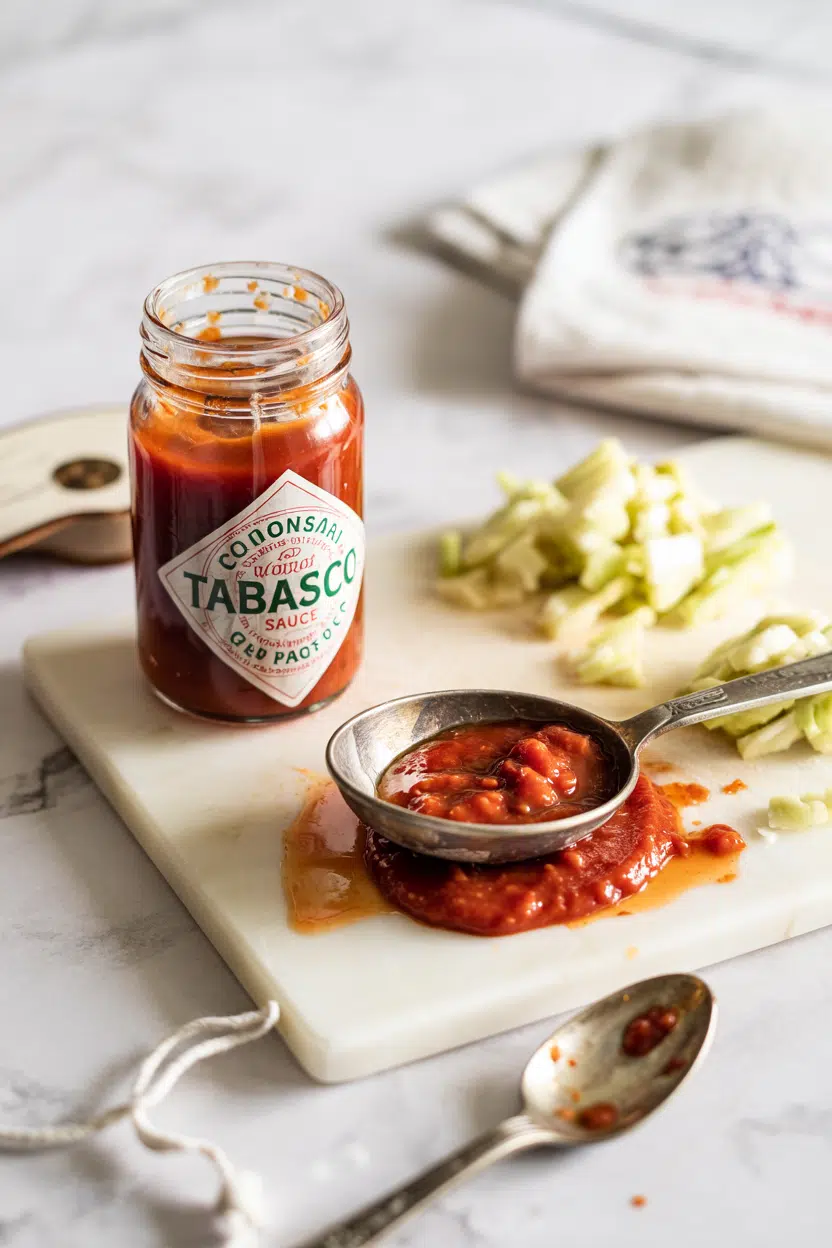
Tabasco sauce doesn't build slowly the way chili pastes do; it hits and retreats, leaving a faint fermented tang behind.
If you've been reaching for it on eggs or in a Bloody Mary without fully understanding what you're working with, that's worth changing.
For cooks who also work with cayenne pepper swaps that work or experiment with making honey sriracha snack mix at home, Tabasco occupies its own lane - thinner, more acidic, and built on a fermentation process most hot sauces skip entirely.
A vinegar-based hot sauce made from aged Tabasco peppers, distilled vinegar, and salt. Delivers sharp, fast heat with a fermented tang. Best as a finishing sauce, cocktail seasoning, or condiment on eggs and shellfish. Shelf life of 2-3 years after opening.
What Is Tabasco Sauce?
Tabasco sauce is a vinegar-based hot sauce produced by the McIlhenny Company on Avery Island, Louisiana - a salt dome off the Gulf Coast where the peppers were first cultivated after the Civil War.
Remember it later
Planning to try this recipe soon? Save it for a quick find later!
The original recipe uses only three ingredients: mashed Tabasco peppers, distilled vinegar, and salt.
What separates it from most grocery-shelf hot sauces is the aging process - the pepper mash sits in white oak barrels for up to three years before vinegar is blended in.
Understanding what makes hot sauce distinct as a category helps clarify where Tabasco fits - it's one of the oldest continuously produced American hot sauces, first bottled commercially in 1868.
The McIlhenny Company still uses Avery Island salt in production, and the iconic diamond-label bottle with its narrow neck and dropper-style opening hasn't changed much in over a century.
Tabasco also produces several sauce variants, including a thicker chipotle version, a milder green jalapeño sauce, and a habanero sauce rated much higher on the Scoville scale. When people say "Tabasco" without qualification, they mean the original red pepper sauce.
What Does Tabasco Sauce Taste Like?
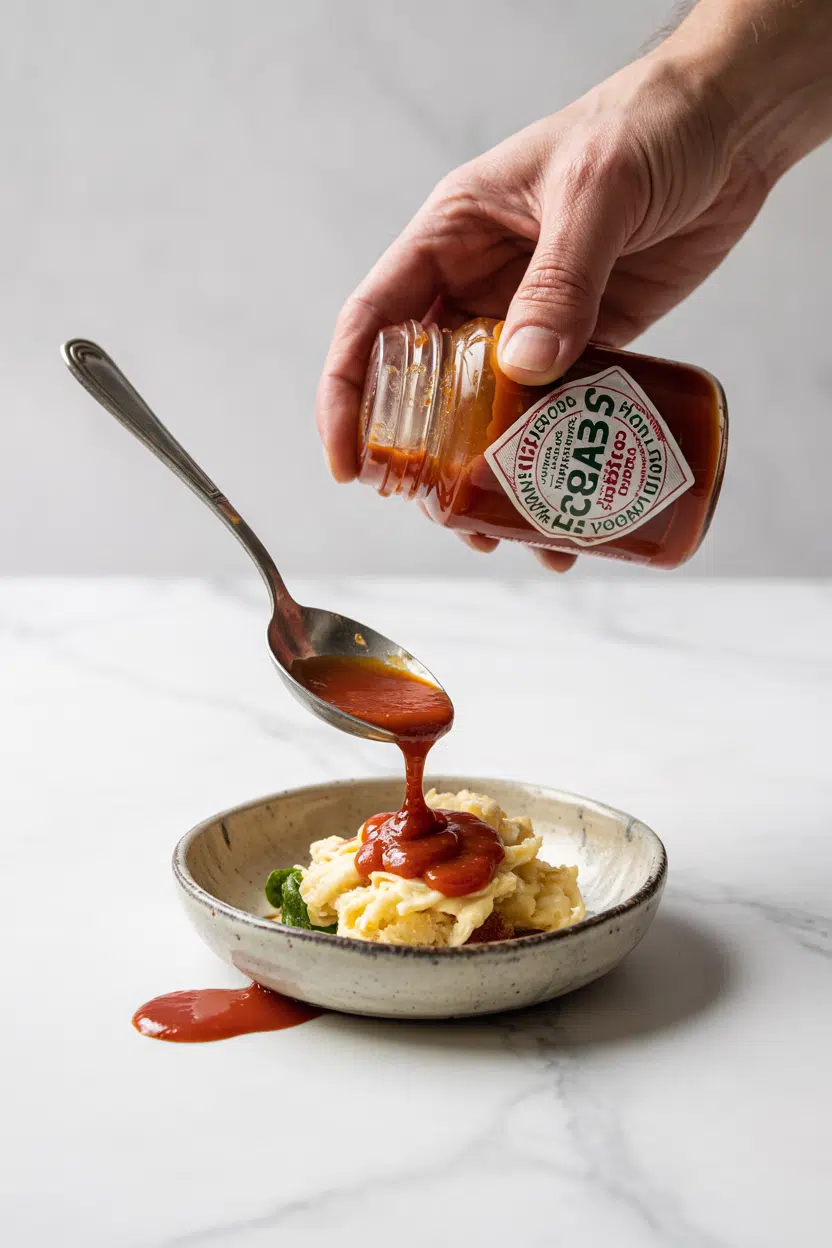
The dominant note is distilled vinegar - present immediately and upfront. Behind it comes the chili heat, which registers between 2,500 and 5,000 Scoville Heat Units (moderate by hot sauce standards) and fades quickly rather than lingering.
The fermentation from barrel aging adds a subtle depth that straight vinegar-and-pepper blends lack.
Compared to sriracha, Tabasco is far thinner, sharper, and less sweet. Against thicker Louisiana-style sauces like Crystal or Frank's RedHot, it's more pungent and more vinegar-forward.
A bottle that's been open for two years will taste noticeably flatter - the pepper brightness dulls before the heat does.
How to Use Tabasco Sauce
Tabasco's low viscosity makes it a drizzle-and-stir sauce rather than a spread. A few drops go a long way, and the delivery mechanism - that narrow-neck bottle - is intentional.
Most applications use two to five drops, not a heavy pour.
| Method | Best For | Tip |
|---|---|---|
| 🥗 Raw / Finishing | Eggs, raw oysters, shrimp, grilled fish | Add at the table to keep the vinegar sharp and heat intact |
| 🍹 Stirred In | Bloody Marys, vinaigrettes, aioli, marinades | Balance acidity with other ingredients before tasting - it compounds fast |
| 🍲 Late-Stage Cooking | Gumbo, jambalaya, bean stews, braises | Add in the final five minutes to preserve pepper flavor |
| 🧈 Blended | Compound butters, dips, sandwich spreads | Mix into softened butter or mayo - fat carries heat without diluting it |
In Louisiana Creole and Cajun cooking, Tabasco appears at the table as often as in the pot - gumbo and red beans get a personal dose rather than a cook's measure.
Southern seafood preparations lean on it as a finish over oysters or clams, where the vinegar cuts through brine.
Mexican-American fusion applications use it in citrus-forward dishes like ceviche-style preparations, where its acidity reinforces the lime cure.
Pairing choices matter more than people expect. Tabasco works cleanly with eggs, raw shellfish, tomato-based dishes, aged cheddar, pickled foods, and butter-based spreads. It clashes in delicate dairy desserts and milk-based custards - the acid destabilizes the protein and the heat has nowhere to balance against sweetness.
If you find yourself without a bottle, guides on swapping out tabasco sauce or finding replacements for hot sauce more broadly can point you to workable alternatives.
How to Buy and Store Tabasco Sauce
Buy in clear glass bottles - the translucent packaging lets you check the color before purchasing. A fresh bottle shows bright, translucent red.
Pass on anything with a dark brown tint or visible cloudiness, both signs of age or improper storage.
- ✅ Sealed bottle - check for an unbroken seal and the McIlhenny diamond label on paper (not a sticker)
- 🔴 Color check - bright red means fresh pepper mash; brownish red means flavor has faded
- 👃 First-open sniff - should smell sharp and peppery; a dull or purely sour smell indicates age
- 📦 Before opening - store upright in a cool, dark pantry; no refrigeration needed
- ❄️ After opening - pantry is fine with the cap tight; refrigerator extends color and brightness
An opened bottle stays at peak flavor for around two to three years - storing tabasco sauce correctly extends that window noticeably.
If your Bloody Mary mix calls for celery salt and you're out, knowing replacements for celery salt rounds out the prep without a store run.
Start Here If You're New to Tabasco
Two drops on eggs is the right entry point. It shows you the vinegar-heat balance without overwhelming the dish.
From there, a splash in a Bloody Mary and a drizzle over raw oysters will cover the full range of what this sauce does well.
Avoid using it as a cooking base - the vinegar burns off too quickly under heat, leaving thin heat with none of the flavor complexity. Keep it finishing-side, and it punches well above its simple three-ingredient formula.
Frequently Asked Questions
Yes - the Tabasco pepper mash is aged in white oak barrels for up to three years before vinegar is added. That barrel time creates the subtle fermented tang that distinguishes it from unaged hot sauces. The fermentation happens in the mash stage, not after bottling.
The original red sauce rates between 2,500 and 5,000 Scoville Heat Units - moderate heat, similar to a jalapeño. The habanero variant jumps to around 7,000 SHU, while the green jalapeño sauce sits closer to 600 SHU.
It won't spoil in a way that makes it unsafe - the vinegar and salt content prevent bacterial growth. However, an opened bottle past two to three years will taste noticeably flat and dull, with faded pepper character.
Tabasco uses only three ingredients and relies on barrel fermentation, giving it a cleaner, sharper profile than sauces with added garlic, sugar, or thickeners. Frank's RedHot is milder and less acidic; sriracha is thicker, sweeter, and garlic-forward.
Two to four drops in a Bloody Mary is standard - stir it in with the tomato juice before adding vodka so the heat distributes evenly. Its thin consistency blends without affecting texture, making it better suited to cocktails than thicker chili sauces.



