Most bakers assume a bigger scoop of starter means faster, more active dough. That's only half the story.
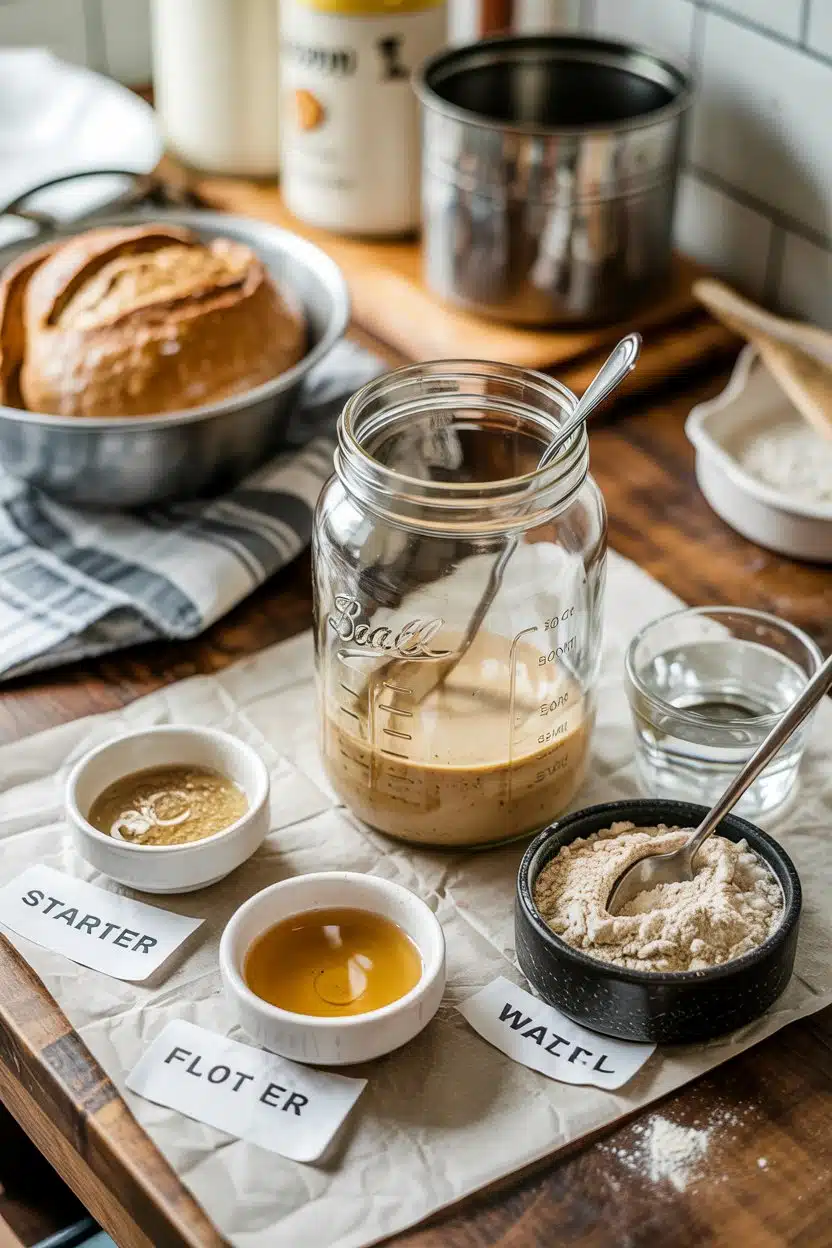
The sourdough starter ratio - the weight relationship between starter, flour, and water - actually determines how acidic, how gassy, and how fast your fermentation runs, and getting it wrong means unpredictable bread every time.
The sourdough starter ratio controls microbial balance, rise speed, and sour flavor. A 1:5:5 ratio gives milder, slower fermentation; a higher-starter ratio accelerates it and sharpens acidity. Mastering this one number changes how predictable your bread becomes.
What Is Sourdough Starter Ratio?
Sourdough has been leavened by wild fermentation since long before commercial yeast existed, with European artisan traditions - particularly in France, Germany, and Scandinavia - developing distinct approaches to feeding and maintaining a starter culture.
Remember it later
Planning to try this recipe soon? Save it for a quick find later!
The starter ratio (also called the feed ratio, refreshment ratio, or levain ratio) describes a three-part weight relationship: seed starter to fresh flour to water.
Written as 1:2:2, it means one part existing starter, two parts flour, two parts water.
That ratio does two things simultaneously. It sets the hydration of the culture and it controls how much fresh food the microbes receive relative to the live organisms already present.
Flavor
Texture
Aroma
Moderate
What Does Sourdough Starter Ratio Taste Like?
A freshly fed starter at a low ratio - say 1:1:1 - smells yeasty and mildly tangy, close to the brightness of cultured yogurt. That lactic quality is clean and approachable.
Most bakers find it pleasant even straight off the spoon.
Push to a high starter proportion and let it ferment longer, and the profile sharpens considerably. Acetic acid builds alongside lactic acid, producing something closer to a mild vinegar bite.
The ratio directly governs which acids dominate: more starter relative to flour accelerates fermentation, favoring that sharper acetic character; a smaller inoculation slows it, keeping lactic notes in front.
Temperature compounds this. A warm kitchen at 80°F pushes the same 1:2:2 ratio to peak in three to four hours with clean tang.
That same ratio in a cooler space holds a gentler flavor for six to eight hours.
How to Use Sourdough Starter Ratio
The ratio you choose is a decision about timing and flavor, not just volume.
A 1:2:2 levain build suits same-day baking - it peaks in four to six hours at room temperature and produces a balanced, moderately sour boule.
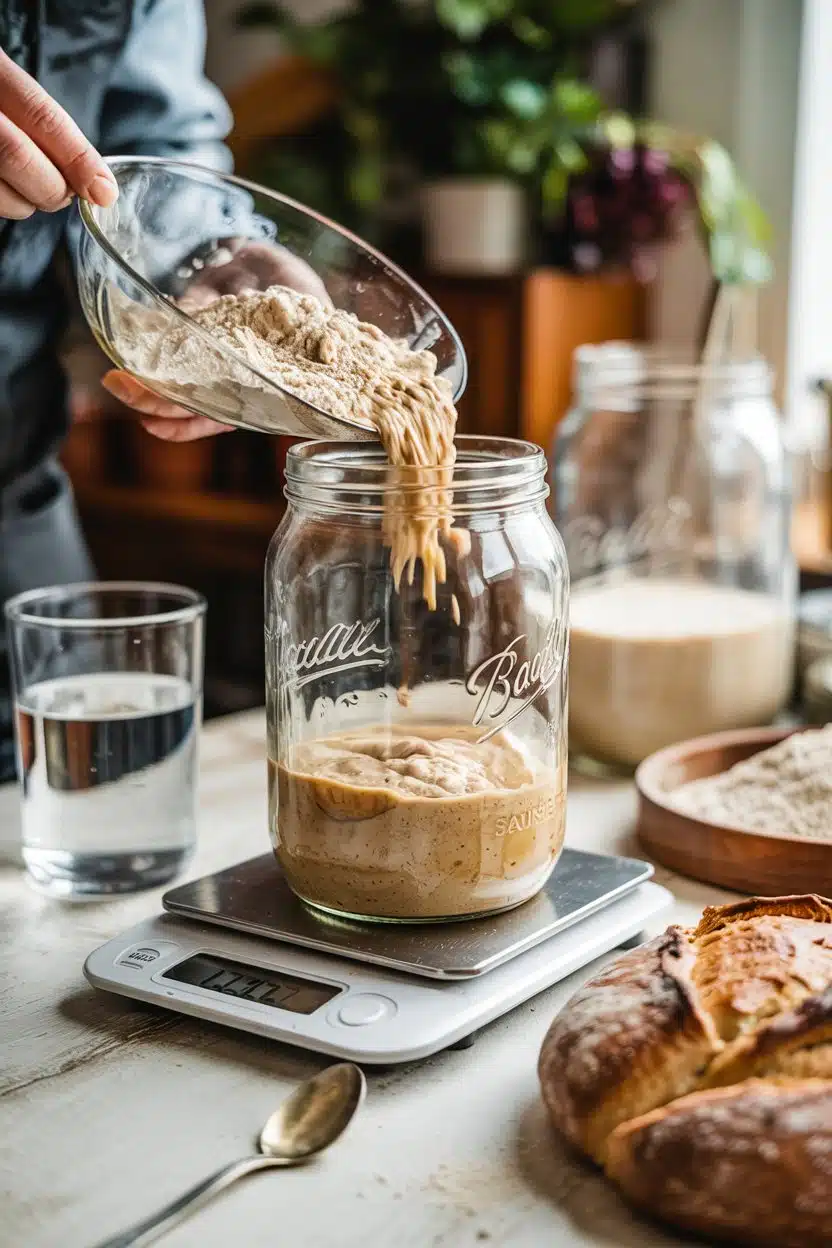
An overnight build at 1:5:5 stretches fermentation to ten to twelve hours and keeps acidity mild, which works well for enriched doughs or sandwich loaves where strong sour would compete with butter and eggs.
| Method | Best For | Tip |
|---|---|---|
| 🌡️ 1:2:2 Levain Build | Same-day country loaves, balanced sourness | Peak at room temp in 4-6 hours; float test confirms readiness |
| 🌙 1:5:5 Overnight Build | Mild flavor, longer schedule, enriched doughs | Build before bed; use at 8-12 hours at 68°F |
| 🍞 1:1:0.5 Stiff Levain | Rye breads, complex aroma, less acidity in crumb | Lower hydration slows bacteria; mix into dough while still pliable |
| ❄️ Retarded Cold Proof | Scheduling flexibility, deeper flavor development | Use a lower starter ratio to prevent over-fermentation overnight in fridge |
🇸🇪 Scandinavian Rye
🏠 Home Baking Worldwide
whole rye flour
olive oil
sea salt
aged cheese
butter
How to Buy and Store Sourdough Starter Ratio
The ratio itself isn't something you buy - what you purchase is an active starter that you then feed at a chosen ratio. Look for starters labeled "active" with recent feeding logs, or dry starters from reputable sources that include clear rehydration instructions.
Avoid anything with no feeding history or visible pink/orange streaks, which signal contamination.
Storage depends on how often you bake. Baking daily means keeping a small culture at room temperature and feeding it every 24 hours.
For less frequent baking, a sealed jar in the refrigerator works well - understanding how long sourdough starter keeps under different conditions helps you avoid wasting a culture you've spent weeks building.
Start Here Based on Your Baking Goal
If you bake once or twice a week, a 1:5:5 ratio fed the night before is the lowest-effort path to active, mild levain.
Baking same-day?
Use 1:2:2 and watch the clock.
For rye or high-complexity loaves where aroma matters more than open crumb, a stiff 1:1:0.5 build earns its extra preparation time.
Match the ratio to the schedule - not the other way around.
Frequently Asked Questions
It means one part existing starter by weight, two parts fresh flour, and two parts water. So 20g starter, 40g flour, 40g water - the numbers scale proportionally, not by volume. This ratio produces a 100% hydration levain that typically peaks in four to six hours at around 75°F.
Most formulas use 15-20% preferment relative to total flour weight, though enriched doughs sometimes drop to 10% to slow fermentation. Going above 25% risks over-proofing before flavor has time to develop. Baker's percentage makes this calculation straightforward once you know your total flour weight.
Not automatically - it speeds up fermentation, which can increase sourness if the dough runs warm or ferments too long. However, a high ratio used with a short fermentation at cool temperatures can produce a surprisingly mild loaf. Temperature and total fermentation time interact with ratio to determine final acidity.
At a 1:2:2 ratio and 75°F, most starters hit peak activity in four to six hours - the point where they've doubled and domed slightly on top. A leaner 1:5:5 ratio at the same temperature takes eight to twelve hours to reach the same peak. Use the starter just before or at peak for maximum lift in your dough.
Yes. If a recipe calls for 20% preferment and your levain formula is 1:2:2, the seed starter represents one-fifth of that levain weight. Divide the required levain weight by five to find how much seed you need, then multiply by two each for flour and water. This keeps your levain's internal ratio consistent regardless of batch size.