
Most people treat sesame seeds like a garnish - scattered on a bun and forgotten.

That undersells what these small, oil-rich seeds actually do: they carry a concentrated nuttiness that shifts character completely depending on whether you toast them, grind them, or press them.
If you've ever wondered why your how long bagel keeps research led you to check the seeds on top rather than the bread itself, that instinct is correct - sesame seed quality matters.
Sesame seeds are small, oil-dense seeds with a nutty, mildly bitter flavor raw and a richer, sweeter nuttiness when toasted. Ground into tahini or pressed into sesame oil, they're central to Middle Eastern and East Asian cooking alike.
What Is Sesame Seed?
Sesame seeds come from Sesamum indicum, a flowering plant believed to originate in West Africa or Ethiopia, with cultivation spreading through West Asia and across the Indian subcontinent thousands of years ago.
Remember it later
Planning to try this recipe soon? Save it for a quick find later!
They are classified as an oilseed - seeds that store a significant proportion of fat - and rank among the oldest cultivated oil crops on record.
In Hindi, they're called til; in Japanese, goma. You'll find them sold under both names at specialty grocers.
The two main commercial types are hulled (white/ivory) and unhulled, with black sesame seeds representing a distinct variety rather than just an unprocessed version of white ones.
Hulled seeds have the outer husk removed, giving them a milder flavor and lighter color.
Unhulled seeds retain the bran layer, which adds more bitterness and a slightly coarser texture. Black sesame seeds have a more pronounced, earthy bitterness and are used heavily in East Asian desserts and savory dishes where that depth is wanted.
What Does Sesame Seed Taste Like?
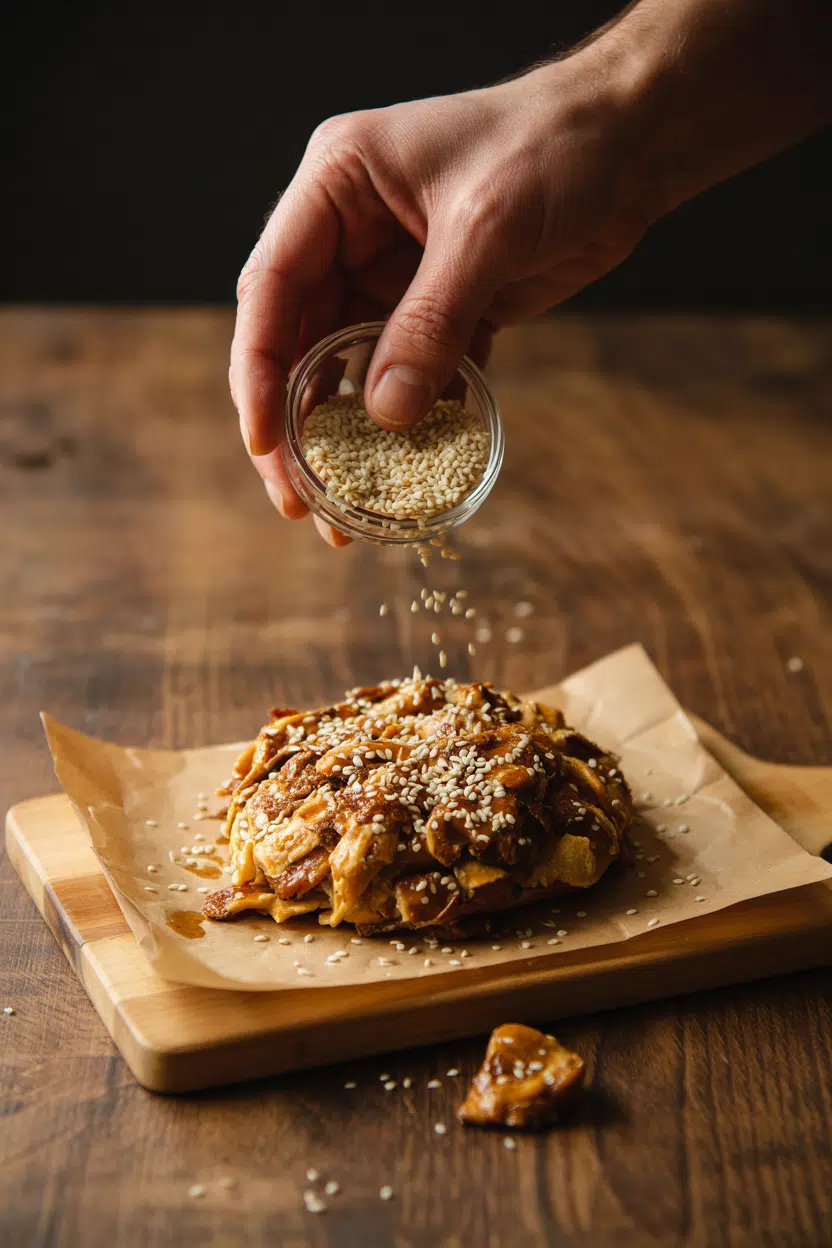
Raw hulled sesame seeds taste mildly nutty with a noticeable bitter edge - similar to toasted sunflower seeds or light pine nuts, but earthier.
That bitterness comes partly from compounds in the seed's natural oils, and it softens significantly once heat is applied.
Toasting transforms the seeds. Dry heat blooms the oils and produces a browned-butter, caramel-nutty aroma that raw seeds simply don't have. A roasted seed also picks up a faint savory, almost umami quality - especially noticeable when sesame is used in soy-forward dishes. Ground into tahini, the flavor becomes rich and slightly bitter again, with a creamy, oily body.
How to Use Sesame Seed
Sesame seeds fit into both sweet and savory contexts without much adjustment, which is why they appear across Middle Eastern, East Asian, and Mediterranean cooking. The key variable is always whether you start raw or toasted.
| Method | Best For | Tip |
|---|---|---|
| 🥗 Raw | Breads, buns, bagels, coating dough before baking | Raw seeds toast during baking - no pre-toasting needed |
| 🔥 Toasted | Salads, grain bowls, gomashio, garnishing noodles | Dry-toast in a skillet over medium heat; pull when golden and fragrant |
| 🥣 Ground | Tahini for hummus, dressings, sauces, halvah | Blend with neutral oil until smooth; over-processing can turn bitter |
| 🍳 Crust | Sesame-crusted tuna, chicken, tofu before searing | Press seeds firmly onto the protein so they adhere before pan contact |
Sesame pairs cleanly with soy sauce, mirin, and ginger in East Asian preparations - think Japanese goma-ae (spinach dressed with ground sesame) or Korean sesame-dressed cucumber salads. In Middle Eastern cooking, tahini carries the seeds into hummus, sauces, and baked sweets like halvah.
For brightness, a hit of lemon or yuzu cuts through sesame's natural richness.
If sesame doesn't work for a dish, sesame seed stand-ins like toasted sunflower seeds or hemp seeds can fill a similar textural role without the same allergen concern.
How to Buy and Store Sesame Seed
Uniform color and a dry surface are the two signs of a quality bag. Hulled seeds should be white to ivory; black sesame should be consistently deep, not patchy. Any oily sheen on the seeds or packaging interior signals that oxidation has already started.
Check the label for "raw" vs "roasted" before buying, since the two behave differently in recipes. For storage:
- 🫙 Pantry (raw hulled) - airtight container, cool and dark; lasts several months
- ❄️ Refrigerator (raw or roasted) - extends shelf life to 6-12 months for raw, 3-6 months for roasted
- 🧊 Freezer - works well for bulk buying; seeds thaw quickly and retain flavor
- 📋 Tahini - follow label guidance; most need refrigeration after opening
Watch for sesame seed spoilage signs like a sharp, paint-like smell or a bitter taste that lingers - both mean the oils have turned.
Tahini-based dips like hummus have their own timeline; how long hummus keeps depends on whether it's store-bought or homemade.
Where to Start With Sesame Seed
New to cooking with sesame? Toast first. A dry skillet over medium heat for two to three minutes unlocks the flavor that makes these seeds worth using. From there, the path splits depending on what you're after.
- 🌰 For crunch and garnish - toasted seeds on grain bowls, noodles, or roasted vegetables
- 🫙 For richness and paste - grind hulled toasted seeds with oil to make your own tahini
- 🍗 For a crust - press raw seeds onto fish or chicken; they toast during searing
- 🍬 For sweets - black sesame adds bitterness to ice cream and mochi; white sesame suits brittle and halvah
If you're substituting sesame oil in a stir-fry and need a swapping strategy, swapping out peanut oil covers the broader category of high-heat nut and seed oils worth considering.
Frequently Asked Questions
Hulled seeds have the outer bran layer removed, giving a milder flavor and ivory color. Unhulled seeds keep the husk, which adds bitterness, more calcium, and a slightly coarser bite. Most supermarket sesame seeds are hulled.
Yes, within normal portions. They're high in healthy fats, plant protein, iron, and calcium - notably more calcium per gram in unhulled seeds. They're also calorie-dense, so a tablespoon goes further than you'd expect.
Toasted sesame oil does - it carries the same roasted, nutty character in concentrated liquid form. Cold-pressed (untoasted) sesame oil is much milder and closer to a neutral cooking oil with only faint nuttiness.
Black sesame seeds appear in East Asian sweets like mochi, ice cream, and tang yuan, where their stronger, more bitter flavor is a feature. They also work in savory dishes and as a visual contrast garnish on pale foods.
Use a dry skillet over medium heat with no oil, stirring constantly. Pull them off the heat the moment they turn golden and smell nutty - usually two to three minutes. They continue cooking briefly from residual pan heat.



