Rock salt hits differently before it even dissolves.
You drop a coarse crystal on your tongue and it stays there a moment - crunchy, almost glassy - releasing a slow, broad wave of salt rather than the sharp spike you get from fine table salt.

That lag is the whole point. Coarse crystalline sodium chloride behaves differently from anything finely milled, and once you understand why, you'll stop treating it as a substitute and start reaching for it deliberately.
Rock salt is mined crystalline sodium chloride (halite) with a slow-dissolving crunch, mild mineral undertone, and broad saltiness. Use it for salt-crust baking, curing, brines, and ice cream making. Not a replacement for iodized table salt.
What Is Rock Salt?
Rock salt is halite - a mineral salt mined directly from underground deposits left behind by ancient evaporated seas.
Remember it later
Planning to try this recipe soon? Save it for a quick find later!
Major sources include the Khewra Salt Mine in Pakistan, as well as deposits across Europe and North America.
Unlike sea salt harvested at the surface or table salt that's been refined and ground fine, rock salt arrives in large, irregular chunks or coarse crystals that retain trace minerals from their source.
You'll also see it labeled crystalline salt, common rock salt, or simply halite in geological contexts.
Varieties differ mainly by source and processing level: some are sold unwashed with visible mineral coloring; others are washed and graded for food use, yielding cleaner, more translucent crystals.
Flavor
Texture
Aroma
Moderate
What Does Rock Salt Taste Like?
Think of coarse sea salt - then slow it down. Rock salt delivers the same clean saline backbone, however the mineral inclusions from its underground origin add a mild earthy or faintly metallic edge that you won't find in most refined salts.
It's subtle, not off-putting.
The key difference is timing.
Fine table salt hits fast and sharp because it dissolves almost instantly on contact.
Rock salt crystals resist the tongue, releasing saltiness gradually and spreading across a wider area of your palate.
That broader, slower delivery makes it less aggressive in direct tasting but highly effective at drawing moisture from proteins during curing - which is exactly what you want when making gravlax or pancetta, where does curing salmon kill parasites explained is a question worth understanding before you start.
Heat changes nothing dramatic. The mineral note softens inside a salt crust as steam builds around the food, leaving behind clean seasoning rather than complexity.
How to Use Rock Salt
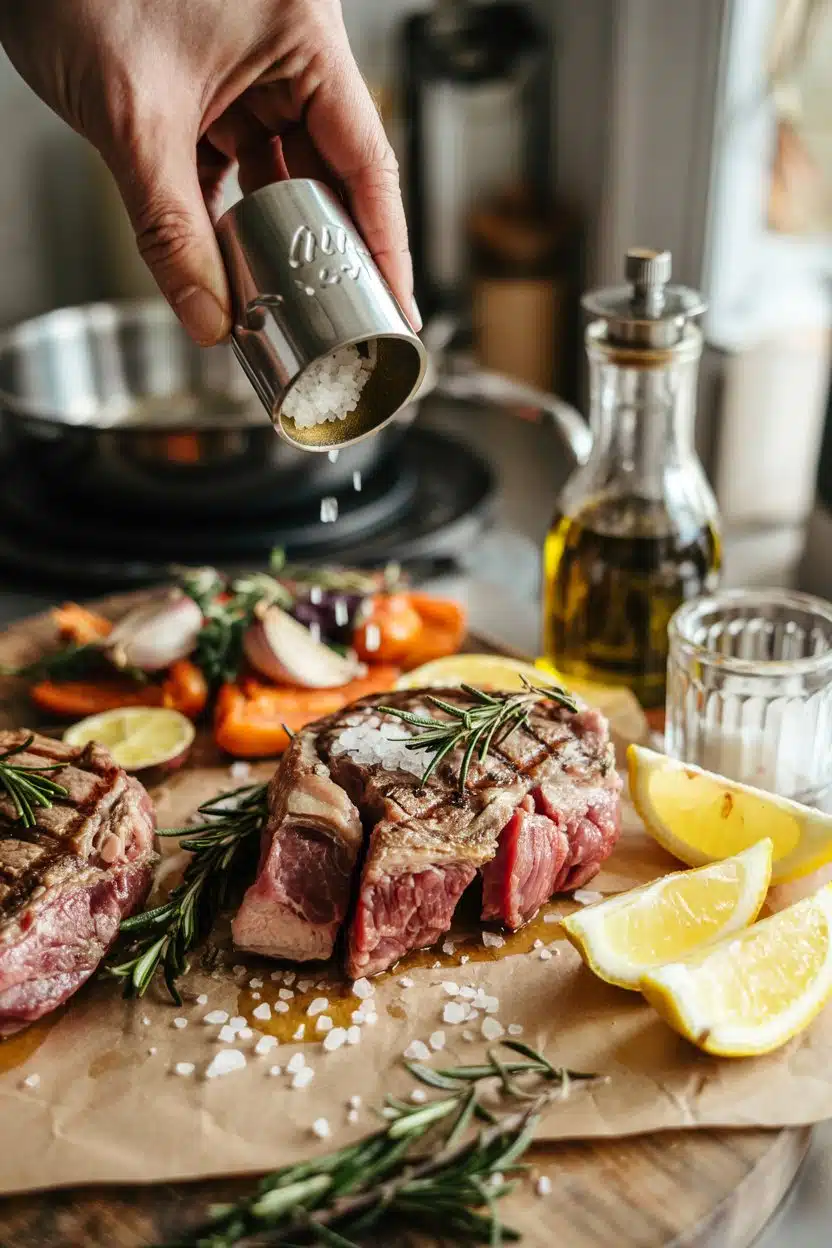
Rock salt earns its place in techniques that exploit its slow dissolution and coarse structure. It's not a finishing salt you scatter at the table - it's a working salt built for process.
| Method | Best For | Tip |
|---|---|---|
| 🧱 Salt-Crust Baking | Whole fish, chicken, root vegetables | Mix with egg white to bind the crust; crack and discard after cooking |
| 🥩 Dry Curing | Gravlax, pancetta, salt beef | Coarse grain draws moisture without over-penetrating thin cuts |
| 🍦 Ice-Salt Freezing | Old-style churned ice cream | Pack around the canister with ice; the salt lowers freezing point to churn properly |
| 🧴 Brining | Poultry, pork, vegetables | Dissolves fully in water - coarseness doesn't matter in brine applications |
| 🍹 Rim Salt | Cocktail rims, finishing texture | Crush lightly first for more even rim adhesion |
🇸🇪 Scandinavian
🇵🇰 South Asian
🥩 Charcuterie
If you need a different coarseness than what's in the bag, crush it in a mortar or pulse briefly in a spice grinder.
For rock salt swaps that work in specific techniques, the substitution depends heavily on which method you're using.
root vegetables
citrus
dried herbs
coarse black pepper
sugar (for brines)
ice (for ice cream churning)
How to Buy and Store Rock Salt
Food-grade labeling matters. Not all rock salt is sold for eating - the same mineral is used for de-icing roads, and those bags may contain anti-caking agents or contaminants unsuitable for food. Look for packaging that explicitly states "edible" or "food grade."
When checking quality, hold a crystal to the light. Good food-grade rock salt is translucent to clear, with minimal dust, no clay staining, and no oily film.
Uniformly sized crystals are easier to work with for curing and salt crusts. For comparing rock salt vs sea salt options, crystal clarity and mineral content are the main points of divergence.
Store it in a tightly sealed, food-safe container - glass or heavy-duty plastic - in a cool, dry pantry. Humidity causes clumping, which doesn't ruin the salt but makes it harder to portion.
For detail on how long rock salt keeps, the short answer is essentially indefinite, provided it stays dry.
Start Here If You're New to Rock Salt
Rock salt isn't an everyday seasoning - it's a technique ingredient.
Reach for it when you need slow dissolution, a structural salt crust, or the ice-lowering effect in a hand-cranked ice cream maker.
Skip it for direct seasoning at the table or in recipes built around the fast dissolve of fine salt.
One bag will last years if stored properly, and the techniques it unlocks - salt-crusted fish, proper curing, old-school ice cream - are worth learning.
Frequently Asked Questions
No, though both are mined halite. Himalayan salt comes specifically from the Khewra Mine in Pakistan and contains iron oxide, which gives it a pink color and a slightly more complex mineral profile. Standard rock salt can come from any halite deposit worldwide and lacks the consistent mineral signature that defines Himalayan salt.
Yes, but only rock salt labeled food-grade or edible. Rock salt sold for de-icing or water softening may contain additives and contaminants not safe for consumption. Always check the label before using any rock salt in food preparation.
Medium-coarse crystals - roughly 1-3mm - work best for most curing applications like gravlax or pancetta. Very fine grains dissolve too quickly and can over-salt the surface before moisture is drawn out. Very large chunks may not make full contact with the protein, leaving uneven curing.
Standard rock salt does not contain iodine unless the package specifically states it has been fortified. If rock salt is your primary cooking salt, you'll need to source iodine from other foods - seafood, dairy, and eggs are reliable sources. Don't assume any mined salt is iodized without checking the label.
Rock salt lowers the freezing point of the ice packed around the ice cream canister, dropping the temperature well below 0°C (32°F). This creates the temperature differential needed for the ice cream mixture inside the canister to freeze and churn properly. Without it, plain ice doesn't get cold enough to set the cream.