
Rice paper does something no other wrapper can quite replicate: it disappears into the roll.

Unlike dough-based wrappers that add their own flavor and chew, a hydrated sheet of bánh tráng contributes almost nothing but structure - and that's exactly the point.
It keeps the focus on herbs, protein, and crunch rather than competing with them.
Much like understanding rice's shelf life reveals how stable dried rice products can be, rice paper rewards patience and proper technique far more than it rewards improvisation.
Rice paper is a dried, translucent wrapper made from rice flour and tapioca starch. Neutral in flavor, it hydrates in seconds to become a pliable sheet for fresh rolls or fries into a glassy, crisp shell. Gluten-free, low in fat, and shelf-stable for up to two years.
What Is Rice Paper?
Rice paper is a dried edible sheet made primarily from rice flour, water, and salt - most commercial versions also include tapioca starch, which increases translucency and adds a slight chew once hydrated.
Remember it later
Planning to try this recipe soon? Save it for a quick find later!
Sold in round discs or squares, the sheets are brittle and semi-opaque straight from the package.
Its Vietnamese name, bánh tráng, roughly translates to "cake spread," a reference to the traditional method of spreading rice slurry over a mesh frame and sun-drying it.
You'll also see it labeled as rice wrappers, rice paper wrappers, or spring roll rice paper depending on the brand and market.
The tapioca ratio matters more than most shoppers realize. Higher tapioca content produces a chewier, more translucent sheet that holds fillings longer without tearing.
Lower tapioca yields a more delicate, starchier wrapper - better for lighter applications or quick frying.
- 🌏 Origin: Vietnam; also used widely across Thai, Cambodian, and Filipino cooking
- 📐 Forms: Round discs (22 cm most common), square sheets, small cocktail-size rounds
- 🏷️ Also called: Bánh tráng, rice wrappers, spring roll rice paper
What Does Rice Paper Taste Like?
On its own, a hydrated rice paper sheet tastes like very little. The flavor is mild, starchy, and faintly sweet - comparable to plain rice noodles or an unseasoned crepe made from rice flour.
There's no yeast, no fermentation, no oil. The wrapper is a neutral canvas.
Texture is where rice paper communicates most. Hydrated correctly, it's silky and slightly chewy - tender without being gummy, pliable without tearing.
Under-soaked, it stays rubbery and resists folding. Over-soaked, it turns sticky and collapses under filling weight.
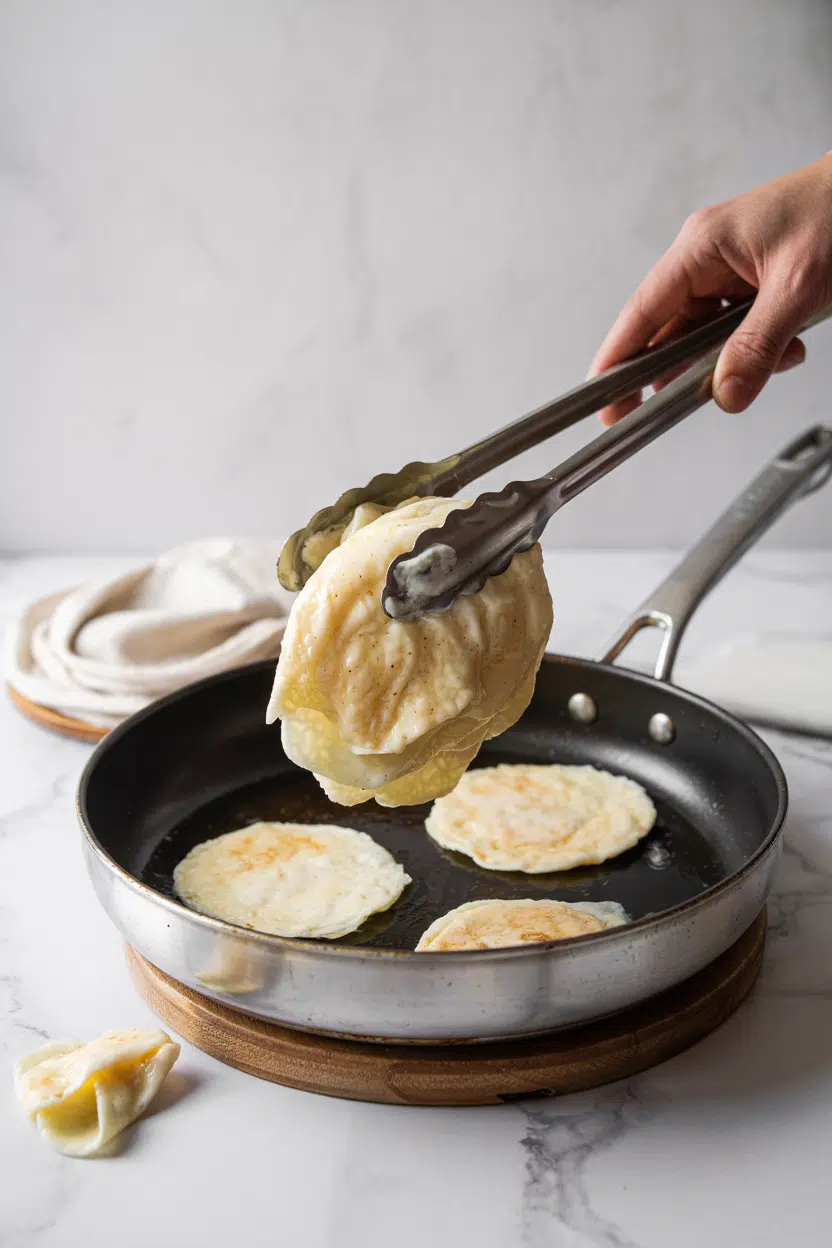
Heat changes everything. Fried rice paper turns glassy and shatters on the bite - close to a thin rice cracker but lighter and more airy.
That toasted rice aroma that was absent from the raw sheet becomes genuinely appetizing when the wrapper hits hot oil.
How to Use Rice Paper
Rice paper's job shifts completely depending on whether it's hydrated or fried. Understanding both modes is the difference between a wrapper that holds and one that tears or dissolves.
For readers curious about cooking rice paper perfectly, the gap between fresh and fried applications is wider than it looks.
Fresh rolling is the most common use. In gỏi cuốn - Vietnamese fresh spring rolls - a hydrated sheet wraps rice vermicelli, shrimp or pork, fresh herbs, and julienned vegetables into a tight, translucent parcel. Understanding the role vermicelli plays as a bulking layer helps explain why the noodles sit inside rather than on the edge, where they'd cause tearing. Choosing sides for spring rolls matters too - nuoc cham and hoisin-peanut sauce both offset the wrapper's neutrality in different ways.
Fried applications run from deep-fried spring rolls (crispier and lighter than wonton-based versions) to pan-fried snack chips brushed with oil and seasoned after crisping. The distinction between rice paper and wheat-based wrappers is worth knowing - what makes wonton wrapper distinct from rice paper comes down to gluten content and how the two wrappers brown under heat.
| Method | Best For | Tip |
|---|---|---|
| 🥗 Fresh Roll | Gỏi cuốn, herb-forward cold rolls, grilled shrimp wraps | Roll on a damp surface; seal edge-side down to hold shape |
| 🍳 Deep-Fried | Crisp spring rolls, glassy fried shells | Double-wrap for sturdier crunch; fry at 175°C / 350°F |
| 🥘 Pan-Fried | Snack chips, low-carb taco shell alternatives | Brush with oil before contact with pan; season immediately after |
| 🔥 Grilled | Smoky char on assembled fresh rolls | Grill briefly over medium heat - 30 seconds per side maximum |
Avoid packing wet, saucy fillings directly against the wrapper. A layer of lettuce or noodles acts as a moisture barrier, keeping the sheet intact long enough to eat.
How to Buy and Store Rice Paper
At the store, check sheets for consistent translucency and clean, unbroken edges. Excessive powder residue at the bottom of the package signals breakage inside - those fragments are still usable in fried applications but won't roll cleanly.
Check the ingredient label: rice flour and tapioca starch should be the first two items.
Storage is straightforward but unforgiving about humidity.
Unopened packages keep in a cool, dry pantry for 6-24 months.
Opened, reseal the bag tightly - an airtight container works better in humid climates.
Watch for rice paper spoilage signs like yellowing, persistent mildew smell, or sheets that feel damp and won't separate cleanly.
No refrigeration needed; cold air can introduce condensation that ruins the sheets faster than a warm pantry would.
- ✅ Buy: Unbroken sheets, clear labeling of rice flour + tapioca, no powder buildup
- 📦 Opened storage: Airtight bag or container, away from humidity and direct light
- 📅 Shelf life: Up to 24 months unopened; opened, months if kept fully dry
Start With a Fresh Roll
Fresh spring rolls are the right entry point for anyone new to rice paper.
The hydration step is quick to learn, the fillings are forgiving, and a goi cuon fresh spring rolls recipe shows exactly how proteins, herbs, and noodles layer inside the wrapper without tearing it.
Once fresh rolling feels comfortable, try double-wrapping and deep-frying. The glassy crunch that results is unlike anything a wheat-based wrapper produces - and it's the clearest demonstration of what rice paper actually does that nothing else can.
Frequently Asked Questions
Rice flour and tapioca starch, plus water and a small amount of salt. The tapioca ratio varies by brand - more tapioca means a chewier, more translucent sheet that holds up longer once filled.
Yes, after hydration. The dried sheet itself isn't harmful, however it's papery and indigestible in that state. A brief soak in warm water is all it takes to make it ready to eat.
Yes. Standard rice paper contains only rice flour, tapioca starch, salt, and water - no wheat. Always check the label on flavored or specialty varieties, as some may be processed on shared equipment.
Months, if kept in an airtight container away from humidity. Moisture is the only real threat - sheets that stay dry remain perfectly usable well past a standard pantry staple window.
Usually over-soaking. A sheet pulled too early may feel stiff, however it softens on the board - tearing typically happens when the wrapper is saturated and can't bear filling pressure. Soak for 8-12 seconds, then roll immediately.



