
Bún bowls in Vietnamese kitchens always start the same way: a nest of softened white strands hit the bottom of the bowl first, before the herbs, the sliced pork, or the fish sauce dressing arrive. That noodle is vermicelli, and its role is rarely decorative.
It provides the neutral, slippery base that carries bold surrounding flavors without competing with them - a job that rice and wheat both handle, just differently.
Vermicelli is a very thin noodle available in wheat, rice, and mung-bean forms. Flavor is mild to neutral depending on type. Used across Vietnamese, Indian, and Southeast Asian cooking, it soaks or boils quickly and pairs best with light sauces and broths.
What Is Vermicelli?
Vermicelli originated in the Mediterranean pasta tradition - its name comes from Italian, meaning "little worms," a reference to its threadlike shape.
Remember it later
Planning to try this recipe soon? Save it for a quick find later!
From there, similar thin-noodle formats developed independently across South and Southeast Asia, giving us several distinct products that share a name but not a grain.
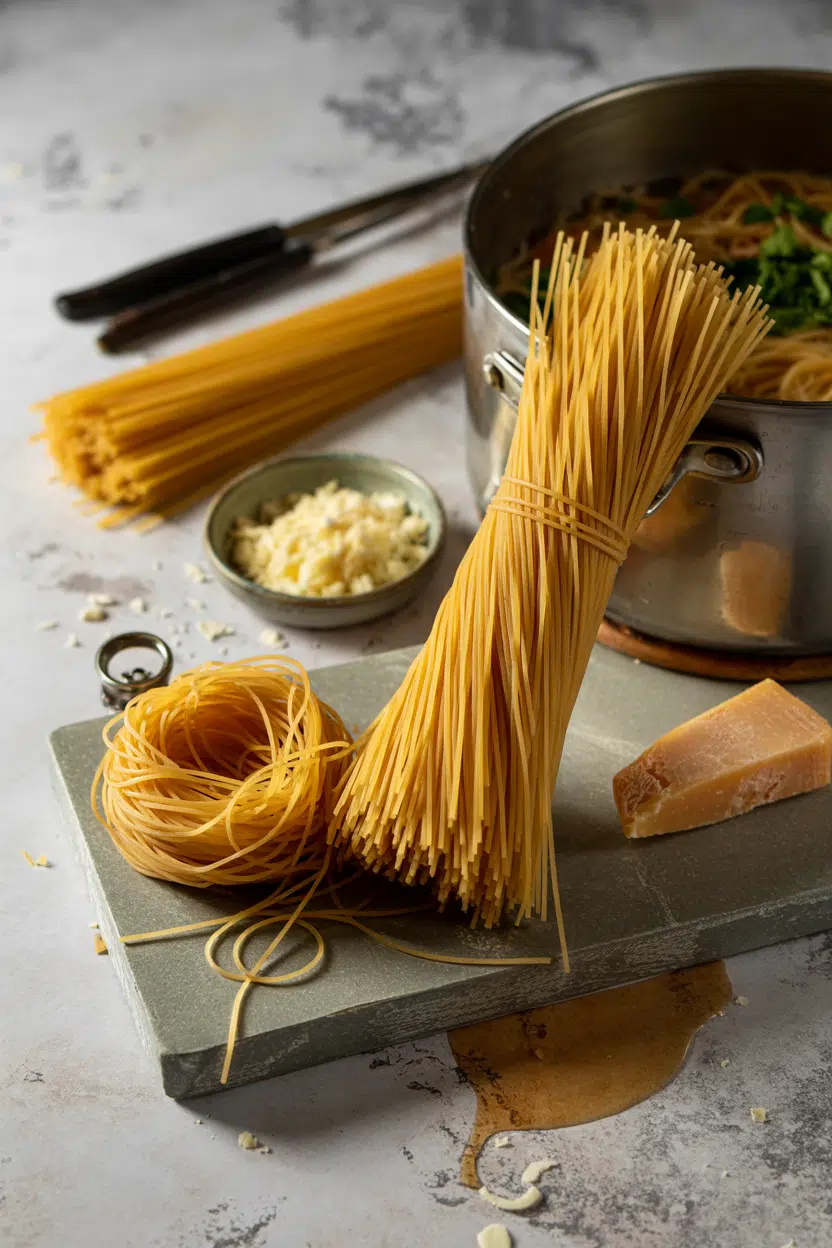
Wheat vermicelli is the closest relative of thin spaghetti, made from durum semolina and sold dry in straight or bundled form. Rice vermicelli - called bee hoon in Singapore and Malaysia - is extruded from rice flour, dries into brittle, glass-like white strands, and turns soft and translucent once hydrated. A third type, made from mung-bean starch, produces what many cooks call glass noodles or miến in Vietnamese; these are often labeled vermicelli despite being a distinct product. On the Indian subcontinent, thin wheat strands are sold as seviyan, typically pre-toasted to a golden color before they reach the pan.
- Wheat vermicelli - pale, durum-based, cooks al dente like pasta
- Rice vermicelli - brittle white strands, goes translucent when soaked
- Glass/mung-bean vermicelli - clear, slippery, often sold in tight coils
- Seviyan - pre-toasted Indian variant, used in sweet and savory dishes
What Does Vermicelli Taste Like?
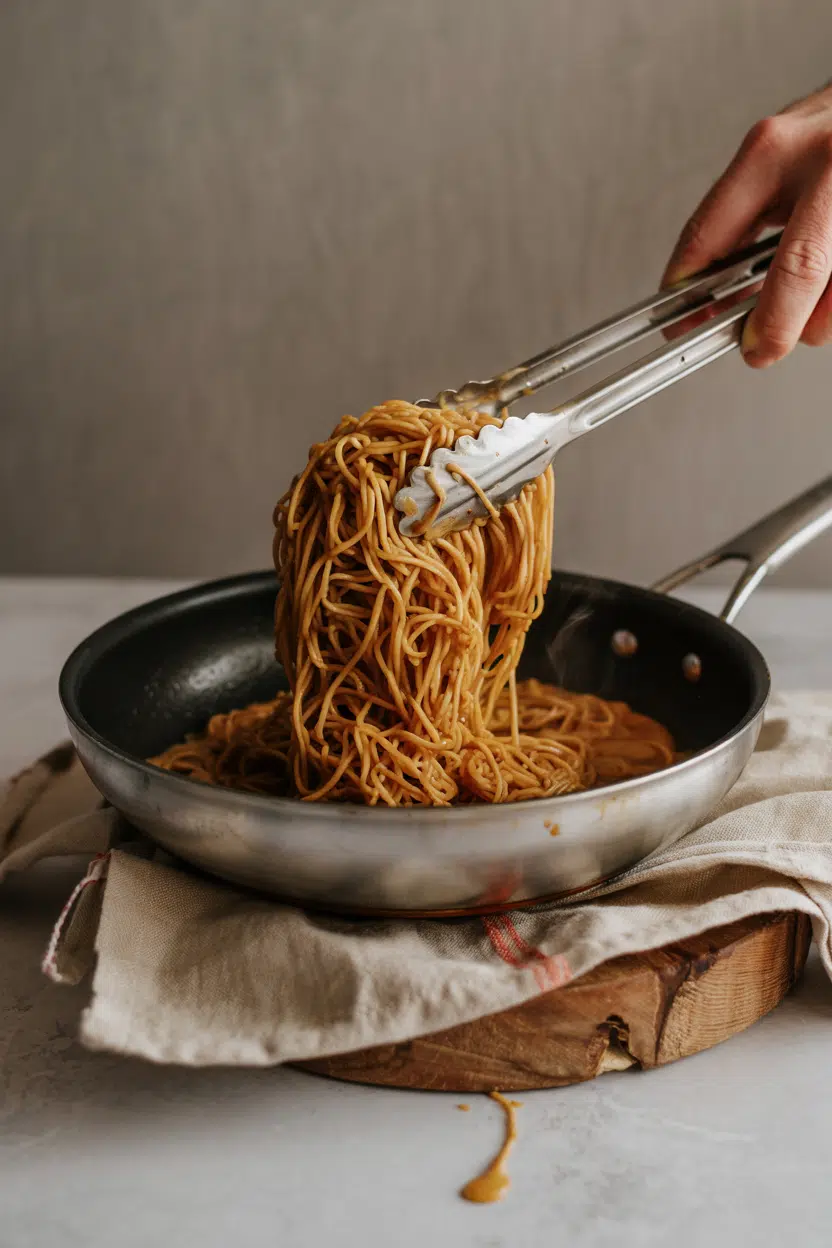
Wheat vermicelli tastes close to a very thin spaghetti - mild, faintly wheaty, with a delicate bite when cooked al dente. The flavor is understated enough that it disappears into whatever sauce or broth surrounds it.
Rice vermicelli reads as nearly neutral, with a subtle background sweetness from the rice flour. It doesn't carry the same wheaty note, which makes it a cleaner canvas for assertive dressings like fish sauce or chili garlic.
Toasted or pan-roasted variants - especially seviyan - develop a noticeably nutty aroma before liquid is added. That roasted quality fades once moisture enters, leaving a warm, slightly caramel background in dishes like kheer.
How to Use Vermicelli
Vermicelli is fast-cooking by design, and its preparation method depends entirely on which type you're working with. Getting this right matters because even 30 extra seconds in boiling water can push rice vermicelli from tender to mushy.
| Method | Best For | Tip |
|---|---|---|
| 🥗 Soak (hot water) | Rice vermicelli in cold salads, spring rolls | Pour boiling water over strands; drain after 3-5 minutes |
| 🍲 Brief boil | Wheat vermicelli in soups, braised dishes | Cook 2-4 minutes; test early - it cooks faster than pasta |
| 🍳 Stir-fry (after soak) | Singapore bee hoon, quick noodle dishes | Shake off excess water before hitting the wok |
| 🍯 Pan-toast dry | Seviyan puddings, pilaf-style dishes | Stir constantly over medium heat until golden, then add liquid |
Vietnamese bún bowls use soaked rice vermicelli as the cold base under grilled proteins, fresh herbs, and a fish sauce dressing. Singapore-style bee hoon calls for quick stir-frying after soaking, with soy sauce, chili, and shrimp or egg. In Indian cooking, seviyan gets dry-toasted in ghee first, then simmered in sweetened milk for a pudding-like dessert. Vermicelli also works well in clear broths - a Vietnamese-style pho variation swaps thick noodles for rice vermicelli when a lighter bowl is the goal.
Avoid pairing vermicelli with heavy, chunky ragùs. The strands are too thin to hold up against dense, slow-cooked sauces - they tangle, clump, and lose structure fast.
When you need a sturdier wheat noodle, check what egg noodle swaps might work instead.
Vermicelli pairs cleanly with: light broths, fish sauce, soy sauce, scallions, cilantro, shrimp, tofu, toasted sesame oil, and chili garlic.
How to Buy and Store Vermicelli
Read the label carefully. "Rice vermicelli" and plain "vermicelli" are not interchangeable at the store - one is rice-based and gluten-free, the other is wheat pasta.
When buying dry rice vermicelli, look for brittle, uniformly white strands with no yellowing or off-smell. Wheat vermicelli should be pale and consistent in thickness - discoloration or a musty odor signals age or moisture damage.
- Unopened - store in a cool, dry pantry in the original sealed packaging
- Opened - transfer to an airtight container, away from heat and moisture
- Cooked - refrigerate and use within 3-5 days; toss with a little oil to prevent clumping
Dry vermicelli keeps for many months when stored properly. For a detailed breakdown by type, see our vermicelli storage life guide.
Where to Start With Vermicelli
New to it? Begin with rice vermicelli - soak it in hot water, drain, and build a cold bowl with whatever herbs and protein you have.
If a recipe calls for a different thin noodle entirely, the vermicelli replacements guide covers the closest swaps by type and texture. Start simple, get the soak or boil time right, and the rest follows.
Frequently Asked Questions
Not exactly. Rice vermicelli is one type of rice noodle - specifically the very thin variety. Other rice noodles like flat pho noodles or wide rice ribbons are distinct products with different textures and cooking times.
Rice vermicelli softens in 3-5 minutes when soaked in just-boiled water - no stovetop needed. Wheat vermicelli boils in 2-4 minutes; start testing at 2 minutes because it overcooks quickly.
Rice and glass (mung-bean) vermicelli are naturally gluten-free. Wheat vermicelli contains gluten. Always check the label, since products from shared facilities may carry cross-contamination warnings.
Dry rice vermicelli is opaque white; glass noodles are semi-transparent or grayish before cooking. After hydration, glass noodles turn completely clear and feel more slippery, while rice vermicelli stays white and slightly firmer.
Yes, and it works well in clear or light broths where thin strands won't compete with the liquid. Add it near the end of cooking - vermicelli softens fast and will turn mushy if left in hot broth too long.



