You measured out what you needed, and the potato ricer is nowhere to be found. Maybe it's buried in a drawer, maybe you never owned one. Either way, those cooked potatoes need to become something smooth.
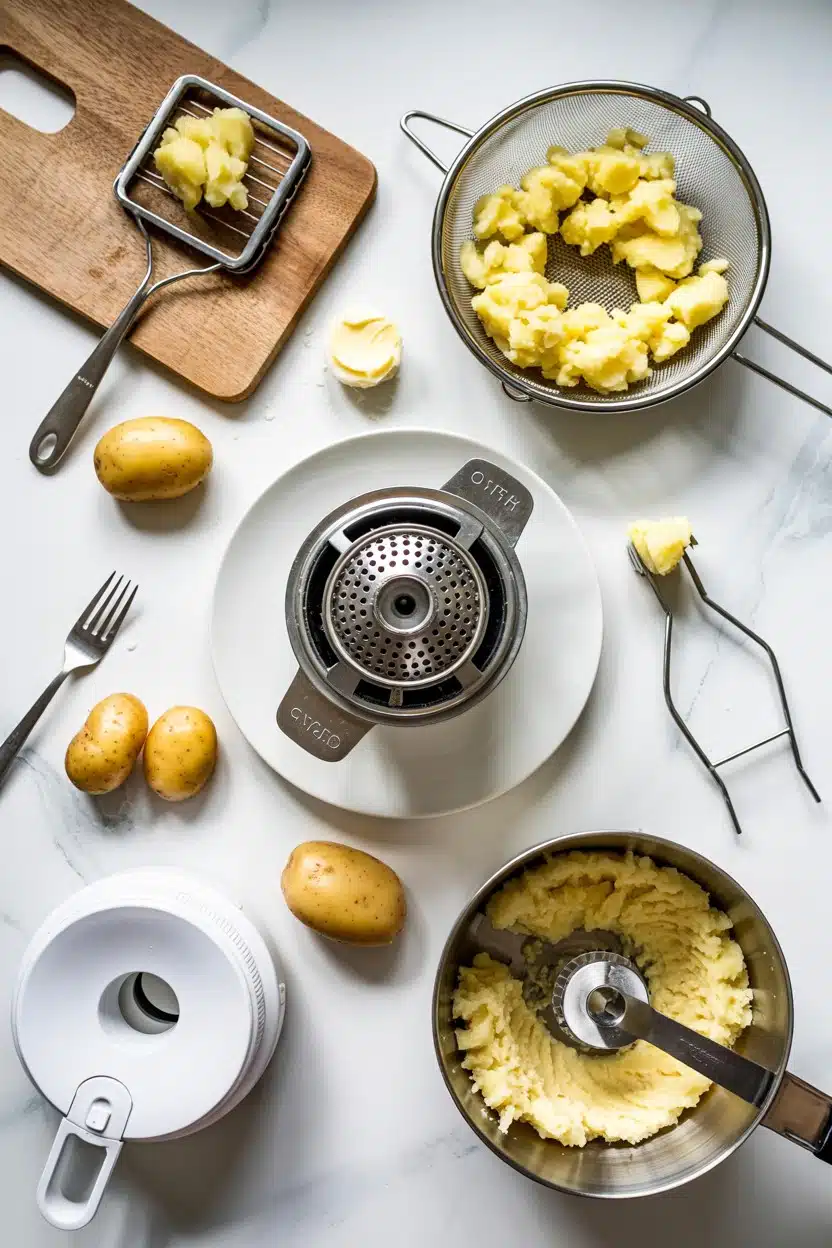

Food mill and mesh sieve offer the best texture for smooth mashed potatoes. Prioritize texture first, then ease of use. For a quick fix, press potatoes gently through a sieve to avoid overworking starch.
The right substitute depends on how fine you need the texture. A ricer creates light, fluffy strands without overworking the starch. Some swaps get close. Others work fine for rustic dishes where a few lumps add character.
| # | Substitute | Best For | Ratio | Key Note |
|---|---|---|---|---|
| 1 | Food Mill | 🍳 Cooking | 1:1 | Slightly coarser texture |
| 2 | Fork Masher | 🍳 Cooking | 1:1 | Chunky, rustic finish |
| 3 | Potato Masher | 🍳 Cooking | 1:1 | May leave small lumps |
| 4 | Mesh Sieve | 🍳 Cooking | 1:1 | Smooth but labor-intensive |
| 5 | Blender | 🍳 Cooking | 1:1 | Risk of gummy texture |
| 6 | Vegetable Mill | 🍳 Cooking | 1:1 | Fine, uniform puree |
| 7 | Colander + Spoon | 🍳 Cooking | 1:1 | Rustic, coarser result |
Here are the best replacements, starting with the closest match.
7 Potato Ricer Substitutes Without Big Changes
These options range from near-identical results to perfectly acceptable rustic alternatives. Pick based on what texture your dish actually needs and what's already in your kitchen.
Remember it later
Planning to try this recipe soon? Save it for a quick find later!
1 - Food Mill
A food mill works almost identically to a ricer. The rotating blade pushes cooked potatoes through small holes, creating that same light, airy texture without activating the starch.
Use the finest disc setting for smoothest results. The texture runs slightly coarser than a ricer, but most people won't notice the difference in finished mashed potatoes.
Quick specs:
- Works best with hot, fully cooked potatoes
- Cleanup takes longer than a ricer
Skip if: you need to process very small amounts-the mill works better with larger batches.
Food Mill
Works for: Large batches, soups, baby food
Skip if: Quick cleanup matters
Potato Ricer
Works for: Small batches, gnocchi, ultra-fluffy mash
Skip if: You need to strain seeds or skins
2 - Fork Masher
Two forks held together create a basic mashing tool. It takes more effort, but works for small amounts when nothing else is available.
The texture comes out chunkier and less uniform. That's fine for smashed potatoes or rustic preparations where you want visible potato pieces.
The essentials:
- Press and twist rather than stir
- Work in small sections for better results
- Expect visible lumps in the final dish
Skip if: you're making gnocchi or anything requiring perfectly smooth potatoes.
3 - Potato Masher
The handheld masher sits in most kitchen drawers already. It won't produce ricer-smooth results, but gets close enough for everyday mashed potatoes.
Keep potatoes hot while mashing-cold potatoes turn gluey faster. Work in batches if needed, and add butter before milk for better absorption.
Key details:
- Use a grid-style masher for finer texture
- Avoid overworking or the starch activates
- Works well for shepherd's pie topping
- Rustic lumps can be a feature, not a flaw
Skip if: the recipe specifically calls for riced potatoes or requires a completely smooth puree.
4 - Mesh Sieve
A fine mesh sieve produces surprisingly smooth results. Press cooked potato pieces through with a spoon or spatula, and you'll get texture close to a ricer.
This method takes time and arm strength. Only practical for small batches-a pound of potatoes might take ten minutes of pressing.
Skip if: you're cooking for more than two people or don't have patience for the process.
5 - Blender
A blender or food processor creates smooth purees fast. The catch: it's easy to overwork the potatoes into a gluey, paste-like consistency that no amount of butter can fix.
Pulse in short bursts, never more than a few seconds at a time. Add liquid (butter, cream, milk) to help the potatoes move without over-processing. Stop before you think it's done.
What to expect:
- Very smooth texture when done right
- Gummy disaster when overdone
- Works better with waxy potato varieties
If you're also short on a standard blender, simple Immersion Blender substitutes list covers handheld options that give you more control.
Skip if: you tend to over-blend things or want fluffy rather than creamy mashed potatoes.
6 - Vegetable Mill
A vegetable mill functions nearly the same as a food mill. The crank mechanism forces cooked vegetables through a perforated disc, producing fine, uniform texture.
Results come out smooth and consistent. The mill handles larger batches efficiently and works for other purees beyond potatoes-squash, carrots, applesauce.
Here's what to know:
- Choose the finest disc for smoothest results
- Hot potatoes process easier than warm ones
- Mill removes skins automatically
- Works for soups and sauces too
Skip if: you only need to rice a single potato-setup and cleanup outweigh the convenience.
| Tool | Texture Result | Best For |
|---|---|---|
| Ricer | Light, fluffy strands | Gnocchi, elegant mash |
| Food/Vegetable Mill | Fine, uniform puree | Large batches, soups |
| Masher | Chunky with some smooth | Everyday mashed potatoes |
7 - Colander + Spoon
Already own a colander? It works as a makeshift ricer. Press hot cooked potatoes through the holes with a large spoon or the bottom of a measuring cup.
The holes are larger than a ricer's, so texture comes out coarser and more rustic. Some potato pieces won't press through evenly. That's fine for casual family dinners.
Quick specs:
- Metal colanders work better than plastic
- Press firmly in circular motions
Missing the grain side of your meal too? Replacements similar to Rice covers starches that pair well with hearty mains.
Skip if: you're serving guests who expect restaurant-smooth mashed potatoes.
Before You Swap Potato Ricer
No substitute replicates a ricer exactly, but most get close enough. For fluffy mashed potatoes, a food mill or vegetable mill comes closest. For rustic dishes, a standard masher works fine.
- Closest match - Food Mill for nearly identical fluffy texture
- Easiest grab - Potato Masher already in most drawers
- Most control - Mesh Sieve for small, precise batches
Frequently Asked Questions
Not recommended. Blenders overwork the starch and create gummy dough. Use a food mill or press through a sieve instead for light gnocchi.
The blades rupture too many starch cells at once, releasing excess starch. Pulse briefly and add butter first to coat the starch and reduce gumminess.
A ricer squeezes potatoes through small holes like a giant garlic press. A food mill uses a rotating blade to push food through a disc. Both create similar textures.
Yes. Hot potatoes mash smoother and absorb butter better. Cold potatoes turn sticky and resist breaking down evenly.
A food mill or vegetable mill handles large quantities most efficiently. A handheld masher works for medium batches but requires more effort.
7 Best Substitutes for Potato Ricer
Ingredients
Equipment
Method
- Choose a substitute based on the texture needed and batch size.
- Prepare the potatoes by cooking them fully and keeping them hot for mashing or milling.
- For Food Mill and Vegetable Mill, use the finest disc setting and process hot potatoes for smooth texture.
- If using Fork Masher or Potato Masher, press and twist or mash in small batches to avoid overworking starch.
- With a Mesh Sieve, press hot cooked potatoes through the mesh with a spoon for smooth results; suitable for small batches.
- If blending, pulse in short bursts and add liquid like butter or milk to prevent gummy texture.
- Using a colander, press hot potatoes through the holes firmly using a sturdy spoon with circular motions for rustic texture.
- Adjust texture and taste if needed by adding butter or milk according to your dish requirements.
- Always keep potatoes hot while processing to avoid gluey or sticky texture.