
Most people treat porcini mushrooms like a fancy button mushroom - slice them, cook them, move on.

That's the mistake. Porcini carry a depth of flavor that closer resembles reduced beef stock than anything else in the produce aisle, and handling them without that knowledge means leaving most of their value on the cutting board.
If you're after a different wild mushroom with a lighter profile, alternatives to chanterelle mushroom are worth a look, but porcini operate in a richer, more concentrated league of their own.
The porcini mushroom is a wild bolete prized for its intense umami, nutty earthiness, and meaty texture. Available fresh, dried, or powdered, it anchors Italian risotto, pasta, and sauces and delivers a flavor punch no cultivated mushroom quite matches.
What Is Porcini Mushroom?
Porcini grow wild in temperate forests across Europe, North America, and Asia, forming mycorrhizal relationships with the roots of conifers and deciduous trees - which is why they can't be commercially farmed at scale. The scientific name is Boletus edulis, though you'll see them sold under several regional labels: cep in France, porcino in Italy, king bolete in North America, and penny bun in Britain.
Remember it later
Planning to try this recipe soon? Save it for a quick find later!
Unlike common button or cremini mushrooms, porcini belong to the bolete family, identifiable by a spongy pore surface on the underside of the cap rather than gills.
The caps range from pale tan to a deep chestnut brown and can grow impressively large - some specimens reach the size of a side plate.
The stem is thick and pale, often with a fine net-like pattern etched into it.
You'll find porcini in three main forms in the market:
- 🍄 Fresh porcini - seasonal, firm, and aromatic; available in late summer through autumn in most regions
- 🟤 Dried porcini - the most accessible form year-round; flavor is concentrated and intense
- 🧂 Porcini powder - ground dried slices; used as a seasoning directly on meats, vegetables, or popcorn
What Does Porcini Mushroom Taste Like?
Fresh porcini taste like a more complex, meatier version of shiitake. The flavor is deep savory umami with a distinct nuttiness and a faint sweetness that suggests roasted hazelnuts.
There's none of the mild blandness you'd expect from a button mushroom - even raw, porcini announce themselves.
Drying concentrates everything: the nutty notes sharpen, the umami intensifies, and the aroma shifts from fresh forest floor to something close to toasted grain. Rehydrated dried porcini deliver a softer, velvety texture - noticeably different from the firm bite of a fresh sautéed slice.
Heat amplifies sweetness and pushes the flavor toward roasted meat territory, which is exactly why porcini stock built from the soaking liquid is so effective in sauces.
How to Use Porcini Mushroom
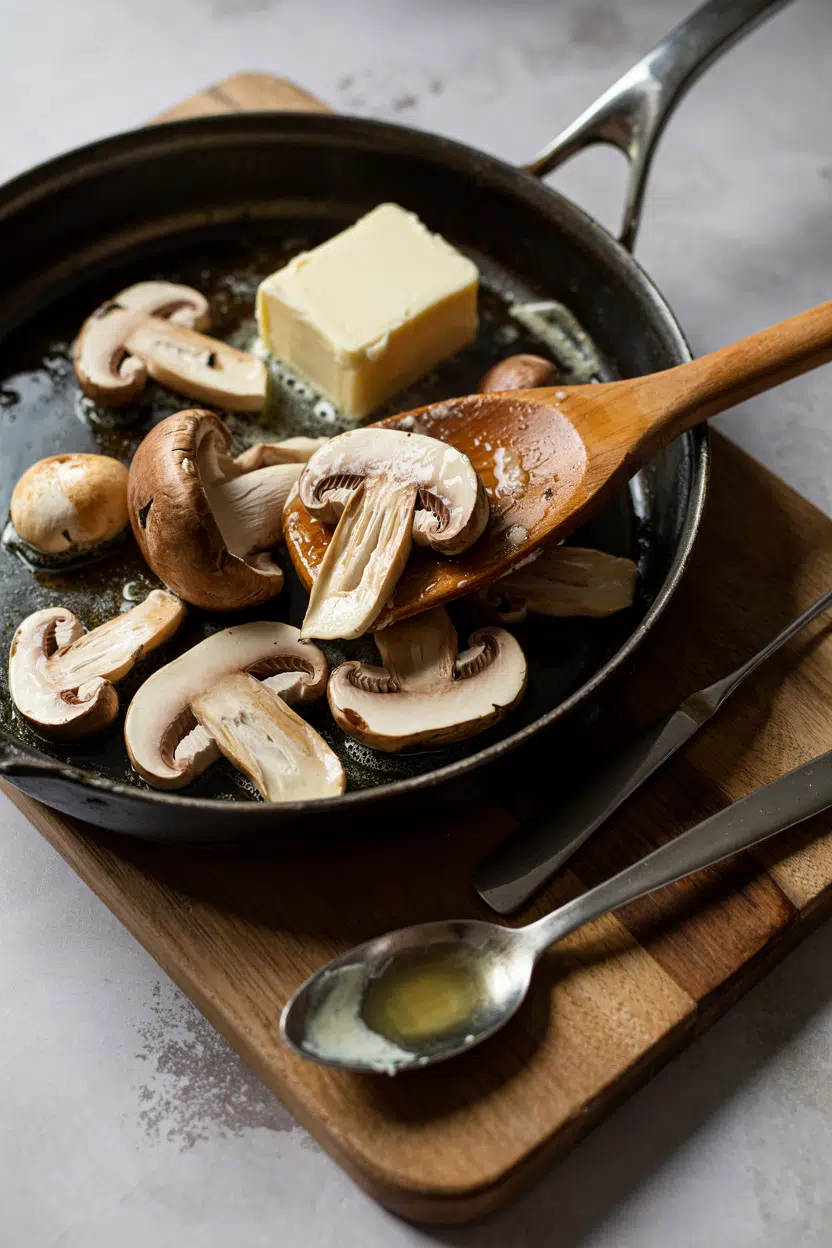
Porcini reward straightforward cooking. Fresh slices need only a dry-sauté in a hot pan to release moisture before finishing in butter or olive oil with garlic and thyme.
That method builds a crust on the cut surface and concentrates flavor rather than steaming it away.
| Method | Best For | Tip |
|---|---|---|
| 🍳 Dry-sauté | Steak toppers, pasta, side dishes | Start in a dry pan; add butter only after moisture evaporates |
| 🫕 Rehydrate | Risotto, ragù, sauces, soups | Soak in warm water 20-30 min; reserve and strain the liquid |
| 🍲 Simmer | Porcini broth, stews, French-style fonds | Low heat preserves volatile aromas lost at a rolling boil |
| 🥄 Powder | Seasoning roasted veg, popcorn, compound butters | Add at the end of cooking to prevent the powder from burning |
| 🥘 Pan-fry | Stuffed pasta fillings, polenta topping | Cut thick to maintain structure; thin slices dissolve into dishes |
In northern Italian cooking, porcini are foundational - risotto alla porcini, ravioli packed with ricotta and porcini, polenta finished with grated Parmesan and a pile of sautéed caps.
French kitchens use the dried and powdered form to deepen sauces and braising liquids.
Central and Eastern European cooks fold rehydrated porcini into stews and dumplings, where the soaking broth doubles as the base liquid.
Strong pairings include Parmesan and aged cheeses, garlic and shallot, thyme, rosemary, red wine, and cream.
Beef, game, and poultry all benefit from porcini alongside them.
When swapping out porcini mushroom is necessary, the replacements tend to be milder, so compensate by adding a splash of the soaking liquid or a pinch of porcini powder to restore depth.
Note that porcini can easily overpower delicate greens and citrus-forward dressings - keep those pairings separate.
How to Buy and Store Porcini Mushroom
Fresh porcini should feel firm and heavy for their size, with dry, unblemished caps ranging from pale tan to dark chestnut. Avoid anything slimy, soft at the stem base, or showing heavy bruising - those signs indicate age.
The pore surface beneath the cap should be pale and fine-grained, not yellowed or wet.
For dried porcini, buy whole or large-broken slices rather than crumbled fragments. Strong nutty aroma at the bag is a reliable quality signal; minimal dust means better handling.
- 🧺 Fresh storage - Paper bag in the refrigerator crisper; paper absorbs moisture and allows airflow, unlike plastic
- 📦 Dried storage - Airtight container in a cool, dark spot away from humidity; a glass jar works well
- ⏱️ Shelf life - Fresh porcini last 3-7 days; dried hold 6-12 months sealed; tips on [keeping porcini mushroom fresh](https://forkliftkitchen.com/porcini-mushroom-shelf-life/) cover edge cases like partial prep and freezing
Risotto made with porcini keeps well when handled correctly, and storing risotto correctly prevents the texture from turning gluey on reheating.
Where to Start With Porcini
New to porcini? Start dried, not fresh. Dried porcini are cheaper, available year-round, and the soaking liquid teaches you immediately what this mushroom contributes to a dish - before you've spent a cent on a seasonal fresh specimen.
Once you understand that soaking liquid, fresh porcini make sense: sauté them hard in a dry pan, add butter last, and pile them onto something that can carry the weight of that flavor.
If the depth of shiitake appeals to you but feels thin by comparison, shiitake mushroom swaps that work can bridge the gap until porcini are in season.
Start with risotto or a simple pasta - both are forgiving formats that let porcini do the heavy lifting.
Frequently Asked Questions
Yes. Cep is the French name for Boletus edulis; porcini is the Italian plural. Both terms refer to the same species - king bolete and penny bun are two more regional names for the same mushroom.
Young, very fresh porcini can be eaten raw and thinly sliced in Italian carpaccio-style preparations. However, cooking significantly improves digestibility and intensifies flavor, so raw use is the exception rather than the rule.
Submerge dried slices in warm (not boiling) water for 20-30 minutes until soft. Always strain the soaking liquid through a fine cloth or coffee filter before using it - grit settles at the bottom of the bowl.
Shiitake works as a structural substitute but delivers less umami depth and none of the nutty sweetness. Adding a pinch of porcini powder alongside shiitake brings the flavor profile much closer to the original.
Peak season runs late summer through autumn - roughly August to November in the Northern Hemisphere, depending on rainfall and altitude. A second, smaller flush sometimes appears in spring in warmer regions of southern Europe.



