When you need a protein-packed breakfast that works for weekday mornings or lazy weekend brunch, a mushroom and Swiss omelet delivers. One skillet, ten minutes, and a meal that feels more intentional than scrambled eggs.

The mushrooms cook first so they release moisture before hitting the eggs. Swiss cheese melts into pockets without turning greasy or overwhelming the earthy flavors.
Perfect for quick weeknight meals when you want something filling that doesn't require planning ahead.
A mushroom and Swiss omelet combines whisked eggs with sautéed mushrooms and melted cheese in a folded package. Cook mushrooms fully first to avoid soggy eggs, then use low heat so the omelet stays tender instead of rubbery.
Why This Recipe Works
Sautéing mushrooms separately before adding eggs prevents the soggy texture that ruins most omelets. For another quick breakfast approach, try a simple jars variation that skips the stovetop entirely.
Remember it later
Planning to try this recipe soon? Save it for a quick find later!
Prep Time
5 min
Cook Time
5-7 min
Total Time
10-12 min
Servings
1-2 servings
Difficulty
Easy
Category
Main Dish
Quick Tip
Cook low heat, do not stir after pouring eggs
Best For
Weeknight | Brunch | Meal prep
Five reasons it works:
- Low heat keeps eggs tender - cooking at medium-low for 3-5 minutes prevents the rubbery texture that happens when the pan runs too hot
- Whisking adds air - 30 seconds of vigorous whisking creates a fluffier omelet instead of a flat, dense layer
- Mushrooms release moisture early - sautéing them 5-7 minutes until golden means the liquid evaporates before it hits the eggs
- Swiss melts without separating - the mild, nutty cheese stays creamy instead of turning greasy like cheddar sometimes does
- Folding traps heat - covering the pan for 30 seconds after folding finishes melting the cheese without overcooking the eggs
What You'll Need
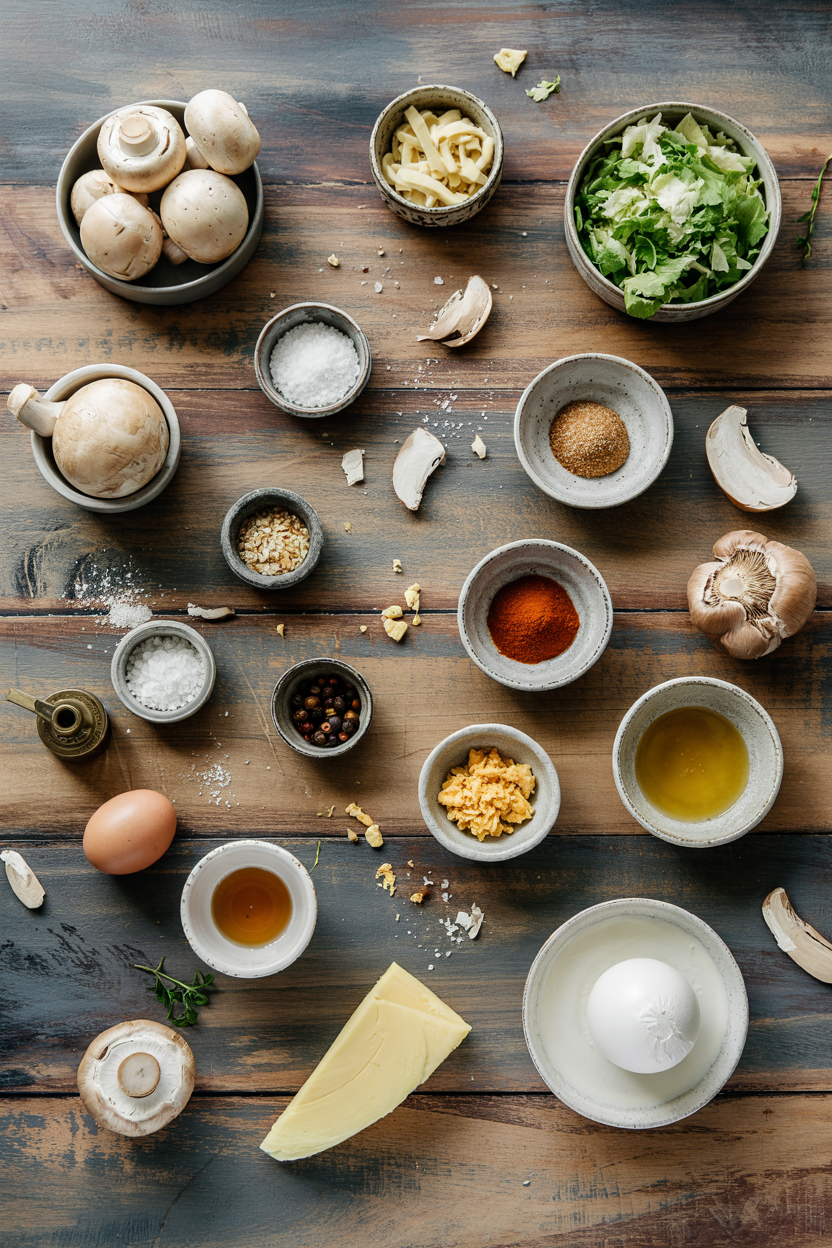
Fresh eggs make the biggest difference in texture and flavor since older eggs turn runnier and weaker. For another weeknight-friendly option, check out this quick potatoes dish that pairs well with any breakfast main.
- 2-3 large eggs
- 1 tablespoon milk or cream (optional)
- 4 oz mushrooms, sliced
- 2 oz Swiss cheese, shredded
- 1 tablespoon butter
- Salt
- Black pepper
- Fresh herbs (optional)
- Onion or shallots
- Olive oil
Ingredient Details
- Eggs
Use fresh eggs within 2 weeks of purchase for best structure - older eggs create runnier omelets that don't hold their shape when folded - Swiss cheese
Shred from a block instead of buying pre-shredded for better melting - pre-shredded cheese contains anti-caking agents that prevent smooth melting - Mushrooms
Slice mushrooms evenly (about ¼-inch thick) so they cook at the same rate and brown properly without some pieces turning mushy - Butter
Use real butter instead of margarine for sautéing mushrooms - it creates better browning and adds rich flavor that pairs with Swiss cheese - Milk or cream
Adding 1 tablespoon makes eggs creamier but isn't required - skip it for a firmer texture or if you're avoiding dairy - Non-stick skillet
An 8-inch non-stick pan works best for a 2-3 egg omelet - larger pans spread eggs too thin and make folding harder - Salt
Season the whisked eggs and mushrooms separately - eggs need salt to enhance flavor, mushrooms need it to release moisture during cooking
Ingredient Swaps
Gruyere or mozzarella work when you don't have Swiss on hand but want similar melting properties. If you're planning a full spread, pair this with simple homemade salad for a balanced brunch plate.
Four swaps that work:
- Swiss cheese → Gruyere or mozzarella - Gruyere adds nuttier flavor with similar melt, mozzarella stays milder and stretchier (budget-friendly for mozzarella, flavor upgrade for Gruyere)
- Butter → olive oil - Less rich but still creates good browning on mushrooms, slight flavor change that works if you're avoiding dairy
- Mushrooms → spinach or bell peppers - Changes moisture level and flavor profile, spinach adds iron and earthiness, peppers add sweetness and crunch
- Milk or cream → water or omit entirely - Creates firmer texture without the creamy mouthfeel, works for dairy-free or if you prefer denser eggs
Gruyere
Works for: Nutty, complex flavor that pairs with earthy mushrooms, melts smoothly like Swiss
Skip if: You want mild cheese or need a budget option (Gruyere costs more)
Mozzarella
Works for: Mild flavor that won't overpower, stretchy melt, budget-friendly
Skip if: You want the nutty Swiss flavor or firmer cheese texture
Olive Oil
Works for: Dairy-free cooking, lighter flavor, still browns mushrooms well
Skip if: You want the rich, buttery flavor that pairs best with eggs and cheese
Spinach
Works for: Quick wilting, iron boost, earthy flavor similar to mushrooms
Skip if: You want the meaty texture mushrooms provide or prefer less moisture
Instructions
The whole process takes under 15 minutes from start to plated omelet. For a heartier breakfast spread, add this easy homemade recipe as a drizzle over greens on the side.
Sauté mushrooms: Heat 1 tablespoon butter in an 8-inch non-stick skillet over medium-high heat until melted and foaming. Add sliced mushrooms in a single layer, season with salt and pepper, and cook 5-7 minutes without stirring too often until golden brown and moisture evaporates. Transfer to a plate.
Whisk eggs: Crack 2-3 eggs into a bowl, add 1 tablespoon milk or cream if using, season with salt and black pepper, then whisk vigorously for 30 seconds until frothy and uniform in color with no streaks of white showing.
Cook omelet base: Reduce heat to low-medium, add another small pat of butter to the same skillet, swirl to coat, then pour in whisked eggs. Let cook undisturbed for 2-3 minutes until edges set and pull away from the pan but the center stays slightly wet and shiny.
Add filling and fold: Sprinkle shredded Swiss cheese over one half of the omelet, top with cooked mushrooms, then use a spatula to gently fold the empty half over the filling. Cover the pan, turn off heat, and let sit 30 seconds so trapped steam finishes melting the cheese.
Slide and serve: Run the spatula around the edge to loosen, tilt the pan, and slide the omelet onto a plate in one smooth motion. The underside should be light golden with no brown spots, the inside should look slightly creamy when you cut into it. Rest 1 minute before eating.
What to Serve With It
Most omelets need something starchy or fresh to round out the plate since eggs alone don't fill you up for long. Check out weeknight chicken dinner ideas for more breakfast and brunch pairing strategies.
| Side Dish | Prep | Why It Works | How to Serve |
|---|---|---|---|
| Toast or crusty bread | Easy | Soaks up runny yolk, adds crunch contrast to soft eggs | Butter while hot, serve on the side for dipping |
| Mixed greens salad | Easy | Fresh, light contrast cuts richness of cheese and butter | Dress lightly with lemon vinaigrette, serve alongside |
| Roasted breakfast potatoes | Medium | Starchy base makes meal more filling, adds crispy texture | Season with herbs, serve hot next to omelet |
| Fresh fruit | Easy | Natural sweetness balances savory eggs and cheese | Slice berries or melon, serve chilled on the side |
| Crisp bacon | Easy | Salty, crunchy protein adds variety to the plate | Cook until crisp, drain on paper towels, serve hot |
Three ways to serve it:
- Classic brunch plate: Serve the omelet with buttered toast, crispy bacon, and fresh fruit for a balanced spread that covers sweet, salty, and savory
- Light lunch option: Pair with mixed greens dressed in lemon vinaigrette and a slice of crusty bread for a filling but not heavy midday meal
- Hearty breakfast: Add roasted breakfast potatoes seasoned with herbs and a side of salsa verde for dipping to make it more substantial
Store and Reheat
Omelets lose texture when stored but still work for meal prep if you adjust expectations. For another make-ahead breakfast, consider homemade coleslaw recipe that stays crisp for days in the fridge.
| Method | Time | Best For |
|---|---|---|
| 🍳 Stovetop | 3-4 min on low heat | Retains texture, works for single servings |
| 📦 Microwave | 45-60 seconds at 50% power | Quick reheating but watch for dryness |
| 🔥 Oven | 10 min at 300°F (150°C) | Even reheating for multiple servings |
For best results when storing:
- Cool completely before storing - let the omelet rest at room temperature 10-15 minutes so condensation doesn't make it soggy in the container
- Wrap tightly in plastic or foil - press wrap directly against the surface to prevent air exposure that dries out eggs
- Store up to 3 days in the fridge - eggs stay safe but texture gets firmer and cheese may harden slightly after day two
- Reheat gently on stovetop - use low heat with a small pat of butter to add back moisture and prevent rubbery texture
- Freeze only if necessary - wrap individually in foil, freeze up to 1 month, but expect texture changes and watery spots when thawed
Frequently Asked Questions
Gruyere and mozzarella work best since they melt smoothly like Swiss. Cheddar turns greasy and separates at high heat, but white cheddar stays creamier if that's all you have.
Cool completely, wrap tightly in plastic wrap, and store up to 3 days in the fridge. Reheat on the stovetop over low heat with a small pat of butter for 3-4 minutes to restore moisture and prevent rubbery texture.
The edges should pull away from the pan and look set while the center stays slightly wet and shiny. Pull it off heat at that point - residual heat finishes cooking it so it stays creamy instead of dry.
Cook mushrooms fully in a separate step until golden and all moisture evaporates before adding them to the eggs. Skipping this step releases water directly into the omelet and creates a watery, soggy texture.
Cook the omelet fully, cool completely, then wrap tightly and store up to 3 days in the fridge. Texture gets firmer but reheating gently on the stovetop with butter brings back some of the original creaminess.
Mushroom and Swiss Omelet
Ingredients
Equipment
Method
- Heat 1 tablespoon butter in an 8-inch non-stick skillet over medium-high heat until melted and foaming. Add sliced mushrooms in a single layer, season with salt and pepper, and cook 5-7 minutes without stirring often until golden brown and moisture evaporates. Transfer mushrooms to a plate.1 tbsp butter, 4 oz mushrooms, to taste salt, to taste black pepper
- Crack 2-3 eggs into a bowl. Add 1 tablespoon milk or cream if using, salt and black pepper to taste. Whisk vigorously for 30 seconds until frothy and uniform with no streaks of white.2-3 large eggs, 1 tbsp milk or cream, to taste salt, to taste black pepper
- Reduce heat to low-medium. Add a small pat of butter to the skillet, swirl to coat. Pour in whisked eggs and cook undisturbed for 2-3 minutes until edges set and pull away from pan but center remains slightly wet and shiny.1 tbsp butter, 2-3 large eggs, 1 tbsp milk or cream
- Sprinkle shredded Swiss cheese over one half of the omelet, top with the cooked mushrooms. Use a spatula to gently fold the empty half over the filling. Cover the pan, turn off heat, and let sit 30 seconds to melt the cheese with trapped steam.2 oz Swiss cheese, 4 oz mushrooms
- Run spatula around edges to loosen. Tilt the pan and slide the omelet onto a plate in one smooth motion. The underside should be light golden with no brown spots; the inside remains slightly creamy. Let rest 1 minute before eating.
Notes
- Cook mushrooms fully first to avoid soggy omelet.
- Use low heat for eggs to prevent rubbery texture.
- Pull omelet off heat while slightly moist in center for best tenderness.