
Scatter a handful of pomegranate arils over a spinach salad with feta and walnuts, and something shifts. The jewel-red seeds add a sharp, juicy burst that no dressing can replicate.
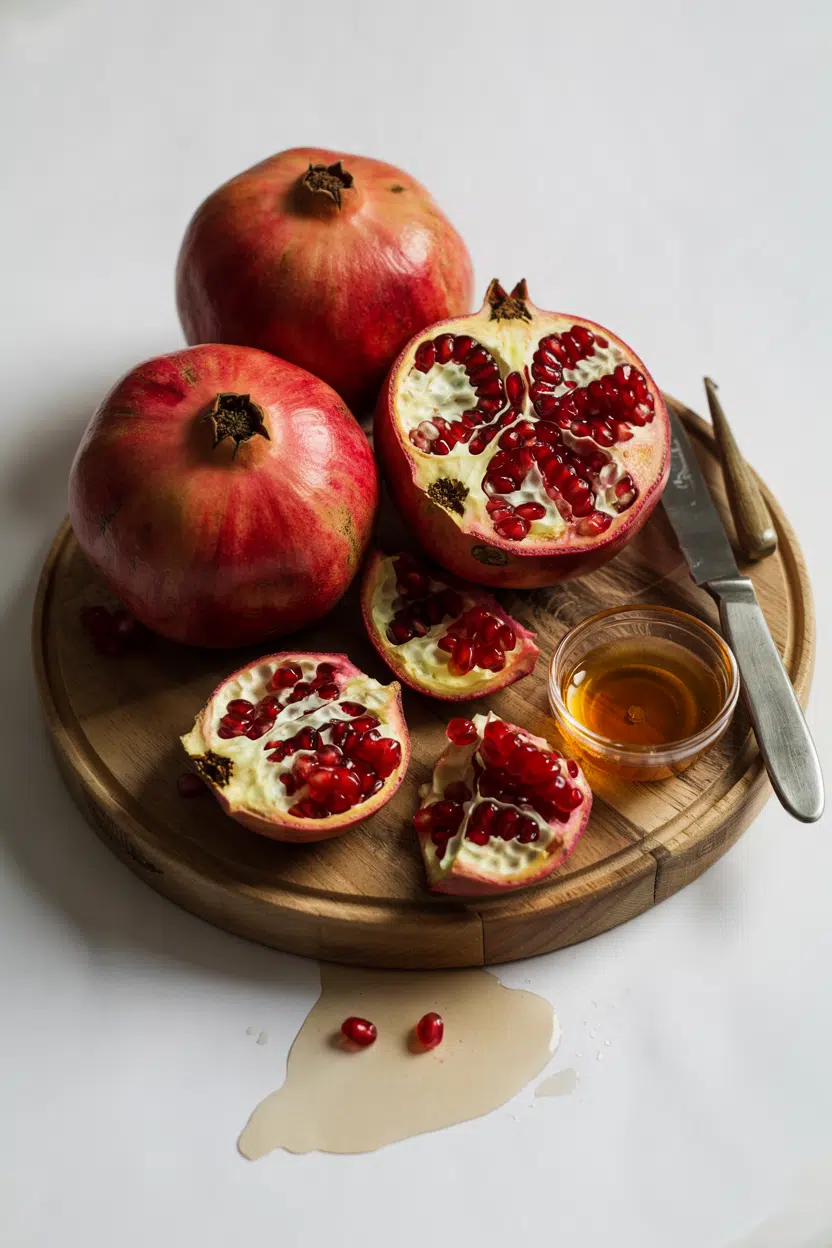
That's the pull of this fruit - it's a finishing ingredient that does serious work. Used across Persian, Middle Eastern, and Mediterranean cooking for thousands of years, pomegranate earns its place in everything from breakfast yogurt to slow-cooked lamb.
Pomegranate is a tart-sweet fruit prized for its juicy arils and bright acidity. Raw arils crunch and pop. Pomegranate molasses concentrates that tartness into a thick, deeply sour syrup. Both forms work across savory and sweet dishes in Persian, Middle Eastern, and Mediterranean cooking.
What Is Pomegranate?
Pomegranate (Punica granatum) originated in the Persian region and spread west across the Mediterranean and east into the Indian subcontinent over millennia. It goes by anar in Hindi and Urdu, rumman in Arabic, and Granatapfel in German - names that track its long path across cultures.
Remember it later
Planning to try this recipe soon? Save it for a quick find later!
Botanically, it's classified as a berry-like fruit, though it shares almost nothing visually with a blueberry or strawberry.
The fruit itself is round with a thick, leathery rind that ranges from pale yellow to deep crimson. Inside, hundreds of arils - small seed sacs - are arranged in clusters separated by bitter white pith.
Each aril holds sweet-tart juice wrapped around a small, edible inner seed.
Two forms appear most in cooking:
- Fresh arils - extracted from the whole fruit and used raw or as a garnish
- Pomegranate molasses - arils reduced to a thick, concentrated syrup used in marinades, dressings, and dips; if you ever need a swap, pomegranate molasses replacements worth knowing
Dozens of cultivars exist, but the most widely available in Western markets is the Wonderful variety - large, deeply red, and reliably tart.
What Does Pomegranate Taste Like?
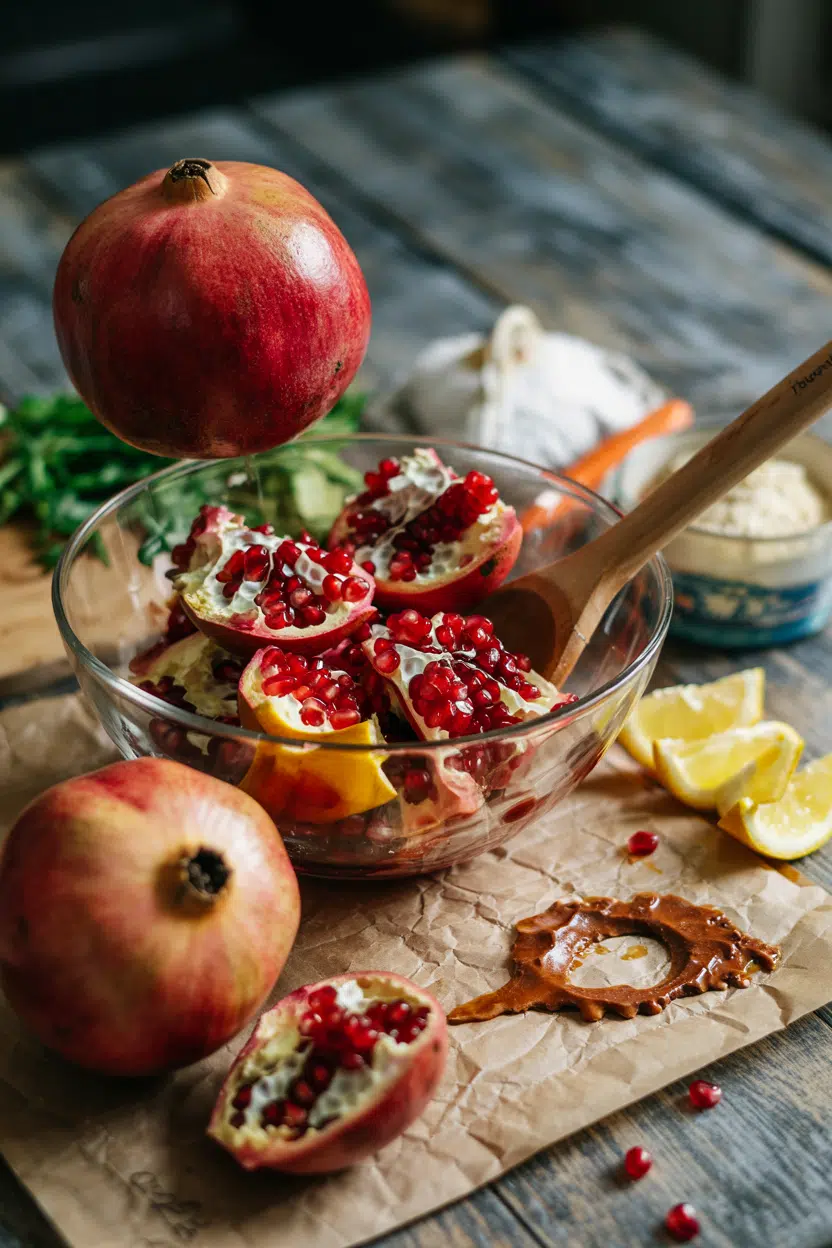
Think of tart cranberry crossed with sweet cherry, then add a lemony zip that lingers. That's the core experience of a fresh aril.
The flavor is bright but never one-dimensional - a subtle floral bitterness sits underneath the acidity, keeping it from tasting sharp or flat.
Texture matters here as much as taste. Each aril delivers a small burst of juice, followed by a light crunch from the inner seed.
Most people eat the seed without thinking about it.
Heat changes things significantly. Reduced into molasses, the sweetness concentrates but so does the tartness, producing something almost sour and deeply complex. Fresh arils added at the end of cooking retain their brightness; added early, they lose it fast.
How to Use Pomegranate
Raw arils are the easiest entry point. Scatter them over grain bowls with farro or quinoa, fold into yogurt or labneh for a meze spread, or toss over roasted vegetables - beets and carrots in particular pick up the contrast well. A spinach salad with feta, walnuts, and pomegranate arils is one of the most straightforward pairings in this cuisine zone.
Pomegranate works just as well in savory mains. In Persian cooking, arils or juice finish dishes like khoresh (braised stews), adding a sharp lift that cuts through rich meat.
Duck and lamb both take well to pomegranate glazes built from reduced juice or molasses mixed with honey.
| Method | Best For | Tip |
|---|---|---|
| 🥗 Raw Arils | Salads, yogurt, grain bowls, garnish | Add just before serving to preserve crunch and brightness |
| 🧃 Juiced | Cocktails, mocktails, marinades, dressings | Strain well; even a little pith makes juice bitter |
| 🍯 Reduced to Molasses | Glazes, dips, meat braises, muhammara | Keep heat low and stir often - it scorches quickly |
| ✨ Finishing Garnish | Rice pilafs, stews, roasted dishes | Add at the last moment; long cooking kills the fresh note |
Sumac is the spice that echoes pomegranate's tartness most closely across these same cuisines - if you ever run short, understanding sumac swaps can help you maintain that acidic balance.
Pairings that consistently work: lamb and duck, feta and goat cheese, walnuts and pistachios, mint, honey, and roasted eggplant with olive oil.
One thing to avoid: don't combine fresh pomegranate juice with delicate fresh ricotta in a hot dish. The high acidity causes curds to over-sour and break down.
How to Buy and Store Pomegranate
Pick up the fruit before you put it in your cart. Weight is the best quality signal - a heavier pomegranate holds more juice.
The rind should feel taut and look glossy; slight surface blemishes are fine, however deep splits that expose arils mean the fruit has dried out or begun to ferment inside.
Storage breaks down simply:
- Whole fruit - refrigerator crisper drawer, up to 4-6 weeks; a well-stored pomegranate outlasts most fresh fruit by a wide margin
- Extracted arils - airtight container in the fridge, 3-7 days; pat dry before storing to reduce moisture buildup
- Fresh juice - refrigerated, 5-7 days; for pomegranate freshness guide beyond that, freeze juice in ice cube trays
Pomegranate molasses, once opened, keeps refrigerated for several months without significant quality loss.
Where to Start With Pomegranate
If you've never cooked with it, begin with raw arils. No cooking, no technique - just open the fruit and scatter them somewhere they'll contrast.
A grain bowl, a cheese board, or yogurt with honey are all low-effort first moves.
Once you're comfortable with the raw form, try reducing juice into a quick molasses at home. It's four ingredients at most and unlocks a completely different flavor register.
From there, glazed lamb or a walnut-pomegranate dip like muhammara are natural next steps.
If fresh pomegranates aren't available, knowing your pomegranate replacements keeps you from losing that acidic counterpoint entirely.
Frequently Asked Questions
Yes - the small inner seed inside each aril is fully edible. Most people chew right through it without noticing. It adds a mild, slightly woody crunch that some prefer to spit out, but there's no harm in eating it.
Score the rind shallowly around the crown and along the ridges, then submerge the fruit in a bowl of cold water and break it apart with your hands. The arils sink, the pith floats, and the water contains the juice splatter.
Pomegranate molasses is intensely sour, thick, and almost tangy-bitter - far more concentrated than fresh arils. The bright floral note mostly disappears; what remains is a deep, jammy tartness closer to tamarind than fresh fruit.
It's a strong source of vitamin C, potassium, and polyphenols called punicalagins. One caution: pomegranate may interact with blood-thinning medications due to its tannin content - check with a healthcare provider if that applies to you.
Yes. Spread arils in a single layer on a lined tray, freeze until solid, then transfer to a sealed bag. They keep well for up to three months and work directly from frozen in smoothies, sauces, or cooked dishes.



