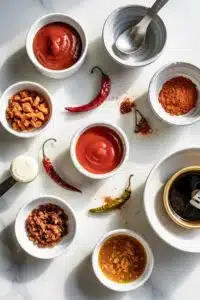
You're making muhammara and reach for the pomegranate molasses, but the bottle's empty. This ingredient isn't just sweet-it brings tangy depth and a syrupy body that balances roasted peppers and walnuts.

Pomegranate molasses adds concentrated tartness and viscosity to Middle Eastern dishes. Standard vinegar or honey alone won't replicate that complexity.
Reduced pomegranate juice with sugar mimics molasses closest-simmer 1 cup juice with ¼ cup sugar for 30 minutes. Tamarind paste thinned with honey and water works for cooked sauces. Balsamic vinegar plus brown sugar fits glazes and dressings but lacks fruity notes.
7 Substitutes for Pomegranate Molasses: Tangy Syrup Swaps
Each swap below matches different aspects-some bring tartness, others focus on the syrup texture.
Remember it later
Planning to try this recipe soon? Save it for a quick find later!
| # | Substitute | Best For | Ratio | Key Note |
|---|---|---|---|---|
| 1 | Reduced Pomegranate Juice | ✨ Both | See recipe | Takes 30 minutes to simmer |
| 2 | Tamarind Paste Blend | 🍳 Cooking | See recipe | Earthier than pomegranate |
| 3 | Balsamic Blend | ✨ Both | 1:1 adjusted | Less fruity depth |
| 4 | Cranberry-Lemon Blend | 🥗 Raw | 2:1 concentrate | Brighter, sharper tang |
| 5 | Date Molasses | 🍳 Cooking | 1:1 | Lacks tartness completely |
| 6 | Red Wine Vinegar Blend | 🥗 Raw | 1:1 adjusted | Thinner than molasses |
| 7 | Lemon-Honey Blend | 🥗 Raw | 1:1 adjusted | Won't thicken sauces |
1. Reduced Pomegranate Juice 🏆
Reducing pomegranate juice with sugar rebuilds molasses at home. Simmer 1 cup juice with ¼ cup sugar over medium heat for about 30 minutes until it coats a spoon like syrup.
This concentrates the natural tartness and fruit notes that define pomegranate molasses. The syrup thickens as water evaporates, mimicking the original texture.
- ✅ Matches flavor exactly
- ✅ Proper syrup consistency for glazes
Use this in muhammara, roasted eggplant, and lamb marinades. It works anywhere you'd use the original.
The prep time makes this impractical for quick cooking. Plan ahead if you're making dishes like common Pomegranate swaps ranked salads.
2. Tamarind Paste Blend 🌏
Mix 1 tablespoon tamarind paste with 1 tablespoon honey and 1 tablespoon water to replace 2 tablespoons pomegranate molasses. Tamarind brings sour intensity similar to pomegranate's tartness.
The paste dissolves into cooked sauces and stews, adding acidity that balances rich flavors. Honey sweetens it to match molasses' sugar content.
Tamarind's earthiness differs from pomegranate's bright fruit notes. Use this in Persian stews, braised short ribs, and glazed chicken thighs where the sauce cooks long enough to meld flavors.
Skip it for raw dressings-the tamarind flavor stays too prominent without heat.
3. Balsamic + Brown Sugar 🥗
Combine 1 tablespoon balsamic vinegar with 1 teaspoon brown sugar per tablespoon of pomegranate molasses. Stir until sugar dissolves completely.
Balsamic's complex acidity mimics molasses' tanginess, while brown sugar adds depth and mild sweetness. This works in glazes for roasted vegetables, salad dressings, and quick pan sauces.
- 🍳 In cooking: Add near the end to preserve vinegar brightness
- 🥗 Raw: Works in tahini dressings and grain bowls
- ⚠️ Texture: Thinner than molasses-won't coat as heavily
- ⚠️ Flavor: Less fruity than pomegranate's distinct profile
The swap runs thin compared to actual molasses. If you need something with more body, try tested Balsamic Vinegar replacements that include reduction methods.
4. Cranberry-Lemon Blend 🍒
Mix 2 tablespoons cranberry juice concentrate with 1 teaspoon lemon juice to replace 1 tablespoon pomegranate molasses. The concentrate brings concentrated tartness similar to reduced pomegranate.
Lemon juice sharpens the acidity and brightens the overall flavor. This works best in cold applications like dressings, marinades for grilled meats, and finishing drizzles.
The cranberry profile skews more North American than Middle Eastern. Use it on quinoa salads, roasted Brussels sprouts, and turkey glazes where the fruit swap won't clash.
Avoid this in slow-cooked dishes-the cranberry flavor can turn muddy with extended heat.
5. Date Molasses 🍯
Date molasses matches the syrup texture perfectly but lacks pomegranate's signature tartness. Use equal amounts as a direct swap.
The thick consistency coats vegetables and meats during roasting. It adds deep caramel sweetness that works in glazes for carrots, roasted cauliflower, and grilled lamb.
- ✅ Perfect syrup texture for coating
- ✅ Adds rich sweetness to dishes
- ⚠️ No acidity-dishes taste flat without added lemon
- ⚠️ Too sweet for most dressings
Add 1 teaspoon lemon juice per tablespoon date molasses to rebuild some tartness. This brings it closer to pomegranate's balance.
Skip this in dishes where tartness defines the flavor, like fattoush dressing. If you're working with dates in other forms, check out easy Date swaps that work for different preparations.
6. Red Wine Vinegar + Honey 🍷
Combine 1 tablespoon red wine vinegar with 1 teaspoon honey per tablespoon of pomegranate molasses. Mix until honey dissolves completely.
Red wine vinegar provides bright acidity, while honey adds mild sweetness. This works in salad dressings, quick pickles, and uncooked sauces where thinness isn't a problem.
The mixture stays liquid-it won't thicken sauces or create glazes. Use it where you need tartness more than body, like grain bowl dressings, herb marinades, and cold vegetable salads.
Don't use this in cooked reductions. The honey can burn if exposed to high heat too long.
7. Lemon-Honey Blend 🍋
Mix 1 tablespoon lemon juice with 1 teaspoon honey per tablespoon of pomegranate molasses. Stir until fully combined.
This brings sharp acidity and mild sweetness but stays completely liquid. Use it as a finishing drizzle on hummus, roasted vegetables, and grilled fish where you want brightness without syrup texture.
- 🥗 Raw applications: Works in tahini sauce and yogurt dips
- ⚠️ Cooking: Won't reduce or thicken in hot dishes
- ⚠️ Flavor: Citrus notes replace pomegranate's fruit complexity
Skip this in glazes or any recipe requiring syrup consistency. For more ways to work with citrus, try Lemon Juice alternatives to try in different cooking contexts.
Picking Your Pomegranate Molasses Swap
- For glazes and marinades: Reduced pomegranate juice or tamarind paste blend
- For dressings: Balsamic-brown sugar or cranberry-lemon blend
- For quick drizzles: Lemon-honey mix works when texture doesn't matter
Frequently Asked Questions
Regular molasses won't work-it's thick and sweet but lacks the tartness that defines pomegranate molasses. You'd need to add vinegar or lemon juice to introduce acidity. Mix 1 tablespoon regular molasses with 1 teaspoon lemon juice for a rough approximation, though it won't match the fruity notes.
Pomegranate molasses is reduced pomegranate juice with concentrated tartness and minimal added sugar. Grenadine is a sweet cocktail syrup made from pomegranate or artificial flavoring with lots of sugar. Grenadine's too sweet and thin to replace pomegranate molasses in savory cooking.
Simmer your thin substitute over medium-low heat until it reduces by half. This concentrates flavors and thickens the consistency. Add a pinch of cornstarch mixed with water if you need immediate thickness without changing flavor-use ¼ teaspoon cornstarch per 2 tablespoons liquid.
Yes, refrigerate pomegranate molasses after opening. The high acidity and sugar content preserve it well, but refrigeration prevents mold growth. It keeps for 6-12 months in the fridge. If your substitute contains fresh juice or honey, refrigerate it and use within a week.
Straight pomegranate juice won't work-it's too thin and not concentrated enough. You need to reduce it with sugar to match molasses' syrup texture and intensity. Simmer 1 cup juice with ¼ cup sugar for 30 minutes until it coats a spoon. Skip this shortcut-raw juice will water down your dish.
7 Best Substitutes for Pomegranate Molasses
Ingredients
Method
- Choose a substitute based on your recipe requirement: syrupy texture, cooking, or raw use.
- For Reduced Pomegranate Juice, simmer juice with sugar for 30 minutes until syrupy.
- Blend or mix liquid substitutes as noted, adjusting ratios per the recipe's needs.
- Apply the substitute in your dish, checking for desired tartness and consistency.
- Taste and adjust sweetness or acidity if necessary to better mimic pomegranate molasses.
Notes
- Reduced pomegranate juice best replicates both flavor and syrupy texture but requires 30 minutes simmering.
- Tamarind paste blends suit cooked sauces but are too earthy for raw dressings.
- Most substitutes lack the thick syrup consistency; reduce further or add thickener if needed.