
Bite into a ripe plum tomato and you notice the difference immediately - firm flesh, low juice, and a clean, concentrated tomato flavor that slicing varieties can't match.

That density is exactly why cooks reach for them when building a sauce that needs to cling rather than pool.
If you've ever wondered why your homemade marinara turns watery, switching to plum tomatoes is usually the fix.
For times when fresh aren't available, knowing your alternatives to canned tomato saves the recipe.
The plum tomato is a small, oval paste variety prized for its thick, meaty flesh and low seed count. It delivers concentrated, tangy-sweet flavor with clean umami - ideal for sauces, roasting, and canning. Fresh ones last up to a week; canned versions work year-round.
What Is Plum Tomato?
Plum tomatoes are a paste variety - bred specifically for dense flesh, few seeds, and low moisture rather than the juicy eating qualities of slicing types.
Remember it later
Planning to try this recipe soon? Save it for a quick find later!
They originated in Central and South America, where tomatoes were first domesticated, and were later refined in Italy into varieties prized for processing.
The most recognized names are Roma tomato and plum roma, though canned San Marzano tomatoes - a prized Italian cultivar - also belong to this category. "Paste tomato" and "prune tomato" are older trade names you'll still see at farmers' markets.
Supermarkets typically stock Roma-type plums year-round.
What separates them from round slicing tomatoes is structure. The flesh-to-seed ratio runs much higher, with thick walls of tomato solids and relatively small, dry seed cavities.
- 🍅 Shape - Oval, egg-sized, typically 2-3 inches long
- 🌱 Origin - Mesoamerica; commercially refined in Italy
- 📦 Varieties - Roma, San Marzano, Amish Paste, Viva Italia
- 🥫 Canned form - Sold whole peeled, crushed, or as crushed tomato pulp
What Does Plum Tomato Taste Like?
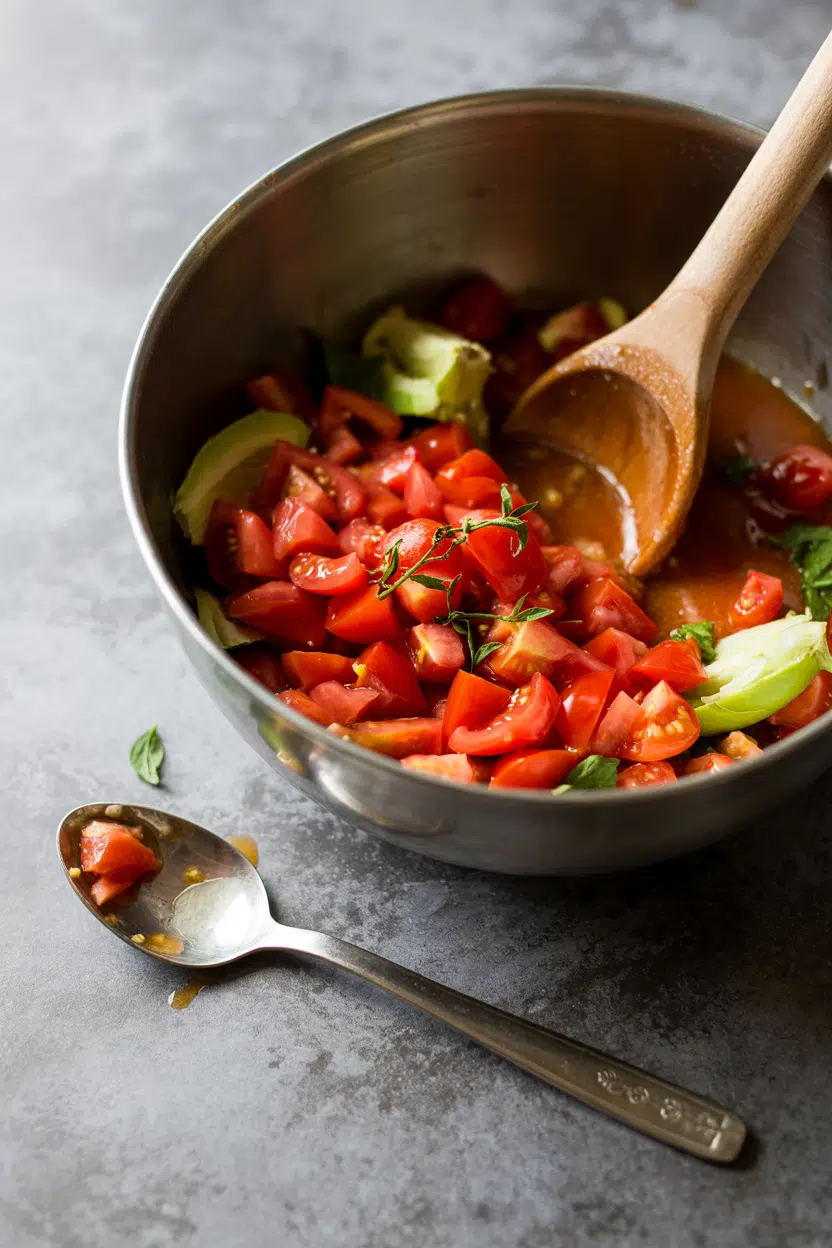
Fresh plum tomatoes taste like a concentrated, cleaner version of a standard slicing tomato. The flavor sits in tangy-acidic territory with a mild sweetness underneath and a savory, umami finish that becomes more pronounced as the tomato ripens.
Heat changes the profile noticeably. Roasting caramelizes the natural sugars and deepens the color to brick-red, while long simmering drives off moisture and pushes the umami forward.
Raw, the flesh is firmer and more muted than a beefsteak - closer to canned San Marzano tomatoes in flavor, but brighter and less processed-tasting.
How to Use Plum Tomato
Plum tomatoes are built for heat and reduction. Their low water content means they break down into thick, clingy sauces without the long evaporation time that juicy slicing tomatoes require.
| Method | Best For | Tip |
|---|---|---|
| 🔥 Simmering | Marinara, passata, ragù, chili | Skip the lid - open pot reduces faster |
| 🌡️ Roasting | Concentrated purée, bruschetta topping | Halve cut-side up; [roasting rack stand-ins](https://forkliftkitchen.com/roasting-rack-substitutes/) work fine on a sheet pan |
| 🥗 Raw/Chopped | Salsa, panzanella, fresh bruschetta | Salt and drain briefly to sharpen flavor |
| 🫙 Blanching & Canning | Whole peeled tomatoes, winter passata | Score an X, blanch 30 seconds, ice bath peels cleanly |
| ⚡ Pressure Cooking | Fast thick sauces, tomato paste base | No added water needed - flesh provides enough liquid |
Pairing them with olive oil, garlic, and basil is the classic Italian approach - the fat carries the tomato's fat-soluble lycopene and rounds out the acidity. Anchovies, parmesan rinds, and crushed red pepper all amplify the umami without masking the tomato.
In Mexican cooking, plum tomatoes give salsa and stewed dishes firmer, less watery texture than round tomatoes would.
For slow-cooked meat dishes, the solids from plum tomatoes give beef in cooking - particularly braises and ragùs - a sauce body that holds up over hours without turning thin.
Basil is the natural finishing herb; knowing how long basil keeps helps you plan so you're not reaching for wilted leaves at the end of a long simmer.
How to Buy and Store Plum Tomato
Good plum tomatoes feel dense and heavy for their size - that weight signals the thick tomato solids you're buying them for.
Look for even red-to-deep-pink coloring, taut unbroken skin, and a stem end that isn't shriveled or sunken.
Soft spots, splits, or mealy patches mean the flesh has started breaking down and won't give you a clean, firm sauce base.
Storage follows a two-step rule: room temperature first, refrigerator second.
- Unripe or firm - Counter at room temp, 1-3 days until ripe
- Ripe and ready - Use within 48 hours, or refrigerate up to 2-3 days
- Before cooking - Return refrigerated tomatoes to room temp first; cold suppresses aroma
- Spoilage signals - Soft, sunken flesh, mold near stem, or fermented smell; see a full list of plum tomato spoilage signs before using questionable ones
Start With Plum Tomatoes If You Want Real Sauce
If your goal is a sauce that reduces quickly and clings, plum tomatoes are the right starting point - not cherry tomatoes, not beefsteaks.
They're also the most forgiving for first-time canners, since the low moisture reduces processing time.
When fresh ones aren't available, knowing your plum tomato swaps that work keeps a recipe on track.
Most dishes that call for them also use olive oil; if you've run out, there are solid replacements for olive oil that won't wreck a sauce.
Frequently Asked Questions
Roma is the most common commercial variety of plum tomato, so the names are often used interchangeably in stores. Technically, "plum tomato" covers the broader category - Roma, San Marzano, and Amish Paste all qualify.
Yes - roughly 1.5 lbs of fresh plum tomatoes replaces one 14-oz can of whole peeled tomatoes. Blanch and peel them first, then crush by hand. Add a small pinch of salt to compensate for the brine missing from canned.
Typically 4-6 medium Roma-type plum tomatoes weigh one pound. Smaller varieties run closer to 6-8. Weight varies with moisture content, so dense, ripe ones will be heavier than underripe ones of the same size.
Yes, significantly. Plum tomatoes have thicker walls and smaller seed cavities, so tomato solids make up a higher percentage of total weight. That's why sauce made from them reduces faster and clings better than sauce from beefsteak or globe tomatoes.
Peak season runs late July through September in most of North America and Europe. That's the best window for canning or making passata. Supermarket Roma tomatoes are available year-round from greenhouse or southern-hemisphere growing operations.



