
Most people assume a pastry cutter is optional - that cold fingers or a fork will do the same job just as well.

They're not entirely wrong, but they're missing what the tool actually controls: the size and distribution of fat pieces inside the dough, which directly determines whether a pie crust shatters into flaky layers or bakes into a dense, chewy disc.
Like a rolling pin and its flavor profile, a pastry cutter brings no taste of its own - and unlike a what makes food processor distinct from manual tools, it keeps heat out of the equation.
Understanding why that matters changes how you approach every pastry you make.
A pastry cutter is a handheld metal tool that cuts cold fat into flour for flaky pastry. It contributes no flavor to dough - its value is entirely structural, controlling fat-piece size for pie crusts, biscuits, and scones.
What Is a Pastry Cutter?
A pastry cutter - also called a pastry blender or dough cutter - is a handheld baking tool built from a rigid handle attached to a row of parallel metal blades or curved wires.
Remember it later
Planning to try this recipe soon? Save it for a quick find later!
Its entire job is mechanical: press it down through cold fat and flour, rock it forward, repeat until the butter or shortening breaks into roughly pea-sized pieces coated in flour.
The tool sits firmly in European baking tradition, where French tart doughs and British shortcrusts demanded a method for incorporating fat without warming it.
American bakers adopted it for pie crusts and biscuit dough, where fat distribution is what separates a flaky result from a tough one.
Two main styles exist:
- 🔧 Multi-blade style - rigid stainless-steel blades in parallel; cuts through firm cold butter efficiently and holds its shape under pressure
- 🌀 Wire loop style - flexible looped wires; gentler on softer fats like shortening, though blades can bend over time
Both styles are also called a pastry masher in some older recipe books. Neither adds flavor - the ingredient is metal, not food.
What Does a Pastry Cutter Taste Like?
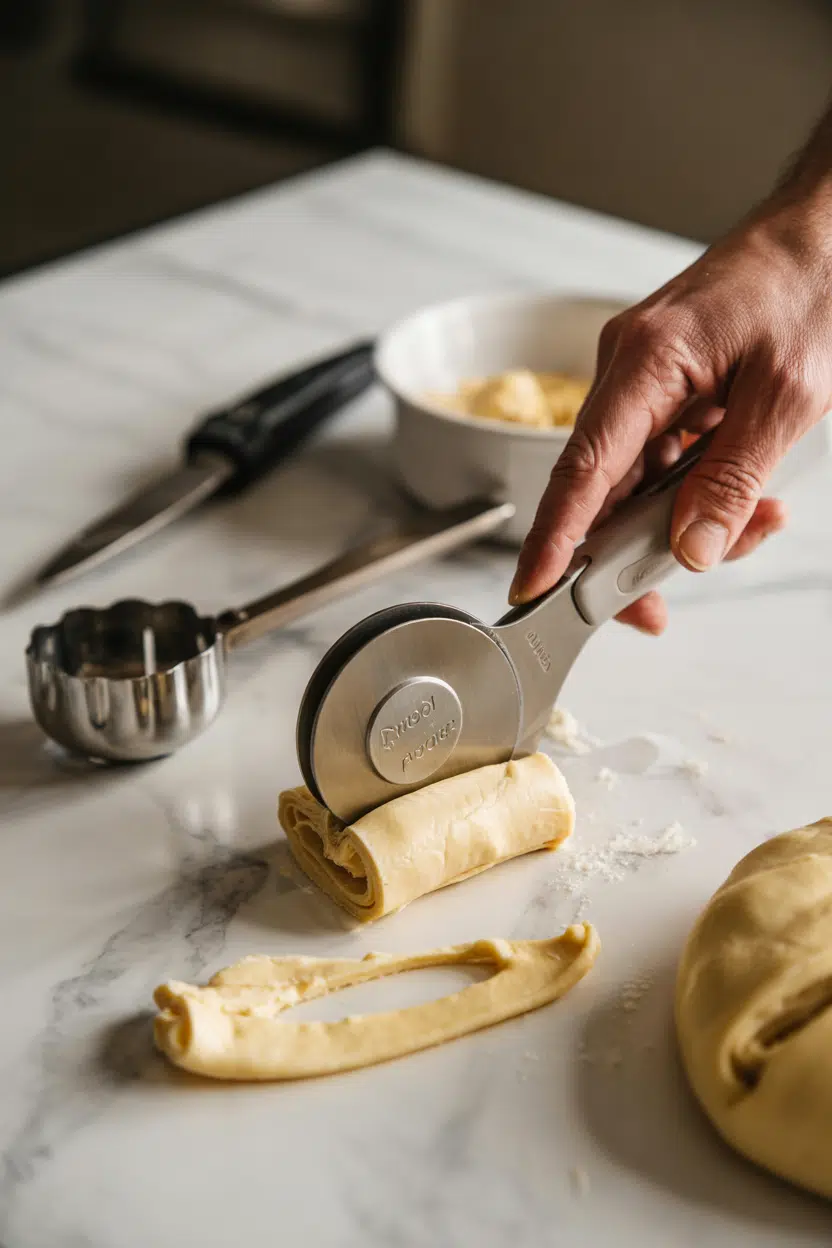
This is a tool, not a food, so the flavor answer is straightforward: it has none. A pastry cutter contributes nothing to the taste of dough - no fat, no salt, no sweetness.
A new tool may carry a faint metallic or manufacturing-oil scent fresh out of packaging. Rinse and dry it before first use, and that fades completely.
What the tool shapes absolutely changes how the finished pastry tastes in texture terms. Properly cut-in cold unsalted butter produces visible steam pockets during baking - that's flakiness.
Overworked fat, whether from warm hands or too many passes with the cutter, melts into the flour and produces density instead.
How to Use a Pastry Cutter
Start cold. That's the rule the tool is built around.
Chill your butter, your flour, even your mixing bowl if your kitchen runs warm. The pastry cutter works by keeping solid fat intact long enough to coat in flour before it hits the oven.
The standard technique is a press-and-rock motion: grip the handle, push the blades straight down through the fat-flour mixture, then rock slightly forward and lift. Rotate the bowl a quarter turn and repeat.
Stop when the largest pieces are roughly pea-sized, with some sand-textured smaller bits throughout - that contrast in fat-piece sizes creates layering.
| Method | Best For | Tip |
|---|---|---|
| 🥧 Cutting-In | Pie crusts, shortcrust tart bases | Stop at pea-sized pieces; do not overwork |
| 🧇 Biscuit Blending | Flaky biscuits with shortening or lard | Work faster - biscuit dough tolerates less handling |
| 🫐 Scone Mixing | British-style scones, cream scones | Cube butter small (1 cm) before starting |
| 🍓 Fruit Mashing | Cooked fruit fillings, rough mashing | Use only on soft, fully cooked fruit |
Cuisines that rely on this method span French tart dough, British shortcrusts and scones, American pie crusts, and Scandinavian buttery tart bases.
The pastry cutter fits anywhere cold fat and flour meet - if you're working with replacements for shortening in biscuit dough, the technique stays the same regardless of which fat you choose.
Similarly, exploring alternatives to butter can point you toward fats with different melting points that affect how aggressively you need to cut.
How to Buy and Store a Pastry Cutter
Stainless-steel multi-blade cutters hold up best over time. Look for tight rivets where blades meet the handle - any wobble there means the tool will flex under pressure and cut unevenly. A gap between blade and handle traps dough and is nearly impossible to clean properly. Brushed stainless finishes resist sharp burrs better than polished versions.
Handle material matters for longevity. Wood looks appealing but absorbs moisture and can crack.
Molded non-slip plastic or rubber grips are more practical for repeated use and dishwasher cycles.
For storage, keep the tool dry - moisture corrodes blade joints even on stainless steel.
The basics of keeping ingredients fresh apply to tools too: knowing how long flour keeps before it goes stale is as useful as knowing your pastry cutter stays usable indefinitely when stored right.
Blade life is essentially permanent on quality stainless steel; plastic or wood handles wear within 2-5 years under heavy use.
On the ingredient side, always check for butter spoilage signs before cutting it in - rancid butter ruins dough regardless of technique.
Where to Start With a Pastry Cutter
Skip the wire-loop style on your first purchase.
A rigid multi-blade cutter handles cold butter more reliably, and cold butter is what you'll use most.
Start with a simple all-butter pie crust: 2.5 cups flour, 1 cup cold butter cubed, ice water added tablespoon by tablespoon.
Cut until pea-sized.
That one exercise will show you exactly what the tool does that hands and forks cannot.
If you're working without one for now, the guide to replacements for pastry cutter covers the best hand methods and tool swaps.
For long-term care, notes on freezing pastry cutter environments and moisture damage are worth a read before you store it.
Frequently Asked Questions
It cuts cold fat - butter, shortening, or lard - into flour without warming it. The goal is pea-sized fat pieces that create steam pockets during baking, which produce flaky layers in pie crusts, biscuits, and scones.
No - the tool is metal and contributes zero flavor. It does affect texture, which registers as flakiness or tenderness when you eat the finished pastry.
A food processor is faster but harder to control - it can overprocess fat in seconds. A pastry cutter is slower and gives you direct feedback on fat-piece size, which most bakers find produces more consistently flaky results.
Yes, though a fork is less efficient and harder to control at depth. It works for small batches of scone or biscuit dough, but transferring more heat from your hand into the fat is a real risk.
Rinse immediately after use - dried dough between blades is difficult to remove. A thin brush or toothpick clears trapped bits; dry thoroughly before storing to prevent blade-joint corrosion.



