
Guajillo chile powder is the closest swap for New Mexico chile powder, used 1:1. It has the same brick-red color and a similar fruity, earthy flavor, but it runs a little tangier and usually hotter, so add the last quarter only after you taste the dish.
Dried California chile is the mildest near-match, and a 3:1 mix of guajillo and ancho adds back the sweetness. Skip a seasoned chili powder blend in traditional red chile sauce, because its cumin, oregano and garlic take over.
What Does New Mexico Chile Do in a Recipe?
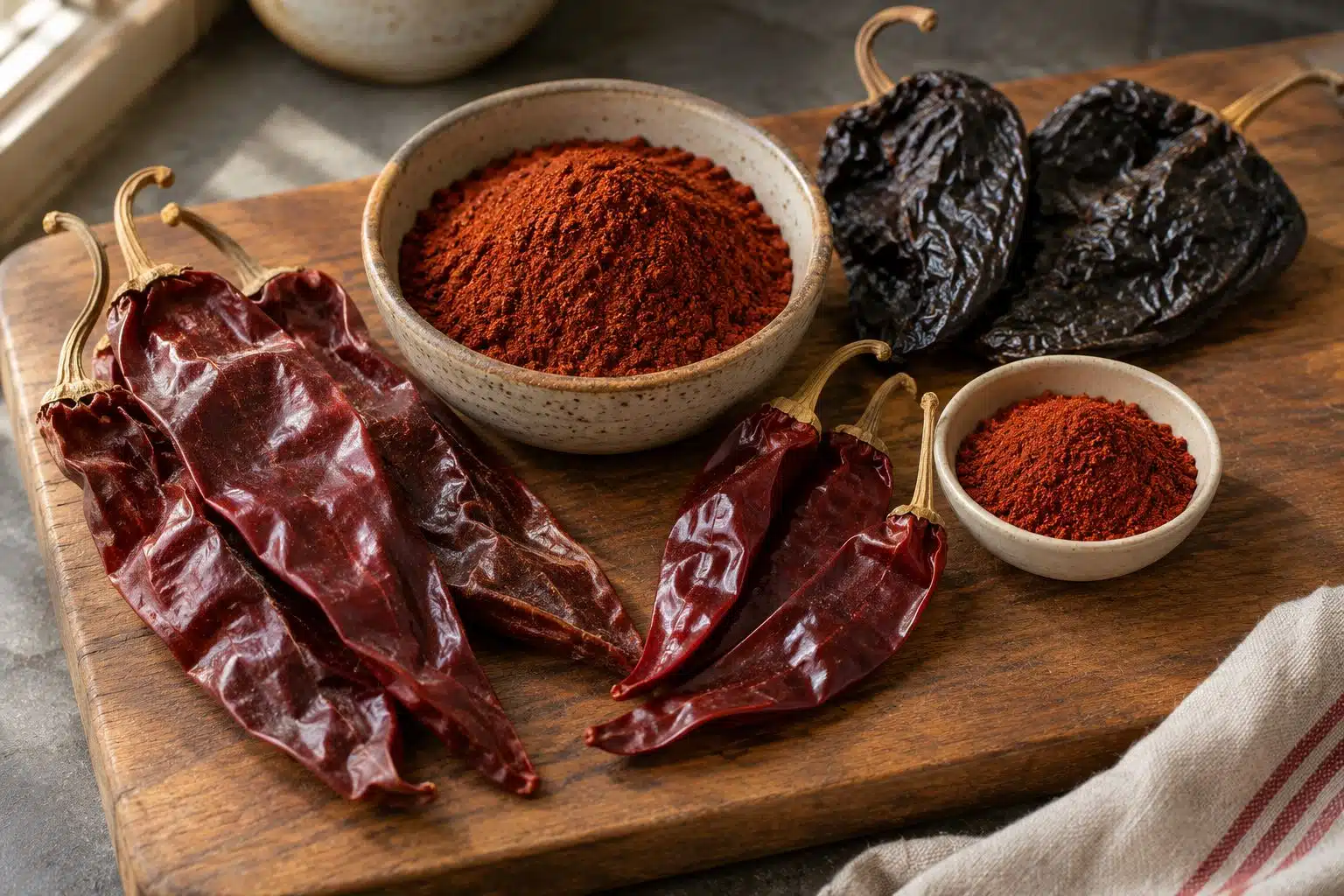
New Mexico chile is a long, brick-red dried pod, sold whole, as flakes or ground into powder. The powder is just ground chiles, with no salt or other spices added.
Remember it later
Planning to try this recipe soon? Save it for a quick find later!
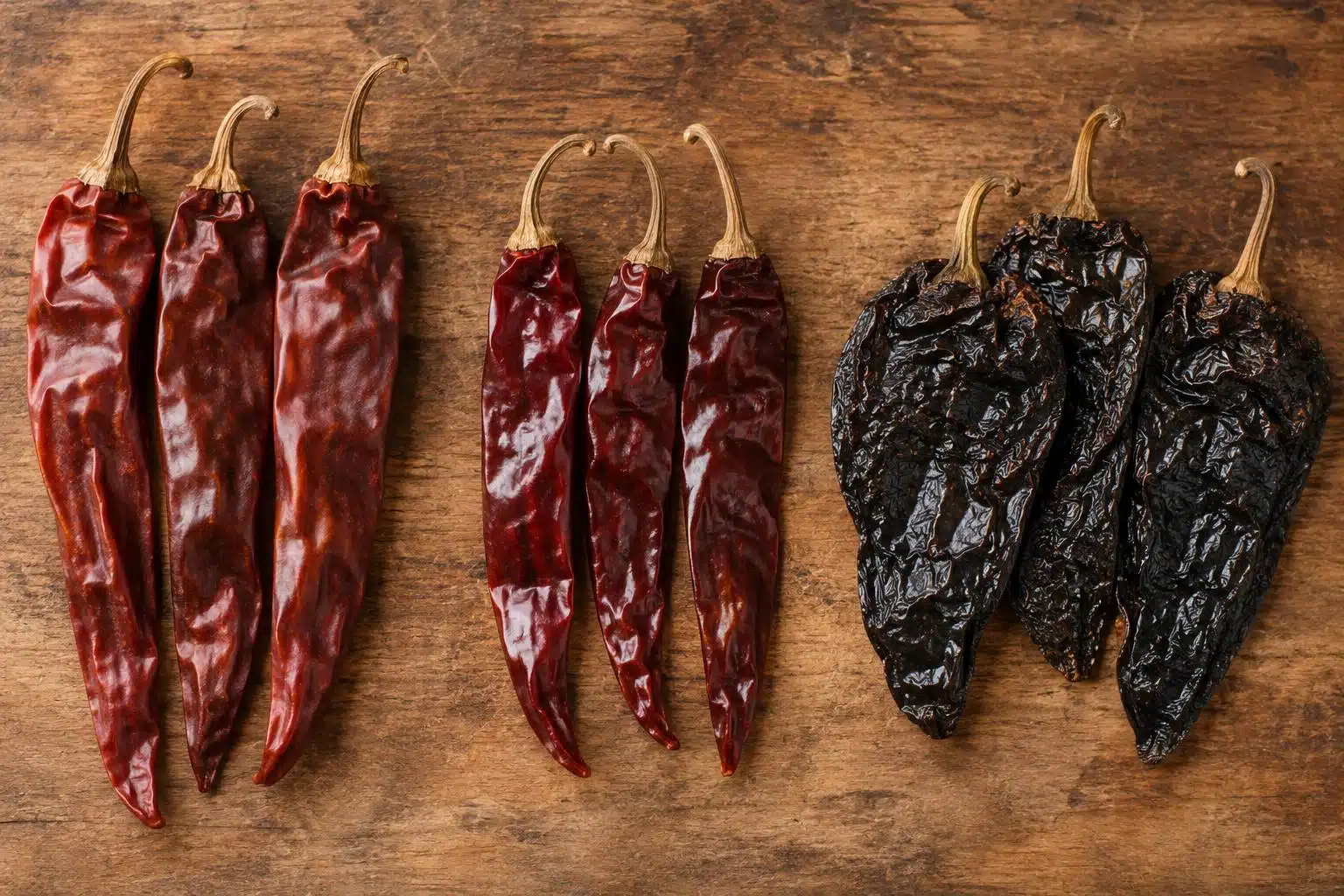
In red chile sauce, enchilada sauce and stews, it does three jobs, and each swap below replaces some of them and not others:
- Color - The pods turn a sauce deep red, and only a few pantry spices can copy that.
- Mild to medium heat - The variety sets the heat: the common No. 9 type is about 1,000 to 1,500 Scoville units, Chimayó is about 4,000 to 6,000, and sellers label bags mild, medium or hot.
- Earthy, slightly sweet flavor - Guajillo adds a little tang and ancho tastes fruitier, so each swap pushes the sauce one step away from the original.
Which Substitute Is Closest to New Mexico Chile?
Chiles in the same family come first, then pantry spices that copy only the color and heat. Ratios assume you are replacing powder with powder.
| # | Substitute | Best For | Ratio | Key Note |
|---|---|---|---|---|
| 1 | Guajillo Powder | ✨ Both | 1:1 | Tangier, hotter |
| 2 | California Chile | ✨ Both | 1:1 | Milder, grassier |
| 3 | Ancho Powder | 🍳 Cooking | 1:1 | Darker, sweeter |
| 4 | Pasilla Powder | 🍳 Cooking | Up to half | Dark, rich |
| 5 | Paprika + Cayenne | 🍳 Cooking | 1 tablespoon + ⅛ tsp | No chile depth |
| 6 | Chili Powder Blend | 🍳 Cooking | 1:1 | Cumin, garlic, salt |
| 7 | Guajillo + Ancho | ✨ Both | 3:1 mix | Balanced profile |
The table lists the swaps from closest to furthest, and the sections below say how each one changes the dish.
1 – Guajillo Chile Powder
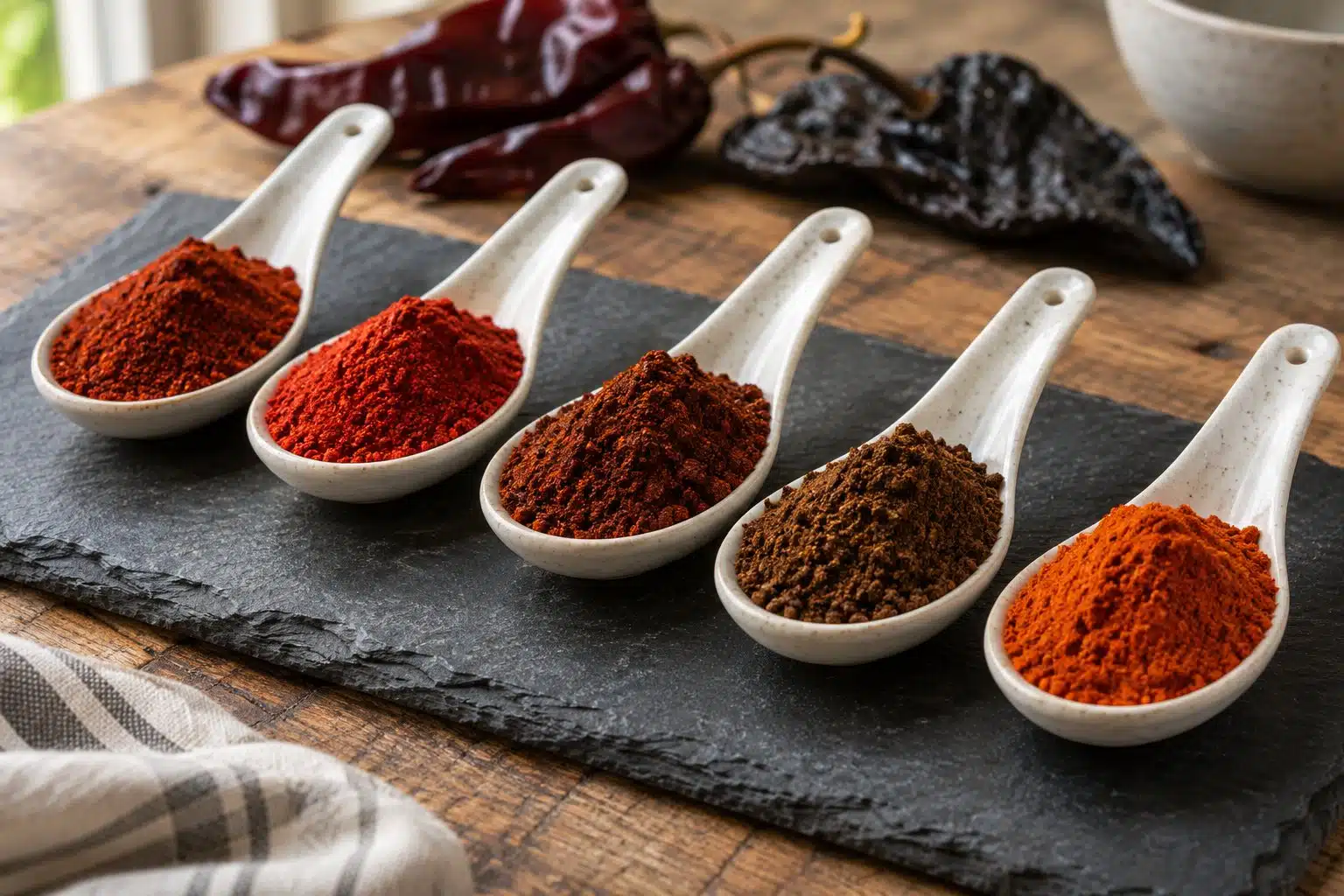
Guajillo is a long, smooth red pod with a fruity, earthy flavor and a little tang. At about 2,500 to 5,000 Scoville units, it usually runs hotter than a mild New Mexico pod.
Measure 1:1, but stir in three quarters first, simmer for about ten minutes, then taste and add the rest if the sauce needs it.
- Where it fits - Red chile sauce, enchilada sauce and pozole, where bright red color and fruity chile flavor carry the dish.
- Where it falls short - It tastes a little more like Mexican dried chiles than Southwest red chile, and a hot-labeled New Mexico bag can be hotter than it.
If you are out of guajillo as well, the substitutes for guajillo pepper list what to use in its place.
2 – California Chile (Dried Anaheim)
California chile is the dried red form of the Anaheim pepper, a mild variety of the New Mexico No. 9. That makes it the nearest relative, so use it 1:1.
Anaheim peppers run about 500 to 2,500 Scoville units and taste earthy, mildly sweet and a bit grassy. Stem and seed the pods and grind them yourself when you only find whole ones.
- Where it fits - Any recipe that wants the original flavor at a gentler heat, including sauces for guests who avoid spice.
- Where it falls short - It can taste flatter than a medium or hot New Mexico bag, so stir in a spoonful of guajillo if the sauce needs more bite.
3 – Ancho Chile Powder
The ancho chile pepper is a dried poblano with a mild, fruity flavor and about 1,000 to 2,000 Scoville units. Its wide, wrinkled pods are almost black, so the sauce comes out darker and sweeter.
Use 1:1 in braised meat, chili con carne and mole-style sauces, where hours of simmering mellow the sweetness. For a bright red enchilada sauce, mix it with guajillo, as in swap 7.
4 – Pasilla Chile Powder
Pasilla is a dark, wrinkled pod with a rich flavor and mild to medium heat. Replace up to half of the New Mexico chile with it, and fill the rest with guajillo or ancho.
The sauce turns dark brown instead of red, so it suits black bean soup, braised beef and other dishes where nobody expects bright color. A squeeze of lime or a splash of vinegar brightens a sauce that tastes too heavy.
5 – Sweet Paprika and Cayenne
For each tablespoon of New Mexico powder, stir together 1 tablespoon of sweet paprika and ⅛ teaspoon of cayenne. Treat this as a starting point, and add more cayenne a pinch at a time, because cayenne is far hotter than any chile above.
The mix gives red color and gentle heat but none of the dried-chile depth. That is enough for dry rubs and taco meat, where cumin, garlic and salt do the flavoring, and too little for a sauce where chile is the main flavor.
Smoked paprika adds smoke that the original does not have, so keep it for dishes that already taste smoky.
6 – Chili Powder Blend
A chili powder blend is ground chiles mixed with cumin, garlic, oregano and sometimes salt. Use it 1:1, leave out any cumin, oregano or garlic the recipe also lists, and cut the added salt.
It fits chili con carne, where cumin is already in the seasoning, such as a slow cooker chili con carne. Traditional New Mexican red chile sauce is the one place it fails, because the sauce is nearly all chile and the extra spices become the main taste.
7 – Guajillo and Ancho Blend
Mix 3 parts guajillo powder with 1 part ancho powder and use the blend 1:1. Guajillo supplies red color and tang, and ancho supplies the sweet, mild body that guajillo lacks.
With whole pods, use 3 guajillo and 1 ancho for every 4 New Mexico pods. If the finished sauce looks brown rather than red, stir in sweet paprika a teaspoon at a time.
Which Swap Fits Your Dish?
Red enchilada sauce shows a bad swap fastest, because chile is almost its only flavor. Soups and braises hide more, since onion, meat and long simmering fill in the gaps.
| If You Are Making | Pick | Why |
|---|---|---|
| Red chile sauce | Guajillo, or the 3:1 blend | Keeps red color and chile flavor |
| Pozole | Guajillo | Its tang suits the broth |
| Beef or pork braise | Ancho or pasilla | Sweeter and darker after hours of simmering |
| Chili con carne | Chili powder blend | Cumin and garlic belong there already |
| Dry rub | Paprika and cayenne | Color and heat are all a rub needs |
Many pozole rojo recipes, including our crockpot Mexican pozole rojo, already build the red broth on guajillo, so that swap needs no adjusting.
What If the Recipe Calls for Pods or Green Chile?
The recipe may list a different form than the one in your pantry, and the swap changes with the form:
- Pods when you have powder - Plan on roughly 2 to 3 tablespoons of powder for each ounce of stemmed, seeded pods, then taste, since grind and packing change the volume.
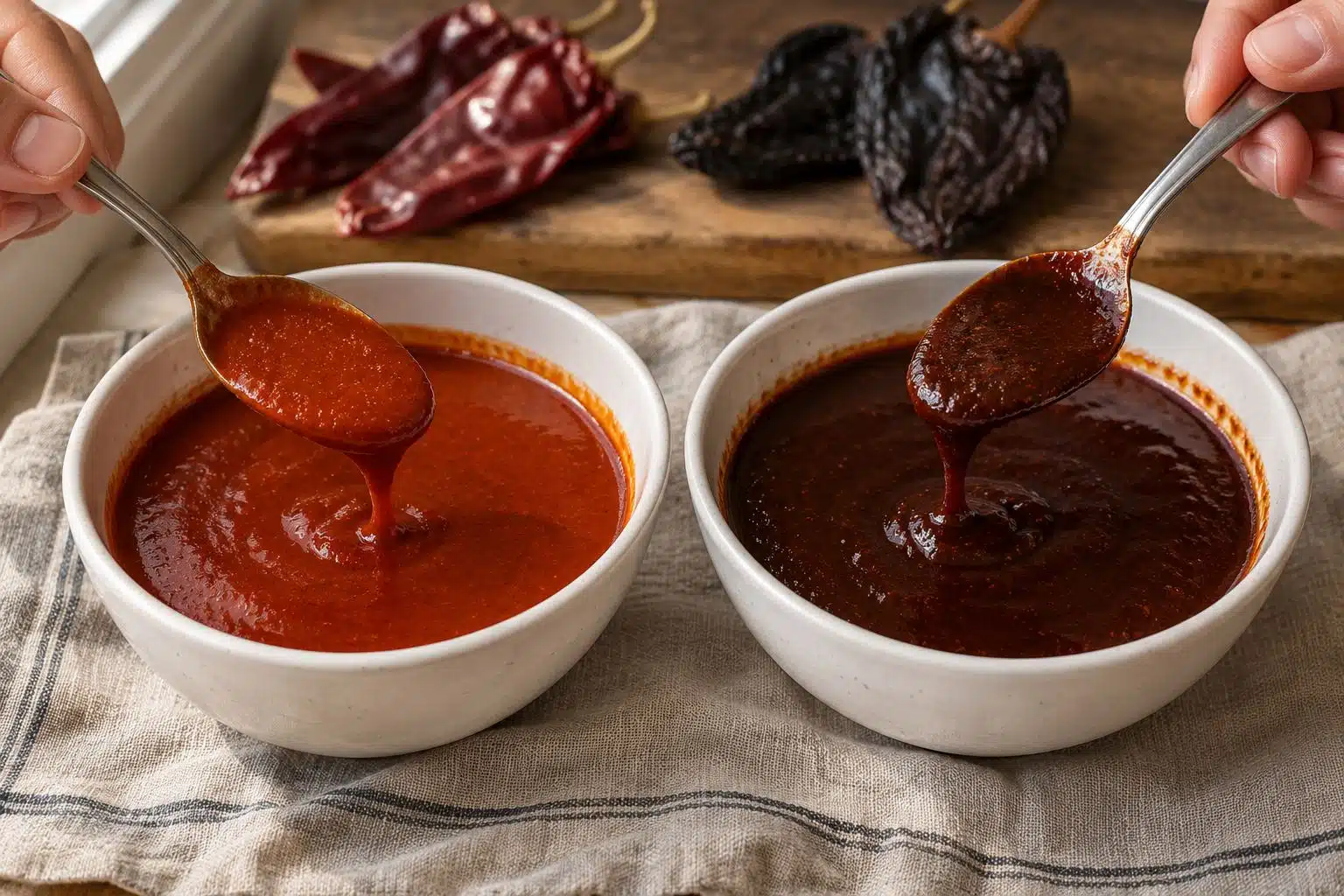
- Powder when you have pods - Remove the stems and seeds, then soak the pods in hot water until soft and blend them into the sauce, or grind them dry for powder.
- Green chile when you have red - Green Hatch-style chile is roasted fresh pepper, not dried, so none of the red swaps above replace it. Roasted Anaheim goes in 1:1 and is milder, and roasted poblano pepper peels and chops the same way.
Frequently Asked Questions
It is usually mild to medium, and bags are labeled mild, medium or hot. The common No. 9 type is about 1,000 to 1,500 Scoville units, close to ancho at 1,000 to 2,000 and below guajillo at 2,500 to 5,000. A hot-labeled bag can go past both.
Use guajillo powder 1:1. Chimayó is hotter than most New Mexico chile, about 4,000 to 6,000 Scoville units, with a sweet, smoky flavor. Guajillo is the nearest on heat, and a pinch of smoked paprika adds some of the smoke.
Only in part. Chipotle is a smoke-dried jalapeño at about 2,500 to 8,000 Scoville units, so use a quarter to a half of the amount and fill the rest with guajillo or ancho. A full swap makes the dish taste of smoke first.



