Ricotta salata is the closest swap for aged, grated mizithra, the kind most recipes mean. Use it 1:1 over hot pasta and taste before you add any other salt.
If your recipe uses the soft, fresh kind that goes into pies or onto honey, whole-milk ricotta works 1:1 instead. The two forms are opposites: a salty grating cheese ruins a pie filling, and fresh ricotta adds no salt or bite to browned butter spaghetti.
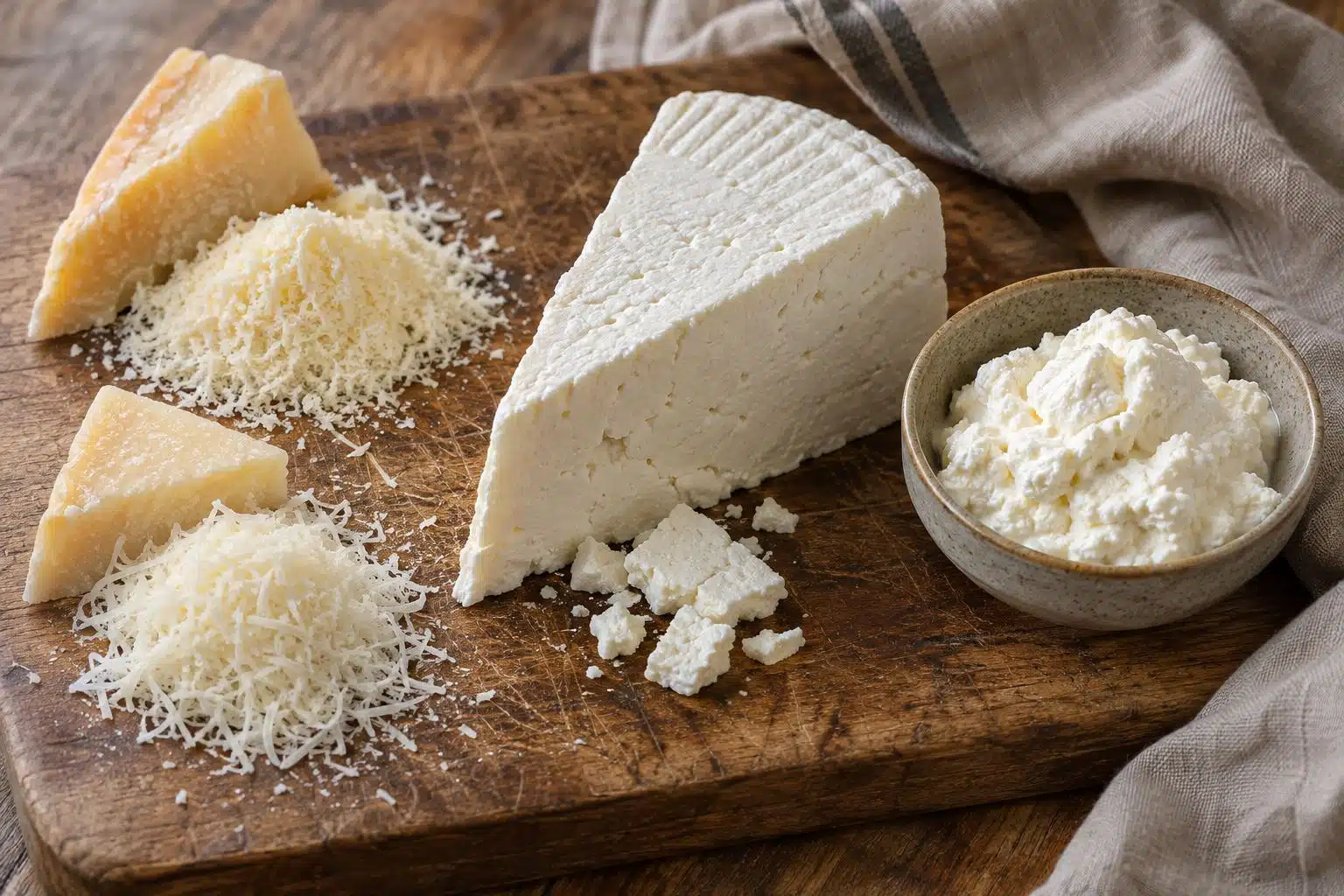
Fresh or Aged: Which Mizithra Does Your Recipe Mean?
Mizithra (also spelled myzithra) is a Greek whey cheese made from sheep's milk, goat's milk or a mix of both. It comes in two forms that cook very differently.
Remember it later
Planning to try this recipe soon? Save it for a quick find later!
Fresh mizithra is soft, moist and creamy, with no added salt, so it tastes mild and almost sweet. Cooks eat it as it is, with honey, or baked into pies.
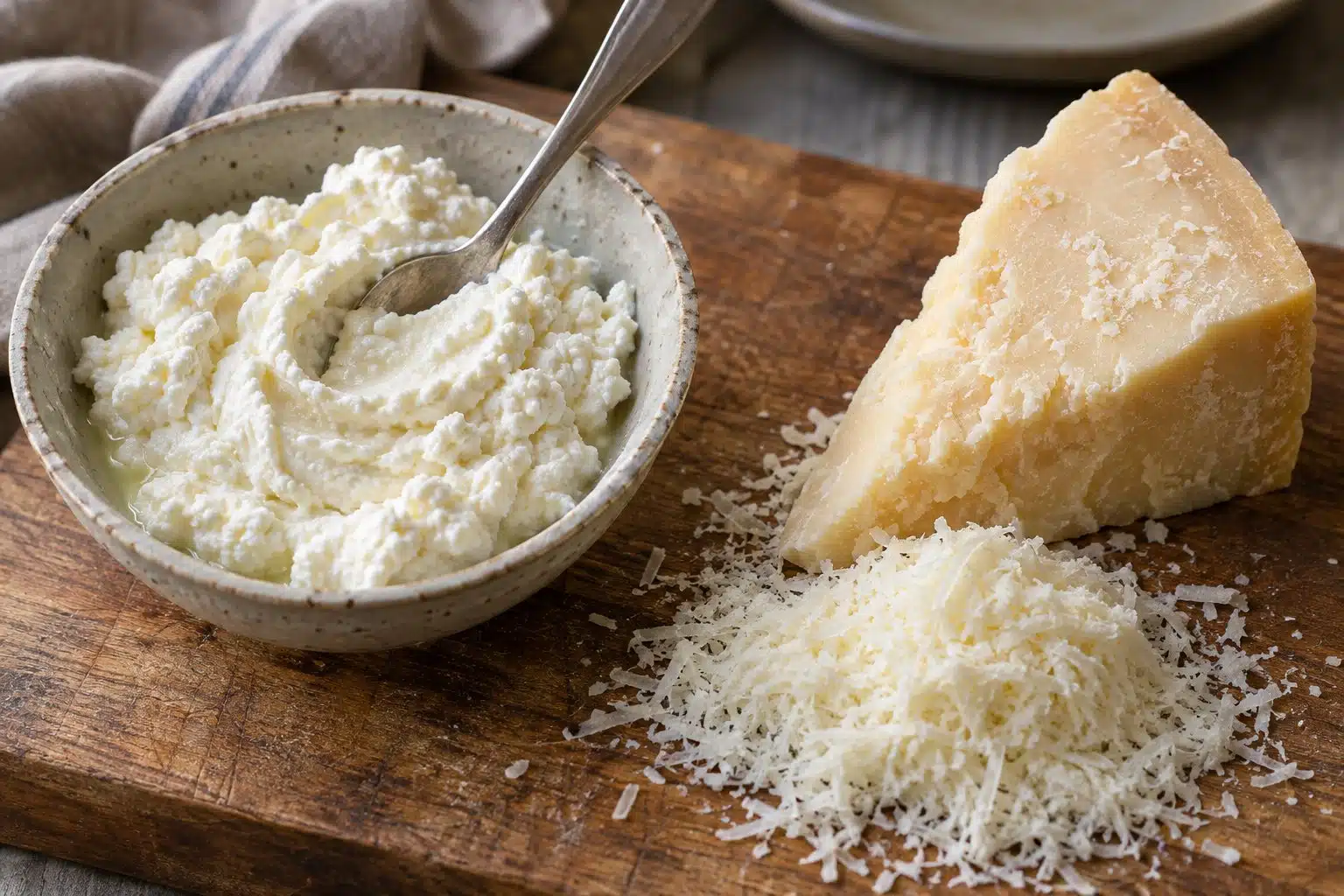
Aged mizithra, called xynomizithra, is salted and left to dry. It ends up denser, saltier and tangier, and it is the cheese Greek cooks grate over hot pasta.
| If the Recipe Says | Mizithra Is | Swap With |
|---|---|---|
| Finely grated | Aged | Ricotta salata |
| Browned butter spaghetti | Aged | Ricotta salata or Romano |
| Spread or with honey | Fresh | Whole-milk ricotta |
| Baked into a pie | Fresh | Drained ricotta |
Grating, shaving and pasta point to the aged kind, while spreading, honey and baking point to the fresh kind. The popular browned butter spaghetti copycats call for finely grated mizithra, so they mean the aged one.
If you shop for the real thing, look for the spellings mizithra, myzithra and anthotyro, which is essentially the same cheese, and ask for the aged one when you plan to grate it.
What Can Replace Aged Mizithra on Pasta?
Aged mizithra is salty, dry and a little sour, so a good swap has to grate fine and carry salt. These six do, ranked by how close they sit to it.
| # | Substitute | Best For | Ratio | Key Note |
|---|---|---|---|---|
| 1 | Ricotta Salata | 🍳 Cooking | 1:1 | Milder, no sour edge |
| 2 | Kefalotyri | 🍳 Cooking | ¾ cup per 1 cup | Greek, salty, hard |
| 3 | Pecorino Romano | 🍳 Cooking | ⅔ cup per 1 cup | Saltiest grating swap |
| 4 | Parmesan | ✨ Both | ¾ cup per 1 cup | Nutty, easy to find |
| 5 | Aged Cotija | 🍳 Cooking | ⅔ cup per 1 cup | Dry and very salty |
| 6 | Feta | 🥗 Raw | ¾ cup per 1 cup | Crumbles, does not grate |
The cup amounts are starting points for finely grated cheese, packed, set lower for the saltier cheeses. Taste the finished dish before you add more.
1 – Ricotta Salata
Ricotta salata is a whey cheese like mizithra, salted and aged until it is firm enough to shave, grate or crumble. Use 1:1.
Italian cooks already grate it over pasta alla Norma, so it suits tomato sauce as well as butter. It tastes cleaner and milder than aged mizithra, so add a pinch of black pepper if the dish seems flat.
2 – Kefalotyri
Kefalotyri is a hard, salty Greek cheese from sheep's milk, goat's milk or both, and Greek cooks grate it over pasta, meat and cooked vegetables. Start with ¾ cup for each cup of mizithra.
Greek markets are the likeliest place to find it. If the shelf has no kefalotyri either, the kefalotyri substitutes cover the same Greek grating job.
3 – Pecorino Romano
Romano cheese is the strongest swap. Pecorino Romano is hard, crumbly and salty, made only from sheep's milk and aged at least 5 months, so use ⅔ cup for each cup of mizithra.
It is the cheese classic cacio e pepe is built on, so it handles butter and pepper well. One browned butter copycat uses ½ cup mizithra and ½ cup Romano for a pound of pasta, which shows how to stretch a small piece of real mizithra.
4 – Parmesan
Parmesan is the swap most kitchens already have. Real Parmigiano Reggiano is a cow's milk cheese aged at least 12 months, hard and granular, with a nutty, savory taste.
Mizithra tastes tangier and milkier, so Parmesan makes a deeper, less sour dish. Use ¾ cup for each cup of mizithra, grated on the fine side.
5 – Aged Cotija
Aged (añejo) cotija is a dry, firm Mexican cow's milk cheese that crumbles into sandy grains and softens in heat without melting. It is very salty, so use ⅔ cup for each cup of mizithra.
- Buy aged (añejo): young cotija is moist and closer to mild feta, while aged cotija behaves like a hard grating cheese such as Parmesan.
- Skip other salt: cotija is very salty, so leave added salt out until you have tasted the dish.
- Add it at the table: it softens in heat without melting, so sprinkle it on after plating and it keeps its dry, sandy bite.
6 – Feta
Crumbled feta replaces aged mizithra only where you crumble the cheese, over a salad or a vegetable bake, and never where you need a fine grate. Use ¾ cup for each cup of mizithra.
Feta cures in brine and stays moist, which changes how you handle it.
- Pat it dry: brine clings to the crumbles and thins a butter or oil sauce.
- Add it last: stirred in early, the crumbles release liquid and turn the dish wet.
- Expect more tang: feta tastes sharper and more sour than aged mizithra, so it suits salads and vegetable bakes better than plain buttered pasta.
Which Swap Works Best for Browned Butter Spaghetti?
One copycat of the restaurant dish uses ½ cup unsalted butter and ⅓ cup mizithra for 8 ounces of spaghetti, enough for four. The butter is ready when it turns dark golden and smells nutty, so take the pan off the heat right then.
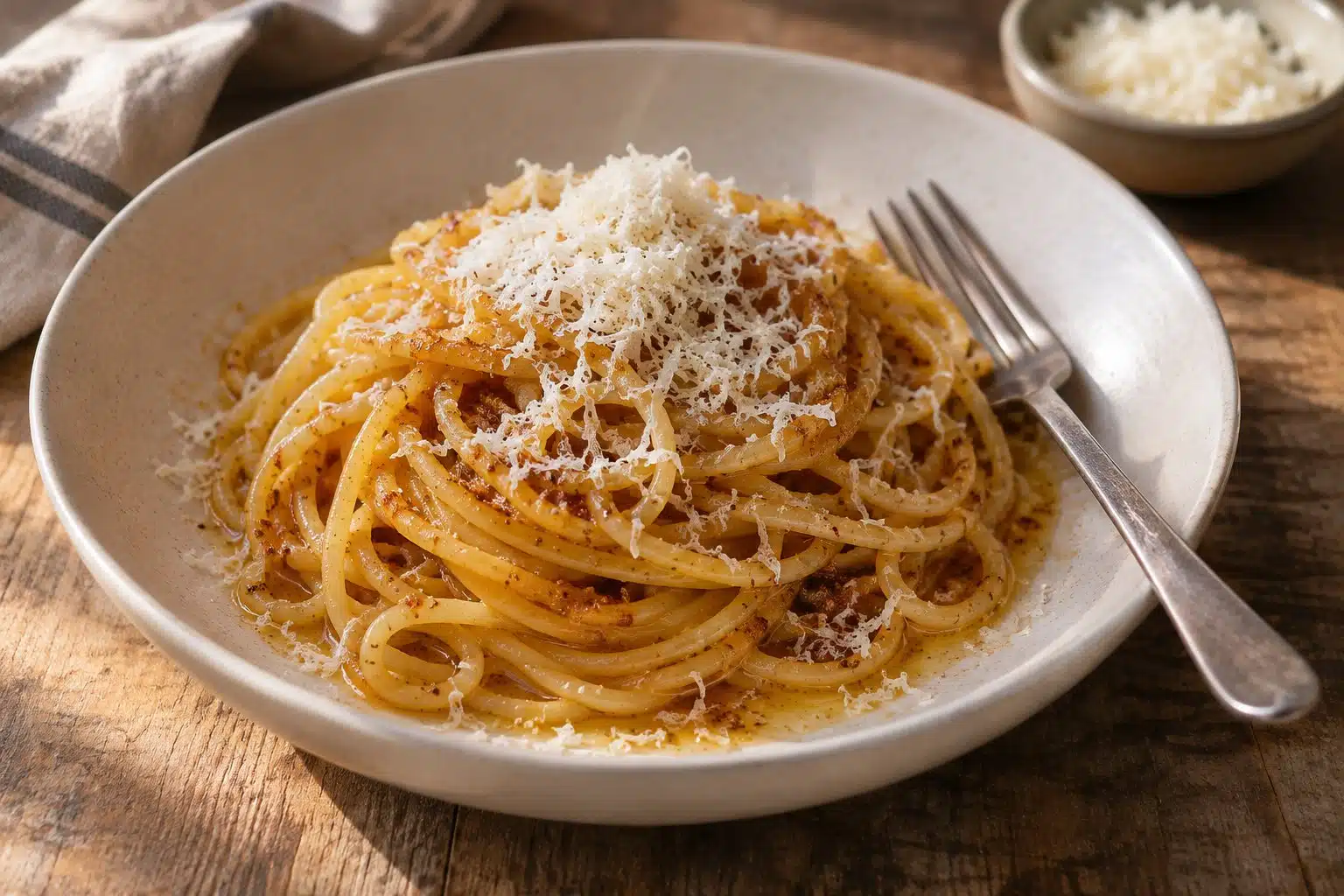
Scale your swap from that ⅓ cup, grate it on the fine side, and toss it with the pasta off the heat so it coats the strands instead of clumping in the pan.
- Ricotta salata: use ⅓ cup, which gives the closest result with a milder taste.
- Parmesan: use ¼ cup, because it is nuttier and a little saltier than mizithra.
- Pecorino Romano: use a scant ¼ cup, because it is the saltiest of the three.
- Half and half: use ⅙ cup (a scant 3 tablespoons) of real mizithra and the same of Romano or Parmesan if you only have a little of the original.
What Can Replace Fresh Mizithra in Pies and Desserts?
Fresh mizithra is soft, moist and unsalted, so a swap for it has to be soft and mild. Salty grating cheeses fail here, because fresh mizithra brings no salt of its own to a filling that was balanced without it.
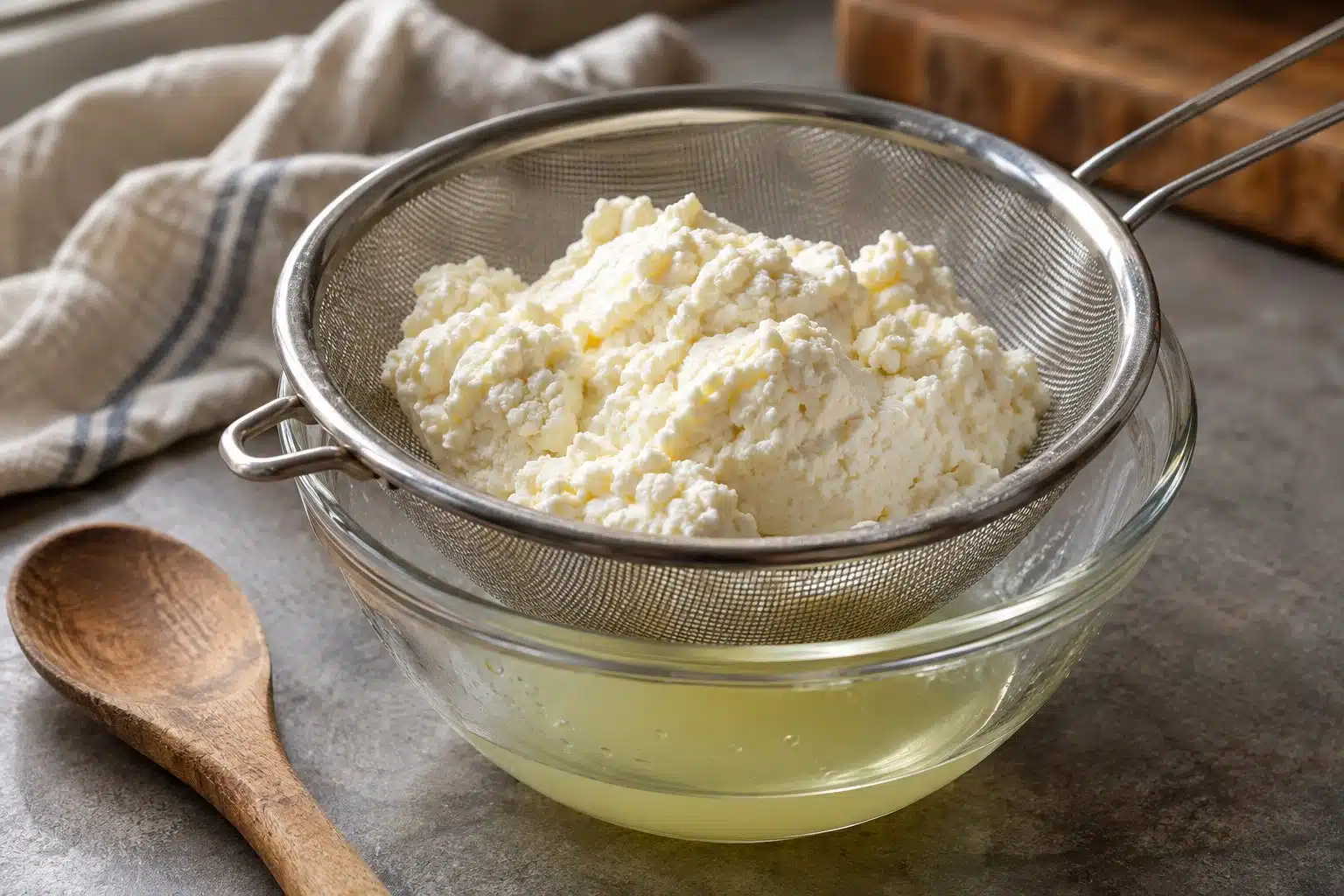
- Whole-milk ricotta, 1:1: drain whole-milk ricotta in a fine strainer until it stops dripping, because loose liquid makes pie fillings runny.
- Manouri, 1:1: this Greek whey cheese is made with added cream, holds only about 0.8% salt, and tastes mildly nutty, so it makes a richer, creamier filling than mizithra.
- Cottage cheese, 1:1: blend or mash cottage cheese until smooth and drain it, then cut any added salt because the curds are already salted.
If the fresh mizithra was meant for toast or a cheese plate, ricotta with lemon and olive oil is a quick way to serve the swap, and a spoonful of honey on top matches how fresh mizithra is usually eaten.
What cheese is most similar to mizithra?
Anthotyro is essentially the same cheese, and manouri has a similar flavor but is less dry. Among cheeses sold in most stores, ricotta salata is the nearest to aged mizithra and ricotta is the nearest to fresh mizithra.
Is mizithra the same as ricotta?
Fresh mizithra and ricotta are both soft whey cheeses, so ricotta works 1:1. Aged mizithra is salted and dried, so it behaves like ricotta salata, not like tub ricotta.
How does mizithra differ from Parmesan?
Mizithra is a whey cheese from sheep's or goat's milk, and the aged kind tastes tangy and sour. Parmesan is a cow's milk cheese aged at least 12 months, so it is harder, more granular and nuttier.
Can I make browned butter spaghetti without mizithra?
Yes. Ricotta salata is the closest swap, and Parmesan or Romano work if you cut the amount to ¾ or ⅔ and use unsalted butter.