
Grilled halloumi arrives at the table making a faint squeak against the fork, golden on the outside and still springy within - a behavior no standard cheese shares.

Understanding keeping halloumi fresh matters almost as much as knowing how to cook it, because texture degrades fast once the block dries out.
This is the firm, brined cheese from Cyprus that browns without melting, and it earns a permanent spot in any cook's rotation for that reason alone.
Halloumi is a firm, brined Cypriot cheese made from sheep, goat, or cow milk that holds its shape under high heat. It tastes salty and mildly tangy raw, then develops a crisp, caramelized crust when grilled or pan-fried. Best used for grilling, frying, and grain salads.
What Is halloumi cheese?
Halloumi originates from Cyprus, where it has been produced for centuries as a staple of Cypriot and broader Eastern Mediterranean cooking.
Remember it later
Planning to try this recipe soon? Save it for a quick find later!
It belongs to a small category of brined, unripened grilling cheeses - firm enough to slice cleanly and heat-stable enough to hold its structure on a grill or in a hot skillet.
Traditional halloumi is made from sheep and goat milk, often in combination, though modern commercial blocks frequently include cow milk to reduce cost and increase yield.
The curd is cooked, pressed, then stored in whey or salt brine, which firms the texture further and builds the characteristic saltiness.
It also goes by hellim in Turkish Cypriot communities, and "haloumi" in some regional spellings.
Two broad styles exist worth knowing:
- Traditional Cypriot halloumi - sheep and goat milk only, denser flavor, often sold with a sprig of dried mint folded inside the block.
- Commercial blend halloumi - includes cow milk, milder, softer texture, more widely available in supermarkets.
Understanding what makes milk distinct across animal sources helps explain why the milk blend shifts the final flavor and firmness of the block.
What Does halloumi cheese Taste Like?
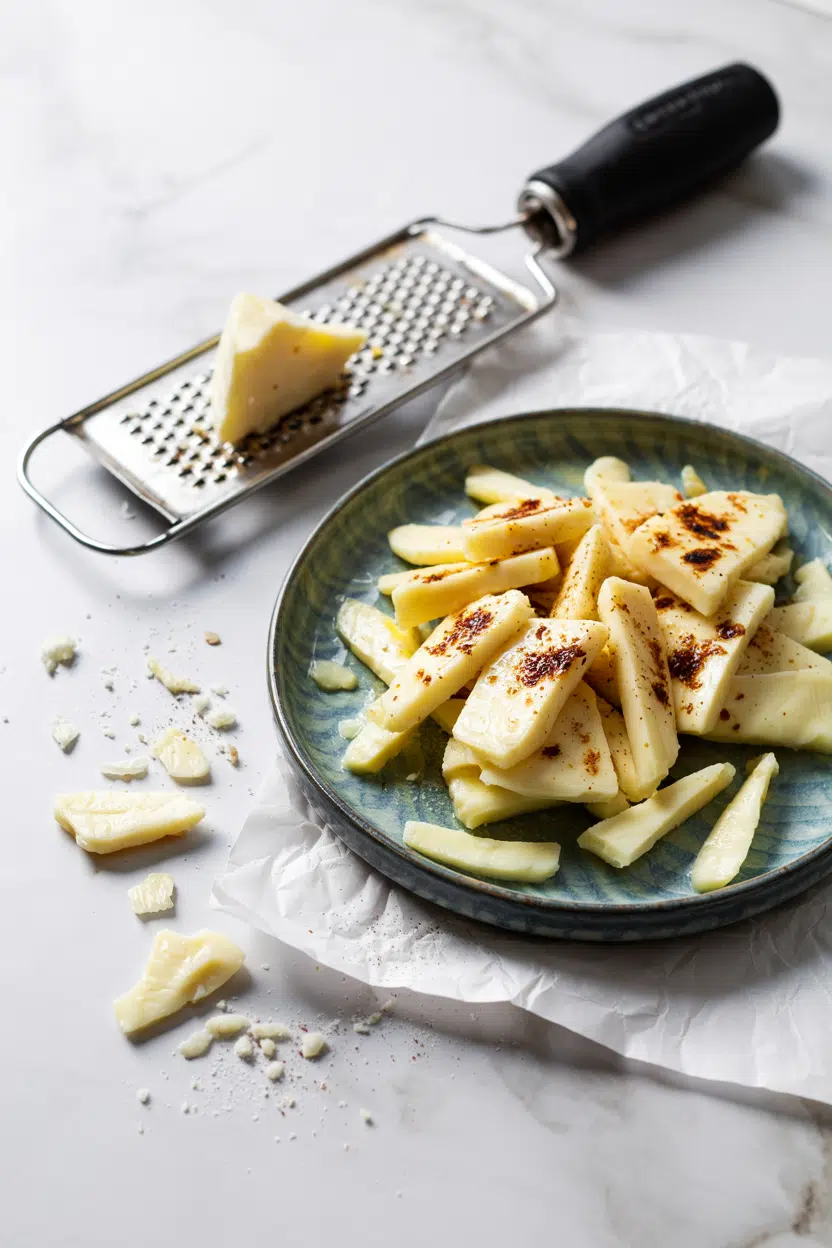
Raw halloumi is salty and clean, with a milky baseline and a faint tang from the brine. The texture squeaks against the teeth - a characteristic shared with fresh paneer or very firm mozzarella, though halloumi is denser than both.
Heat changes everything. Once browned, a caramelized, slightly smoky edge develops on the crust while the interior softens just enough to turn yielding without collapsing.
That contrast - crisp shell, springy center - is what separates halloumi from every other cheese in a hot pan.
Older or drier blocks taste saltier and more concentrated. Soaking slices in water for 20-30 minutes before cooking pulls out enough brine to dial the salt back without flattening the flavor entirely.
How to Use halloumi cheese
Halloumi's defining trait - it doesn't melt - makes it the right tool for cooking situations where other cheeses would turn liquid and disappear.
A dry skillet over medium-high heat is all it takes to get a deep golden crust; no oil is needed because the cheese releases enough fat as it warms.
The most direct route is grilling thick slices and finishing them with lemon and oregano - the classic Cypriot preparation.
Knowing the difference between comparing dried oregano vs ground oregano options matters here, since dried leaf oregano gives a more distinct herbal hit than powder on hot cheese. Beyond that, the range of uses is broad:
| Method | Best For | Tip |
|---|---|---|
| 🔥 Grilling | Classic Cypriot serving, kebabs, flatbreads | Oil the cheese, not the grill grate |
| 🍳 Pan-Frying | Grain salads, bowls, sandwiches | Dry skillet, medium-high heat, don't move it early |
| 🥗 Raw | Sliced over salads, with watermelon or figs | Slice thin; soak if block is very salty |
| 🍤 Battered and Fried | Crispy appetizer, sharing plates | Light batter only - the cheese is already dense |
| 🍢 Broiled on Skewers | Vegetable kebabs, mezze platters | Thread between dense vegetables to buffer heat |
Halloumi works across Cypriot, Greek, and Middle Eastern meals, and it moves easily into modern grain bowls and street food formats.
Sweet pairings - honey, figs, or watermelon - exploit the salt contrast and are worth trying before assuming halloumi only belongs in savory applications.
For ideas on using halloumi cheese for creaminess in broader meal contexts, the pairing combinations extend well beyond the grill.
How to Buy and Store halloumi cheese
At the store, look for a block with even white color and a moist surface inside its packaging. Chalky, dry edges suggest the brine has evaporated; excessive sliminess points to age.
For traditional style, choose blocks labeled "Cyprus" or single-origin - these are more likely to use sheep and goat milk rather than a full cow milk blend.
Unopened vacuum-packed blocks keep for weeks to months per the sell-by date.
Once opened, submerge the remainder in fresh salted water and refrigerate; it holds well for up to two weeks that way.
Cooked halloumi keeps in the fridge for 2-4 days, though the crust softens.
For longer storage, details on freezing halloumi cheese cover what to expect from texture after a freeze-thaw cycle.
On the topic of dairy freshness more broadly, guidance on milk in dairy recipes applies to the whey-based brining liquid as well.
Start Here for Halloumi
First block of halloumi? Grill or pan-fry it plain - no marinade, no batter - just thick slices in a dry skillet until both sides are deeply golden.
That single cook tells you what the cheese does and how much salt it carries.
From there, squeeze lemon over the top and decide if you need to soak future slices before cooking.
If the flavors of halloumi don't land for you, exploring alternatives to halloumi cheese gives a clear map of what else holds up under heat.
Frequently Asked Questions
No. Halloumi is specifically made to resist melting at high heat. The cooking process that forms the curd - heating the whey to a high temperature before pressing - denatures the proteins so they hold structure rather than flow. You get browning and softening, not pooling.
Yes, and it's common in Cypriot mezze. Raw halloumi is firm, squeaky, and saltier-tasting than cooked slices because the brine flavor hasn't been tempered by heat. Thin slices pair well with watermelon or tomatoes straight from the block.
It's notably saltier than mozzarella or paneer, closer to feta in sodium level. Brining throughout production means the salt penetrates the whole block, not just the rind. Soaking slices in cold water for 20-30 minutes reduces saltiness if needed.
Both are firm, heat-stable cheeses, but paneer is made from cow milk without brine and tastes mild and unsalted. Halloumi is brined, much saltier, and browns more aggressively. Paneer also crumbles more readily; halloumi holds a slice under direct flame.
Brush oil onto the cheese itself, not the grill grates, and make sure the grill is fully preheated before the slices go on. Don't attempt to move halloumi for the first 2 minutes - once a crust forms, it releases cleanly on its own.



