
You spot a thick grouper fillet at the fish counter - dense, ivory-white flesh with almost no fishy smell - and it's easy to see why it's a staple in Florida Keys kitchens and Caribbean coastal cooking alike.

If you've ever reached for swapping out mahi mahi or browsed halibut swaps that work, grouper deserves a serious look as a landing spot on your list.
Grouper is a firm, white-fleshed reef fish with a mild, clean flavor and meaty texture. It holds shape well under high heat, suits a wide range of cooking methods, and is best used within 1-2 days of purchase.
What Is grouper?
Grouper belongs to the family Serranidae and is one of the most commercially significant reef fish caught in the western Atlantic and Gulf of Mexico.
Remember it later
Planning to try this recipe soon? Save it for a quick find later!
These are bottom-dwelling fish that grow slowly and reach impressive sizes - large individuals can weigh over 100 pounds.
Several species appear at fish markets under distinct regional names. Gag grouper and red grouper dominate Gulf Coast fisheries, while Nassau grouper comes mainly from Caribbean waters; yellowfin grouper is less common but occasionally available.
Understanding fish and its flavor in general helps explain why grouper's thick, dense muscle structure produces such a different eating experience from thinner-fleshed species.
The fillets are thick and bone-white, often sold as large skin-on portions or cross-cut steaks.
It's worth knowing that if grouper is unavailable, many cooks reach for snapper - and you can read about alternatives to red snapper or cod swaps that work depending on what your recipe needs.
What Does grouper Taste Like?
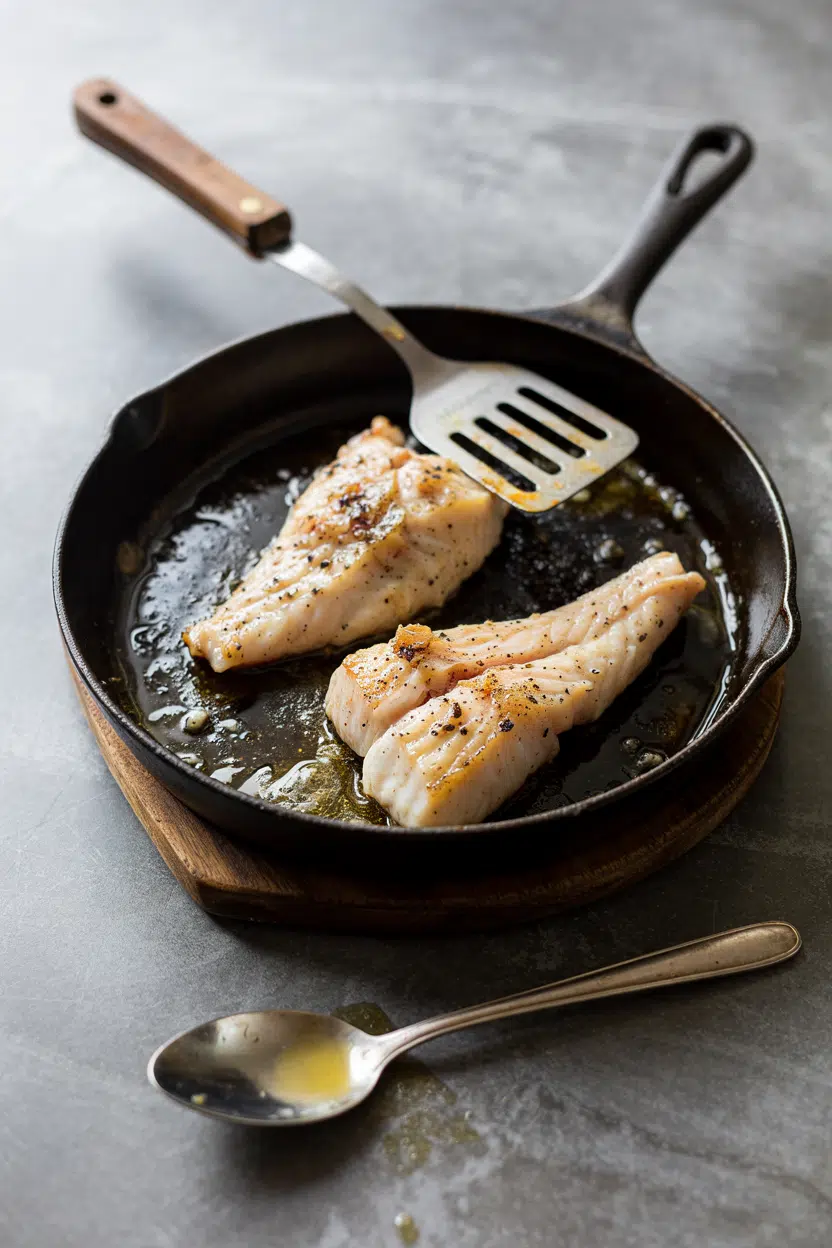
Grouper has a mild, clean flavor - lightly briny from its reef habitat, with a subtle natural sweetness and a low-key umami quality that makes it satisfying without tasting assertive. Raw fillets smell faintly of the sea, not fishy.
Heat intensifies the sweetness slightly and firms the flake structure into large, cohesive chunks rather than the finer shreds you get from cod. Compared to snapper, grouper is denser and meatier; compared to halibut, it's less delicate but similarly clean.
How to Use grouper
Grouper's dense flesh is one of its biggest practical advantages - it doesn't fall apart on the grill or in a braise, which puts it in a different class from more delicate white fish.
| Method | Best For | Tip |
|---|---|---|
| 🔥 Grilling | Thick steaks, large skin-on fillets | Use high direct heat; oil the grates well to prevent sticking |
| 🍳 Pan-Searing | Skin-on fillets finished with brown butter | Press fillet flat for the first 90 seconds to crisp the skin evenly |
| ♨️ Blackening | Sandwiches, Gulf-style plates | |
| 🫙 Baking | Whole fillets with tomatoes, olives, or herbs | Keep temperature at 400°F; thicker fillets need 14-18 minutes |
| 🍋 Ceviche / Raw | Thinly sliced when exceptionally fresh | Use only day-of purchase fish; acid-cure at least 20 minutes |
In Gulf Coast and Florida Keys cooking, blackened grouper sandwiches on crusty rolls are practically a regional institution. Caribbean preparations lean toward baked whole fish or fillets with tomatoes, capers, and olive oil.
Southeast Asian coastal cooks use chunked grouper in coconut-broth soups and steamed preparations with ginger and scallion.
For pairings, bright acids work best - lemon, lime, or white wine. Garlic, shallot, parsley, and cilantro are classic aromatic companions, while roasted peppers and tomatoes give body without masking the fish.
Mild chiles and blackening spice are the main heat options that don't overwhelm.
How to Buy and Store grouper
At the counter, look for moist, translucent flesh with no brown edges or slimy surface. Whole fish should have clear, slightly convex eyes and bright red gills - not sunken, cloudy eyes.
A sour odor is an immediate reject.
Once home, store grouper at the coldest part of your fridge, on a plate covered tightly with plastic wrap or in an airtight container.
Use it within 1-2 days for best flavor.
For signs of degradation before you cook, checking reliable grouper spoilage signs can save you from an unpleasant meal.
Freezing is a solid option for longer storage - wrap tightly in plastic, then foil, and use within three months.
Start Here
Grouper suits cooks who want a firm, forgiving white fish that handles high heat and pairs cleanly with simple seasonings.
If you're new to it, a pan-seared skin-on fillet with lemon and brown butter is the fastest way to understand what this fish does well.
If grouper isn't available, what makes red snapper distinct covers another firm reef fish that overlaps significantly in use.
- 🐟 New to grouper - start with pan-seared fillets; the method is forgiving and results are immediate.
- 🔥 Grill-first cooks - buy steaks, not thin fillets; they hold on the grate without tearing.
- 🌶️ Spice lovers - blackening on a cast-iron skillet is the most crowd-reliable preparation.
- 🍋 Light eaters - thin slices in ceviche, day-of purchase only, show the fish at its cleanest.
Frequently Asked Questions
Yes. Grouper lives exclusively in saltwater, typically on or near coral reefs and rocky bottom structures in tropical and subtropical coastal waters. Most commercial supply comes from the Gulf of Mexico and western Atlantic.
Mild. The flavor is clean and lightly briny with a subtle sweetness - noticeably less assertive than salmon or mackerel. It's a good entry point for people who find strongly flavored fish off-putting.
Fresh grouper has moist, translucent flesh, no brown edges, and smells faintly of the sea rather than sour or ammonia-like. On whole fish, eyes should be clear and slightly convex, not sunken.
Yes, and it's one of the best methods for thick cuts. The dense flesh holds together over high direct heat where thinner fish would break apart. Oil the grates well and avoid moving the steak until it releases naturally.
Grouper falls in the moderate-mercury category - lower than swordfish or tilefish, higher than shrimp or tilapia. The FDA advises pregnant women and young children to limit grouper to one serving per week.



