
Gochugaru does one job no other chili product quite replicates: it delivers heat, color, and a faint smokiness all at once without overwhelming what it seasons.
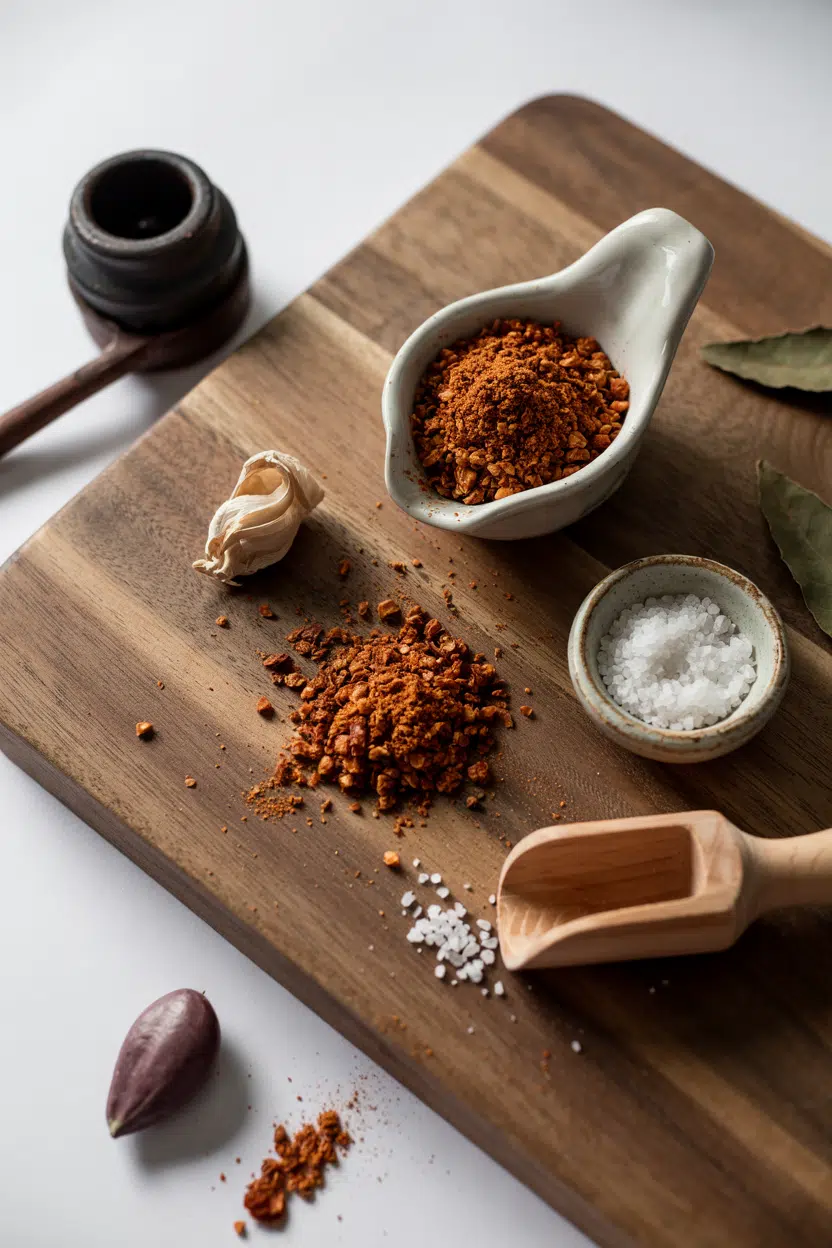
Understanding what makes kimchi distinct starts here, because this single ingredient anchors that ferment's flavor from first mix to final bite.
Most cooks reach for replacements for chili powder when their pantry runs short, not realizing gochugaru is its own category entirely.
Gochugaru is coarsely crushed Korean red chili pepper flakes with mild-to-moderate heat, fruity sweetness, and a light smokiness. It's the backbone of kimchi, stews, and marinades - irreplaceable in Korean cooking for its texture and color as much as its heat.
What Is gochugaru?
Gochugaru comes from the Korean Peninsula, where sun-dried red chili peppers are seeded and coarsely ground into irregular, rust-red flakes.
Remember it later
Planning to try this recipe soon? Save it for a quick find later!
The name roughly translates to "red pepper powder," though "flakes" is more accurate - the texture is nothing like a fine powder.
You may also see it spelled kochukaru or labeled "Korean red pepper flakes" on import packaging. Both names point to the same product, so don't get tripped up by the variation.
It comes in two grinds worth knowing about:
- 🔴 Coarse grind - the standard for kimchi; large flakes hold their texture in fermentation and give pastes visible body
- 🔴 Fine grind - used in soups, sauces, and marinades where a smoother consistency matters
Gochugaru is distinct from generic chili flakes (which include seeds and have sharper heat) and from gochujang (a fermented paste that already contains salt, sugar, and fermented soy). These are not interchangeable, even though they share the same chili base.
What Does gochugaru Taste Like?
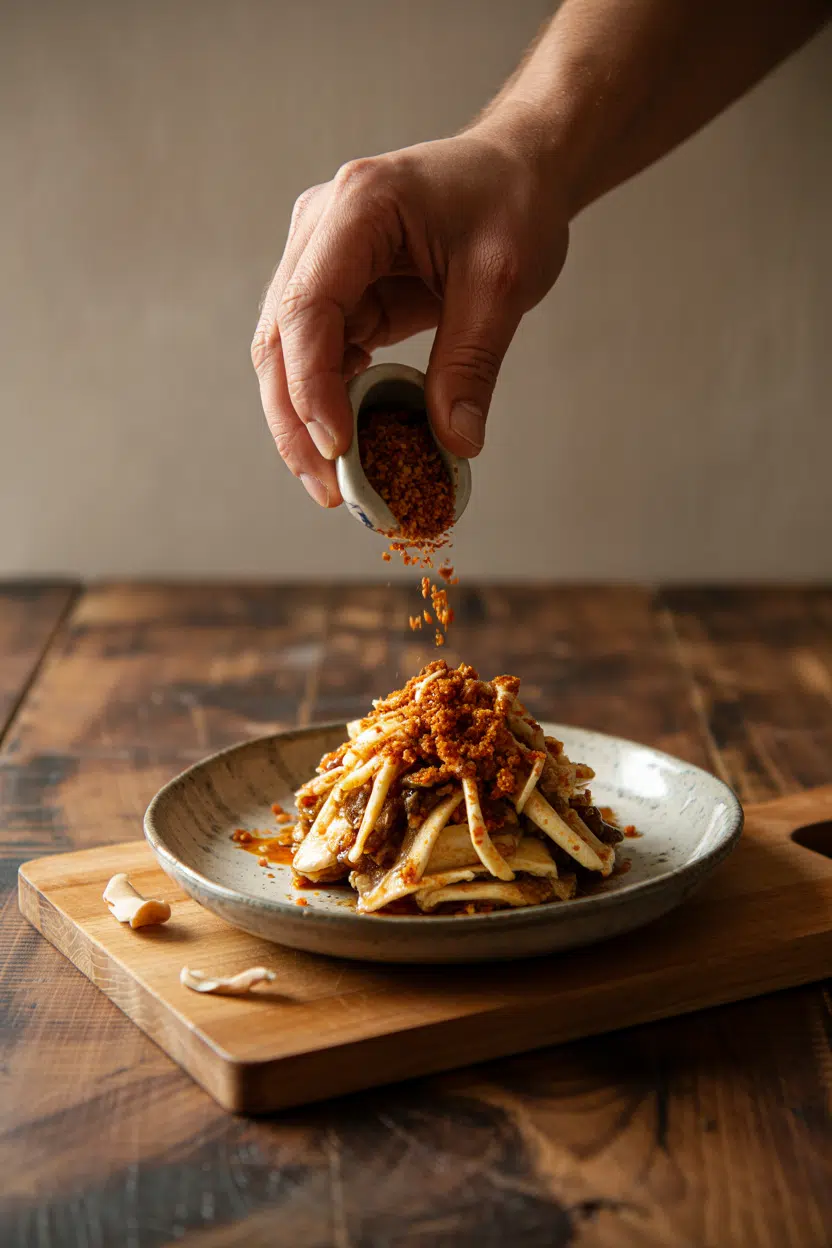
The closest comparison is a milder, fruitier cayenne blended with smoked paprika - but that description only gets you partway there. Gochugaru's heat is slow, building at the back of the throat rather than hitting the front of the palate immediately.
That fruity sweetness comes from the pepper variety itself - Korean chilis are selectively bred for lower capsaicin and higher sugar content than most Western chili cultivars. Toasting gochugaru briefly in a dry pan deepens the nutty and smoky notes considerably, shifting the flavor closer to a roasted pepper profile.
Heat from gochugaru lingers rather than spikes. That warmth is what makes it work in fermented applications like kimchi, where the chili flavor mellows and integrates over weeks.
How to Use gochugaru
Gochugaru works at every stage of cooking - raw in cold pastes, simmered into hot broths, and scattered as a finishing spice. Its coarse texture means it suspends well in wet mixtures without turning pastes gummy or thin.
In Korean cooking, it's the foundation. The kimchi seasoning paste wouldn't function without it, and for good reason: gochugaru supplies heat, red pigment, and enough body to coat vegetables evenly.
If you're making kimchi jjigae kimchi stew at home, gochugaru is what gives the broth its characteristic red color and depth - gochujang alone won't replace it.
It pairs tightly with garlic, ginger, sesame oil, scallions, and fish sauce - the core flavor architecture of Korean cooking.
It also works alongside doenjang (Korean fermented soybean paste); if you're ever short on that ingredient, guidance on swapping out doenjang can help you rebuild the flavor profile.
Outside Korean cooking, gochugaru holds up well in dry rubs for pork belly or chicken thighs, stirred into vinaigrettes, or used in marinades where you want warm color and moderate heat.
However, keep it away from delicate white fish or dishes built around subtle floral flavors - the pigment and heat will dominate.
| Method | Best For | Tip |
|---|---|---|
| 🥗 Raw in paste | Kimchi, dipping sauces, cold marinades | Use coarse grind; mix with sesame oil first to bloom color |
| 🍲 Simmered | Stews, broths, kimchi jjigae | Add early for deep color; fine grind integrates faster |
| 🔥 Dry rub | Pork belly, chicken, grilled meats | Combine with salt and garlic powder; press firmly into meat |
| ✨ Finishing | Roasted vegetables, noodle bowls, eggs | Add after cooking to preserve bright color and fresh aroma |
How to Buy and Store gochugaru
Look for bright, brick-red flakes with visible irregularity - consistent fine powder is a sign of poor quality or wrong product. The color tells you everything: faded orange-brown flakes have lost their pigment and flavor both.
Packaging labeled "Korean gochugaru" with a country of origin listed is more reliable than generic "Korean chili flakes," which may blend in other chili varieties.
For keeping gochugaru fresh beyond a few months, the refrigerator is your best option - cold storage slows color fade and oil degradation noticeably.
- 🧊 Pantry storage - airtight container, away from light and heat; best within 3-6 months once opened
- ❄️ Refrigerator storage - extends opened shelf life to 12-18 months with minimal quality loss
- 📦 Unopened - good for 6-12 months at room temperature in a cool, dark spot
Where to Start With gochugaru
New to it? Buy the coarse grind first. It's the more forgiving format - it works in pastes, rubs, and as a finisher without any adjustment.
If you find yourself short mid-recipe, options for swapping out gochugaru exist, though none replicate the exact color-heat-smoke combination.
For dishes built around fermented ingredients, knowing your alternatives to chili paste and options for swapping out kimchi gives you a more complete picture of where gochugaru fits in the larger Korean pantry.
Start with kimchi seasoning paste or a simple pork belly rub. From there, its role in broths and marinades becomes obvious quickly.
Frequently Asked Questions
Mildly to moderately so. Heat builds slowly at the back of the throat rather than hitting upfront - most people with average spice tolerance handle it comfortably. It rates well below cayenne on most heat scales.
Not directly - cayenne is significantly hotter, finer, and has none of gochugaru's fruity sweetness. Use roughly one-quarter the amount and combine with smoked paprika to approximate both heat level and color.
Standard chili flakes include seeds and skins from mixed chili varieties, producing sharper, more aggressive heat. Gochugaru is seeded before grinding, which removes much of the capsaicin and leaves a sweeter, fruitier result.
No - properly processed gochugaru is seeded before drying and grinding. That seeding step is key to its milder heat, since most capsaicin in chili peppers concentrates in the membrane and seeds.
Yes, and it works well anywhere smoked paprika or mild chili flakes would go. It performs reliably in roasted vegetables, vinaigrettes, egg dishes, and spice rubs without requiring any other Korean ingredients alongside it.



