
Fleur de sel earns its place at the finish line.

A pinch over a seared steak or a square of dark chocolate does something no ordinary salt can replicate - it adds a light crunch, a clean briny lift, and just enough mineral sweetness to make the whole dish snap into focus.
This is not a cooking salt.
It's the last thing you reach for before a plate leaves the kitchen.
Fleur de sel is a hand-harvested finishing salt from the Atlantic coast of France. Its pale, moist flakes deliver a clean brine with soft mineral sweetness - best applied after cooking, never during, to preserve the texture that makes it worth the price.
What Is fleur de sel?
Fleur de sel - French for "flower of salt" - is the thin, delicate crust of crystals that forms on the surface of coastal salt pans during warm, dry, and gently windy days.
Remember it later
Planning to try this recipe soon? Save it for a quick find later!
Workers skim it by hand before it can sink and mix with the coarser salt below, which is why supply is limited and prices run higher than everyday sea salt.
Most of the world's best-regarded fleur de sel comes from Brittany on France's Atlantic coast, with Guérande being the most recognized producing area.
You'll also see it labeled fleur de sel de Bretagne, and regional certifications matter - look for those origin markers on the package.
The crystals themselves are pale gray or off-white, irregularly shaped, and slightly moist to the touch. That moisture is part of what gives the salt its softer bite compared to fully dried flake salts.
- 🌸 Also called - sea flower, French sea salt, fleur de sel de Bretagne
- 🏷️ Category - finishing salt, hand-harvested sea salt
- 🌍 Key regions - Guérande, Île de Ré, Noirmoutier (all Atlantic France)
- 🔍 Versus regular sea salt - skimmed from the surface rather than raked from the bottom of the pan
What Does fleur de sel Taste Like?
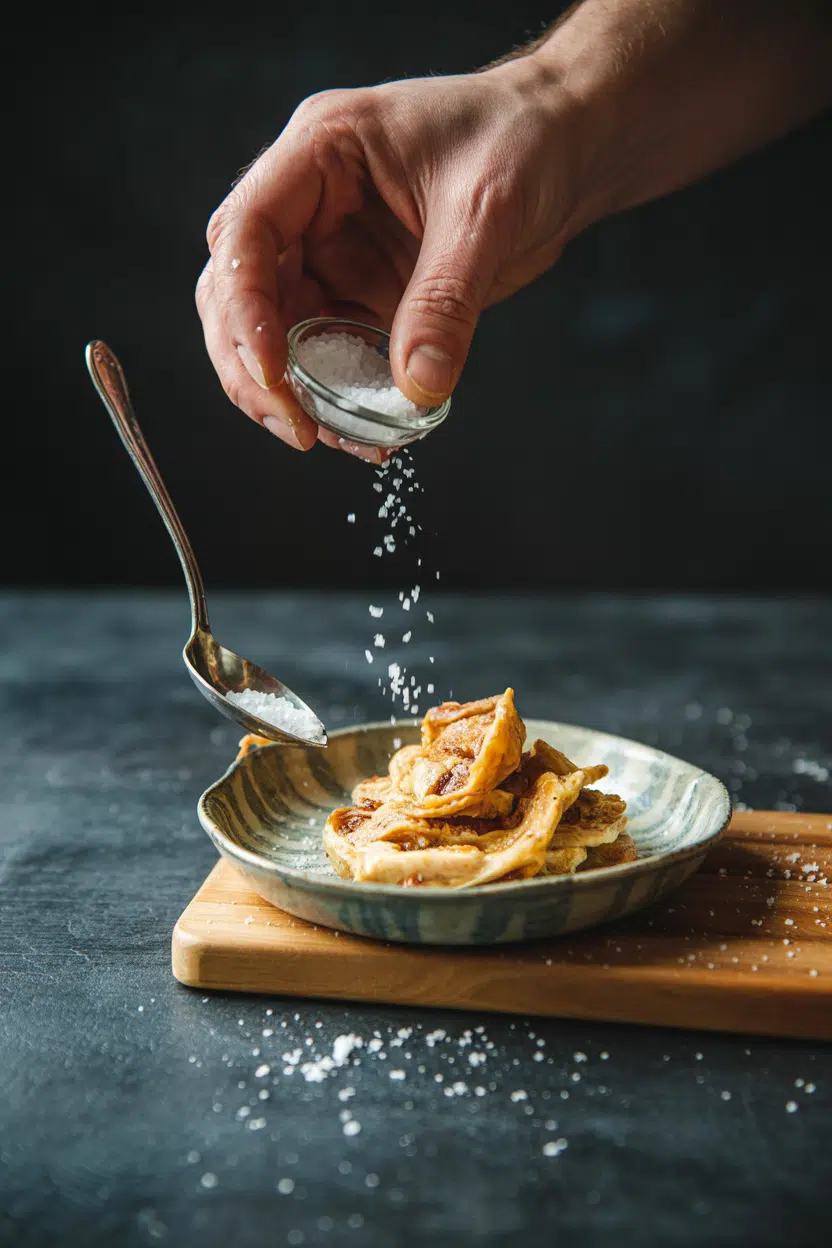
The flavor is clean and briny without the sharp edge you get from iodized table salt. There's a quiet mineral sweetness underneath - not sugary, but soft - and a barely-there oceanic quality that dissipates quickly on the tongue.
Compared to regular sea salt, fleur de sel is noticeably lighter and less aggressive. It tastes similar, yes, but where standard sea salt hits in a single note, fleur de sel resolves across a few seconds.
The finish is short and pleasant rather than persistently salty.
Heat destroys the texture advantage almost instantly. Once dissolved into a dish, fleur de sel becomes indistinguishable from any other salt - which is precisely why it belongs only at the end, not in the pot.
How to Use fleur de sel
Fleur de sel is a finishing salt only. Apply it at the very end of cooking or directly at the table - never in boiling water, never into a marinade, never stirred into a sauce.
The crystal structure is the whole point.
That light crunch lands on the tongue first, followed by the brine, and that sequence is what separates a finished dish from a merely seasoned one.
French cooks in Brittany have applied it this way for centuries, and modern pastry kitchens follow the same logic when tapping it over salted caramels and dark chocolate bars.
Pairings lean toward rich, fatty, or sweet: butter, olive oil, dark chocolate, caramel, citrus, and fresh oysters all benefit from the contrast.
On the savory side, roasted root vegetables, seared steak after resting, and grilled oysters right before serving are classic applications.
| Method | Best For | Tip |
|---|---|---|
| 🧂 Cold Finish | Salads, avocado toast, buttered bread | Pinch between fingers and drop from height for even distribution |
| 🥩 Post-Roast Garnish | Seared steak, roasted vegetables, whole fish | Apply after resting, not directly off the heat |
| 🍫 Confectionery | Dark chocolate, caramels, shortbread | Press lightly so crystals adhere without sinking in |
| 🦪 Table Service | Oysters, compound butters, charcuterie boards | Small ramekin on the side lets guests control their own finish |
If you need salt for general cooking and wonder about swapping out fleur de sel for a more affordable option, most recipes handle the substitution well at the seasoning stage.
How to Buy and Store fleur de sel
Look for crystals that are pale gray or off-white, irregular in shape, and slightly moist when you press the bag.
Bright-white, uniformly shaped flakes signal a refined product - closer to a dried flake salt than true fleur de sel. Labels matter: Guérande and Brittany are the benchmarks, and regional designations on the package confirm origin.
Store fleur de sel in a small, dry, covered container at room temperature, away from steam, direct heat, and humidity. A ceramic cellar or tight-lidded glass jar works well.
Flavor holds indefinitely under those conditions, though fleur de sel's shelf life for peak texture runs roughly one to three years before the crystals start to compact.
When to Reach for It
This salt earns its price only when the crystal matters. Use it whenever texture is part of the eating experience - a crunch, a pop, a moment of saltiness distinct from the dish itself.
Skip it for anything long-cooked or baked where salt dissolves into the recipe. For those jobs, a reliable workhorse like kosher salt's flavor and uses make it the smarter, more economical choice.
Frequently Asked Questions
Not significantly. Sodium content is essentially the same by weight. However, fleur de sel crystals are larger, so a pinch delivers less sodium by volume than the same pinch of fine table salt.
Sprinkle it directly onto melted or tempered chocolate before it sets, or press a few crystals onto finished truffles and caramels. Apply lightly - two or three crystals per bite is enough.
Kosher salt is a coarse cooking and curing salt with no particular regional flavor - it's meant to dissolve into food. Fleur de sel is a finishing salt valued for its moist, delicate crystals and subtle mineral flavor that should stay intact on the plate.
You can, but it's wasteful. Once dissolved into boiling water or a sauce, the texture disappears and the flavor is indistinguishable from cheaper salts. Reserve it for finishing.
Yes. Its crystals are thinner and more fragile than kosher or coarse sea salt, so they dissolve quickly on contact with warm food or liquid. That's another reason to apply it only at the very end.



