
Drambuie does something no plain Scotch or straightforward honey syrup can replicate: it delivers both at once, wrapped in a layer of cinnamon, clove, and heather warmth.
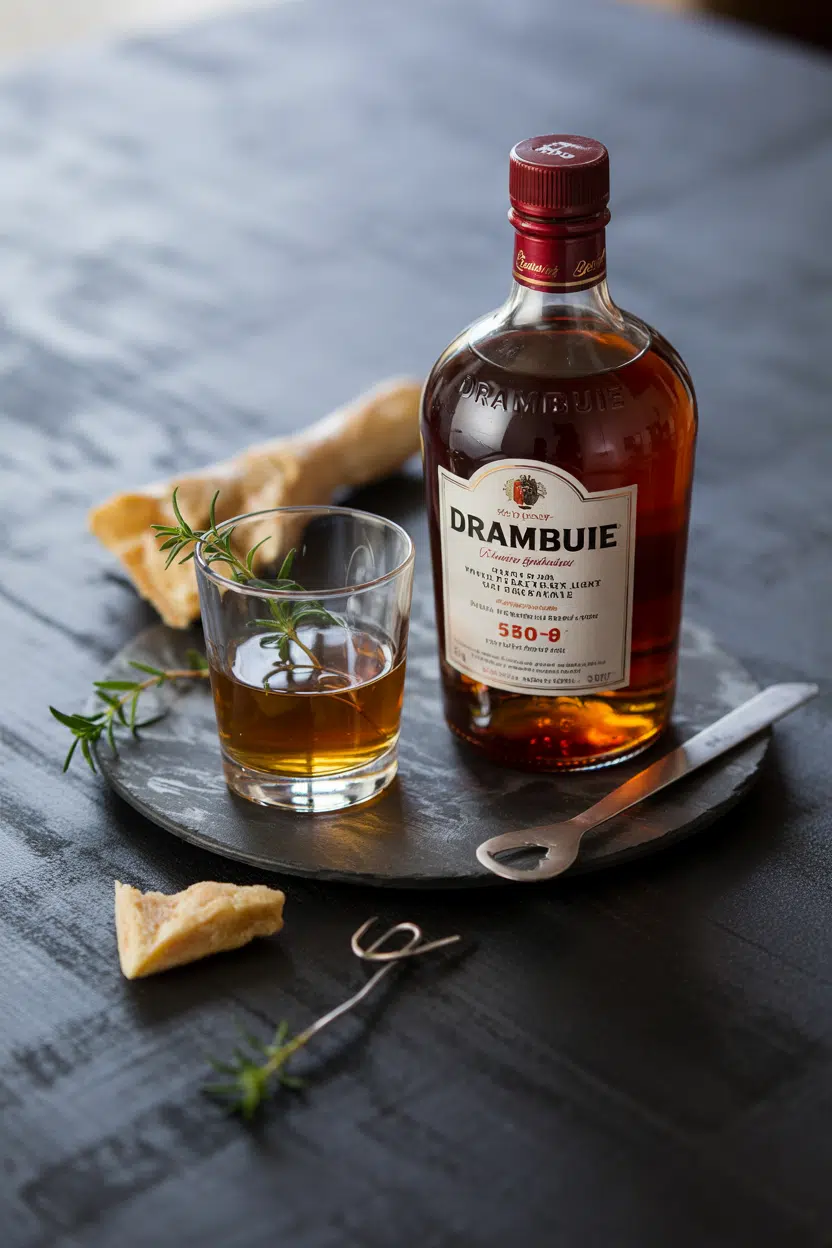
Bartenders reach for it when a drink needs weight and sweetness without losing its spirit backbone, and home cooks use it where a glaze or sauce needs complexity on a single pour.
Unlike orange liqueurs - where cointreau swaps that work give you a clear path if a bottle runs short - Drambuie's layered malt-and-honey profile is harder to replace on the fly.
It sits in a category of its own, closer in spirit to what makes benedictine liqueur distinct than to anything fruit-based.
Drambuie is a Scotch whisky liqueur sweetened with heather honey and spiced with herbs, cinnamon, and clove. Golden-amber and syrupy, it's best known in the Rusty Nail cocktail but works equally well in glazes, sauces, and hot drinks.
What Is Drambuie?
Drambuie is a whisky-based herbal liqueur produced in Scotland, made from aged Scotch whisky, heather honey, and a proprietary blend of herbs and spices. The name comes from the Scottish Gaelic An Dram Buidheach, meaning "the drink that satisfies."
Remember it later
Planning to try this recipe soon? Save it for a quick find later!
Its origin story traces to the Isle of Skye in 1746, linked to a recipe allegedly gifted to a Scottish clan by Bonnie Prince Charlie after Culloden.
Whether that legend holds up historically, the liqueur has been commercially produced since 1909 and is now one of the most recognized Scotch-based liqueurs worldwide.
The liqueur sits in a specific subcategory alongside other herb-forward spirit liqueurs - swapping out benedictine liqueur follows a similar logic to finding a Drambuie stand-in, since both rely on a spirit base plus herbal complexity.
You may see it labeled as Drambuie liqueur or Drambuie Scotch liqueur; "drambuie" (lowercase) is a common misspelling but refers to the same product.
- 🥃 Base spirit - aged Scotch whisky, giving malt and oak character
- 🍯 Sweetener - Scottish heather honey, not refined sugar
- 🌿 Botanical blend - herbs and spices including cinnamon, clove, and nutmeg
- 📍 ABV - 40% alcohol by volume, same as standard whisky
What Does Drambuie Taste Like?
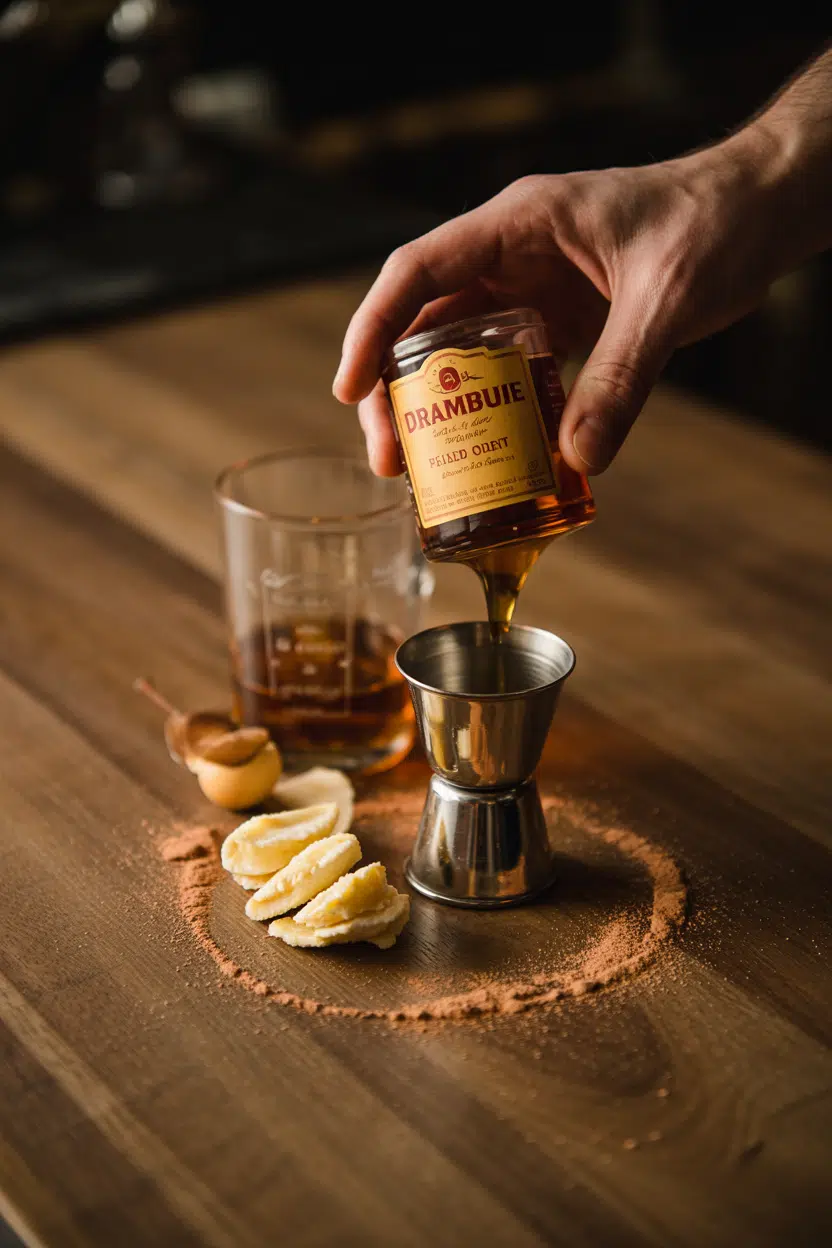
Honeyed malt leads on the palate, followed immediately by warm spice - cinnamon and clove come through clearly, with nutmeg sitting underneath. There's a faint citrus peel note at the edges that keeps the sweetness from feeling heavy.
The texture is syrupy and silky, noticeably more viscous than plain Scotch. It tastes closest to a sweetened tawny sherry crossed with a single malt, though nearer in style to other honeyed whisky liqueurs than to brandy or bourbon-based alternatives.
Heat amplifies the honey note and softens the spice edges - in a hot toddy or warm sauce, the cinnamon recedes and the malt reads sweeter.
Reduced to a syrup, it thickens considerably and the herbal notes concentrate alongside the honey.
How to Use Drambuie
The Rusty Nail is where most people meet Drambuie: two parts Scotch, one part Drambuie, stirred over ice.
It's the cocktail that put the liqueur on bar menus globally, and the ratio is easy to adjust based on how sweet you want the drink.
Beyond cocktails, Drambuie earns its place in the kitchen.
Brushed over roasted pork or ham in the final ten minutes of cooking, it produces a honey-spice glaze with more depth than a plain honey wash.
Stirred into pan drippings with a little butter, it becomes a finishing sauce for game birds or pork chops.
The technique of making compound butter (herb) at home applies directly here - fold a tablespoon of Drambuie into softened butter with a pinch of sea salt and you have a compound butter that melts well over a rested steak.
For desserts, a small reduction - simmered down with a splash of cream - drizzles over baked apples or panna cotta without clashing. Flambéed with pear or banana, the alcohol burns off and leaves honeyed whisky aroma behind.
| Method | Best For | Tip |
|---|---|---|
| 🥃 Stirred | Rusty Nail, hot toddy, espresso drinks | Add last; taste as you go - sweetness amplifies cold |
| 🍳 Pan glaze | Pork, ham, root vegetables | Brush in final 10 min to prevent burning |
| 🔥 Reduction | Dessert syrups, finishing sauces | Reduce by half; watch closely - honey scorches fast |
| 🍌 Flambé | Fruit desserts | Warm the liqueur first; ignite off heat |
| 🧈 Compound butter | Steaks, roasted veg, warm bread | One tablespoon per 60g butter is enough |
Pairings that work reliably: dark chocolate, apricot, roasted apple, aged cheddar, Manchego, ginger, and citrus zest. Avoid using Drambuie with delicate white fish or green salads - the honey-spice weight overwhelms both.
How to Buy and Store Drambuie
Buy a sealed 700-750 ml bottle from a reputable retailer and check the fill level and cap integrity before purchasing. The liquid should be golden-amber and clear; avoid bottles with cloudy or significantly darkened liquid, which points to poor storage history.
Store upright in a cool, dark pantry or liquor cabinet, cap tightly closed. Unlike wine, Drambuie doesn't need refrigeration - the alcohol and sugar content preserve it well at room temperature.
For a full breakdown of timelines and signs of decline, the guide on how long drambuie keeps covers both opened and unopened bottles in detail.
- Unopened - lasts many years if stored away from heat and direct light
- Opened - best within 2-3 years for peak flavor; safe longer if properly sealed
- Temperature - avoid anywhere above 25°C or subject to swings
Where to Start With Drambuie
If you're new to the bottle, mix a Rusty Nail first - it shows both sides of the liqueur's character without any cooking required.
From there, the glaze route is the easiest kitchen entry point: roasted carrots or a pork tenderloin, a brush in the last ten minutes, done.
If you can't find Drambuie or want a cost comparison, reviewing replacements for drambuie will show which honeyed whisky liqueurs come closest and where they fall short.
Understanding what does single malt mean guide also helps when you're deciding which Scotch to pair alongside it in a Rusty Nail.
Frequently Asked Questions
It's a liqueur. Drambuie uses aged Scotch whisky as its base but adds heather honey and herbs, which classifies it as a liqueur, not a straight whisky. The ABV is 40%, the same as most standard whiskies.
In a Rusty Nail, it rounds out the Scotch with honey sweetness and warm spice while keeping the malt character intact. It doesn't read as sugary - the herbal notes balance the honey.
Yes, and it performs well reduced into glazes or sauces. The honey-spice profile survives moderate heat, though reducing by half before adding to savory dishes prevents over-sweetness.
Most distilled spirits are considered low in gluten because distillation removes proteins. However, Drambuie is not certified gluten-free, and those with celiac disease should consult their doctor before consuming any barley-based distilled spirit.
Amaretto is almond-forward and sweeter; Drambuie is malt-forward with spice and honey. They're not interchangeable, though both suit dessert glazes - if you need to swap amaretto instead, [replacements for amaretto](https://forkliftkitchen.com/amaretto-substitutes/) covers the closest options.



