
Brushed across a resting ham before the final blast of oven heat, Benedictine does something that no single-note sweetener can replicate - it leaves behind honey warmth, a whisper of dried herbs, and just enough spice to make the glaze feel composed rather than cloying.

If you've worked with amaretto swaps that work or spent time navigating swapping out cointreau, you already know how much a liqueur's specific flavor character matters in substitution. Benedictine is one of those bottles that earns its place on the shelf by doing things other liqueurs simply don't.
A honeyed, herbal French liqueur built on a cognac base and a secret botanical blend, Bénédictine D.O.M. sits between the sweetness of Grand Marnier and the herbal edge of chartreuse - mild enough for baking, complex enough for serious cocktails.
What Is Benedictine Liqueur?
Bénédictine has one of the more storied origin stories in spirits history.
Remember it later
Planning to try this recipe soon? Save it for a quick find later!
A wine merchant named Alexandre Le Grand claimed in 1863 to have rediscovered a medieval monastic recipe from the Benedictine abbey of Fécamp in Normandy - and while historians debate how much of that story holds up, the liqueur he released became a legitimate classic.
The bottle carries the label D.O.M., an abbreviation for the Latin Deo Optimo Maximo ("to God, most good, most great"), a nod to that monastic framing. Production has remained in Fécamp ever since.
At its core, Benedictine is a cognac-based herbal liqueur, sweetened with honey and shaped by a proprietary blend of 27 plants and spices. The exact formula is kept secret, though confirmed botanicals include hyssop, angelica, and lemon balm.
It falls into the aromatic digestif category alongside chartreuse and génépy - sweet, complex, and built for sipping or mixing.
- 🏷️ Full name - Bénédictine D.O.M. (also spelled Benedictine liqueur)
- Base spirit - aged cognac
- ABV - 40% (80 proof)
- Country of origin - France (Normandy)
- B&B - a common pre-bottled blend of Benedictine and brandy, slightly drier
What Does Benedictine Liqueur Taste Like?
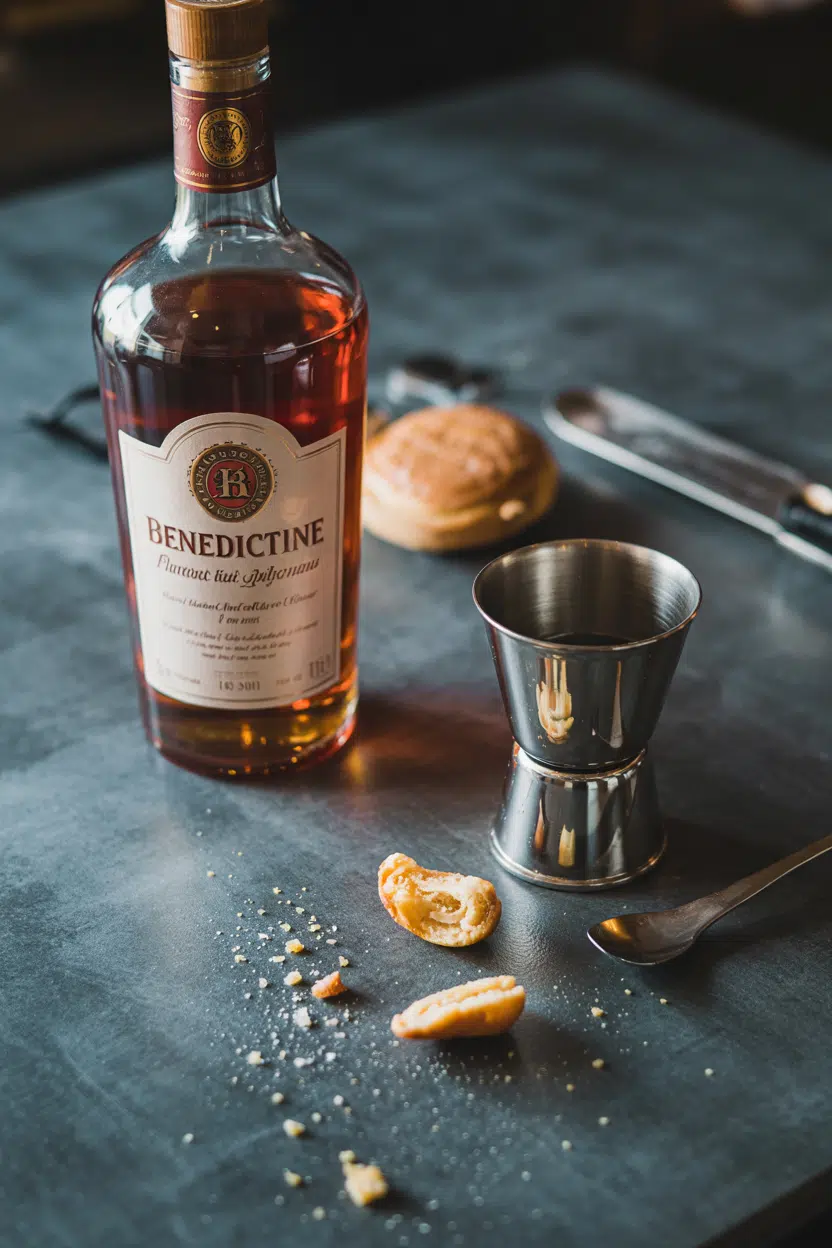
The first impression is sweet and honeyed, close to the caramel richness you get from grand marnier's flavor and uses - but Benedictine pulls away quickly with an herbal middle note that Grand Marnier doesn't have.
Think dried thyme, a faint resinous quality, and the kind of spice warmth you associate with mulled wine: cinnamon, clove, and a trace of ginger.
The finish lingers. That syrupy, silky mouthfeel coats the palate and holds the spice notes longer than you'd expect from a 40% ABV spirit.
Heat softens the herbal edge noticeably. In a warm custard or a finished sauce, Benedictine reads more as honeyed spice than as an herbal spirit - a useful distinction if you're cooking rather than mixing.
How to Use Benedictine Liqueur
Cocktails are where most people encounter Benedictine first.
It appears in the Vieux Carré alongside rye and cognac, where its honey-spice character bridges both base spirits, and in the Singapore Sling, where it anchors the gin's botanicals with sweetness and depth.
In the kitchen, 1-2 tablespoons opens up a range of applications without overwhelming a dish.
| Method | Best For | Tip |
|---|---|---|
| 🍸 Stirred in | Cocktails, hot chocolate, coffee | Add last - never shake when pairing with aged spirits |
| 🍳 Folded in | Pastry cream, custard, crème brûlée | Add after tempering, off direct heat |
| 🔥 Reduced | Glazes for pork or ham, dessert syrups | Reduce gently; sweetness concentrates fast |
| 🍐 Simmered | Poached pear or apple compote | Add mid-poach so spice infuses the fruit |
Pairings lean toward cognac, aged brandy, pear, quince, and vanilla - flavors that share Benedictine's warm, brown-spice register. Blue cheese and dark chocolate both work as contrasting partners, cutting the sweetness with bitterness or funk.
Knowing how long custard keeps matters when you're planning a Benedictine-spiked pastry cream ahead of an event.
If a recipe calls for a different herbal liqueur and you're considering a switch, benedictine liqueur swaps that work lays out the closest matches by flavor direction.
Avoid using Benedictine with raw bitter greens - radicchio and endive without a sweet counterpoint will fight the honey and make both elements taste off.
How to Buy and Store Benedictine Liqueur
Look for the Bénédictine D.O.M. label - that's the historic recipe, and it's the only version with the full botanical profile. At the store, check the fill level: a neck-fill line indicates the bottle has been stored upright and sealed properly.
The liquid should be clear amber with no cloudiness or sediment.
B&B (Benedictine and Brandy) is a drier pre-blended variant - useful if you want less sweetness in a cocktail but not a direct swap in baking.
For storage, keep the bottle upright in a cool, dark cabinet and reseal the cap firmly after each use.
The full picture of benedictine liqueur's shelf life covers edge cases, but the short version is: unopened bottles last indefinitely; opened, aim to use within one to two years for the best aromatic expression.
Start Here
Benedictine is most accessible as a cocktail modifier - start with a Vieux Carré or add a half-ounce to a brandy old-fashioned before moving into kitchen applications.
Once you're comfortable with its flavor, try folding a tablespoon into a vanilla custard or a pear compote.
Those uses reveal why bartenders and pastry cooks both keep it close - the honey-spice depth is genuinely hard to replicate, and replacements for green chartreuse or grand marnier swaps that work confirm just how distinct each herbal liqueur really is.
Frequently Asked Questions
Sweet. Benedictine is honey-forward with significant residual sugar, placing it firmly on the sweeter end of herbal liqueurs. B&B (Benedictine and Brandy) is the drier pre-blended option if sweetness is a concern.
40% ABV (80 proof) - the same as most standard spirits. Despite its syrupy texture, it isn't lower in alcohol than a typical whiskey or gin.
In a pinch, yes - but the result will be sweeter and less bitter. Chartreuse has a sharper herbal edge and higher ABV (55% green), so reduce any added sugar when substituting Benedictine.
The Vieux Carré and the Singapore Sling are the two classics. It also appears in the Bobby Burns (Scotch and sweet vermouth) and many bartender-built stirred cocktails using aged base spirits.
Not entirely - alcohol retention depends on cooking time and method. Adding Benedictine off-heat or at the very end of cooking preserves the most aroma while still reducing the raw alcohol edge.



