
Fresh dill weed does something few herbs manage: it anchors a dish without taking it over.
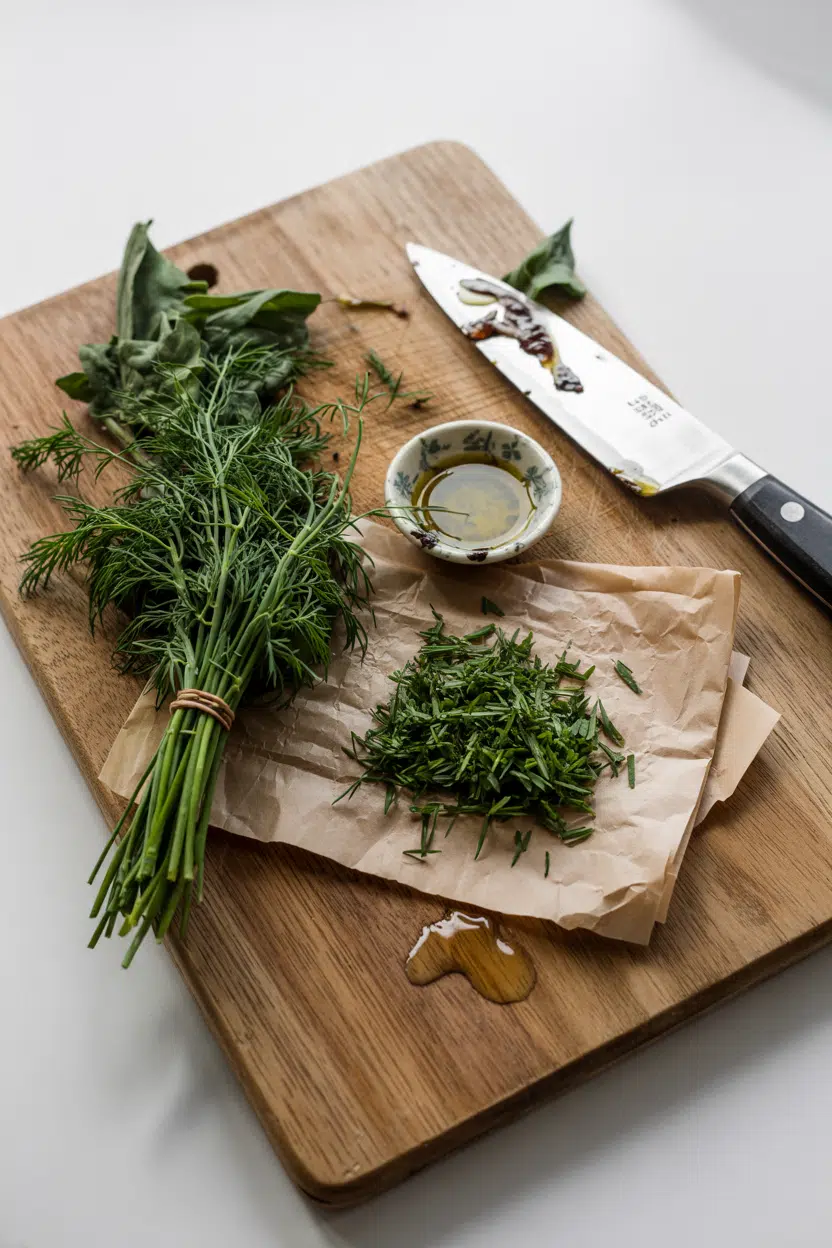
The feathery fronds add a bright, anise-citrus lift to cold sauces, cured fish, and potato dishes - and keeping dill fresh is the first thing worth learning, because its flavor degrades fast once those fronds start to wilt.
If you've been reaching for tarragon swaps that work to fill the anise gap in a recipe, dill weed is often the cleaner, lighter answer.
Dill weed is the feathery green fronds of the dill plant, used fresh as a finishing herb. It delivers a mild anise-citrus flavor with a grassy edge - best added at the end of cooking or straight to cold dishes.
What Is Dill Weed?
Dill weed refers specifically to the feathery green fronds of Anethum graveolens, a flowering herb native to Eurasia - spanning the Mediterranean coast east toward India.
Remember it later
Planning to try this recipe soon? Save it for a quick find later!
The name "dill weed" distinguishes the leaves from dill seed, which comes from the same plant but has a sharper, more concentrated flavor.
You'll also see it labeled as dill fronds or simply fresh dill at the market.
The plant belongs to the same family as fennel, caraway, and parsley - all Apiaceae - which explains some of its flavor overlap with those herbs.
- 🌿 Plant family - Apiaceae (same as fennel, caraway, and carrot)
- 🌍 Origin - Wild across Eurasia; cultivated for at least 5,000 years
- 🌱 Forms available - Fresh fronds, dried flakes, or frozen chopped
- 🔤 Alternate names - Dill fronds, fresh dill, *Anethum graveolens*; "dillweed" (one word) is a common informal spelling
Fresh fronds are the preferred form for most cooking - dried dill weed retains some flavor but loses the grassy brightness that makes the fresh herb worth using.
What Does Dill Weed Taste Like?
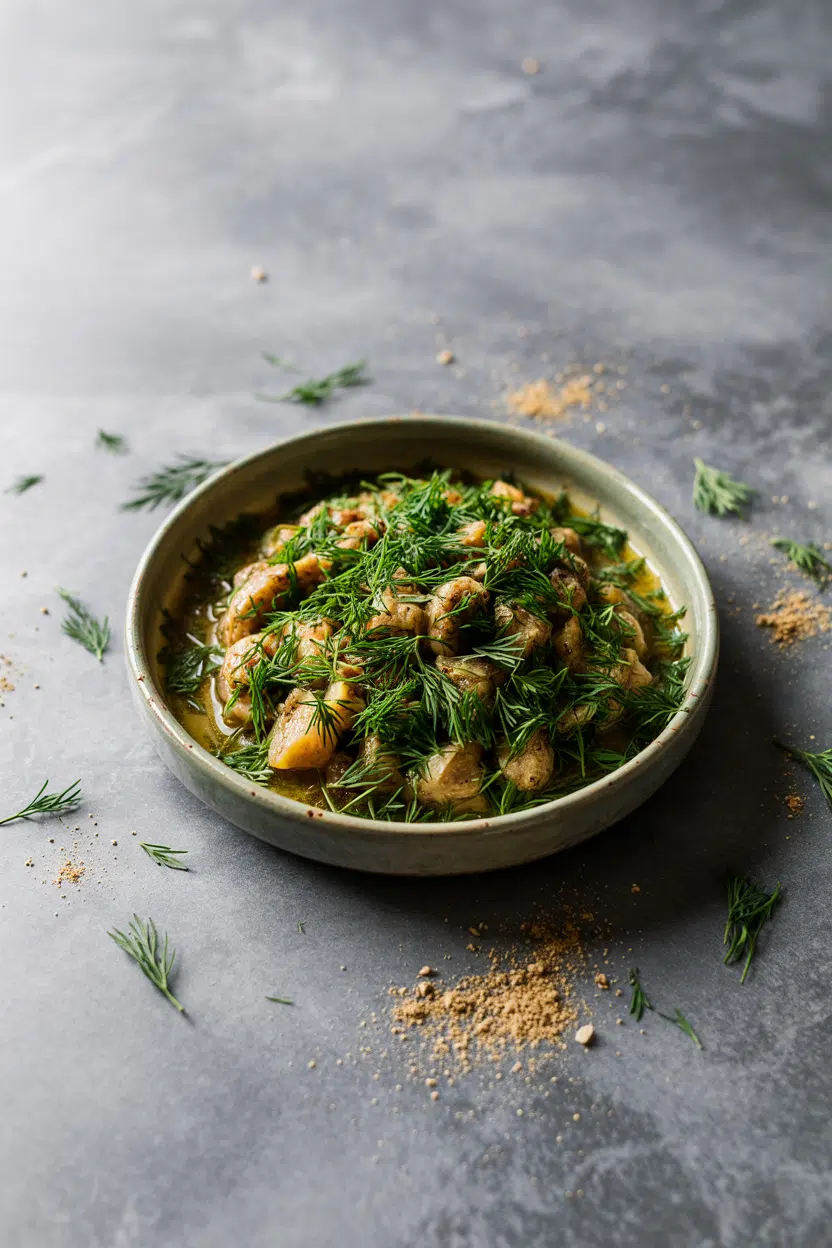
Dill weed tastes like a lighter, less assertive version of fennel fronds crossed with parsley - though the taste of parsley is earthier and more neutral by comparison.
The dominant note is mild anise or licorice, softened by a bright citrusy top note that lifts the palate without sharpness.
There's also a subtle grassy bitterness underneath, which keeps the herb from tasting sweet or cloying.
Heat changes things fast. Cooking dill weed for more than a minute or two collapses the citrus brightness and leaves a flat, slightly bitter residue. That's why it's almost always added last.
How to Use Dill Weed
Dill weed performs best as a finishing herb - stirred in at the end, scattered over the top, or folded into cold preparations where no heat is involved.
Its anise-citrus character integrates cleanly with dairy, fish, and starchy vegetables without competing for attention.
In Scandinavian cooking, it's inseparable from gravlax cured salmon - and if you want to try making it at home, making gravlax cured salmon at home walks through the full cure.
Eastern European cuisines use dill weed heavily in pickle brines, cold beet soups, and yogurt-dressed salads.
Mediterranean cooks fold it into tzatziki alongside cucumber and garlic; for alternatives to that sauce, replacements for tzatziki sauce covers the closest options.
In Middle Eastern herb salads, it adds an anise note that balances sharper greens.
The herb pairs especially well with oily fish like salmon and trout, cucumber, new potatoes with butter, sour cream, cream cheese, and eggs.
Tossed new potatoes with dill and butter is a classic combination - and dishes alongside new potatoes shows how dill-dressed potatoes fit into a broader spread.
| Method | Best For | Tip |
|---|---|---|
| 🥗 Raw/Finishing | Gravlax, open-faced sandwiches, cucumber salads | Add just before serving; don't pre-mix hours ahead |
| 🥣 Cold Sauces | Tzatziki, dill dip, yogurt dressings, deviled eggs | Let it sit 15-30 min for flavors to meld |
| 🍲 Last-Minute Heat | Fish soups, chowders, steamed vegetables | Stir in off-heat or in the final 60-90 seconds |
| 🫙 Brines | Dill pickles, quick-pickled cucumbers | Use stems and fronds both - stems hold up in brine |
How to Buy and Store Dill Weed
At the market, look for bright green fronds with no yellowing, limpness, or brown spots on the tips.
The stems should bend without snapping, and the bunch should smell fresh and grassy - if there's no aroma, the flavor has already started to go.
Once home, trim the stem ends, wrap the bunch loosely in a damp paper towel, and store it in a resealable bag or upright in a jar of water in the fridge.
Proper handling - detailed in our guide to storing dill weed correctly - can extend fresh fronds to the full 5-10 day window.
Frozen dill weed holds up to six months and works well in cooked applications.
Dried dill weed lasts 6-12 months but loses much of the citrus brightness - use it when fresh isn't available, and double-check that it still has a noticeable aroma before adding it to a dish.
Start Here With Dill Weed
New potatoes with butter and dill, or a simple cucumber-yogurt sauce - those two applications show what dill weed does better than any description can. If you need a stand-in, dill weed stand-ins covers the closest flavor matches.
Start fresh, start cold, and always add it last. That's the entire framework.
Frequently Asked Questions
Mostly yes. "Dill weed" specifically means the feathery green fronds of the dill plant, as opposed to dill seed. In everyday use, "fresh dill" and "dill weed" refer to the same thing.
Yes, but milder. Dill weed shares anise's core flavor compound, anethole, though in lower concentration than star anise or licorice. A citrusy brightness softens the anise note considerably.
In herb applications, yes - dill fronds swap reasonably well for fennel fronds. Dill is lighter and less sweet, so the anise note will be less pronounced in the finished dish.
Dried dill weed holds noticeable flavor for about 6-12 months when stored in an airtight container away from heat and light. After that, the anise notes fade and the herb tastes mostly grassy and flat.
Both are usable. Tender upper stems carry the same flavor as the fronds and work fine chopped into dishes. Thicker lower stems are better reserved for pickle brines, where they infuse flavor without being eaten.



