
You spot delicata squash at the farmers market and it's hard to miss - small, oblong, cream-yellow with dark green stripes running stem to tip.
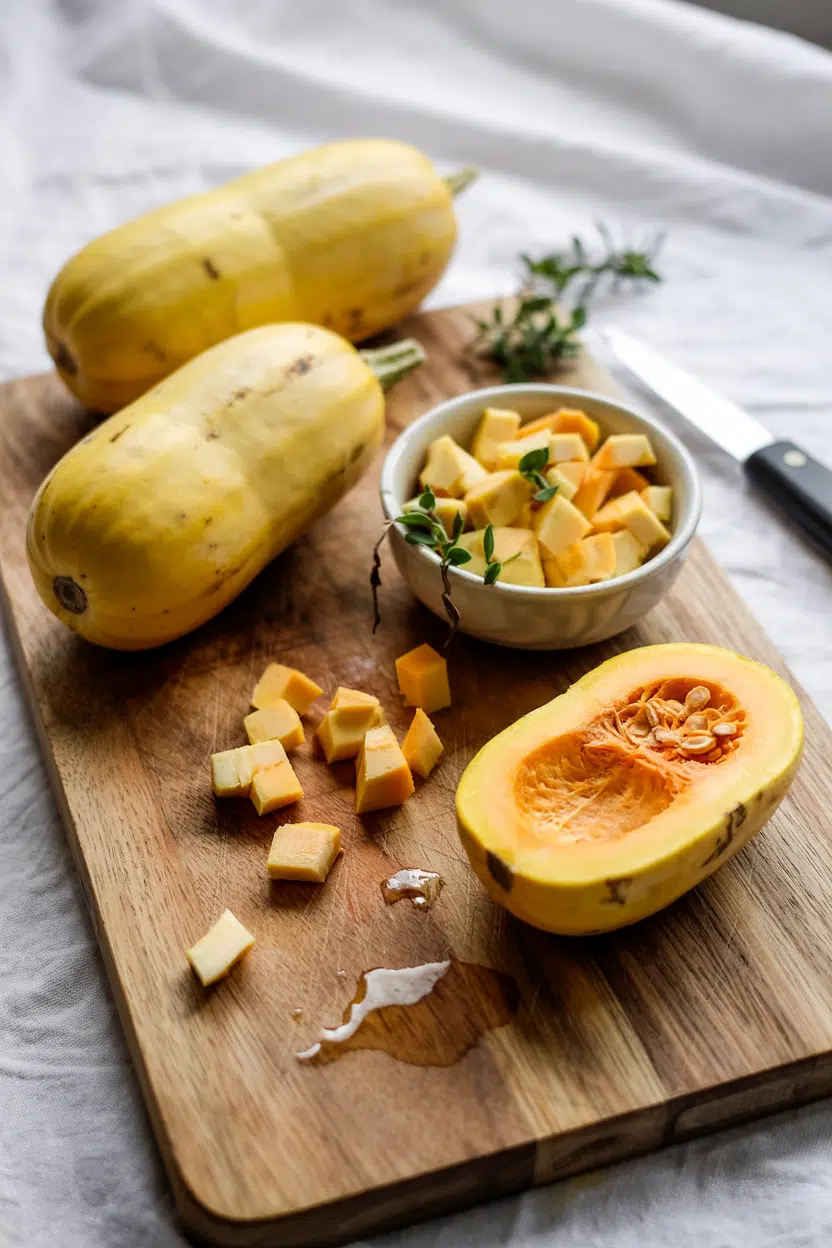
Most winter squash sends you reaching for a peeler and a heavy knife, but delicata skips that step entirely because its skin is thin enough to eat.
That no-peel quality, paired with a naturally sweet, starchy interior, makes it one of the most approachable squashes to cook on a weeknight.
If you already know your way around alternatives to acorn squash or replacements for butter in roasted vegetable dishes, delicata fits right into that same practical cooking mindset.
Delicata squash is a small winter squash with edible striped skin and a sweet, starchy interior. It roasts quickly without peeling, tastes like a lighter butternut, and pairs well with sage, maple, and goat cheese. Whole squash keeps up to 3 months in cool storage.
What Is Delicata Squash?
Delicata squash is a winter squash cultivar developed in North America, though its roots trace back to an 1894 seed catalog introduction.
Remember it later
Planning to try this recipe soon? Save it for a quick find later!
It belongs to the Cucurbita pepo species - the same family as zucchini and acorn squash - and goes by several alternate names including sweet potato squash and pepita squash.
The fruit is small and oblong, typically 6-9 inches long, with pale cream or yellow skin marked by longitudinal green or orange stripes. Unlike butternut or kabocha, the skin stays tender after cooking, so it's fully edible once roasted.
Delicata doesn't store as long as its thicker-skinned cousins, which is part of why it stayed under the radar for so long. It's seen a strong revival in farm-to-table American cooking over the past decade.
Understanding where delicata sits among the broader squash family helps - if you've browsed alternatives to kabocha squash or read up on pumpkin's flavor and uses, delicata occupies a lighter, more delicate end of the winter squash spectrum.
- 🎃 Species - Cucurbita pepo, same as acorn squash and zucchini
- 🏷️ Alternate names - Sweet potato squash, pepita squash, delicata gourd
- 📏 Size - Small, typically 6-9 inches, easier to halve than large squash
- 🟢 Skin - Thin and edible; no peeling required after cooking
What Does Delicata Squash Taste Like?
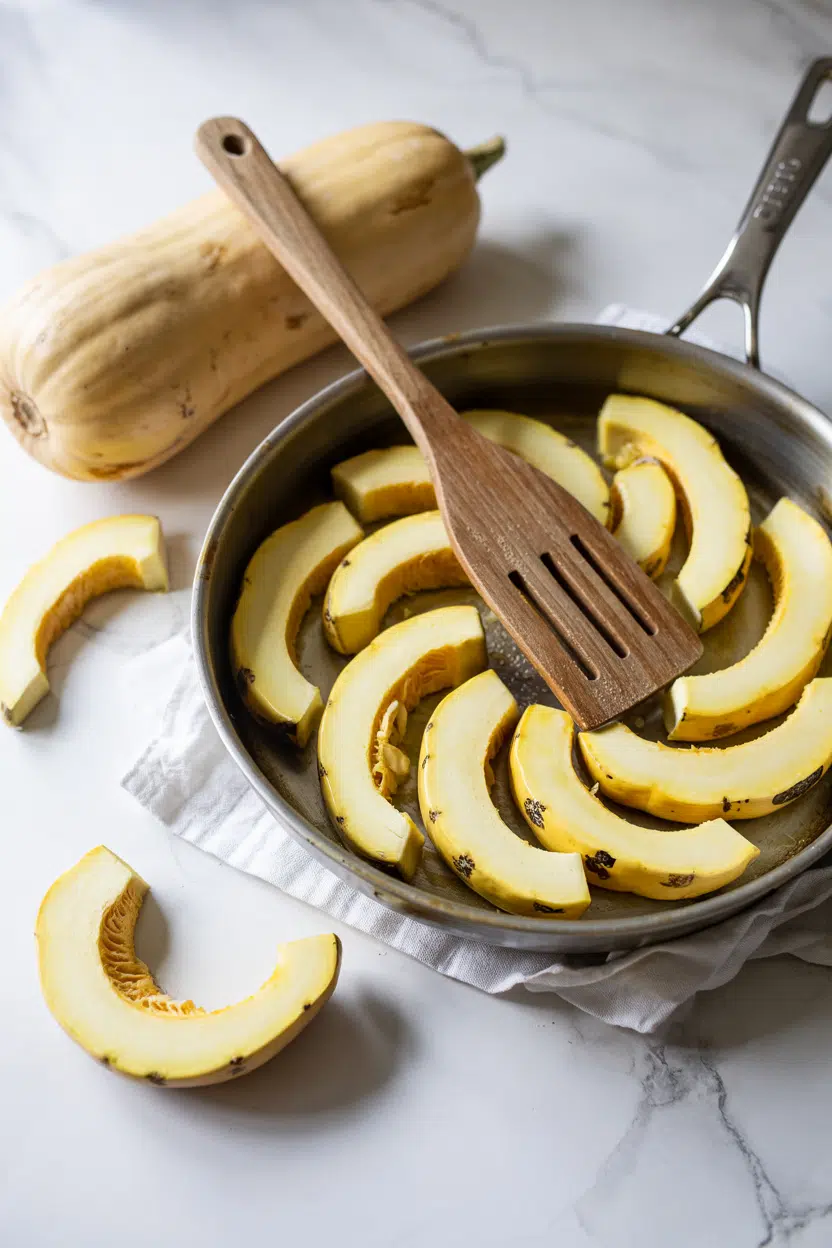
Delicata tastes like a lighter, less dense version of butternut squash - sweet and starchy, with a corn-like sweetness that's more subtle than a roasted sweet potato.
There's a mild nuttiness underneath, and the overall flavor sits firmly in the gentle, not aggressive, range.
Heat deepens the flavor noticeably. Raw delicata smells faintly sweet, but caramelization in a hot oven draws out a toasty, almost honey-like aroma that raw flesh doesn't hint at.
The flesh turns creamy inside while the cut edges brown and firm up, giving you two textures in one slice.
How to Use Delicata Squash
Roasting is the most effective method and the one that shows off delicata's natural sweetness best. Slice into half-inch rings, toss with olive oil, salt, and pepper, and roast at 425°F for 20-25 minutes. The rings hold their shape, the edges caramelize, and you get a side dish with almost no prep work.
Halved and stuffed, delicata works well as a main course. Fill the cavity with quinoa, herbs, and goat cheese or ricotta, then bake until the flesh is fork-tender.
For a faster option, pan-sear slices cut-side down in a hot cast iron skillet - it builds a browned crust in about 8 minutes.
Delicata also purees into a light, smooth soup when blended with stock and aromatics, though the soup will be thinner than one made with butternut.
For pairing ideas for delicata squash beyond the basics, maple glazes, sage butter, and toasted pepitas all complement the natural sweetness without overwhelming it.
| Method | Best For | Tip |
|---|---|---|
| 🔥 Roasting | Rings, halves, salads, grain bowls | 425°F; cut edges down for best browning |
| 🍳 Pan-Searing | Quick weeknight side, textured slices | Cast iron, high heat, 4 min per side |
| 🫙 Baking Stuffed | Main course with grains or cheese | Halve lengthwise, scoop seeds, fill cavity |
| 🥣 Pureeing | Light soups, blended sauces | Add stock gradually - flesh is less dense than butternut |
If you find yourself without delicata, the guide on swapping out delicata squash covers the closest alternatives across roasting and stuffing applications.
How to Buy and Store Delicata Squash
At the market, look for firm, unblemished skin with clean cream-yellow coloring and well-defined green or orange stripes. The stem end should feel dry and intact - wrinkling near the stem signals age.
Skip any fruit with soft spots or sticky patches.
Store whole squash in a cool, dry, dark place - a pantry shelf or basement works well. Do not refrigerate whole squash; cold storage shortens rather than extends shelf life.
Once cut, wrap tightly in plastic or beeswax wrap and refrigerate for up to a week.
Cooked delicata keeps 3-5 days in the fridge in a sealed container. For longer storage, the details on freezing delicata squash are worth reviewing before you commit to a bulk buy.
A baking sheet makes roasting rings straightforward - if yours is warped, the alternatives to a roasting rack piece covers a few workarounds.
Where to Start With Delicata Squash
Delicata is the right squash if you want a fast, weeknight-friendly option without the peeling and heavy prep that most winter squash demands.
- 🔪 First cook - Slice into rings, roast at 425°F, done in 25 minutes
- 🧀 First pairing - Goat cheese or ricotta with fresh thyme; no complicated glaze needed
- 📅 Buy in fall - Peak season runs September through November; that's when selection is broadest
Treat it simply the first time. Once you know how the flesh caramelizes and holds shape, stuffed halves and grain bowls follow naturally.
Frequently Asked Questions
No. Both are Cucurbita pepo winter squash, but they differ in shape, skin thickness, and flavor. Acorn squash has ridged, dark green skin that's too tough to eat; delicata has thin, edible striped skin and a noticeably sweeter, corn-like flavor.
No peeling needed. The skin softens completely during roasting or baking and is safe to eat. This is the main practical difference between delicata and most other winter squash varieties.
Yes. Rinse, dry, and roast them at 325°F for 15-20 minutes with oil and salt. They're smaller than pumpkin seeds but have the same nutty flavor once toasted.
Slicing into half-inch rings and roasting at 425°F takes about 20-25 minutes total. Pan-searing rings in cast iron is faster - roughly 8 minutes - and produces a well-browned crust on both sides.
Technically yes, but raw flesh is starchy, dense, and bland - very little of the sweetness comes through without heat. Cooking is what develops the flavor, so raw preparation isn't worth it here.



