
You spot a bottle of Cointreau on the back bar shelf and it looks almost too simple - clear liquid, orange label, no drama.
Yet this single bottle shows up in three of the most ordered cocktails in the world, and serious home bartenders treat it as a non-negotiable staple alongside triple sec alternatives and grand marnier alternatives. Cointreau earns that shelf space because nothing else delivers the same combination of clean orange intensity and reliable sweetness at 40% ABV.
Cointreau is a clear French orange liqueur made from sweet and bitter orange peels, bottled at 40% ABV. It delivers bright, clean orange flavor with a crystalline sweetness and subtle floral bitterness - the standard choice for Margaritas, Sidecars, and Cosmopolitans.
What Is Cointreau?
Cointreau is a French orange liqueur produced in Saint-Barthélemy-d'Anjou, France, by the Cointreau family since 1875. It falls within the triple sec category, though the brand predates the generic term and holds its own distinct identity.
Remember it later
Planning to try this recipe soon? Save it for a quick find later!
The liqueur is made by macerating a blend of sweet and bitter orange peels in neutral spirit, then distilling and blending the result to 40% ABV.
That higher alcohol content sets it apart from most generic triple secs, which typically run 15-30% ABV and taste noticeably thinner.
Unlike orange curaçao, which often carries caramel color or artificial flavoring, Cointreau remains completely clear. Other names you'll see on menus or in recipes include "orange liqueur," "Cointreau orange," and simply "triple sec" - though the latter covers a wide range of quality.
- Triple sec - The broad category Cointreau belongs to, covering any clear, orange-flavored liqueur
- Orange curaçao - A related style, often colored, sometimes aged, with a slightly different flavor profile
- Grand Marnier - A cognac-based orange liqueur; richer and darker than Cointreau, not a direct equivalent
What Does Cointreau Taste Like?
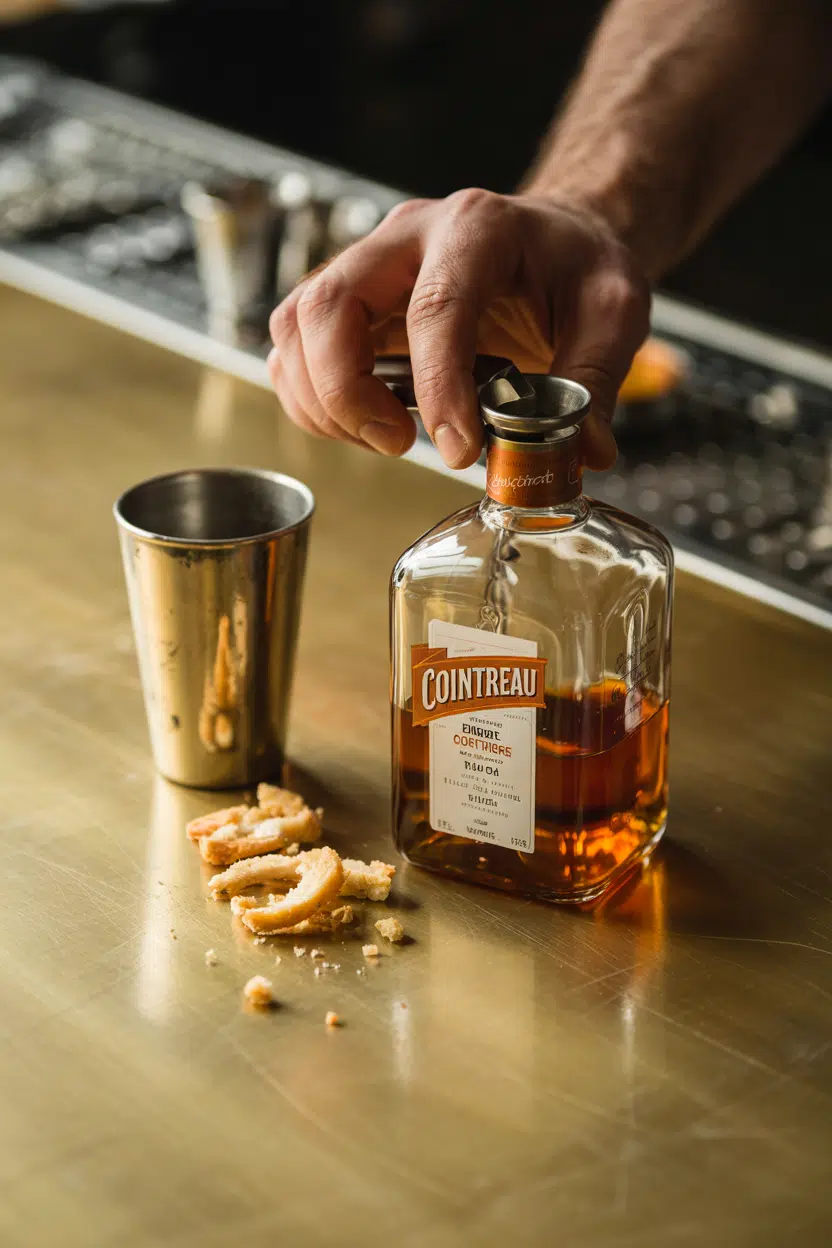
Cointreau leads with bright, bitter orange peel - the kind of sharp citrus note you get from zesting a fresh navel orange directly over a glass. Clean crystalline sweetness follows immediately, balancing without turning syrupy.
The finish carries noticeable ethanol warmth - more so than lower-ABV triple secs - which actually helps it hold its own against strong base spirits.
In cooked applications, heat drives off alcohol quickly, leaving behind candied orange and floral bitterness that reads almost like a high-quality marmalade.
Compared to generic triple sec, the difference is immediate. Generic versions tend toward artificial sweetness and flat citrus.
Cointreau is sharper, more orange-forward, and cleaner on the palate.
How to Use Cointreau
Cointreau's clearest role is as the orange-liqueur component in classic cocktails. A standard Margarita calls for roughly three-quarters of an ounce - enough to bridge tequila and lime without dominating either.
The Margarita's balance depends heavily on this ratio holding steady.
In a Sidecar, Cointreau links cognac and lemon juice, providing sweetness without the barrel weight of Grand Marnier. The Cosmopolitan uses it differently - here the orange aroma lifts vodka and cranberry, adding brightness to what would otherwise be a flat combination.
Cooking opens up a second set of applications. Handle it carefully off heat.
| Method | Best For | Tip |
|---|---|---|
| 🍹 Stirred/Shaken | Margaritas, Sidecars, Cosmopolitans | Measure precisely - sweetness throws off balance quickly |
| 🔥 Reduced | Cocktail syrups, fruit macerations | Reduce over low heat; high heat kills orange aroma fast |
| 🍳 Sauce finish | Duck pan sauces, butter sauces for poultry | Whisk in off-heat after removing from the burner |
| 🍫 Ganache / desserts | Chocolate truffles, orange-chocolate cakes | Add 1-2 teaspoon per 100g chocolate for clean orange note |
| 🔆 Flamed | Crêpes Suzette-style finishes, dessert glazes | Warm gently before flaming; cold spirit won't catch flame |
Cointreau pairs naturally with tequila, cognac, vodka, dark chocolate, lemon, and lime. Thyme or rosemary added to a Cointreau reduction creates a French bistro-style glaze that works well over roasted duck or pork.
Avoid pairing it with delicate raw seafood or strong bitter greens - the orange bitterness compounds rather than complements.
If you need to swap it out, check the options across cointreau alternatives and triple sec alternatives before settling on a replacement, since ABV and sweetness level both matter.
How to Buy and Store Cointreau
Look for the official clear glass bottle with an orange label stating 40% ABV. The tamper band around the cork or cap should be fully intact.
Avoid any bottle showing cloudiness - Cointreau is crystal clear by nature, and any haze suggests contamination or extreme temperature damage.
For storage, keep the bottle upright in a cool, dark pantry away from direct sunlight or heat sources. Unlike wine, Cointreau doesn't require refrigeration.
Opened bottles stay at peak quality for 2-4 years when sealed tightly; for a more detailed breakdown, see our guide on cointreau storage life. Unopened bottles last indefinitely at room temperature.
Where to Start with Cointreau
Start with a Margarita or Sidecar if you've never cooked or mixed with Cointreau before. Both recipes use it in a defined role - a fixed amount, a specific job - which makes the contribution easy to taste and understand.
Move to savory applications only after you've tasted it straight. A small sip at room temperature shows you exactly what the orange bitterness and sweetness will contribute before heat changes the equation.
Anyone exploring orange liqueurs further should also look at blue curaçao - same flavor family, very different visual impact and typical ABV.
Frequently Asked Questions
Cointreau is a triple sec, but triple sec is not always Cointreau. Triple sec names a category of clear orange liqueurs; Cointreau is a premium brand within it, bottled at 40% ABV versus the 15-25% common in cheaper versions.
The standard ratio is ¾ oz (22ml) Cointreau to 1½ oz tequila and ¾ oz fresh lime juice. Adjusting Cointreau up or down shifts the sweetness balance, so start with the standard before experimenting.
Pierre Ferrand Dry Curaçao and Combier Liqueur d'Orange are the closest matches - both run at or near 40% ABV with real orange peel distillation. Grand Marnier works structurally but adds cognac richness that changes the drink's character.
Yes - both sweet and bitter orange peels are macerated in neutral spirit before distillation. No artificial orange flavoring is used; the citrus character comes entirely from the peel oils extracted during that process.
Yes, with the right technique. Adding it off-heat to a warm sauce or reducing it gently in a syrup drives off most of the ethanol while preserving the orange aroma. Boiling it hard destroys the citrus notes along with the alcohol.



