
Blue curaçao earns its place behind every serious home bar not because of its color, but because it delivers something no other orange liqueur quite replicates: a bitter-orange backbone that holds its own in layered, citrus-forward cocktails. Producers like those making cointreau replacements or grand marnier replacements chase that same bitter citrus note, yet blue curaçao arrives with a distinctive sweetness and that unmistakable electric-blue hue.

It's both functional and theatrical - a liqueur that does real flavor work while turning a glass visibly dramatic.
Blue curaçao is a sweet, bitter-orange liqueur from the Caribbean island of Curaçao, colored bright blue with food dye. It's sweeter than triple sec and carries a pronounced laraha peel bitterness. Primarily used in cocktails and the occasional dessert glaze, opened bottles stay at peak flavor for 1-3 years.
What Is Blue Curaçao?
Blue curaçao is an orange-flavored liqueur produced using the dried peel of the laraha bitter orange, a citrus fruit native to the Caribbean island of Curaçao.
Remember it later
Planning to try this recipe soon? Save it for a quick find later!
The laraha evolved from Valencia oranges transplanted to Curaçao's arid soil, where the fruit became too bitter to eat but developed an intensely aromatic peel.
Producers steep or distill those dried peels to extract flavor, then sweeten the base and add bright blue food coloring - the only thing separating it visually from its clear orange-liqueur relatives. You'll also see it labeled simply as curaçao or curaçao liqueur.
Premium bottles sometimes note laraha or Curaçao island origin on the label, which signals a closer tie to the original recipe.
The alcohol content typically sits between 15% and 40% ABV depending on the producer, so strength varies significantly across brands. Pairing it with light rum or vodka is standard practice in Caribbean-influenced bartending.
What Does Blue Curaçao Taste Like?
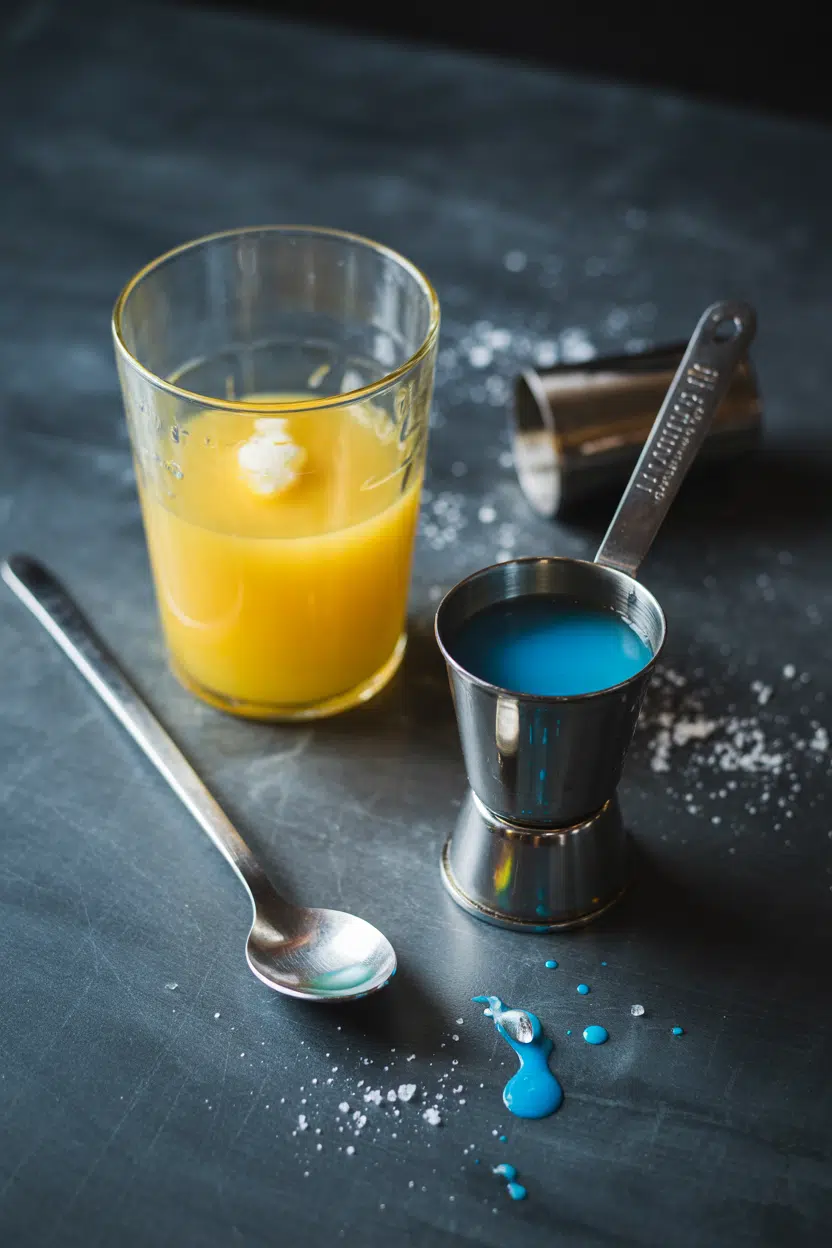
The blue food coloring contributes nothing to flavor - taste it blind and you're drinking a sweeter, slightly more bitter version of triple sec.
Compared to Cointreau, blue curaçao is noticeably less sharp and more syrupy, with the laraha peel bitterness sitting under a layer of candied orange sweetness rather than cutting through clean.
That syrupy body also means it integrates differently in cocktails. Where triple sec stays bright, blue curaçao rounds off edges and adds weight.
The faint floral vanilla note in the aroma becomes most apparent when the liqueur is poured neat and warmed slightly in the hand - in a cold shaken drink, it mostly disappears into the citrus.
How to Use Blue Curaçao
Blue curaçao's primary job is cocktail work, and it excels there across a range of formats. Classic tiki drinks like the Blue Lagoon depend on it for both the orange-citrus sweetness and the color.
In punch bowls, a measured pour adds orange scent without overpowering the fruit base.
| Method | Best For | Tip |
|---|---|---|
| 🍹 Stirred or Shaken | Tiki cocktails, martinis, punches | Use 0.5-1 oz per drink; it sweetens fast |
| 🧊 Blended with Ice | Frozen tropical drinks, slushies | Color dilutes slightly - add an extra splash |
| 🔥 Reduced for Glaze | Citrus dessert glazes, boozy compotes | Reduce gently; high heat drives off the nuance |
| ✨ Float or Splash | Layered cocktails, color finishing | Pour over the back of a spoon for clean layers |
For cooking, small amounts work as a syrup substitute in fruit compotes or as a drizzle over citrus-glazed desserts.
The blue hue limits how far this can go - it's better suited to desserts that can absorb the color, such as soaked cakes or dark-fruit reductions.
Avoid pairing it with delicate green herbs. The sweetness buries fresh mint or basil instantly.
Strong smoky mezcal is another poor match; the flavor profiles actively fight each other.
How to Buy and Store Blue Curaçao
Look for bottles labeled curaçao or blue curaçao - not just "blue orange liqueur," which is a generic category without the laraha connection.
Premium labels often cite Curaçao island origin or name the laraha orange explicitly; those bottles tend to deliver more complex bitterness than budget versions.
- Storage position - Keep the bottle upright to prevent the cap seal from degrading.
- Light and heat - Store in a cool, dark cabinet; direct sunlight fades the blue dye over time.
- Opened bottle - Cap tightly after every use; the shelf life of an opened bottle runs 1-3 years under good conditions.
- Unopened - An unopened bottle will last for years without significant flavor loss.
If you ever need to swap it out, a mix of triple sec and a drop of blue food coloring is the most direct blue curaçao substitute. For the flavor without the color, triple sec replacements work well in most cocktail applications.
Where to Start with Blue Curaçao
Start with cocktails if you want to understand what blue curaçao actually does. One drink - a simple Blue Lagoon or a vodka-pineapple split - will tell you more than any description.
Once you know how the sweetness and bitterness balance, you can make smarter calls about when to reach for it versus a drier orange liqueur.
Move to food applications only after you're comfortable with the flavor profile. The color is a constraint, but the bitter-orange note works in glazes and soaked desserts where that bitterness can echo citrus zest.
Frequently Asked Questions
Yes. Most bottles fall between 15% and 40% ABV depending on the producer. It's not suitable for children, pregnant people, or anyone avoiding alcohol - even in small culinary amounts.
Curaçao uses laraha bitter orange peel from the island of Curaçao and tends to be sweeter and slightly more bitter. Triple sec is a broader, drier style made from various orange peels without geographic restriction.
The blue color comes entirely from added food dye - it has no effect on flavor. Producers introduced it to distinguish the product visually and create the dramatic color effect valued in tiki bartending.
Yes, in limited applications. It works in glazes, fruit compotes, and soaked cakes where the blue color can be absorbed. Avoid it in pale sauces or batters where the color is unwanted.
Most recipes call for 0.5 to 1 oz per drink. Because it's sweeter than triple sec, start at the lower end and adjust - it can tip a cocktail syrupy quickly if overdone.



