
Chili powder does one thing that no single-spice shortcut can replicate: it builds a warm, earthy base layer that makes everything from a pot of chili con carne to a dry-rubbed pork shoulder taste like it was seasoned with intention.

The blend is doing more work than most cooks realize, which is also why reaching for alternatives to cayenne pepper or replacements for chipotle powder only gets you partway there - neither substitute recreates the full profile.
Chili powder is a ground spice blend built around dried red chiles, cumin, and paprika. It delivers moderate heat with earthy, smoky depth - a reliable backbone for Tex-Mex dishes, braises, and rubs. Best within 6-12 months of purchase.
What Is Chili Powder?
Chili powder is a ground spice blend, not a single ground chile. Most commercial versions combine dried red chiles - often ancho or cayenne - with cumin, garlic powder, oregano, and paprika, though exact ratios vary by brand.
Remember it later
Planning to try this recipe soon? Save it for a quick find later!
The blend was popularized in the United States and became a foundational seasoning in Tex-Mex and Southwestern cooking.
You'll see it spelled "chilli powder" in British English and "chile powder" in writing that refers to single-variety ground chiles, though these terms often overlap in casual use.
Understanding that distinction matters at the store.
A jar labeled "ancho chile powder" or "guajillo chile powder" contains only that one ground chile - no added cumin or garlic.
Standard chili powder blends are the seasoning; single-origin powders are the raw material for building your own blend, which is why knowing cumin and its flavor helps you balance the proportions when you're blending from scratch.
- 🌶️ Standard blend - ground chiles, cumin, garlic powder, oregano, paprika
- Single-origin powders - ancho, guajillo, or cayenne ground alone, no additives
- Hot vs. mild - cayenne-heavy blends run hotter; ancho-forward blends stay mild and sweet
- Regional names - "Mexican chili powder" is an informal label, not a regulated category
What Does Chili Powder Taste Like?
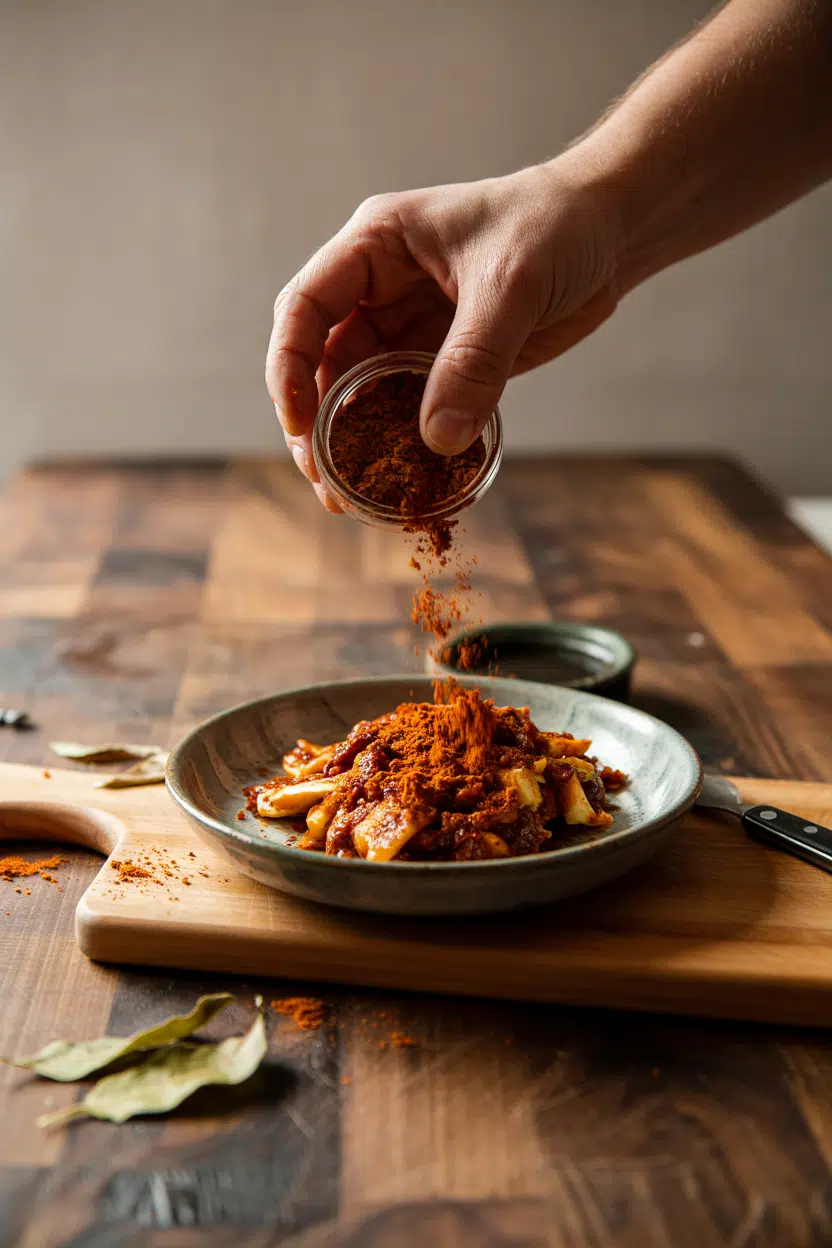
Chili powder lands at moderate intensity - noticeable heat without the sharp punch of straight cayenne.
The dominant notes are warm and earthy, with a background that reads slightly smoky or faintly fruity depending on which dried chiles anchor the blend.
Think of it as paprika with structure. The role paprika in spice blends plays is largely color and mild sweetness - chili powder adds that same base but layers in capsaicin-driven heat and the herbal edge from oregano and cumin.
Heat builds gradually rather than hitting immediately. Coarsely ground versions feel slightly gritty if tasted raw, but that texture dissolves completely once the powder cooks into fat or liquid.
How to Use Chili Powder
Brown it in fat first. Chili powder blooms - its fat-soluble compounds release fully when cooked in oil or rendered meat fat for 30 to 60 seconds before liquid is added. Skipping this step gives you raw-spice flavor instead of developed depth.
The classic applications are taco meat and chili con carne, where the powder goes in during the browning stage alongside cumin and garlic.
It's equally effective as a dry rub component for chicken thighs, pork shoulder, or beef ribs before roasting or grilling.
If you're swapping out chili powder in any of these contexts, keep in mind you're replacing a blend, not a single spice.
Stir it into tomato-based braises and bean dishes early enough to cook out the raw edge.
For roasted vegetables - sweet potatoes and cauliflower especially - toss with oil and chili powder before the pan goes into the oven, not after.
| Method | Best For | Tip |
|---|---|---|
| 🥩 Bloomed in Fat | Taco meat, chili con carne, bean stews | Cook in oil or meat fat 30-60 sec before adding liquid |
| 🧂 Dry Rub | Chicken, pork, beef ribs, burgers | Mix with brown sugar and smoked paprika for balance |
| 🍲 Stirred into Sauce | Tomato braises, enchilada sauce, meatloaf | Add early - needs time to mellow and integrate |
| 🥄 Finishing Sprinkle | Roasted vegetables, corn, avocado toast | Use sparingly raw; heat hasn't been cooked out |
| 🫙 Marinade Base | Grilled meats, tofu, shrimp skewers | Combine with oil, lime juice, and garlic powder |
Cumin is chili powder's closest companion in almost every application - understanding cumin swaps that work is useful any time you're building a Tex-Mex spice profile from scratch.
How to Buy and Store Chili Powder
Color is your first quality signal. A good chili powder blend looks deep brick-red, not dull brown or gray.
Clumping inside the jar means moisture has already degraded the powder - skip it.
For storage, an airtight, opaque container away from the stove is essential. Heat and light degrade capsaicin and volatile aromatics faster than most cooks expect.
The details on storing chili powder correctly matter if you buy in bulk or keep multiple blends open at once.
- Shelf life - Best within 6-12 months; after that, heat fades even if color holds
- Container - Opaque, airtight; avoid clear glass near a bright window
- Allergen note - Check for anti-caking agents if strict allergen control applies
- Smoked paprika blends - If your chili powder has a smoky edge, knowing [replacements for smoked paprika](https://forkliftkitchen.com/smoked-paprika-substitutes/) helps when you need to sub the whole blend
Start Here Based on What You're Cooking
If you're making chili or taco meat, use a full-blend commercial chili powder and bloom it in fat.
If you want more control over heat or want single-origin complexity, build your own blend from ancho or guajillo powder plus cumin, garlic, and oregano.
For rubs and marinades, start with half the amount you think you need. Raw chili powder is more intense than cooked, and a heavy hand on a dry rub can overwhelm leaner proteins like chicken breast or shrimp.
Frequently Asked Questions
Paprika is a single ground dried pepper - mild, sweet, and one-dimensional. Chili powder is a blend: it contains paprika (or red chile base), plus cumin, garlic powder, and oregano. Chili powder carries more heat and structural complexity.
Most commercial blends are moderate - noticeably warm but not sharp. Cayenne-heavy blends run hotter; ancho-forward blends stay mild. The capsaicin level depends on which chiles anchor the specific blend you're using.
Not directly. Cayenne is pure heat; chili powder adds cumin, garlic, and paprika alongside it. Substituting one for the other changes both the heat level and the flavor profile of the dish significantly.
No. Chili flakes are coarsely crushed dried chiles - usually a single variety like cayenne or red pepper - with no added spices. Chili powder is a fine-ground blend. They don't swap evenly in recipes.
It won't become unsafe, but it loses potency. After 12 months, the volatile heat compounds degrade noticeably while the red color persists. Smell the jar - if it smells flat or dusty rather than spiced, replace it.



