
The closest caster sugar substitute is granulated sugar pulsed in a food processor until fine, swapped 1:1 by weight. In the US, the same fine sugar is sold as superfine sugar, and it swaps 1:1 with no changes.
Plain granulated sugar also goes into most cakes and cookies, but in meringue its larger crystals can stay undissolved. Powdered sugar needs the most care, because a cup of it holds far less sugar than a cup of caster sugar.
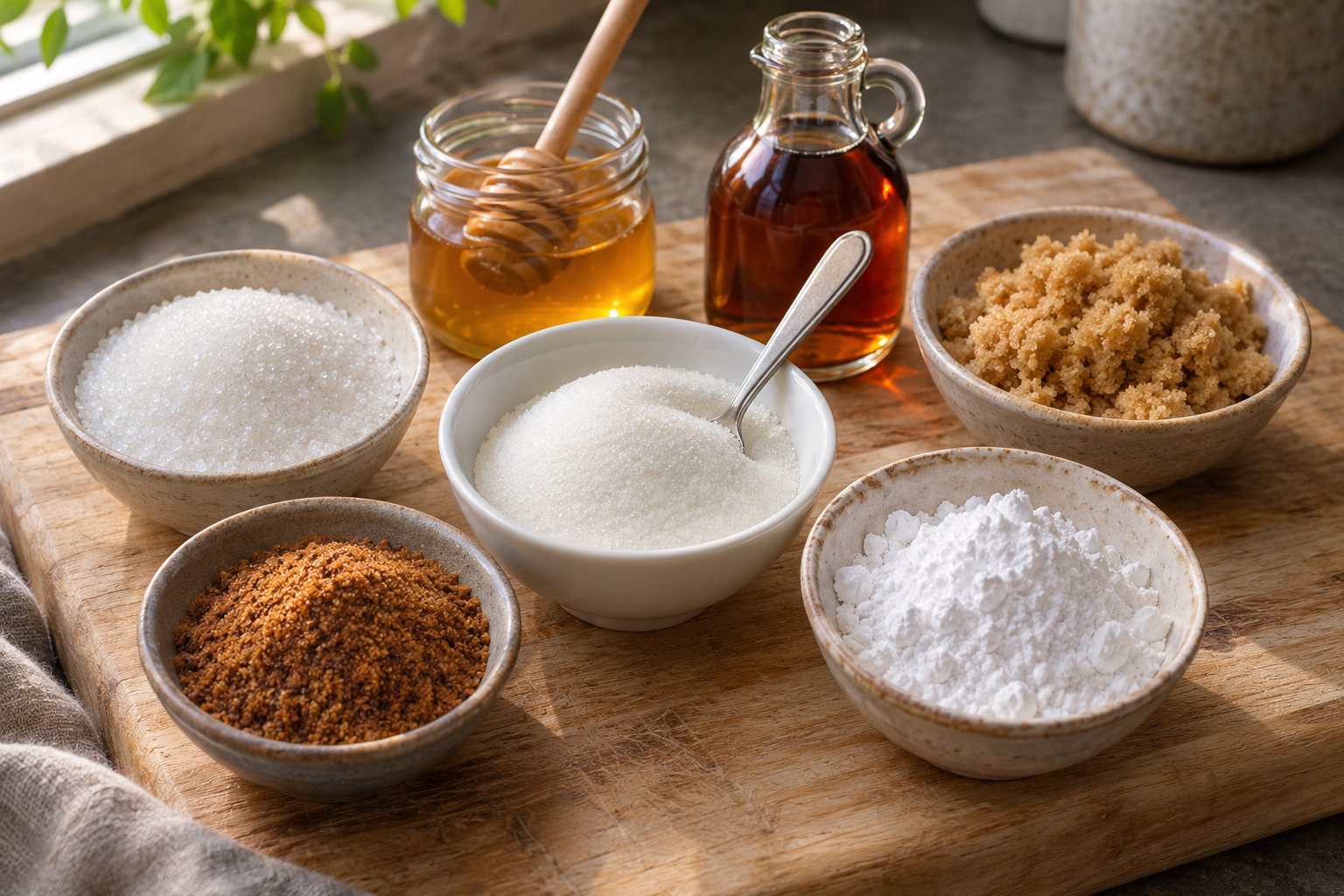
Granulated sugar, pulsed fine, replaces caster sugar 1:1 by weight. Weigh it before you blitz it.
Superfine sugar is caster sugar under its US name, so swap it 1:1 and change nothing.
Powdered sugar swaps by weight only. A cup holds about 113 g against 190 g for superfine sugar, so measuring by the cup leaves you with roughly 40% less sugar.
What Does Caster Sugar Do in a Recipe?
Caster sugar is granulated sugar ground to smaller crystals. The crystals are finer than table sugar but not as fine as powdered sugar, so they dissolve quickly and still feel like grains.
Remember it later
Planning to try this recipe soon? Save it for a quick find later!
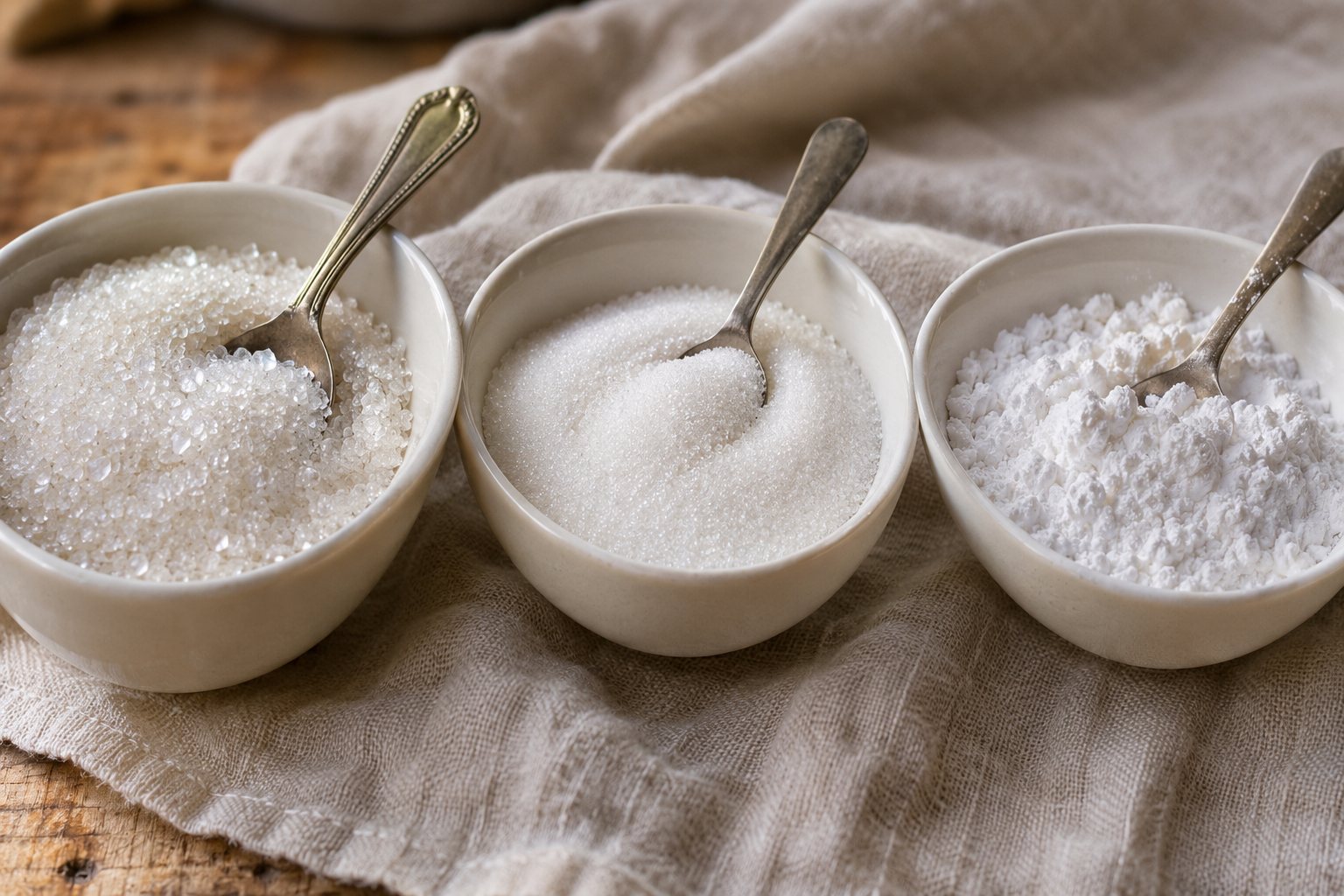
A recipe asks for it when the sugar gets little time or little liquid to dissolve. Three jobs make up most of those recipes:
- Meringues and whipped egg whites: Sugar stabilizes the foam, and sugar that stays undissolved leaves a gritty texture and syrupy beads on the baked surface.
- Creamed butter and sugar: The sharp edges of the crystals pierce the butter and trap tiny air bubbles, so you need real grains here, not a powder.
- Simple syrups: King Arthur lists them beside meringues as a best use of superfine sugar, because the small crystals dissolve fast.
That gives you the test for every swap below: how long will this sugar have to dissolve? A cake batter that is mixed for several minutes gives granulated sugar time. Whipped egg whites hold very little water, so a meringue dessert such as pavlova gives it the least help.
7 Best Substitutes for Caster Sugar, Ranked
The first three keep the fast dissolving. The last four change the flavor, color or moisture of what you bake.
| # | Substitute | Best For | Ratio | Key Note |
|---|---|---|---|---|
| 1 | Superfine Sugar | ✨ Both | 1:1 | Same product |
| 2 | Blitzed Granulated | 🥧 Baking | 1:1 by weight | Weigh, then pulse |
| 3 | Plain Granulated | 🥧 Baking | 1:1 by weight | Add slowly to meringue |
| 4 | Powdered Sugar | 🧁 Icings | 1:1 by weight | About 1⅔ cups per 190 g |
| 5 | Light Brown Sugar | 🍪 Baking | 1:1 by weight | Adds molasses taste |
| 6 | Coconut Sugar | 🥥 Baking | 1:1 by weight | Dark and gritty |
| 7 | Honey or Maple Syrup | 🍯 Sauces | ¾ or 1 cup | Cut other liquid |
The table ranks the swaps by how closely they behave like caster sugar, and the ratios are for 1 cup (about 190 g) of caster sugar.
1 – Superfine Sugar
Superfine sugar is caster sugar sold under its North American name. Some bags call it baker's sugar, and King Arthur's weight chart lists all three names on one line.
Use it 1:1 in every recipe that names caster sugar, including meringues, whipped egg whites and simple syrups, which are the jobs King Arthur recommends it for.
2 – Granulated Sugar, Blitzed Fine
King Arthur's own substitute is granulated sugar blitzed in a blender or food processor until fine, measured by weight. Weigh the sugar first, because finer sugar packs differently in a cup: King Arthur lists 198 g per cup of granulated and 190 g per cup of superfine.
Pulse in short bursts, scrape down the sides, and check after each burst. A few pulses, roughly 10 to 30 seconds in all, are usually enough. Stop while the sugar still looks like fine sand, because over-processing turns it into powdered sugar.
- Use it in: meringues, whipped egg whites and sponge cakes, where fast dissolving matters most.
- Watch for: a cloud of sugar dust and a powdery texture if you pulse too long.
3 – Plain Granulated Sugar
Granulated sugar goes in 1:1 by weight when you have no way to grind it. In creamed cakes and cookies it is a good swap, since the crystals' edges are what pierce the butter and trap air, and the long mixing gives them time to dissolve.
Meringue is where it can fail. The pavlova recipe on this site uses regular granulated sugar by adding 1 tablespoon at a time, with 5 seconds between additions. To make that work in any meringue:
- Add the sugar slowly while you whisk, a spoonful at a time.
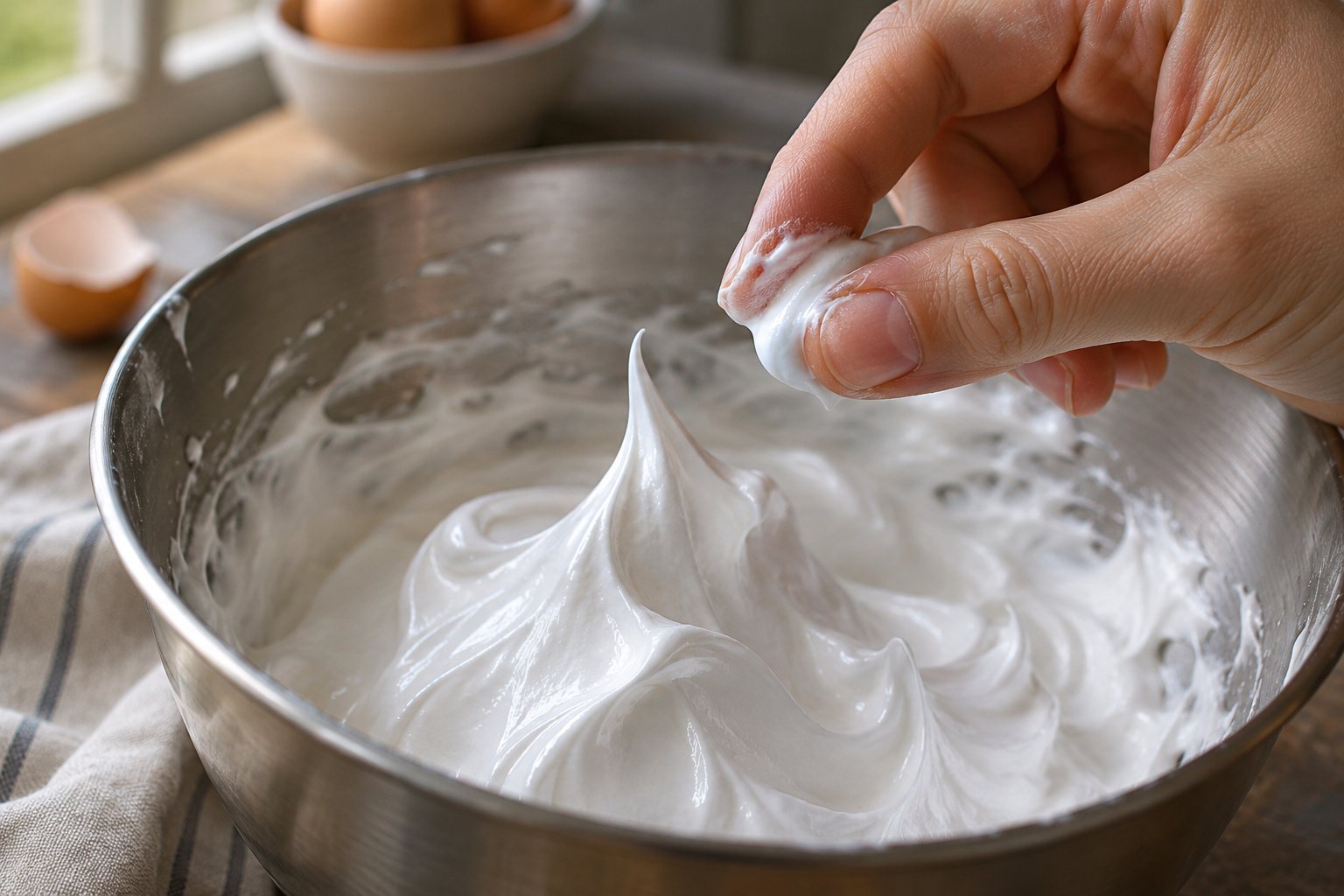
- Rub a little meringue between your thumb and finger. Any grit is sugar that has not dissolved yet.
- If it feels gritty, whisk another minute and test again. Stop once it feels smooth, because over-whisking is linked to weeping.
4 – Powdered Sugar
Powdered sugar, also called icing sugar, is granulated sugar blitzed to a fine powder. It dissolves almost instantly, which makes it a good match for frostings and glazes.
It also carries a little cornstarch to stop clumping, so it brings that into whatever you make.
Swap it by weight, 1:1. King Arthur puts 1 cup of unsifted powdered sugar at 113 g, so 190 g of caster sugar becomes about 1⅔ cups of powdered sugar. A plain 1 cup swap gives you roughly 40% less sugar.
- Use it in: frostings, glazes and other mixtures where the sugar is stirred or blended into a soft base.
- Skip it in: creamed butter, because powdered sugar has no granules to pierce the fat, and Handle the Heat warns that it can change the texture of creamed recipes.
5 – Light Brown Sugar
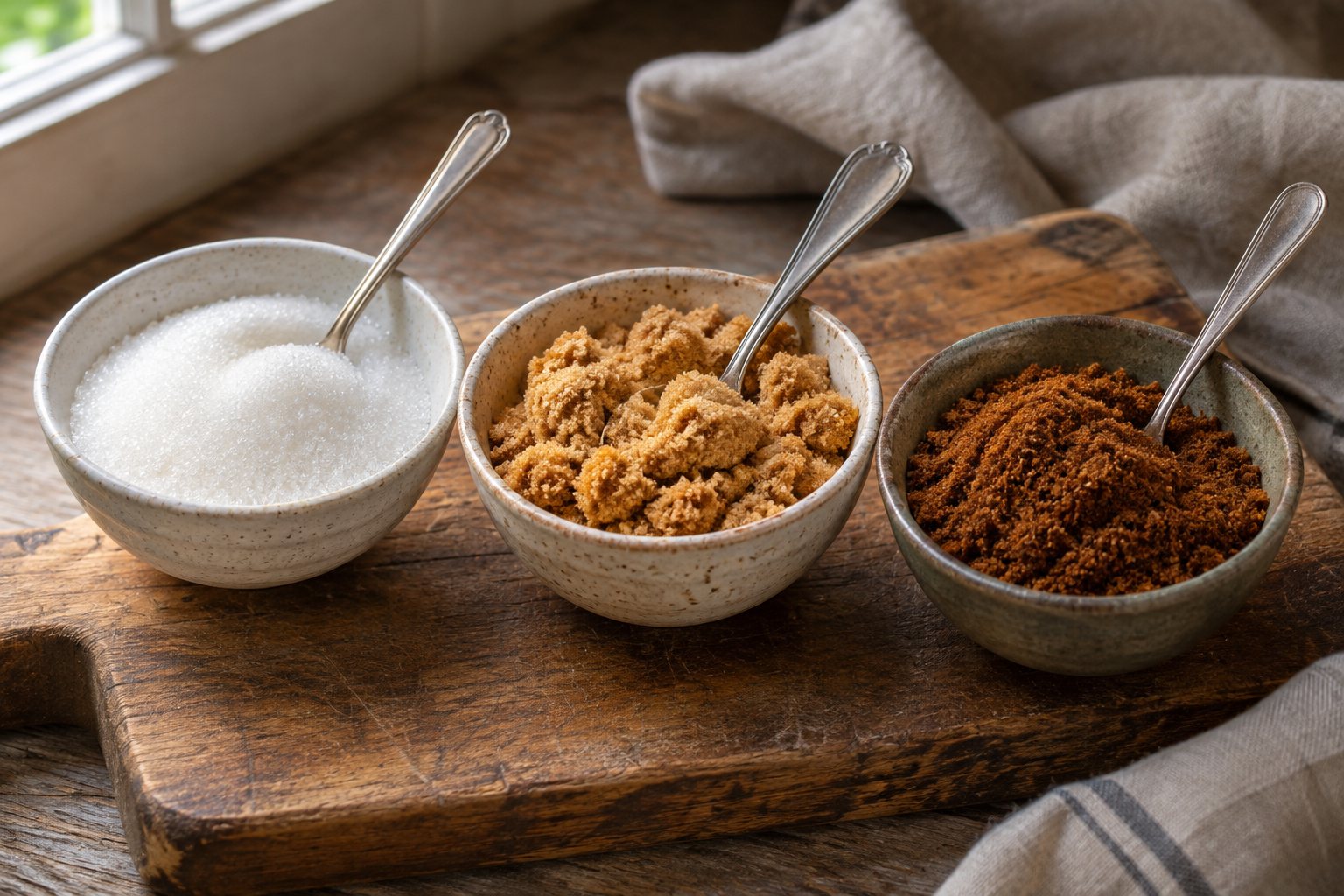
Brown sugar is granulated sugar with a small amount of molasses added, so it brings moisture, a tan color and a caramel taste. Swap it 1:1 by weight.
Weigh it rather than scooping, because a packed cup of light brown sugar weighs 213 g, about 12% more than a cup of superfine sugar.
It creams with butter just as well as granulated sugar. Use it in cookies, brownies and spice cakes, where the caramel taste fits. Leave it out of white meringues, vanilla sponge and macarons, where you want a pale color and a clean sugar taste.
6 – Coconut Sugar
King Arthur describes coconut sugar as a dark, gritty sugar with toffee-like notes, made from the nectar of coconut blossoms. Its recommended swaps for it are brown sugar and muscovado, both by weight, so use it 1:1 by weight here too.
Weigh it, because King Arthur lists half a cup at 77 g, so a full cup holds about 19% less sugar than a cup of superfine sugar.
The grit does not fully disappear in a quick batter, so keep it for oatmeal cookies, spice cakes and coffee cake. Skip it in meringue, where undissolved grains show.
7 – Honey or Maple Syrup
Liquid sweeteners are a last resort in recipes built around dry sugar. They suit glazes, sauces and dressings, where you are not counting on crystals to do any work.
- Honey: Use about ¾ cup per 1 cup of caster sugar, because it tastes sweeter than sugar.
- Maple syrup: Use an equal amount, 1 cup for 1 cup, because it is about as sweet as sugar.
- Liquid and flour: Cut the other liquid by 3 to 4 tablespoons per cup of sweetener. When the recipe has no liquid to cut, add about 3 to 4 tablespoons of flour per cup of honey, or about 1 tablespoon per ¼ cup of maple syrup.
Honey browns fast, and King Arthur advises against baking it above 350°F because it scorches. Maple syrup browns only slightly faster than sugar.
Do not use either one in meringue, which needs dissolved sugar to hold the whipped whites. Creamed cakes are risky too, since liquid sweeteners do not create the air pockets that sugar crystals do.
Which Caster Sugar Swap for Which Recipe?
| If You're Making | Pick | Why |
|---|---|---|
| Meringue | Superfine or blitzed sugar | Dissolves fastest into whipped whites |
| Creamed Cakes | Granulated or light brown | Crystal edges pierce the butter |
| Frosting | Powdered sugar, by weight | Already a fine powder |
| Spice Cakes | Light brown or coconut | Molasses and toffee notes fit |
| Glazes | Honey or maple syrup | Liquid sweetener, cut other liquid |
The table matches each recipe to the swap that has the right crystal size or the right flavor for it.
Which Sugars Should You Not Swap In?
Coarse raw sugars such as turbinado sugar have larger crystals than granulated sugar. Handle the Heat lists larger-grained raw sugar among the swaps that can change a creamed recipe's texture.
Frequently Asked Questions
King Arthur lists 1 cup of superfine (caster) sugar at 190 g and 1 cup of granulated sugar at 198 g. One UK site puts commercial caster sugar near 225 g per cup. The numbers differ, so use the grams in your recipe when it gives them.
Yes. King Arthur names a blender or a food processor, and both need short pulses so the sugar does not turn into powder. Weigh the sugar first, then pulse.



