
Bite into a preserved Calabrian chili and the heat arrives fast - bright, almost fruity, with a low smoky hum underneath.
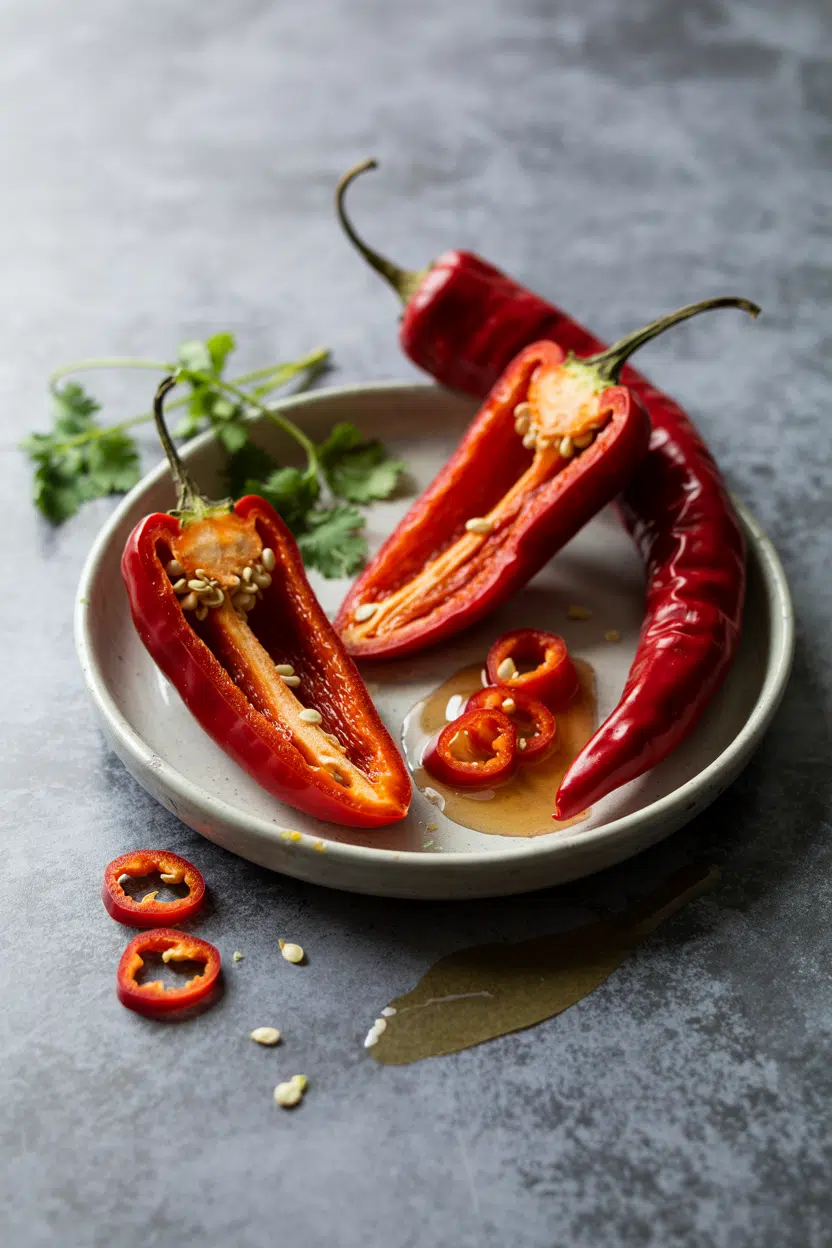
It doesn't build slowly like a dried ancho or flatten out like standard red pepper flakes.
Understanding seasoning with chili paste helps frame how this pepper behaves differently in finished dishes, and keeping chili fresh becomes relevant quickly once you crack open a jar.
A small, wrinkled red pepper from Calabria, southern Italy, sold fresh, dried, or preserved in oil. Delivers bright fruity heat with smoky undertones. Used widely in southern Italian cooking, pasta, pizza, and finishing condiments.
What Is Calabrian Chili?
Calabrian chili - also called peperoncino calabrese or Calabrian pepper - comes from Calabria, the toe of Italy's boot.
Remember it later
Planning to try this recipe soon? Save it for a quick find later!
This small, tapered red pepper has been central to the region's cooking for centuries, showing up in local salumi, sauces, and preserved condiments across southern Italian households.
The pepper belongs to the Capsicum annuum family and grows in several subforms. Most reach the market in one of four states:
- 🌶️ Fresh whole - firm, slightly wrinkled, found at specialty grocers in season
- 🌿 Dried whole - concentrated heat, chewy skin, long shelf life
- 🫙 Preserved in oil - silky, mellow, ready to use straight from the jar
- 🥫 Paste (chili paste) - blended with olive oil and salt, smooth enough to swirl into sauces
Each form behaves differently in cooking. Preserved chilies and paste are the most common formats in Italian-American restaurant kitchens, partly because olive oil stand-ins rarely replicate the way the oil carries and softens the pepper's heat in those jars.
What Does Calabrian Chili Taste Like?
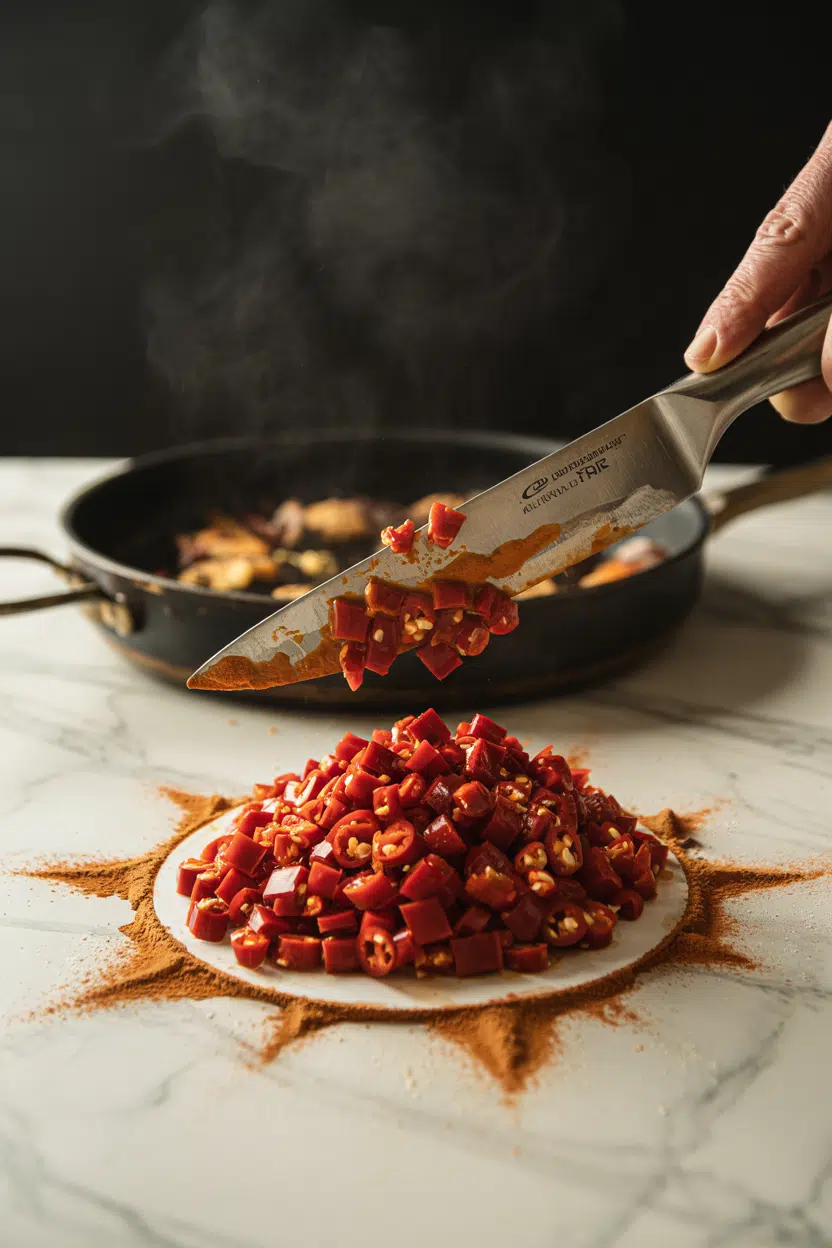
The first thing you notice is brightness - a clean, almost citrus-adjacent heat that hits the front of the palate before settling into a woody warmth.
Unlike many dried chilies that lead with earthiness, Calabrian chili keeps a distinctly fruity red-pepper character throughout.
In paste form, the tangy fermented note becomes more pronounced - closer to a less vinegary gochujang than anything you'd find in a standard Italian pantry.
Heat level sits well above red pepper flakes but below a Thai bird's eye chile, landing roughly in the 25,000-40,000 Scoville range depending on the producer.
Preserved in oil, the fat rounds the edges and the salt comes forward.
How to Use Calabrian Chili
Calabrian chili earns its place as a finishing ingredient as often as a cooking one.
A single teaspoon of paste stirred into spaghetti aglio e olio changes the dish's entire direction - fruitier, hotter, more complex than garlic alone could manage.
| Method | Best For | Tip |
|---|---|---|
| 🥗 Raw / Finishing | Swirled into soups, spread on crostini, whisked into dressings | Use paste directly from the jar - no prep needed |
| 🍳 Quick-sautéed | Blooming heat and aroma in olive oil before adding tomato or garlic | 30 seconds over medium heat is enough - it scorches fast |
| 🫕 Slow-simmered | Pizza sauce, braised meats, long-cooked pasta sauces | Add early so heat mellows and integrates with the sauce |
| 🧈 Compound butter | Grilled steak, roasted seafood, finishing grilled bread | Blend softened butter with paste at a 4:1 ratio |
The pepper pairs tightly with extra-virgin olive oil, garlic, and lemon - the backbone of much southern Italian cooking.
It also works alongside pancetta or guanciale, where its fruity sharpness cuts through rendered fat.
The way it interacts with cured meats mirrors the taste of salami - there's a shared pepper-forward character that explains why the two appear together so often in southern Italian antipasto spreads.
For completely different serving ideas, dishes alongside chili offers a broader frame for pairing.
Avoid using Calabrian chili in dishes where delicate dairy is the centerpiece - the pepper's tang can clash with neutral cream-based sauces rather than complement them.
How to Buy and Store Calabrian Chili
For preserved chilies in oil, look for deep red, glossy peppers fully submerged in the jar - any floating above the oil line will deteriorate faster.
Paste jars should have a tight seal and a uniform deep-red color with no grey or brown patches.
Storage is straightforward once you know the rules:
- Unopened jars - store in a cool pantry away from direct light, good for many months up to a year
- Opened preserved jars or paste - refrigerate sealed and submerged in oil, use within 2-3 months
- Dried whole chilies - airtight jar, cool dark pantry, 6-12 months; check for moisture
For a full breakdown, how long calabrian chili keeps covers edge cases like freezing paste and what spoilage actually looks like.
If you run short on the paste format, the guide to chili paste and its flavor clarifies what you lose and gain when switching to a generic chili paste.
Start Here With Calabrian Chili
New to this pepper? Open a jar of preserved chilies in oil. No prep, no rehydrating - chop one into pasta, spread another on toast with ricotta, and you'll understand the flavor inside ten minutes.
Once that makes sense, calabrian chili swaps that work is useful when the jar runs out mid-recipe.
From there, dried whole chilies and paste give you more control over heat and texture as you go.
Frequently Asked Questions
No - paste is a processed form made by blending Calabrian peppers with olive oil and salt. Whole preserved chilies retain more texture and a cleaner pepper character, while paste integrates more smoothly into sauces.
Noticeably hotter. Calabrian chilies typically range from 25,000-40,000 Scoville units, while standard red pepper flakes average around 15,000-30,000. The bigger difference is character - Calabrian heat is fruitier and more aromatic.
Yes, with caveats. Flakes add heat but lack the fruity, slightly tangy character of Calabrian chili. Adding a small amount of sun-dried tomato or a drop of red wine vinegar can partially close the gap.
Italian specialty stores and well-stocked grocery chains carry it, usually near jarred peppers or condiments. Online retailers stock a wider range of brands, including imported Calabrian producers with DOP-adjacent sourcing.
Yes - the oil left in a jar of preserved Calabrian chilies is one of its most underused byproducts. Drizzle it over pizza, grilled fish, or bruschetta for low-effort heat without adding solid pepper pieces.



