
Butternut squash does something no other starchy vegetable quite manages: it caramelizes under dry heat into a sweet, nutty, deeply savory side with almost no effort required.

Roasted, pureed, or mashed, it holds its own as a lead ingredient - not just a filler.
Cooks reaching for acorn squash substitutes or alternatives to kabocha squash often land here, and for good reason.
Butternut squash is a pear-shaped winter squash with orange flesh that roasts to a sweet, creamy, nutty texture. Raw it's dense and firm; cooked it turns silky. Use it in soups, gratins, grain bowls, and pies from autumn through winter.
What Is Butternut Squash?
Butternut squash belongs to the species Cucurbita moschata, a group of winter squashes domesticated in Central America and northeastern South America thousands of years ago.
Remember it later
Planning to try this recipe soon? Save it for a quick find later!
It arrived in North American commercial markets in the mid-twentieth century and has since become one of the most widely grown winter squashes in the world.
The squash has a distinctive pear shape - a slender neck attached to a rounded base - covered in smooth, matte tan skin.
All the seeds sit in the base cavity, which means the neck yields a solid block of dense orange flesh with no waste.
Outside North America, names shift. Australians and New Zealanders call it butternut pumpkin, while "gramma" appears in some regional Australian contexts.
Despite the different names, the squash is identical - same flesh, same flavor, same cooking behavior.
- 🧡 Flesh color - deep orange from high beta-carotene content
- 🌱 Species - Cucurbita moschata, distinct from pumpkin (C. pepo) and Hubbard (C. maxima)
- 📐 Structure - solid neck, seed cavity confined to the bulbous base
- 🌍 Origin - the Americas; now grown globally in temperate climates
What Does Butternut Squash Taste Like?
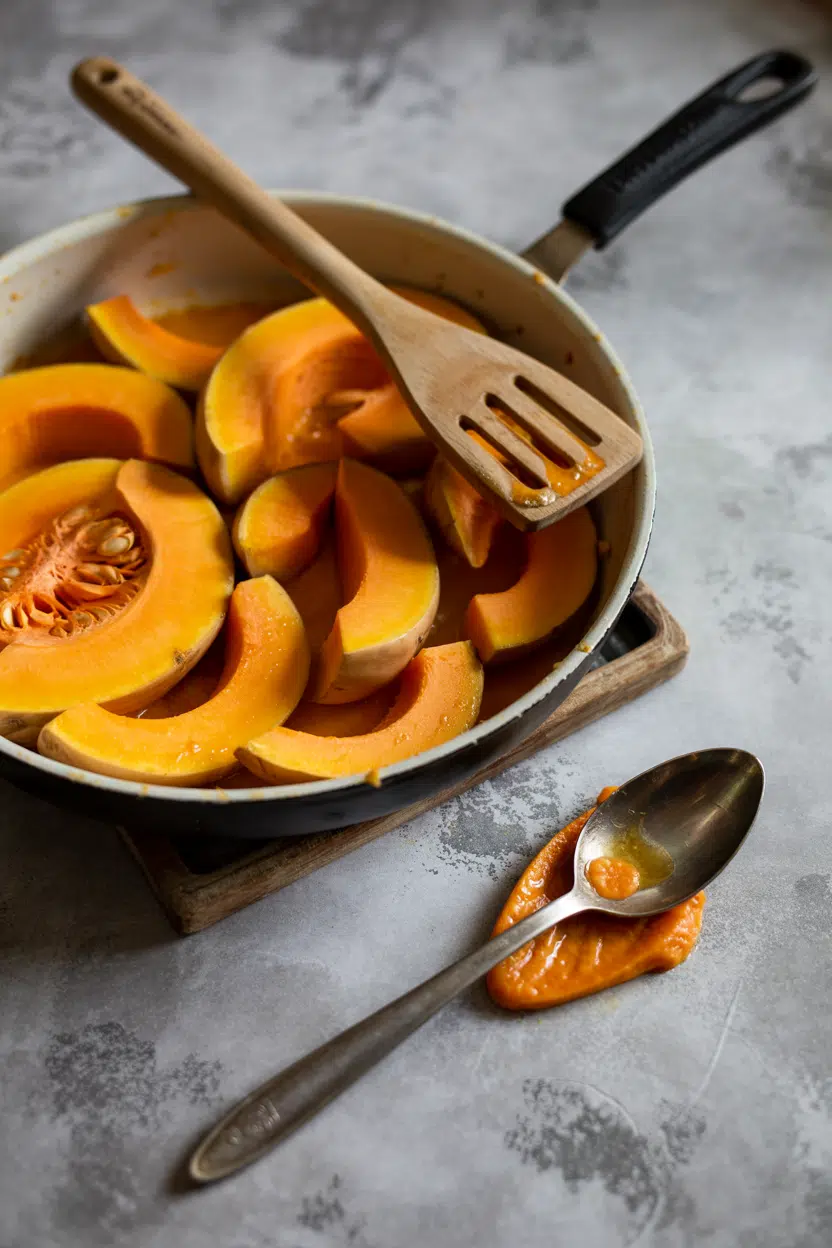
Raw butternut squash tastes faintly green and starchy, with a mild sweetness that barely hints at what heat will unlock. The real character emerges under dry heat.
Roasting drives off moisture and concentrates its natural sugars into pronounced brown-sugar and caramel notes with a nuttiness that carries a faint chestnut quality. There's also a quiet savory undercurrent that keeps the sweetness from tipping into dessert territory.
Compared to the taste of pumpkin, butternut reads sweeter, smoother, and less fibrous. Sweet potato is the closest parallel overall, though butternut finishes drier and nuttier - less sugary on the back palate.
How to Use Butternut Squash
Butternut squash handles heat in several ways, and each method pulls a different quality from the flesh. Roasting at high heat concentrates flavor; simmering then pureeing produces a smooth, neutral base for soups; steaming keeps the texture softer for mashing.
| Method | Best For | Tip |
|---|---|---|
| 🔥 Roasting | Caramelized cubes, sheet-pan sides, grain bowls | Cut into even pieces; toss with oil and roast at 425°F for best browning |
| 🍲 Simmering + Pureeing | Soups, bisques, baby food, smoothie base | Simmer until fully tender, then blend hot with stock for a silky finish |
| ♨️ Steaming / Boiling | Mashed squash, stuffing base, puree for pies | Steam over simmering water to avoid waterlogging the flesh |
| 🫕 Baking | Gratins, lasagna layers, savory tarts, pies | Slice thin for even cooking in layered dishes; pre-roast cubes for gratins |
| 🥗 Sautéing | Warm salads, risotto additions, quick weeknight sides | Cut small for faster cooking; add aromatics like sage or thyme early |
Brown butter and sage is the pairing most associated with butternut squash in North American and Italian kitchens - the nuttiness of browned butter mirrors the squash's own character. For recipes where you want to skip the dairy, knowing your replacements for butter keeps the dish on track. Cheese pairings lean toward goat cheese, feta, and Parmesan - all sharp enough to cut the sweetness. Spices from the curry family (cumin, coriander, cinnamon) work especially well in Middle Eastern-style stews.
Across cuisines, butternut appears in Italian risotto and lasagna with béchamel, North American autumnal grain bowls with farro and pumpkin seeds, and modern Australian seasonal menus.
For cooks who rely on spaghetti squash swaps that work, butternut can step in when a creamier, denser result is acceptable.
How to Buy and Store Butternut Squash
At the market, weight matters more than size. A butternut squash should feel noticeably heavy for its dimensions - lightness signals moisture loss and older flesh inside.
Look for matte, unblemished tan skin; any soft spots near the stem or deep surface cuts that expose flesh are reasons to pass.
A firm, dry stem is the clearest indicator of a mature, well-cured squash. Once you're home:
- Whole squash - store at 50-60°F in a cool, dark, dry spot; keeps for several weeks to 3 months
- Cut squash - wrap the cut face tightly and refrigerate; use within 3-5 days
- Cooked squash - refrigerate for 3-4 days or freeze for several months
Understanding butternut squash's shelf life in more detail helps when you're buying several squashes at once for winter storage.
Where to Start with Butternut Squash
First time cooking it? Roast halved in the oven - cut side down at 400°F until the flesh yields easily to a fork. That one method teaches you the flavor, the texture, and the timing before you complicate anything.
Already comfortable roasting? Move to butternut squash bisque or a gratin layered with béchamel and Parmesan.
If you need a swap for a recipe, butternut squash swaps that work covers the most reliable alternatives, and sweet potato swaps that work is useful when the recipe leans in the opposite direction.
Frequently Asked Questions
Botanically, it's a fruit - it develops from a flower and contains seeds. In cooking and nutrition contexts, we treat it as a starchy vegetable, the same way we classify tomatoes and cucumbers.
Butternut squash is noticeably sweeter and creamier than most culinary pumpkins. Its natural sugar content is higher, and its flesh is denser with less fiber, which makes the sweetness more concentrated when roasted.
Yes, though the flavor is bland and starchy and the texture is quite hard. Thin ribbons or spiralized raw butternut work in salads with bold dressings, but most cooks cook it first for palatability.
Look for fully matte tan skin with no green patches and a firm, dry stem. A ripe squash will also feel heavy and produce a hollow sound when tapped - any softness in the skin means it's past its best.
Kabocha squash and sweet potato are the closest matches - both puree smoothly and carry similar sweetness. Kabocha produces a slightly drier, earthier soup, while sweet potato adds more sugar and a distinct orange color.



