
Brioche does something no other bread quite manages: it carries a full meal forward on butter and eggs alone. Slice it for breakfast, stack it under a burger, or soak it overnight in custard for a Sunday French toast - the bread holds its structure and contributes flavor at every step.

That combination of structural reliability and rich, egg-forward taste is why bakers and cooks keep coming back to it.
Brioche is a French enriched yeast bread loaded with butter and eggs. It has a soft, pillowy crumb, a glossy golden crust, and a flavor that sits firmly between bread and pastry - mildly sweet, buttery, and egg-forward.
What Is Brioche Bread?
Brioche is an enriched yeast bread originating in France, with its strongest roots in Normandy and Île-de-France.
Remember it later
Planning to try this recipe soon? Save it for a quick find later!
Unlike lean breads made with just flour, water, yeast, and salt, brioche incorporates generous quantities of butter and eggs directly into the dough, which is what places it in its own category.
The result is a loaf that behaves more like a pastry than a standard sandwich bread. It's baked in several forms - classic loaves, individual rolls, slider buns, and the iconic brioche à tête, a fluted mold topped with a small dough knob.
A few other regional varieties exist:
- Brioche vendéenne - a braided version from the Vendée region, often lightly scented with orange flower water
- Brioche loaf - the standard rectangular format sold in most bakeries and supermarkets
- Brioche bun - portioned rolls used for sandwiches and burgers, now common far outside France
- Brioche à tête - the traditional fluted single-serve form, recognizable by its topknot shape
The word is sometimes misspelled as brioché - the accent doesn't belong there in standard French.
What Does Brioche Bread Taste Like?
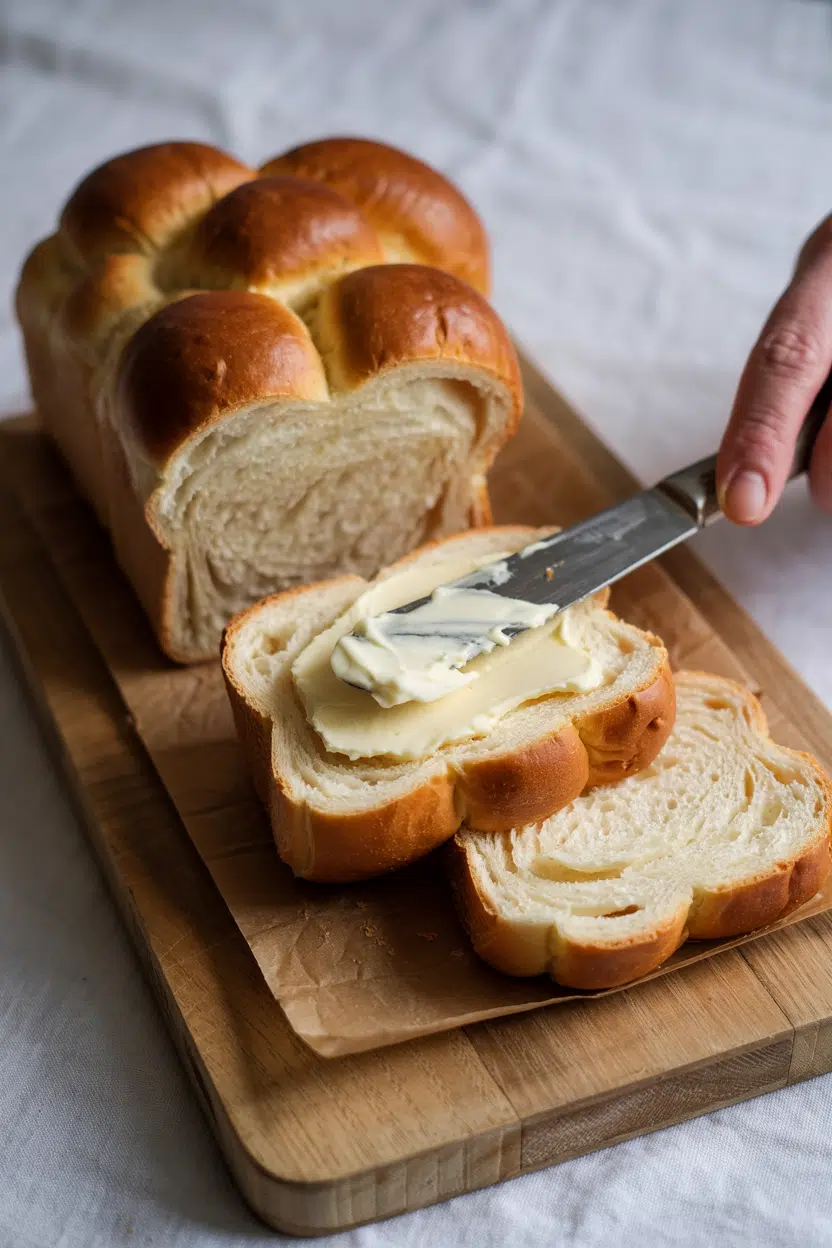
Brioche tastes buttery and mildly sweet, with a clear egg presence that gives it more depth than plain white bread. The yeast contributes a soft background note, but it never dominates - richness from fat and egg is what you notice first.
Toasting changes the profile noticeably. Heat caramelizes the natural sugars in the dough, pushing the sweetness forward and adding a light crispness to the crust while the interior stays soft.
The closest comparison is a richer, butterier challah - though challah uses oil rather than butter, so brioche has a creamier finish. It shares nothing with a standard sandwich loaf beyond its general shape.
How to Use Brioche Bread
French toast is the most famous application, and for good reason. The tight, fine crumb soaks custard deeply without disintegrating, and the egg-and-butter content in the bread itself amplifies the custardy result. If you need a bread substitute for French toast, few options come close.
Bread pudding works on the same principle - the enriched crumb absorbs liquid slowly and evenly, producing a dense, set interior rather than a soggy one. Stale brioche is actually better here; it soaks faster.
Burger buns are the other major use. Pan-searing the cut side of a brioche bun in butter for 60 seconds gives you a golden crust that holds up under sauces without going limp.
| Method | Best For | Tip |
|---|---|---|
| 🍽️ Sliced Fresh | Breakfast with butter and jam, pâté service | Use day-of for best crumb integrity |
| 🍳 Custard Soak + Pan-Fry | French toast, pain perdu | Cut thick - at least 3cm - so the center stays custardy |
| 🫙 Baked in Pudding | Bread pudding, strata | Slightly stale brioche absorbs more evenly than fresh |
| 🍔 Pan-Seared Bun | Burgers, ham and Gruyère sandwiches | Butter the cut side; 60 seconds on medium-high is enough |
| 🧂 Stale Crumb | Savory coatings, panzanella-style salads | Dry in a low oven before using; brioche crumbs brown fast |
Brioche pairs cleanly with Brie and Gruyère, roast beef, ham, chocolate, and vanilla custard. Coffee and tea both work well alongside it.
Avoid very oily, heavy sauces - they flatten the butter-egg notes that make brioche worth using in the first place.
How to Buy and Store Brioche Bread
Look for loaves with a deep golden, glossy crust - that sheen comes from an egg wash applied before baking and signals proper technique.
When sliced, the crumb should be tight and even, not crumbly at the edges or dense through the center (both point to under-proofing or low butter content).
Storage is straightforward but time-sensitive. Brioche stales faster than lean breads because high fat content changes how the crumb holds moisture.
For details on how bread storage life works across different styles, the difference is significant.
- Room temperature - keep in a paper bag inside a bread box, up to 1-2 days
- Freezer - wrap tightly in plastic, then foil; use within 1 month for best texture
- After freezing - thaw at room temperature or toast directly from frozen; avoid microwaving if you can
For a closer look at timing and signs of spoilage, see our full guide on brioche bread storage life.
Where to Start With Brioche
Buy a small loaf first. Toast one slice plain to understand the baseline butter-egg flavor before building anything on top of it. If that works for you, move to French toast - it's the simplest way to use brioche at its best.
Bakers who want to go further can try Belgian yeast waffles for a related enriched-dough comparison that uses a similar fat-and-egg structure in a different format.
Once you understand how enriched dough behaves, brioche stops feeling like a specialty item and starts becoming a regular tool.
Frequently Asked Questions
It's mildly sweet but works in both directions. The sugar content is low enough that brioche handles savory fillings - ham, cheese, roast beef - without tasting like dessert. Context and toppings steer it either way.
Both are enriched egg breads, but brioche uses a large quantity of butter while challah uses oil. Brioche has a creamier, richer flavor and a tighter crumb; challah is slightly leaner with a chewier texture.
Yes, and it holds up well. Pan-sear the cut side in butter before assembling - the caramelized surface resists soaking from sauces. It works best with medium-weight burgers; very juicy patties can still overwhelm the crumb.
Yes. Wrap individual slices or whole loaves tightly in plastic then foil and freeze up to one month. Thaw at room temperature or toast directly from frozen - the crumb recovers well either way.
The dough contains a much higher ratio of butter and eggs than standard bread - sometimes up to 50% butter by flour weight in classic recipes. That fat content is what produces the tender crumb and creamy flavor.



