
Brazil nuts show up in the bottom of a mixed nut bowl, get skipped over, and then someone finally cracks one open and realizes they've been missing out.
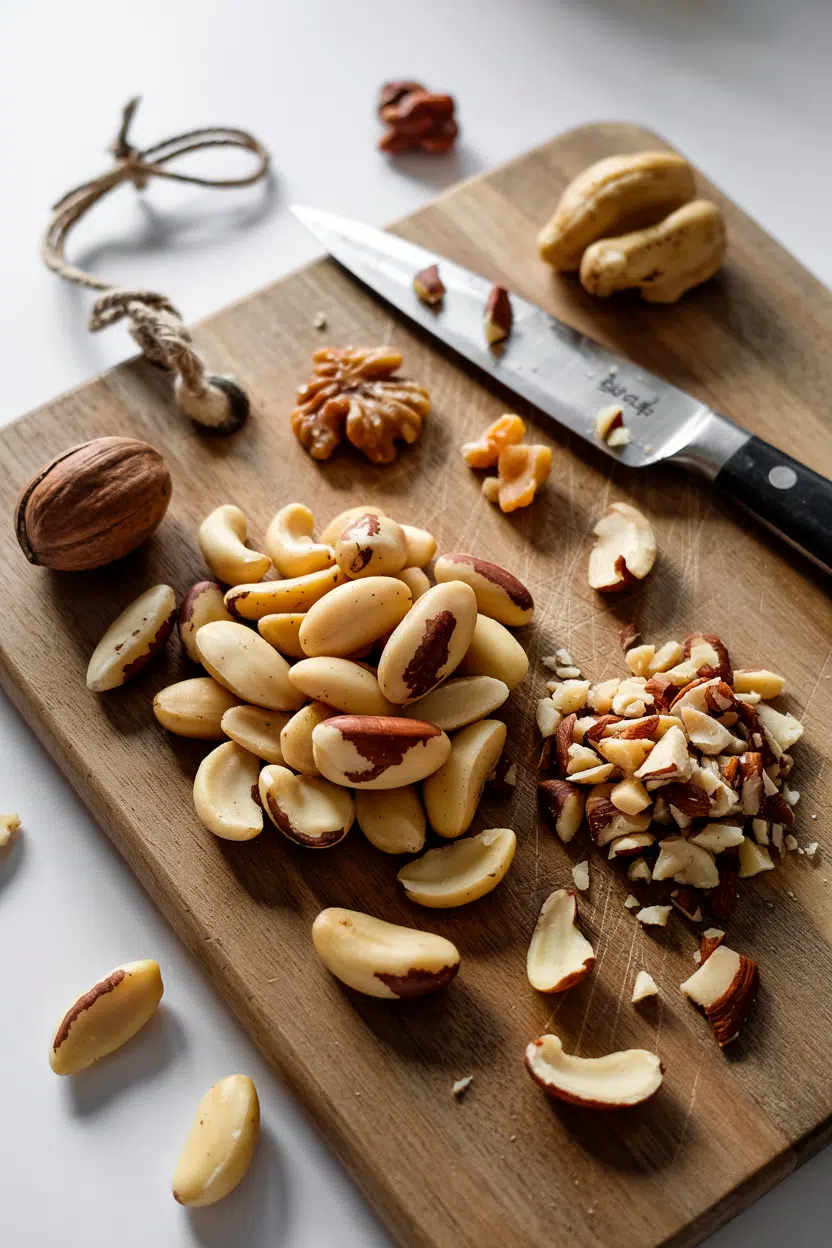
Much like swapping out butter for richer fats in a recipe, reaching for a brazil nut instead of a blander snack changes the whole equation - these are dense, creamy, and faintly cocoa-edged in a way that surprises most people the first time.
They're also among the most nutritionally loaded nuts on the shelf, which makes knowing how to use them well worth your time.
Brazil nuts are large, oil-rich seeds from the Amazon basin with a buttery, mildly cocoa-edged flavor. Use them roasted as a snack, chopped into granola, or blended into nut butter. Limit intake to 1-3 per day due to extremely high selenium content.
What Is Brazil Nuts?
Brazil nuts are the seeds of Bertholletia excelsa, a towering tree native to the Amazon rainforest of South America. They're not true nuts in the botanical sense - they're seeds packed inside a large, woody pod that resembles a coconut, with each pod housing 8 to 24 seeds arranged like orange segments.
Remember it later
Planning to try this recipe soon? Save it for a quick find later!
Wild harvesters collect fallen pods from the forest floor, since the Brazil nut tree does not grow commercially outside its native ecosystem.
That ecological dependency makes them one of the few major food products still sourced almost entirely from wild stands.
Also called castanha-do-pará in Brazil and sometimes simply "Brazilian nut," they're sold two ways:
- 🌰 Shelled brazil nuts - cream-colored, triangular seeds ready to eat or cook with
- 🪨 In-shell brazil nuts - sold whole in the pod shell, offering longer shelf life before cracking
Much like pistachio in cooking, brazil nuts occupy an interesting middle ground - they work as both a snack nut and a cooking ingredient without much adjustment.
Their standout trait beyond flavor is selenium content, with a single nut delivering more than a full day's recommended intake for most adults.
What Does Brazil Nuts Taste Like?
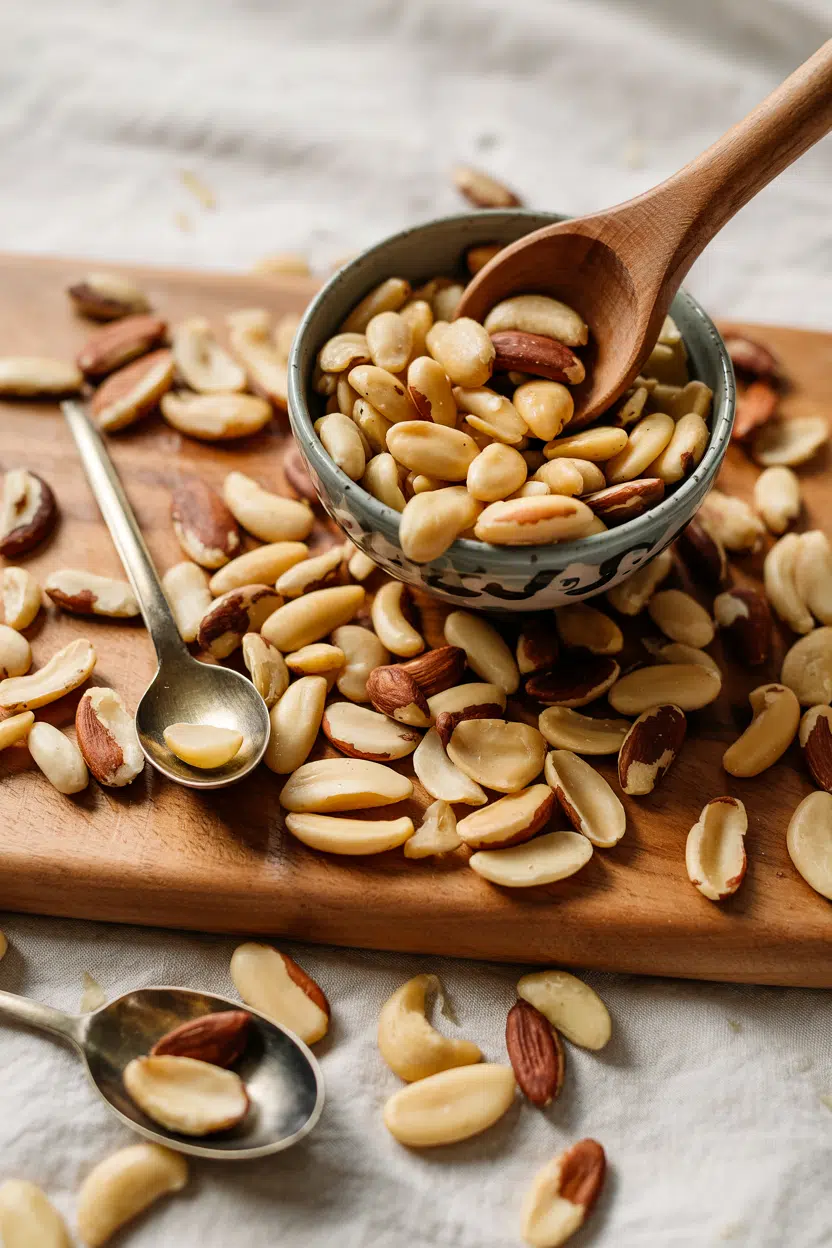
Raw brazil nuts open with a buttery, mildly sweet note that settles quickly into something earthier. The finish carries a faint cocoa-like bitterness - subtle, not sharp - that separates them from most other tree nuts.
Compared to macadamia nuts and its flavor, brazil nuts share a similar creaminess, though they're denser and carry that cocoa finish that macadamias lack.
Think of it as somewhere between a macadamia and a lightly roasted almond - and for context, almonds's flavor and uses show how differently a nut with similar earthiness can behave in a recipe.
Dry-roasting shifts the profile noticeably. Heat deepens the cocoa notes, adds a toasty edge, and draws out more of the inherent sweetness.
Raw nuts are milder; roasted nuts are more assertive.
How to Use Brazil Nuts
Brazil nuts bring richness and a cocoa-edged crunch to both sweet and savory cooking. They work across more methods than most people expect.
| Method | Best For | Tip |
|---|---|---|
| 🥗 Raw | Snacking, slicing into muesli or granola, adding to cheese boards | Pair with aged manchego or a square of dark chocolate to highlight sweetness |
| 🔥 Dry-Roasted | Standalone snacks, salad toppings, brittle and bark | Toss with coarse sea salt and rosemary before roasting for a savory edge |
| 🫙 Blended | Brazil nut butter, pesto-style sauces, baking fat replacement | Blend with a neutral oil if the paste seizes; the high oil content usually keeps it smooth |
| 🍞 Ground/Crusted | Coatings for fish fillets or poultry, pie and tart crusts | Combine with oats or breadcrumbs to moderate the richness in crusts |
In Brazilian and Amazonian cooking, brazil nuts appear in both savory rice dishes and in sweets like cocada-style confections.
Modern Western kitchens use them most often folded into chocolate bark or nut brittles, where the cocoa finish pairs naturally with dark chocolate and orange zest.
They also stand in for pine nuts in pesto-style sauces - if you've ever needed brazil nuts stand-ins to go the other direction, that pairing logic works in reverse just as well.
Ground brazil nuts produce a rich, oily paste that functions as a spread or a baking fat. Mixed with maple syrup and a pinch of sea salt, it works across toast, oatmeal, or as a filling in chocolate truffles. The fat profile also makes it a natural fit for plant-forward baking where butter or coconut fat would otherwise dominate.
How to Buy and Store Brazil Nuts
Good brazil nuts look plump and cream-colored with a smooth, unbroken surface. Pass on anything shriveled, darkened, or with an overly slick, oily surface - those signs point to age and early rancidity.
For in-shell purchases, pick pods that feel heavy for their size with no visible cracks, mold, or insect holes in the shell. The weight signals the seeds inside are still dense and moist.
Storage is where most people go wrong with brazil nuts:
- 🏠 Room temperature - only a few weeks before the high oil content begins to oxidize
- ❄️ Refrigerated - airtight container extends freshness to several months
- 🧊 Frozen - vacuum-sealed bags keep them good for a year or more
A full guide on keeping brazil nuts fresh covers the signs of rancidity in more detail - worth checking before stocking up in bulk.
The fat profile that makes these nuts rich also makes them one of the faster-spoiling options in your pantry, so cold storage isn't optional for any quantity beyond a week's use.
Where to Start With Brazil Nuts
Try a small roasted batch first. A handful dry-roasted with sea salt and a sprig of rosemary takes about ten minutes and shows you the full flavor range - buttery upfront, cocoa-edged at the finish, with a crunch that holds.
Once you know the flavor, move to chocolate bark: roughly chopped brazil nuts pressed into melted dark chocolate with orange zest is the most direct showcase of what they do best.
From there, the paste and crust applications open up naturally.
Keep the daily limit in mind - 1 to 3 nuts is the practical ceiling for most adults given the selenium load. That constraint actually makes them easier to use: a few go a long way in any recipe.
Frequently Asked Questions
Yes, in small amounts. A single nut delivers more than 100% of the daily recommended selenium intake, plus magnesium, healthy fats, and protein. Eating too many regularly risks selenium toxicity, so keep it to 1-3 per day.
One to three nuts covers your daily selenium needs without risk of excess. Eating a full handful daily over time can push selenium levels into a toxic range - symptoms include hair loss, nail brittleness, and nausea.
They share a creamy, buttery quality, but brazil nuts are denser and carry a faint cocoa-bitter finish that macadamias don't have. Macadamias are milder and sweeter overall.
Yes. Spread shelled nuts on a dry baking sheet and roast at 325°F (160°C) for 8-10 minutes, stirring once halfway. Higher temperatures push the oils toward bitterness quickly, so keep the heat low.
Their unusually high oil content - around 66% fat by weight - oxidizes faster than lower-fat nuts like almonds or cashews. Cold storage is essential; room temperature works for only a few weeks before the flavor degrades.



