
Blade steak earns its place in a serious cook's rotation not because it's the easiest cut, but because it delivers a depth of beefy flavor that pricier steaks rarely match. Connective tissue runs right through its center - that single anatomical feature determines everything: your cooking method, your prep, your result.
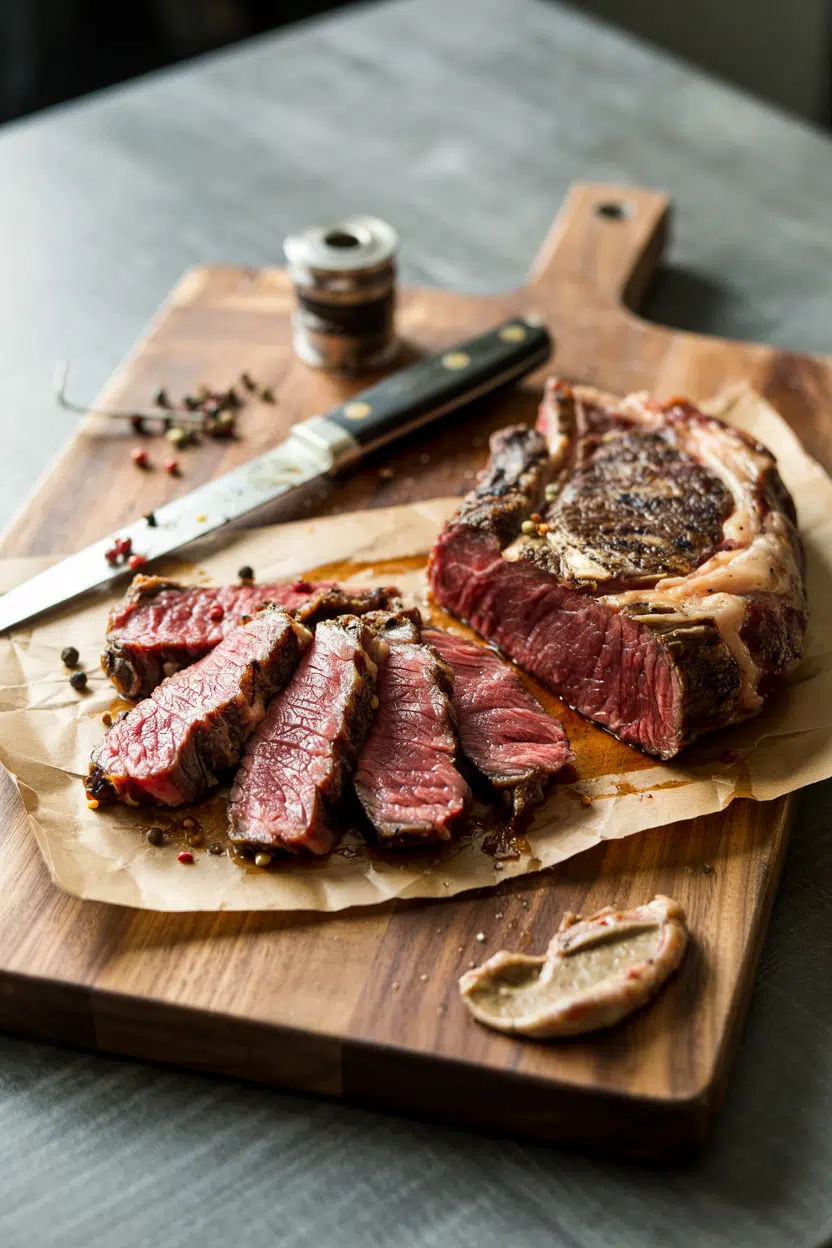
Blade steak shares that same iron-forward richness with cuts like the taste of hanger steak but rewards patience in ways hanger doesn't require.
Blade steak is a well-marbled chuck cut with a central line of connective tissue that makes cooking method everything. Braise it low and slow for tender, shreddable beef. Remove the membrane and sear it fast for a result close to flat iron. Rich, umami-forward, deeply beefy.
What Is blade steak?
Blade steak comes from the chuck primal - the shoulder section of the cow - where the muscles work hard and develop serious flavor as a result.
Remember it later
Planning to try this recipe soon? Save it for a quick find later!
That workload also means more connective tissue, and in blade steak, a thin but significant strip of it runs straight down the center of each steak.
It goes by several names depending on the butcher and country. You'll see it labeled top blade steak, chuck blade, or blade chuck steak at American counters.
When that central connective tissue is removed entirely, the resulting cut is sold as flat iron steak - one of the more tender chuck cuts available.
Unlike skirt or flank, blade steak isn't particularly thin. It's a thicker, rectangular cut with visible marbling throughout, which is exactly what gives it flavor that leaner shoulder cuts can't replicate.
Knowing which version you're buying - membrane-in or membrane-out - shapes every decision that follows.
- 🐄 Chuck primal - cut from the shoulder, not the loin or rib
- 📍 Top blade - the most common retail name in the U.S.
- 🔪 Flat iron - the same muscle, membrane removed, sold separately
- 🌍 British/Irish markets - often labeled simply "blade" or "chuck blade"
What Does blade steak Taste Like?
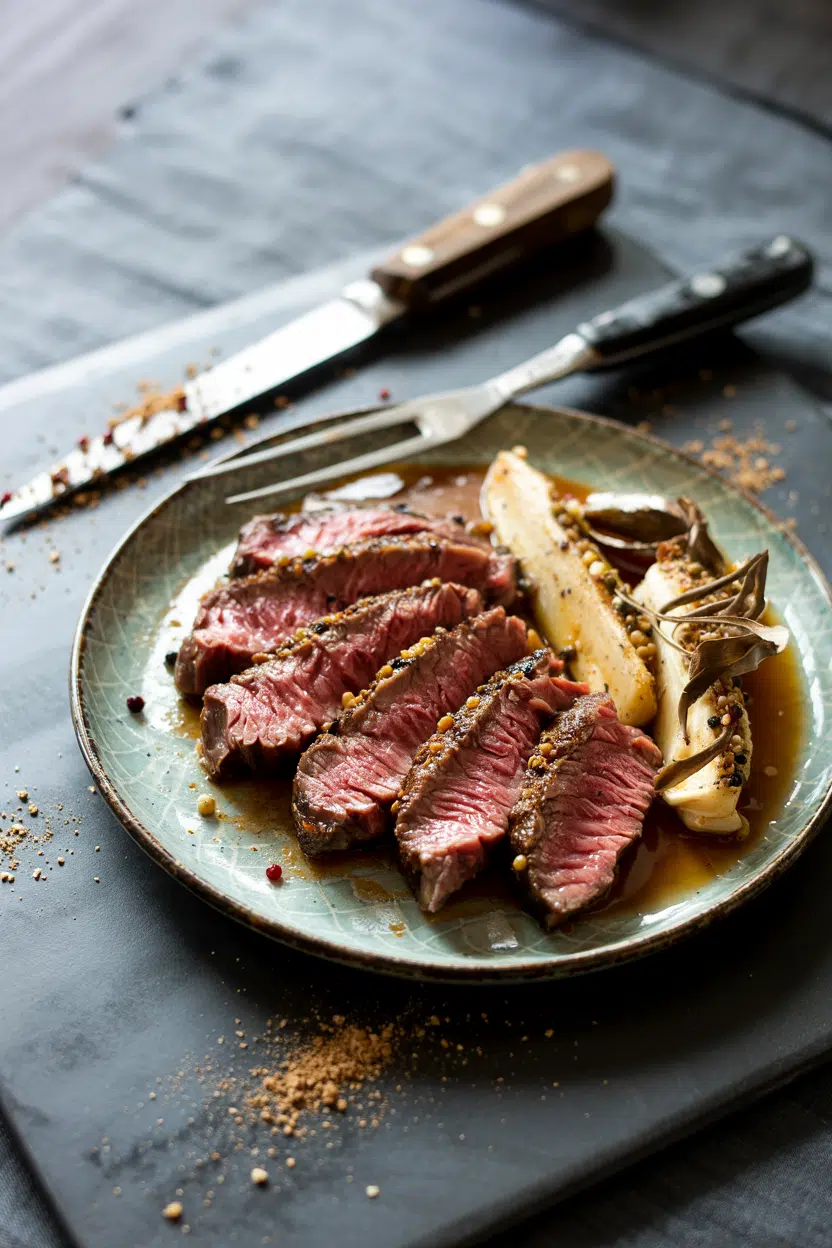
Beefy is the right word - specifically, a deep, iron-forward beefiness that sits closer to skirt steak than to a ribeye's buttery richness. The fat marbling contributes a round, almost meaty sweetness that balances that iron note.
Heat changes this cut significantly.
A quick sear on a membrane-removed steak gives you caramelized crust with a tender, moist interior - closer to flat iron in every way.
Braise the whole steak low and slow, and the connective tissue dissolves into the cooking liquid, making the meat pull apart with a rich, gelatinous quality that's closer to short rib territory.
Skip the comparison to tenderloin or strip - blade steak has none of that mild, neutral character. Its flavor is assertive enough that it doesn't need much seasoning beyond salt, pepper, and time.
How to Use blade steak
The central connective tissue isn't a flaw - it's a decision point. Remove it and you have a fast-cooking steak. Leave it in and you commit to low, slow, moist heat.
For braising, set the steak in a heavy pot with aromatics - garlic, onion, rosemary, thyme - and enough red wine or beef stock to come halfway up the meat.
Two to three hours at a low simmer gives you beef that shreds cleanly for tacos or a proper ragù.
When comparing equipment for this kind of cook, comparing braising pan vs dutch oven options helps you decide which vessel retains heat most effectively for the long haul.
Sous-vide is another strong route: cooking at 135-140°F for several hours, then finishing with a hard sear, gives you edge-to-edge pink beef with the connective tissue partially broken down - a result that's difficult to achieve any other way. The precision involved is a different discipline from boiling, as the differences between sous vide vs boiling make clear.
With the membrane out, thin-sliced blade steak works well for fajitas and cheesesteaks.
A soy-sauce and lime marinade for 30 minutes, followed by high heat, handles it.
The same approach that works for dishes alongside skirt steak translates cleanly to blade steak strips.
If you're working without blade steak, blade steak swaps that work outlines the closest alternatives by cooking method.
| Method | Best For | Tip |
|---|---|---|
| 🍲 Braising | Shredded tacos, ragù, stew | Keep liquid at a gentle simmer - a rolling boil toughens the meat |
| 🌡️ Sous-Vide + Sear | Restaurant-style even cook | Pat completely dry before the finishing sear or you'll steam, not crust |
| 🔥 Pan-Sear (membrane removed) | Fast weeknight steak, sliced thin | Let it rest 5 minutes - the thin cut loses juice fast when sliced hot |
| 🌮 Marinated + Sliced | Fajitas, cheesesteaks, stir-fry | Slice against the grain at a 45° angle for maximum tenderness |
| 🍔 Ground | Burgers with deep beefy flavor | Ask the butcher to grind it - adds richness to a leaner blend |
How to Buy and Store blade steak
At the butcher counter, look for steaks with even marbling throughout and a moist, deep-red surface - not gray patches or dried, dark edges.
The visible white seam running down the center is what confirms you're looking at a true blade steak, not a trimmed flat iron.
Storage is straightforward.
Keep fresh blade steak refrigerated between 34-38°F and use it within 1-2 days.
For anything beyond that, vacuum-seal it - sealed cuts last up to 7 days in the fridge.
For long-term storage, freezing blade steak properly extends its life to 6-12 months without significant quality loss.
Unlike more delicate proteins - a a pan-seared salmon with dill sauce recipe demands day-of freshness - blade steak holds up well under controlled freezing conditions.
Where to Start With Blade Steak
Blade steak rewards cooks who read it correctly before applying heat. If you have two to three hours, braise it whole with aromatics and red wine -
you'll get something that rivals short rib for a fraction of the price. If time is short, pull the membrane, season well, and sear hard in a cast iron pan.
This is a cut that fits multiple situations. Just don't walk it into a hot grill without a plan.
Frequently Asked Questions
Not exactly. Both come from the same top blade muscle, but flat iron has the central connective tissue removed before sale. Blade steak retains that membrane, which changes both cooking method and texture considerably.
Yes, but only after removing the central membrane. Grilling it whole leaves that connective tissue tough and chewy since dry high heat won't break it down. With the membrane out, grill quickly and slice against the grain.
Two to three hours at a low simmer is the standard range. Thicker steaks or larger braising batches may need closer to three hours before the connective tissue fully softens and the meat shreds easily.
Chuck steak is a broader category covering several shoulder cuts. Blade steak is a specific chuck cut defined by the top blade muscle and its central connective tissue seam - chuck steak doesn't always include that feature.
Braised blade steak is an excellent meal-prep cut. It reheats well in its own braising liquid without drying out, and shredded portions hold refrigerated for up to four days in a sealed container.



