
Most home cooks treat hanger steak like a second-tier cut - something to grab when ribeye is too expensive or flank steak is sold out. That's the wrong read entirely. Hanger steak delivers a depth of beefy, iron-forward flavor that strip and flank rarely match, and it cooks fast enough for a weeknight without sacrificing anything to the process.

Once you understand what this cut is and how it behaves, it becomes a deliberate choice rather than a fallback.
Hanger steak is a diaphragm muscle cut with an unusually intense, beefy flavor and coarse grain. Cook it fast over high heat, slice it against the grain, and it rewards you with tender, juicy results. Don't overcook it - medium-rare is the ceiling.
What Is Hanger Steak?
Hanger steak comes from the diaphragm muscle - a U-shaped piece of meat that literally hangs between the rib and loin, suspended from the last rib. There is only one per animal, which partly explains why it stayed a butcher's secret for so long.
Remember it later
Planning to try this recipe soon? Save it for a quick find later!
French butchers called it onglet and kept it for themselves rather than selling it to customers. That habit earned it the name "butcher's steak" in English, a label that still sticks in American markets.
The cut runs roughly 1 to 1.5 pounds and has a visible central seam of connective tissue dividing two lobes. Unlike a ribeye or strip, it has a pronounced, coarse grain that runs at an angle across each lobe.
- Also called: onglet, onglet de boeuf, hanging tender, butcher's steak
- Comes from: The diaphragm, not a locomotive muscle - so it's tender despite its beefy look
- Cut size: One cut per animal, typically serving two people
- Key feature: Central connective tissue seam that a butcher trims before cooking
What Does Hanger Steak Taste Like?
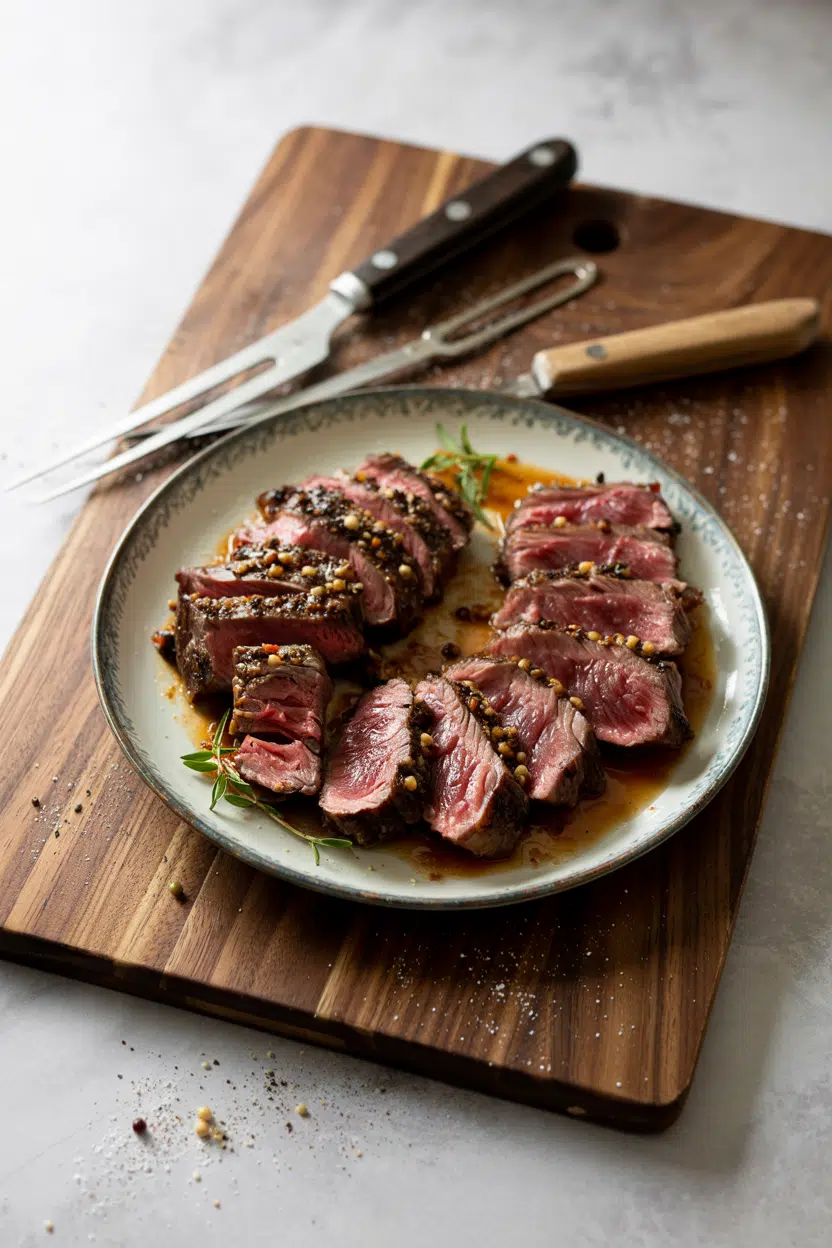
Hanger steak has a flavor intensity closer to offal than to a strip steak - that's not a criticism, it's the point.
The iron-forward, mineral edge is more pronounced here than in skirt steak or flank, and the umami depth holds up against strong sauces without disappearing.
Raw, it carries a robust, slightly metallic aroma that cooks off quickly under high heat. Once rested, a mild sweetness emerges beneath the beefy base note - the kind of finish that makes a simple salt-and-pepper preparation feel complete.
Compared to flank steak, hanger is noticeably more tender and carries more flavor per bite. It's less fatty than ribeye but more assertive - the cut that makes the strongest case for beef without excess marbling.
How to Use Hanger Steak
High heat is the rule. Cast-iron searing and direct grilling are the two methods that work best, both relying on a hard crust to lock in the cut's natural juices and build a savory exterior against the beefy interior.
| Method | Best For | Tip |
|---|---|---|
| 🔥 Cast-Iron Sear | Steak frites, butter-basted bistro steak | Pat dry before cooking; sear 3-4 min per side |
| 🍖 Direct Grill | Whole grilled steak, chimichurri service | Use high direct heat; rest 5-7 min before slicing |
| 🌮 Marinate + Grill | Tacos, steak salads, stir-fry strips | Acid-based marinades work in 30-60 min; don't go longer |
| 🫕 Pan-Finish | Garlic butter and thyme finish, bistro sandwiches | Add butter, garlic, thyme in the last 2 min; baste constantly |
French bistro cooking built its reputation partly on this cut - steak frites with hanger steak remains a standard for good reason. The bold flavor carries through fries, wine sauces, and shallot reductions without being muted.
Across Latin traditions, the cut works in tacos and alongside Argentine chimichurri sauce, where the herb-acid combination cuts through the iron-forward profile cleanly. For sides, side dishes for grilled ribeye steak gives useful pairing direction that translates directly to hanger.
Avoid braising or slow-cooking this cut. Long, moist heat destroys what makes it worth buying - the quick-cook intensity collapses into a bland, fibrous result.
How to Buy and Store Hanger Steak
Look for a deep red, single U-shaped piece with a visible central seam and a thin fat cap along one side. Avoid packages with excess liquid pooling or a sharp metallic odor - both signal age.
Ask your butcher to trim the silver membrane but leave the fat cap intact for cooking.
Shelf life is short once refrigerated. Keep it at 32-36°F and use it within 1-2 days of purchase.
For details on how long it stays safe, see our hanger steak storage guide guide - and check the skirt steak storage life page if you're comparing storage behavior across similar cuts.
Vacuum-sealing extends refrigerated life to around 5 days and frozen life to 6-12 months. Store it away from strong-smelling foods - the cut absorbs odors faster than thicker, denser cuts like brisket.
Start Here for Best Results
If you're cooking hanger steak for the first time, keep it simple: coarse salt, cracked pepper, hot cast iron, and a rest period. That setup gives you the clearest read on what this cut actually tastes like before you layer in marinades or sauces.
If the bold, iron-forward profile isn't for you, hanger steak swaps covers the closest alternatives by flavor and texture. For those who want sides before the protein decision is even finalized, pairings for skirt steak applies well here too.
Medium-rare is the target. Pull it at 130-135°F, rest it five minutes minimum, and slice on the bias.
Frequently Asked Questions
Butchers traditionally kept this cut for themselves rather than selling it, because its intense flavor was considered a trade perk. There's only one per animal, which made it easy to absorb into personal use before it reached the display case.
Yes, when sliced correctly. The coarse grain requires cutting against the fibers at a bias - skip that step and the same cut feels tough. Cooked to medium-rare and sliced properly, it's more tender than flank steak.
Hanger has a deeper, beefier flavor and slightly more tenderness. Skirt steak has more fat marbling and a looser texture that some prefer for tacos. Both need high heat and cross-grain slicing.
Pull it at 130-135°F for medium-rare. Above 140°F the texture tightens significantly and the juicy quality of the cut diminishes - medium-well and well-done are not recommended for this cut.
Avoid it. Acid-based marinades work in 30-60 minutes on this cut; overnight exposure breaks down the surface fibers and produces a mushy exterior. A short, high-acid marinade is enough to add flavor without damaging texture.



