
The best substitute for Asian pear in bulgogi and other marinades is a ripe Bosc pear, swapped 1:1 by weight, with a Fuji apple as the next choice. Both give the sweetness and juice, but neither tenderizes beef much, so add a little fresh kiwi or pineapple when tenderness is the goal.
In raw salads and slaws, jicama or a crisp Anjou pear matches the crunch better than Bosc does.
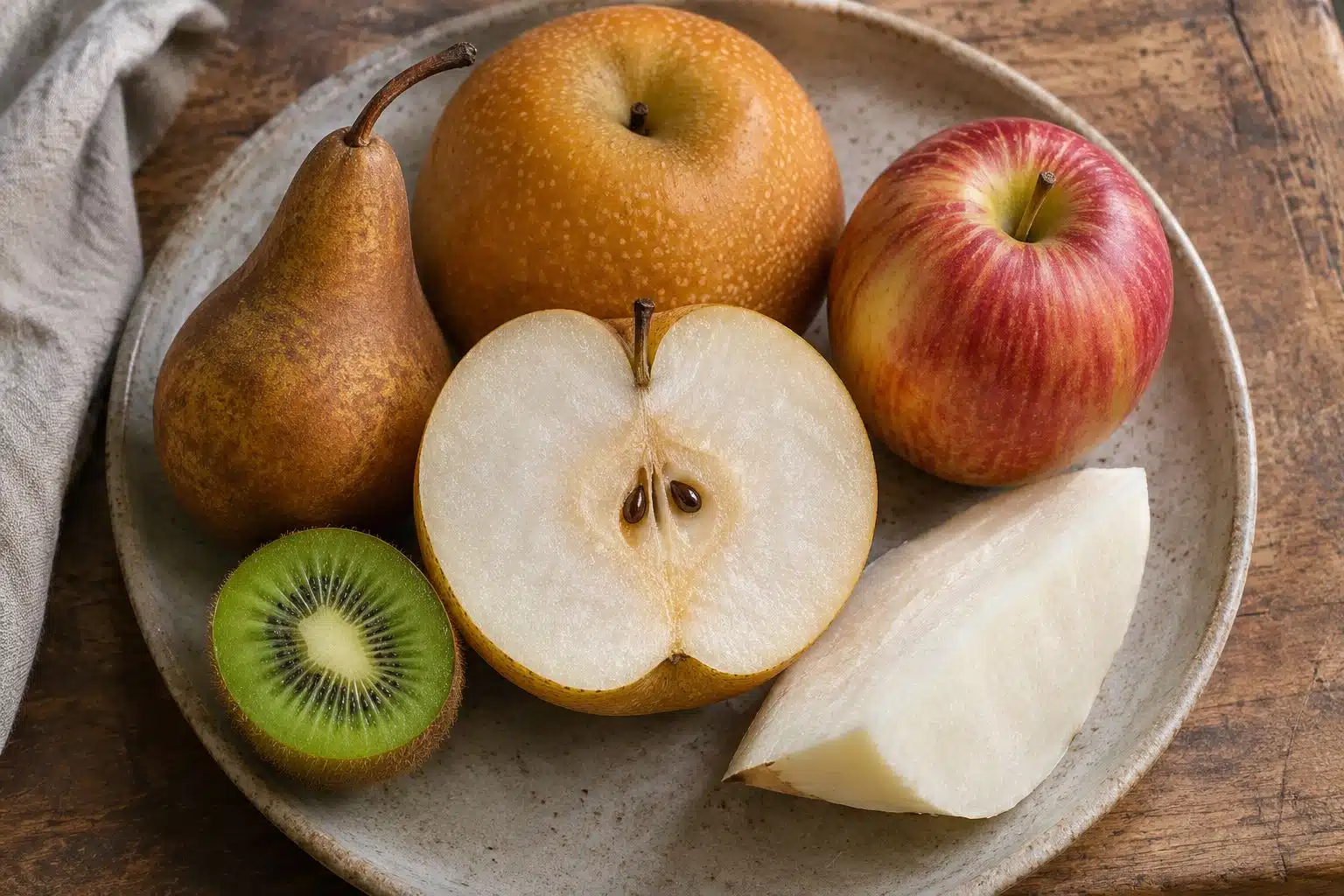
| # | Substitute | Best For | Ratio | Key Note |
|---|---|---|---|---|
| 1 | Bosc Pear | ✨ Both | 1:1 | Drier, grainier flesh |
| 2 | Fuji Apple | ✨ Both | 1:1 | Sweet, crisp, little tenderizing |
| 3 | Green Kiwi | 🍳 Cooking | ½ kiwi per 1-2 lb | Strong, fast enzyme |
| 4 | Fresh Pineapple Juice | 🍳 Cooking | 1:2 | Fresh only, 30 min max |
| 5 | Grated Jicama | 🥗 Raw | 1:1 | Crisp, less sweet |
| 6 | Korean Melon | 🥗 Raw | 1:1 | Won't tenderize meat |
The table ranks the swaps by how well they work in a bulgogi-style marinade, with the two raw-only options last. For pineapple, the ratio means ½ cup juice for every 1 cup of grated pear the recipe asks for.
What Does Asian Pear Do in a Recipe?
Asian pears are round, crisp and gritty, and they stay crunchy as they ripen. The same fruit is sold as Korean pear, nashi pear or sand pear, so a recipe that asks for any of those names wants the same thing.
Remember it later
Planning to try this recipe soon? Save it for a quick find later!
In a recipe the pear does three jobs, and the swap you pick depends on which job matters:
- Sweetness and juice: Grated pear adds sugar and liquid to a bulgogi or galbi marinade, and recipes use roughly 3 tablespoons to ½ cup grated pear per pound of beef.
- Mild tenderizing: Pear contains a protease, an enzyme that cuts protein, but one Korean study that compared fruit juices in a beef marinade ranked pear last, behind pineapple, papaya, fig and kiwi.
- Crunch in raw dishes: The flesh stays crisp in salads and slaws, but it softens and falls apart when cooked, which is why America's Test Kitchen calls it unsuited to cooked dishes.
Because sweetness and juice do most of the work in bulgogi, any ripe pear or apple covers that job. Tenderness comes mostly from slicing the beef thin, with a small dose of kiwi or pineapple if you want extra.
The Best Asian Pear Substitutes, Ranked
1 – Bosc Pear
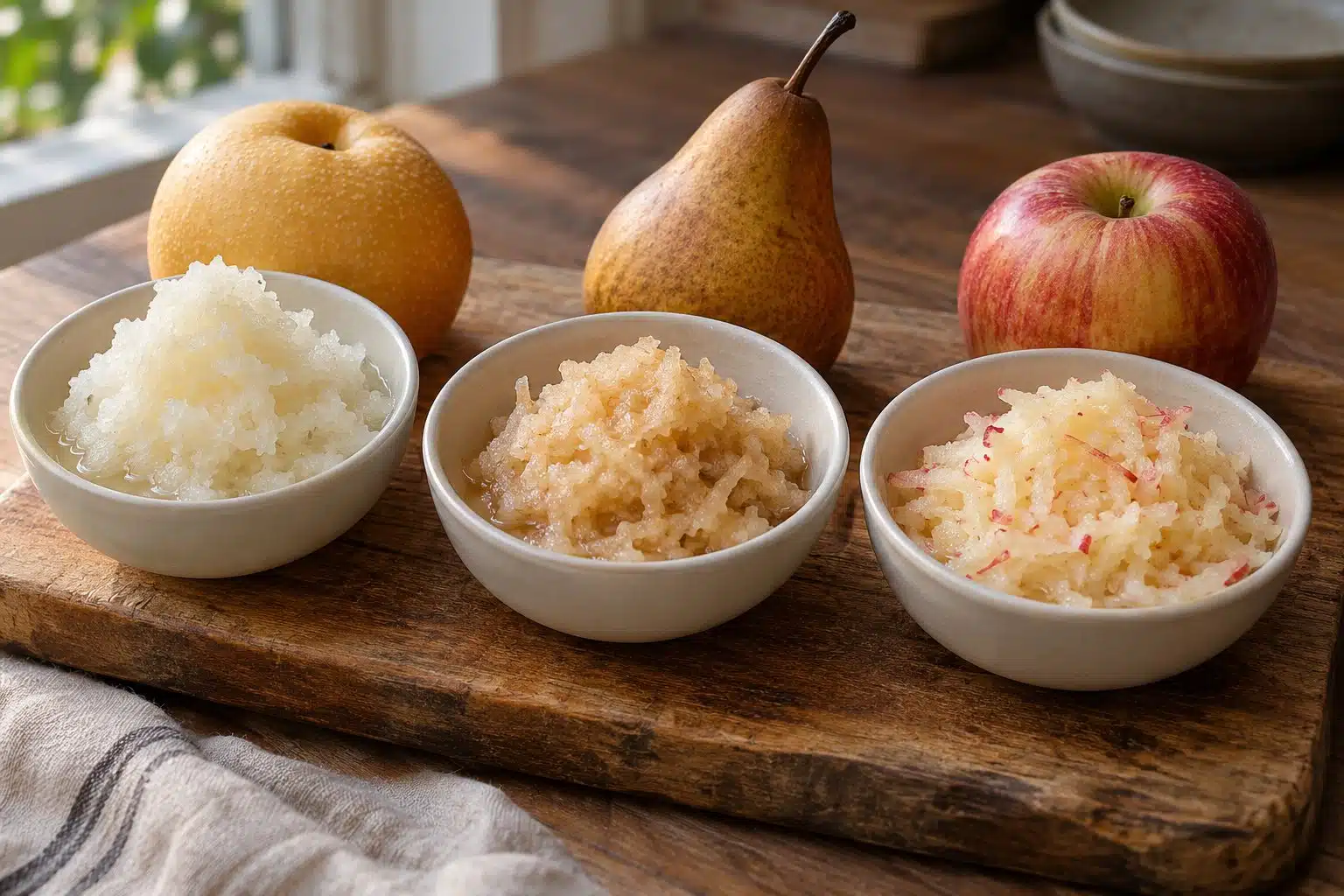
Use 1:1 by weight: if the recipe wants 1 cup grated Asian pear, grate 1 cup of Bosc. Pick a ripe one, since a ripe Bosc gives up more juice when grated.
Bosc has firmer, grainier and drier flesh than Asian pear, so the marinade ends up slightly thicker. A splash of water or apple juice loosens it.
That dense flesh also holds its shape in heat, so Bosc is the pear to pick when the fruit is cut in chunks for a braise or a baked dish, not grated.
- Why it works: Bosc is a pear with a mild floral sweetness, so the flavor stays in the same family as the original.
- Where it fails: Raw Bosc is firm but not crunchy, so it will not give a salad the same snap as Asian pear.
- Better raw match: Anjou has a similar crisp texture and sweetness, though it is less juicy than Asian pear.
- Softer pears: A ripe Bartlett also works 1:1 in a grated marinade, but it is too soft to stand in for Asian pear in a salad.
2 – Fuji or Gala Apple
Swap 1:1 by weight, and grate the apple just before it goes into the marinade. A Fuji apple is sweet, crisp and slightly acidic, which fits both bulgogi and raw slaws.
Apples add sugar, juice and a little acidity, but unlike pineapple or kiwi they are not known for meat-tenderizing enzymes. If the beef is a tougher cut, slice it thin or add one of the stronger fruits below.
- Where it works: Korean Bapsang's bulgogi names Bosc pear or an apple as the stand-in and asks for a sweet variety such as Honeycrisp, Fuji or Red Delicious, not a tart one.
- Where it falls short: The flavor reads as apple, with less of the floral note some pears have, so it suits a bold marinade better than a delicate fruit salad.
3 – Green Kiwi
Kiwi is the swap when you want more tenderizing than pear gives. Green kiwi carries actinidin, a protease strong enough that Zespri's own marinade for meat needs only 15 minutes.
Mash about half a green kiwi for every 1 to 2 pounds of beef in place of the pear. Korean Bapsang's galbi uses half a kiwi for 2 pounds of ribs, and a pear-sized portion would be far too much.
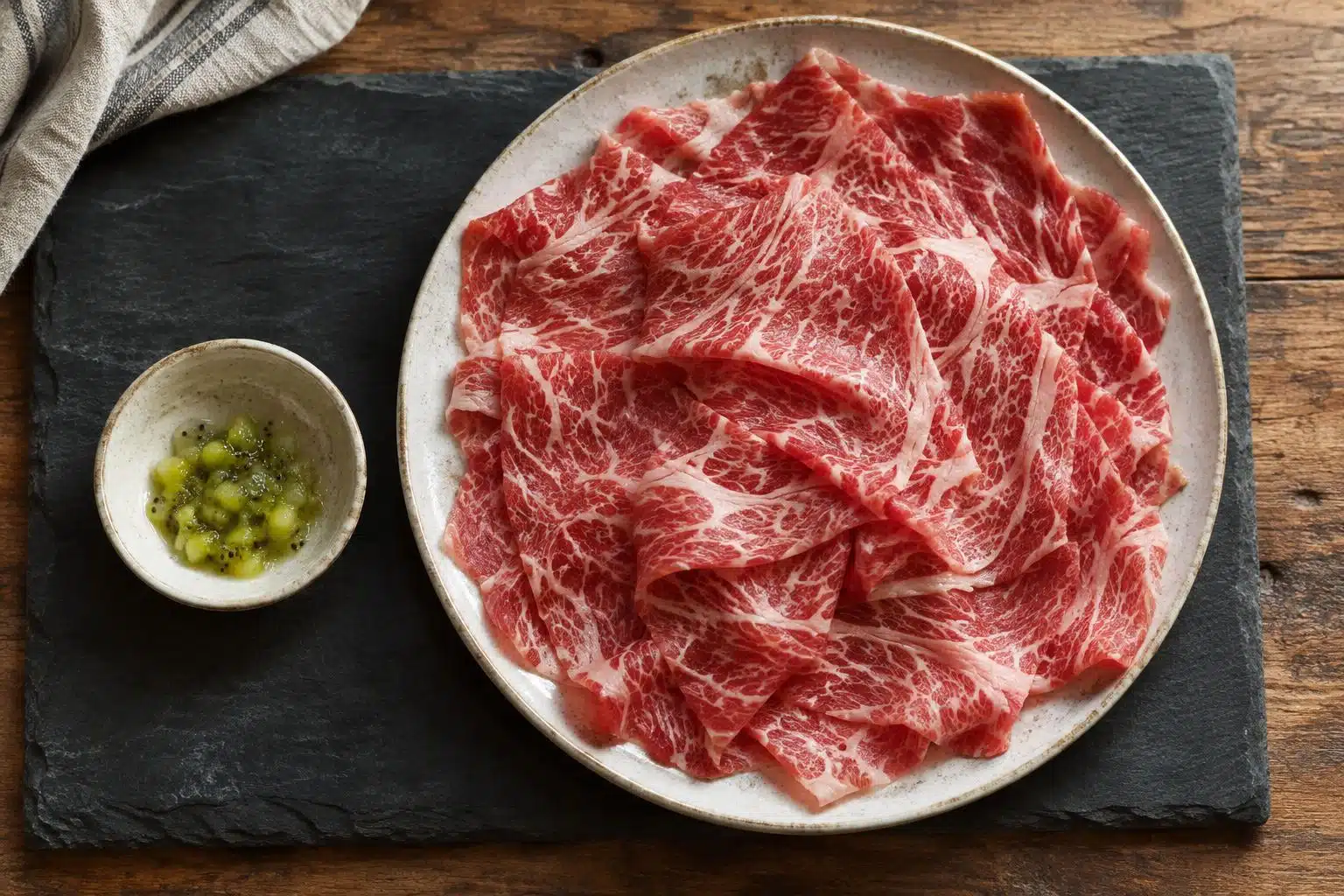
Kiwi tastes tangy, not like pear, because it has more acid. Balance it with the sugar already in the marinade.
4 – Fresh Pineapple Juice
Fresh pineapple juice contains bromelain, a strong protease, so it tenderizes harder than pear. Use ½ cup juice per 1 cup grated Asian pear and marinate for 20 to 30 minutes at most.
- Fresh only: Canning destroys the enzyme, so canned juice adds sweetness but little tenderizing, and Just One Cookbook specifies fresh, not canned, pineapple in its bulgogi.
- Short soak: Past 20 to 30 minutes the outside of the meat turns spongy and mushy while a tough center stays tough.
- Flavor: It tastes tropical and tangy, so add a little extra soy sauce or sesame oil to keep the marinade savory.
If you are also out of pineapple juice, the pineapple juice substitutes for marinades cover that gap.
5 – Grated Jicama
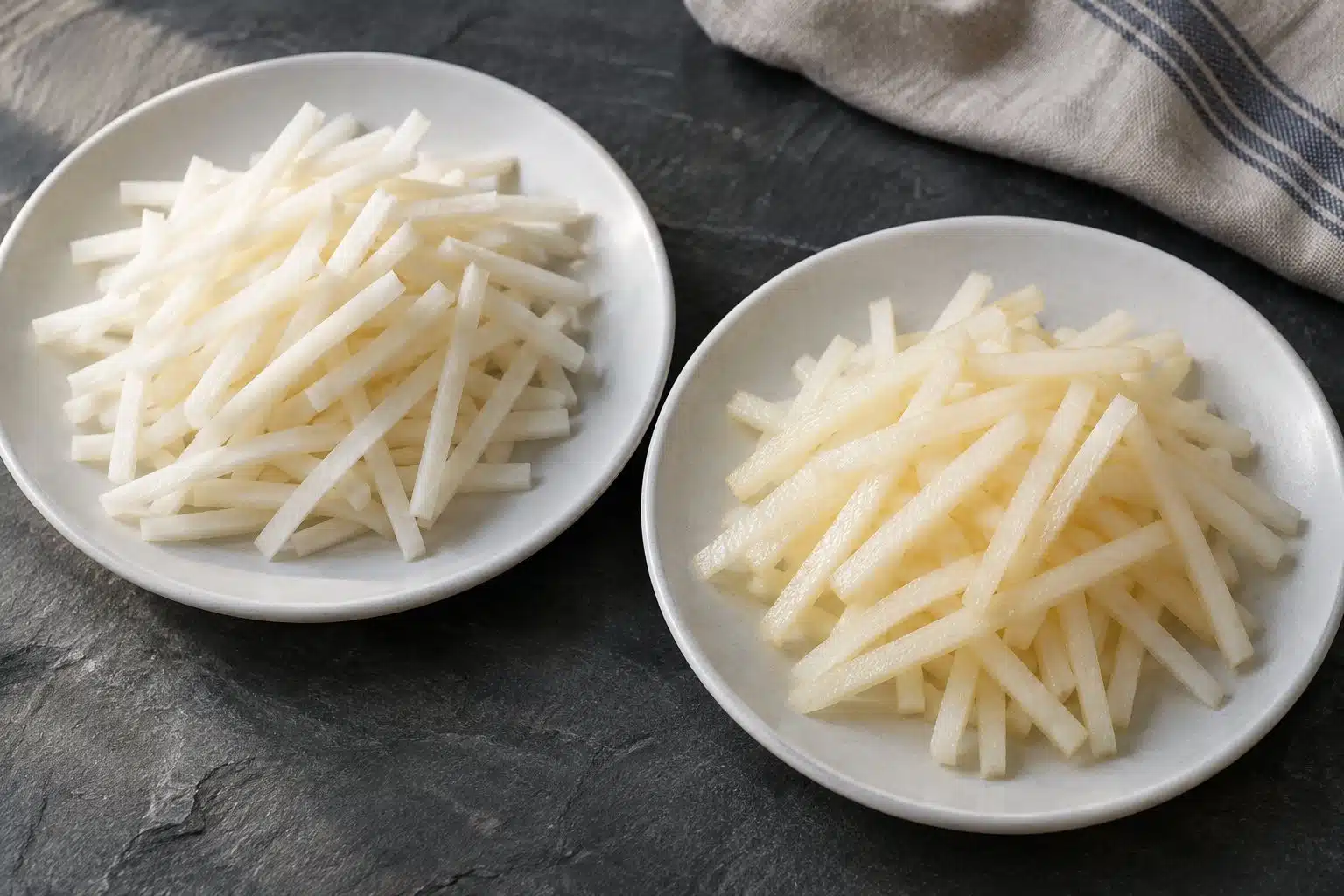
Raw jicama is crunchy, white and a little sweet, with a taste close to water chestnut. Use it 1:1 by weight for raw Asian pear in salads, slaws and spring rolls.
Grate or cut it just before serving. It does not brown right away, but pieces that sit out for a long time keep better with a brush of lemon or lime juice.
It also fits Korean-style side dishes where the pear was only there for crunch.
- Won't tenderize: Jicama has no meat-softening enzyme, so keep it out of marinades that need to tenderize.
- Milder flavor: It is less sweet and less floral than Asian pear, so lift the salad with citrus, herbs or chili.
6 – Korean Melon (Chamoe)
Korean melon has crisp, juicy white flesh that tastes sweet and mild, closer to cucumber and pear than to soft cantaloupe. Peel it, scoop out the seeds, and use it 1:1 by weight in salads, fruit plates or cold noodle dishes.
The flesh stays crisp but is softer than Asian pear, so cut the pieces a little thicker.
It will not break down meat fibers, so leave it out of marinades. The flavor is more neutral and watery than Asian pear, which means it supports a dish and does not add a floral note.
Choose by What You're Cooking
| If You Want | Pick | Why |
|---|---|---|
| Sweet, juicy bulgogi | Ripe Bosc pear or Fuji apple | Same sweetness and juice at 1:1 |
| Faster tenderizing | Green kiwi or fresh pineapple juice | Strong proteases, 20 to 30 minutes |
| Raw crunch | Jicama or Anjou pear | Crisp flesh that stays firm |
| Mild, cool salad | Korean melon | Juicy and neutral, no enzymes |
| A cooked braise or stir-fry | Bosc pear | Firm flesh holds its shape when heated |
The table sorts the swaps by the result you want, so the marinade and the salad each get a different answer.
Using the Swap in Galbi and Bulgogi
Thin bulgogi slices need only 30 minutes to an hour in the marinade, and with Bosc pear or apple they can sit overnight, according to Korean Bapsang's bulgogi.
Galbi uses short ribs cut about ⅓ inch thick, and Korean Bapsang marinates them 6 to 8 hours, longer for thicker meat. A grated pear or apple is the safe choice for a soak that long.
Can You Leave the Pear Out?
Yes. Korean Bapsang's bulgogi says to omit the pear or use Bosc or apple instead, and our Korean beef bulgogi lists the grated fruit as optional.
Without it the marinade loses some sweetness and juice. Taste it before the beef goes in and add sugar a teaspoon at a time until it matches your usual batch, then slice the beef thin.
For galbi, Korean Bapsang also lists about ¼ cup apple or pineapple juice, or Korean plum syrup (maesilcheong), in place of the grated pear.
Frequently Asked Questions
Yes. Ripe Bosc or Bartlett pears work at a 1:1 ratio, and the marinade may come out slightly thicker because they are drier than Asian pear.
Korean pear contains a protease that breaks down protein, much as bromelain does in pineapple and actinidin does in kiwi. Pear's enzyme is milder than those two, so slice the beef thin as well.
For raw eating, Anjou is closest, with a crisp texture and mild sweetness, though it is less juicy. For marinades and cooked dishes, Bosc is the practical choice.
Not as a direct 1:1 swap, because applesauce lacks the fresh texture of grated fruit. Grated apple at 1:1 is better, with a little kiwi or fresh pineapple if you want extra tenderizing.
With Bosc pear or apple, thin bulgogi slices take 30 minutes to an hour and can sit overnight, while thick galbi ribs take 6 to 8 hours. Fresh pineapple juice needs 20 to 30 minutes at most, and kiwi about 30 minutes.
Blend and strain a ripe Bosc or Bartlett pear, or use a sweet apple such as Honeycrisp apples. Store-bought pear or apple juice is the quick option, so taste before adding more sugar.
Jicama, cut into matchsticks or thin slices and used 1:1 by weight, gives the closest crunch. Korean melon is milder and softer.
The pear in kimchi adds natural sweetness, so a ripe Bosc pear or a sweet apple covers that job. America's Test Kitchen's napa kimchi names very ripe Hachiya persimmon pulp as its alternative.



