
You spot them on the shelf in two forms - a jar swimming in herb oil or a can with a plain label - and it's not always clear which one to reach for. Artichoke hearts are the trimmed, choke-removed center of the globe artichoke, and they do quiet, steady work in dishes where you want a meaty vegetable bite without the fuss of preparing a full thistle bud.

If you've landed here because of a recipe calling for dishes alongside spinach artichoke dip or you're working through endive swaps that work in a composed salad, this profile will help you understand the ingredient first.
The artichoke heart is the tender center of the globe artichoke - mild, slightly nutty, and faintly briny when jarred. It works raw in salads, roasted for depth, or blended into dips and sauces. Jarred hearts are the most practical option for everyday cooking.
What Is Artichoke Heart?
The globe artichoke (Cynara cardunculus var. scolymus) is a thistle bud cultivated across the Mediterranean for centuries, with Italy, Spain, and Egypt among the top producers today.
Remember it later
Planning to try this recipe soon? Save it for a quick find later!
The heart is what remains after you strip away the tough outer leaves and scrape out the fuzzy choke sitting above it - a dense, bowl-shaped base that holds the plant's most tender flesh.
You'll find it sold under several names: globe artichoke heart, canned artichoke heart, marinated artichoke, or simply choke-removed artichoke. Fresh hearts require prep work and acidulated water to prevent browning.
Jarred or canned versions skip that step entirely.
Understanding the role hearts of palm plays in similar recipes helps clarify where artichoke hearts differ - hearts of palm is milder and more fibrous, while the artichoke heart has a denser, more savory character.
- 🌍 Origin - Mediterranean; cultivated for over 2,000 years in Italy and North Africa
- Plant family - Asteraceae (thistle family), not a true vegetable but a flower bud
- Key varieties - Green Globe (common in US), Violetto (Italian, smaller and nuttier), Romanesco
- Forms available - Fresh whole, quartered in jars, canned in brine, frozen, vacuum-packed
What Does Artichoke Heart Taste Like?
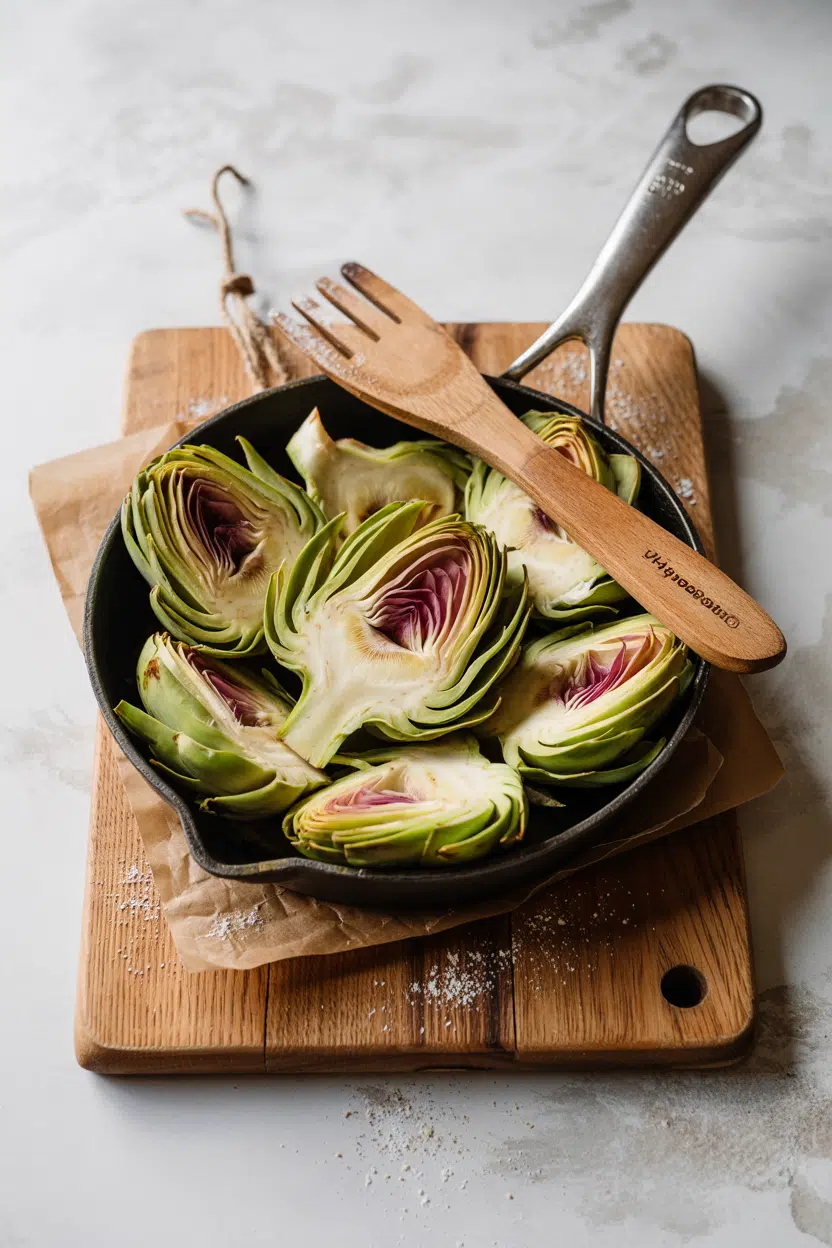
The artichoke heart lands somewhere between mild asparagus and hearts of palm, with a nuttiness that neither of those shares. Raw or lightly blanched, it reads as clean and vegetal with a faint sweetness at the base.
That sweetness comes partly from cynarin, a compound unique to artichokes that temporarily affects how other flavors register on the palate.
Heat changes the profile. Roasting deepens the nuttiness and adds a slight caramelized edge. Slow cooking in liquid softens the flavor toward creamy and mild.
Jarred hearts carry an additional layer - mildly briny and tangy from the oil and acid brine - which is often the version most people know first.
How to Use Artichoke Heart
Jarred artichoke hearts cover most everyday needs without prep. Drain them, rinse if you want less brine, and they're ready to slice, quarter, or blend. Fresh hearts need trimming, acidulated water to prevent oxidation, and either blanching or direct cooking before use.
Italian cooking claims the widest range of applications - antipasti platters, pasta with lemon and olive oil, and risotto all rely on the heart's ability to absorb surrounding flavors without disappearing into them. French preparations lean toward gratins and tarts.
American usage centers on spinach-artichoke dip and pizza toppings, where the jarred form dominates.
| Method | Best For | Tip |
|---|---|---|
| 🥗 Raw/Jarred | Salads, antipasti, quick pasta | Rinse jarred hearts to reduce brine intensity |
| 🔥 Roasted | Pizza, flatbreads, side dishes | Halve and roast cut-side down for caramelization |
| 🍳 Sautéed | Pasta, frittatas, grain bowls | Use olive oil over high heat for light browning |
| 🫙 Baked/Stuffed | Side dishes, appetizers | Breadcrumbs, garlic, and Parmesan fill the cavity well |
| 🥣 Pureed | Dips, spreads, dairy-free sauces | Blend with white beans or lemon for body without cream |
Lemon, olive oil, and garlic form the core pairing foundation. From there, Parmesan and prosciutto push the flavor Italian; capers and anchovy take it toward a sharper, more assertive direction. Avoid pairing with strong sweet fruit or very bitter greens - both suppress the heart's mild, nutty profile. When considering swapping out artichoke heart in a recipe, the texture match matters more than flavor, since the heart's meatiness is its key function.
How to Buy and Store Artichoke Heart
Fresh whole artichokes should feel heavy for their size with tightly closed, squeaky-firm leaves and no brown cut edges at the stem. A little surface browning from frost is fine - it doesn't affect quality.
For jarred or canned versions, look for pale, uniform color, clear oil (not cloudy or rancid-smelling), and no bulging lids.
Checking the artichoke heart's shelf life in detail is worth doing before you stock up - the gap between fresh (5-7 days refrigerated) and unopened canned (months to years) is significant.
Opened jars hold for 1-2 weeks refrigerated when kept covered in their liquid.
Store fresh whole artichokes in a perforated plastic bag in the crisper drawer, just as you would with keeping asparagus fresh - moisture retention is the priority.
Start With the Jar
If you're cooking with artichoke hearts for the first time, reach for a quality jarred version in olive oil rather than fresh.
The prep barrier with fresh hearts is real - trimming and acidulating adds 20+ minutes before you've cooked anything.
Once you understand how the jarred heart behaves - its texture, its brine, how it softens further with heat - moving to fresh becomes a natural next step.
For pairing ideas for artichokes beyond what's listed here, the flavor combinations expand significantly once you've worked with the ingredient a few times.
Frequently Asked Questions
Yes, but only very young, small hearts. Larger fresh hearts are too fibrous and bitter to eat without cooking. Jarred hearts in oil or brine are already softened and are the practical raw option for salads.
Yes. They're low in calories and fat while providing dietary fiber, folate, vitamin C, and potassium. The soluble fiber content supports digestive health, and they fit vegan, gluten-free, and Mediterranean diets without modification.
Bitterness usually means the choke wasn't fully removed, or the outer leaf bases are still attached. Cynarin, the compound responsible for artichoke's distinct flavor, reads as bitter at high concentrations - blanching or roasting mellows it significantly.
One to two weeks refrigerated, provided the hearts stay submerged in their oil or brine. If the liquid runs short, top it off with olive oil. Discard if you notice cloudiness, sourness, or any off-smell.
Trim to the pale base, drop immediately into lemon water to prevent browning, then boil or steam for 10-15 minutes until a knife slides in easily. From there, roast, sauté, or use directly in your recipe.



