
Most people assume apple cider vinegar is just a sharper, cheaper stand-in for the taste of rice vinegar or replacements for balsamic vinegar - a pantry backup with no real personality.
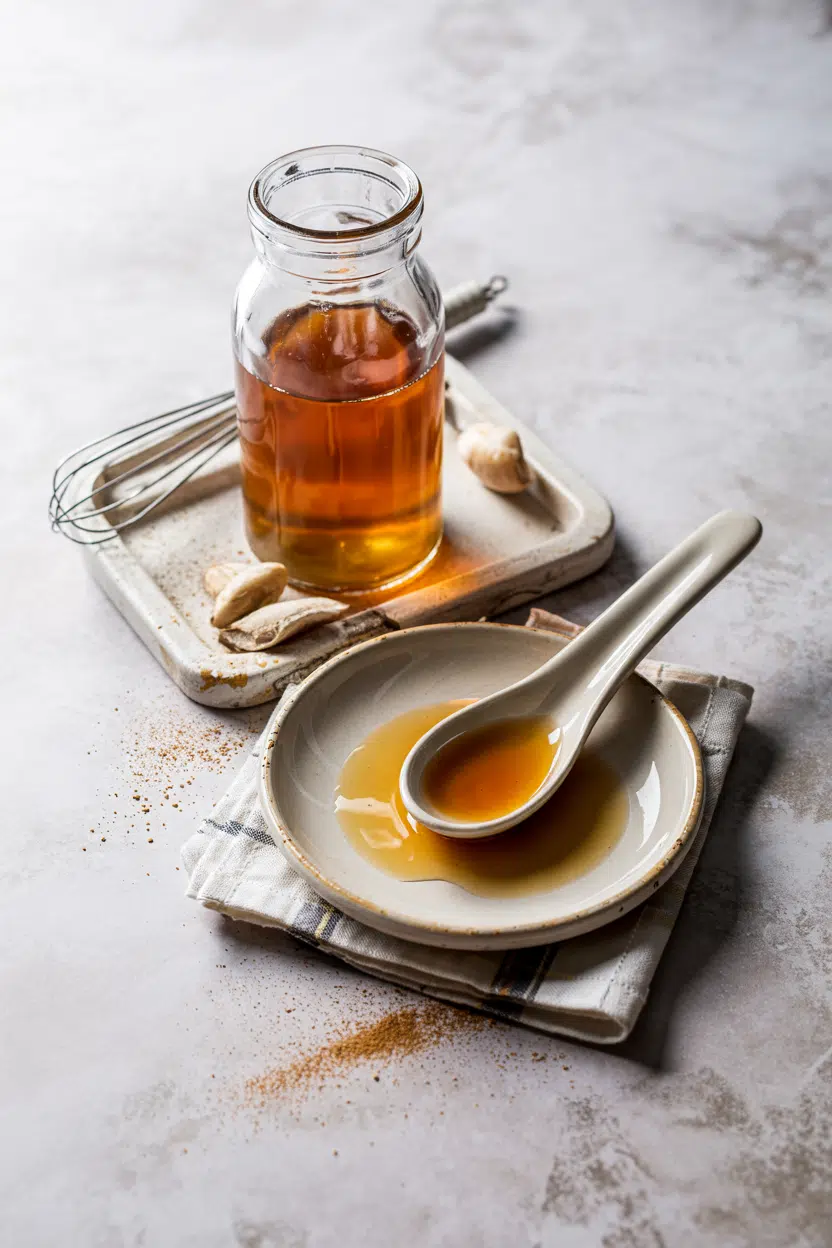
That's the wrong read. Apple cider vinegar has a distinct profile: bright, tangy acidity with a faint apple fruitiness that no other vinegar quite replicates.
It shows up in barbecue sauces, quick pickles, coleslaw, and shrubs, but it also disappears into dishes as a finishing acid that rounds out richness without announcing itself. Knowing how to use it -
and when not to - is what separates a well-balanced dressing from one that tastes like vinegar for its own sake.
Apple cider vinegar is a fermented fruit vinegar with bright tang, mild apple fruitiness, and a sharp finish. It suits dressings, marinades, quick pickles, and finishing sauces. Unopened, it keeps 2-5 years; opened, expect peak flavor for 1-2 years.
What Is Apple Cider Vinegar?
Apple cider vinegar starts as fermented apple cider. The cider converts to alcohol first, then a second fermentation converts that alcohol into acetic acid - the compound responsible for vinegar's sharp bite.
Remember it later
Planning to try this recipe soon? Save it for a quick find later!
Traditional, unfiltered production leaves behind the 'mother' of vinegar: a cloudy mass of beneficial bacteria, enzymes, and cellulose strands that settle at the bottle's bottom.
Filtered versions are clear amber and shelf-stable; unfiltered versions are hazy and slightly viscous, with visible strands.
You'll see it labeled several ways:
- 🍎 ACV - shorthand across most English-speaking markets
- 🍎 Raw or unfiltered ACV - retains the mother culture
- 🍎 Distilled apple cider vinegar - filtered clear, no mother, milder character
- 🍎 Cider vinegar - common British labeling, same product
It sits in the fermented fruit vinegar category alongside white wine vinegar and red wine vinegar, and it's been produced in temperate Europe and North America for centuries.
Unlike malt vinegar or distilled white vinegar, its starting material - apples - carries through as detectable fruit character in the finished product.
If you're ever looking at white vinegar stand-ins or replacements for malt vinegar, ACV is a frequent candidate, though its fruitiness will shift the flavor.
What Does Apple Cider Vinegar Taste Like?
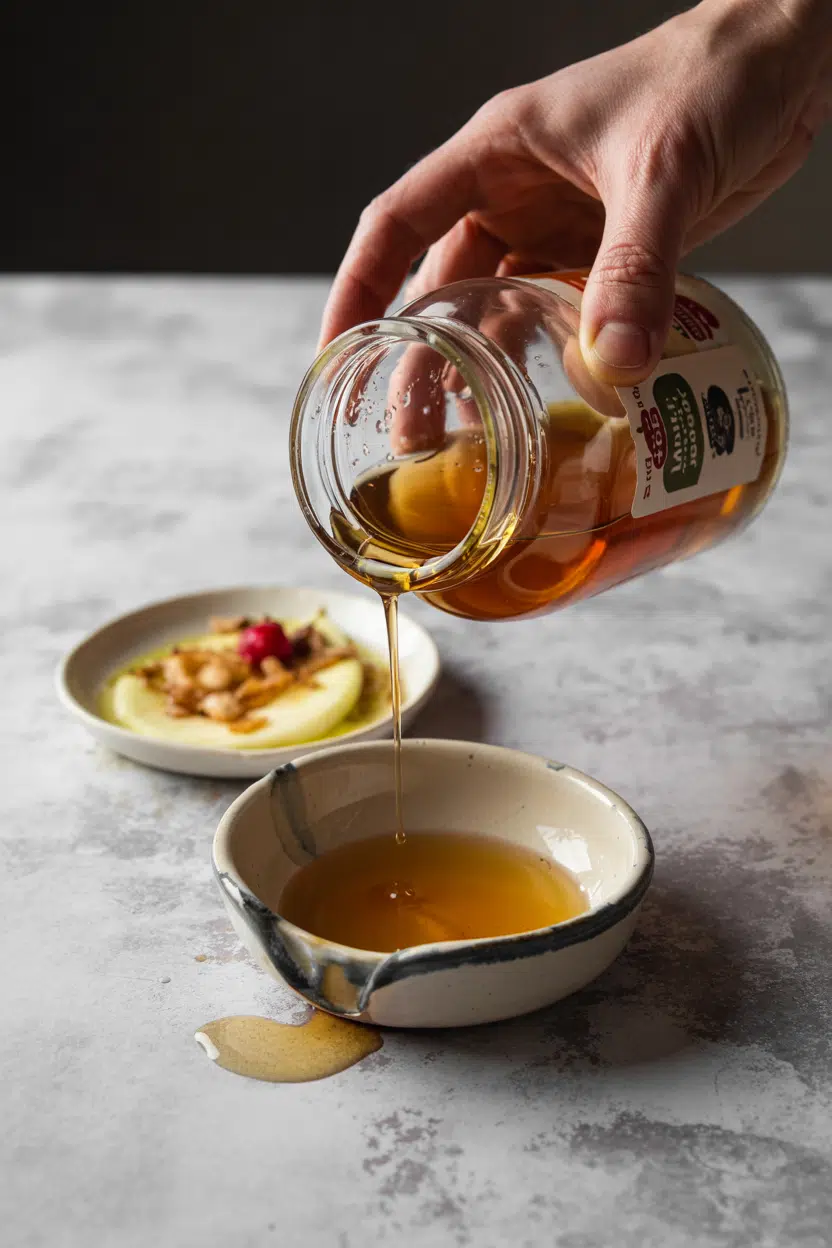
Apple cider vinegar leads with sharp, bright acidity - more assertive than white wine vinegar, less sweet than balsamic. The apple origin comes through as a mild, slightly cooked-fruit note sitting beneath the tang, not as obvious sweetness.
The finish turns astringent - that dry, puckering sensation on the back of the palate. Heat softens acetic acid somewhat, so ACV added mid-cook reads differently than ACV in a cold dressing.
Raw in a vinaigrette, it's upfront and assertive; stirred into a warm braise at the end, it integrates as a bright background note rather than a sharp edge.
How to Use Apple Cider Vinegar
ACV is one of the most adaptable acids in the kitchen. Its apple fruitiness makes it a natural partner for pork, root vegetables, and honey-based sauces - pairings that a more neutral white wine vinegar wouldn't flatter as well.
| Method | Best For | Tip |
|---|---|---|
| 🥗 Raw | Vinaigrettes, coleslaw, cold marinades | Balance with olive oil and a small amount of honey or maple syrup |
| 🫙 Pickling | Quick-pickled cucumbers, onions, cabbage | Combine with salt and a pinch of sugar; no heat required for fast pickles |
| 🍳 Finish | Deglazing pans, brightening braises, balancing chutneys | Add in the last 2-3 minutes; taste and adjust before serving |
| 🥤 Drinks | Shrubs, tonics, cocktail mixers | Dilute heavily - 1 teaspoon per 240ml is a reasonable starting point |
The cuisines where ACV appears most are American barbecue (vinegar-based sauces and slaws), British pickling traditions, and Eastern European vegetable preserves.
Modern bartenders also use it in shrubs - drinking vinegars built on fruit, acid, and sugar - where its rounded acidity works better than harsh distilled vinegar.
It pairs well with olive oil, mustard, garlic, fresh herbs like tarragon and parsley, soy sauce in small amounts, and anything pork-adjacent.
Avoid it in dishes requiring neutral-tasting acidity, like some custards, where its fruitiness will clash.
If a recipe calls for something you don't have, understanding swapping out apple cider vinegar or checking alternatives to red wine vinegar can help you navigate without wrecking the balance.
How to Buy and Store Apple Cider Vinegar
Start at the label. Unfiltered, raw ACV - with a visible cloudy mother - is the traditional choice if you want full character.
Filtered versions are cleaner-tasting and fine for most cooking, but you lose the live cultures and some depth.
Storage is straightforward:
- Pantry, sealed - the standard approach; a cool, dark spot away from the stove
- Cap tight - acetic acid is volatile and will escape through a loose lid over time
- Refrigerator option - not required, but slows flavor changes in opened bottles
Unopened bottles hold peak flavor for 2-5 years. After opening, plan to use it within 1-2 years for best results - though acidity remains effective much longer.
You won't need to worry about freezing apple cider vinegar; the high acidity means it keeps well at room temperature without any spoilage risk.
Where to Start With Apple Cider Vinegar
If you're new to cooking with ACV, start with a simple vinaigrette: three parts olive oil, one part ACV, a small spoon of mustard, and a drizzle of honey.
That ratio showcases everything distinctive about it - the apple note, the rounded tang, the way it holds against fat.
From there, try it as a finishing acid in a braised pork dish or a pan sauce.
Those two applications cover most of what makes ACV worth keeping on your shelf, and they'll teach you the difference between raw and cooked acidity faster than any description can.
Frequently Asked Questions
No. Both contain acetic acid, but ACV is made from fermented apple cider, which gives it mild fruitiness and a rounded acidity. Distilled white vinegar is sharper, more neutral, and lacks any fruit character.
The mother is a mass of beneficial bacteria, enzymes, and cellulose strands formed during fermentation. It's harmless and signals unfiltered, traditionally made ACV - shake the bottle to redistribute it before use.
Yes, and it works well for quick pickles specifically. Its apple fruitiness adds a subtle layer that plain white vinegar won't. For long-term canning, confirm the acidity level is at least 5% before using it.
Start with a 3:1 ratio of oil to ACV. For a single salad serving, that's roughly 1 tablespoon ACV to 3 tablespoons oil - then adjust based on how assertive you want the acid to read.
Not in the traditional sense. Its high acidity prevents spoilage, though flavor can darken and mellow significantly past the 2-year mark after opening. The mother may grow thicker over time - that's normal.



