That roll of parchment paper looked fine last week, but now it's crinkled, torn at the edges, and barely enough for one small pan.
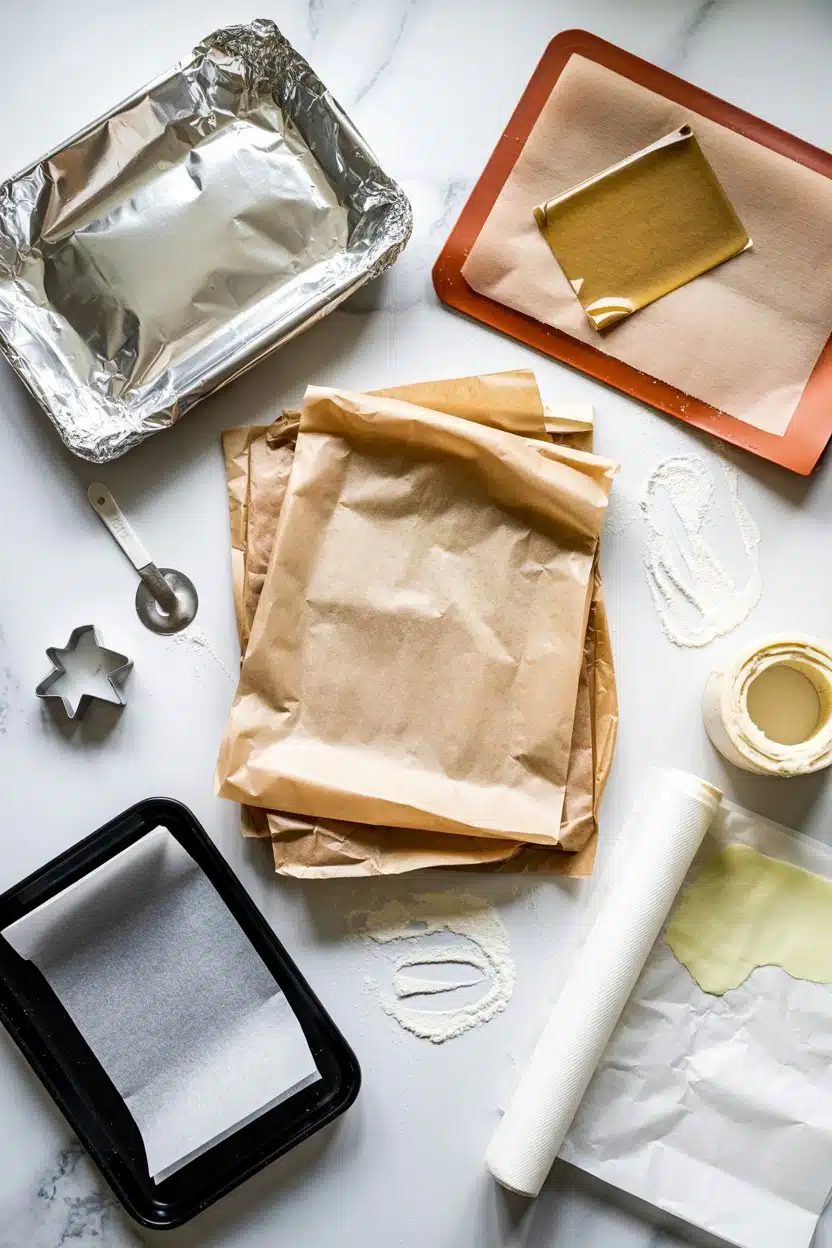
Aluminum foil and silicone mats offer the best heat resistance and non-stick properties. Prioritize heat tolerance or non-stick needs first. Greasing trays works well but requires extra fat. Always oil foil to prevent sticking when roasting or baking.
Parchment paper creates a barrier between food and metal, preventing sticking and making cleanup simple. The right substitute depends on whether you need non-stick release, heat resistance, or both. Some swaps work for high-heat roasting while others handle delicate cookies better.
| # | Substitute | Best For | Ratio | Key Note |
|---|---|---|---|---|
| 1 | Aluminum Foil | 🍳 Cooking | 1:1 + grease | Needs oil to prevent sticking |
| 2 | Silicone Mat | 🥧 Baking | 1:1 | Reusable, no greasing needed |
| 3 | Greased Tray | ✨ Both | Thorough coat | Basic but effective |
| 4 | Wax Paper | 🍳 Cold Prep | 1:1 | No heat-melts in oven |
| 5 | Banana Leaves | 🍳 Steaming | 1:1 | Adds subtle aroma |
| 6 | Cooking Spray | ✨ Both | Even coat | Quick but no liner |
| 7 | Glass/Ceramic Dish | 🥧 Baking | Direct use | Grease if needed |
7 Parchment Paper Swaps That Keep Flavor Balanced
Below are parchment paper substitutes that vary by shape, size, and heat flow. The best choice depends on your recipe and what's already in the kitchen.
Remember it later
Planning to try this recipe soon? Save it for a quick find later!
1 - Aluminum Foil
Foil handles high heat without breaking down, making it reliable for roasting vegetables or baking sturdy items. The tradeoff is sticking-without a layer of oil or butter, food bonds directly to the surface.
A light brush of neutral oil solves most adhesion problems. Foil works best when you need heat reflection and easy cleanup, not delicate release.
Quick specs:
- Apply oil before placing food to prevent tearing during removal.
- Crisp edges develop faster due to heat conduction.
- Cleanup stays simple since you toss the foil afterward.
- Avoid for thin cookies or sticky glazes that pull apart.
Skip if: you're baking delicate pastries or anything with caramelized sugar.
Aluminum Foil
Works for: roasting, sheet pan dinners, meat
Skip if: baking cookies or sticky desserts
Silicone Mat
Works for: cookies, macarons, repetitive batches
Skip if: you need crisp bottoms
2 - Silicone Mat
Silicone mats provide consistent non-stick performance without any greasing. Cookies slide off cleanly, and the mat goes back in the drawer for next time.
The surface insulates slightly, which means bottoms brown less than on parchment. For crisp-bottomed biscuits or crackers, this matters.
The essentials:
- Lay flat on a standard sheet pan for best contact.
- Wash with warm soapy water between uses.
- Expect softer bottoms on items that normally crisp underneath.
- Store rolled or flat to prevent creasing.
Texture runs slightly different than parchment since the silicone cushions heat transfer. Recipes relying on crisp edges may need an extra minute or two.
Skip if: golden-brown bottoms are the goal.
3 - Greased Tray
Direct greasing eliminates the liner entirely. A thin layer of butter, oil, or shortening creates enough barrier for most baked goods to release.
This method works well for breads, brownies, and bar cookies. Sugary items or anything prone to caramelization may stick in spots where grease thins out.
Apply grease evenly using a paper towel or pastry brush-missed corners cause problems. For extra insurance, dust with flour after greasing.
Skip if: you're making anything with burnt sugar or caramel toppings.
4 - Wax Paper
Wax paper looks similar to parchment but behaves completely differently under heat. The wax coating melts at oven temperatures, potentially smoking or transferring onto food.
For cold prep, it works fine. Roll out dough between sheets, wrap sandwiches, or line counters when decorating.
Key details:
- Never place wax paper in a heated oven.
- Use for room-temperature or refrigerated tasks only.
The slight waxy feel doesn't affect cold foods. Just keep it far from heat sources.
Skip if: your recipe involves any oven time at all.
5 - Banana Leaves
Traditional in Southeast Asian and Latin American cooking, banana leaves create a natural non-stick surface for steaming or wrapping. They add a subtle earthy sweetness that parchment can't replicate.
Soften leaves over an open flame or in hot water before folding. This prevents cracking and makes them pliable enough to wrap around tamales, fish, or rice.
What to expect:
- Aroma transfers to food during cooking.
- Best for steaming, grilling in packets, or lining steamers.
- Trim to fit your pan or basket.
If banana leaves aren't available either, common banana swaps ranked covers alternatives that provide similar wrapping flexibility.
Skip if: you need a neutral-flavored liner or crisp baked results.
6 - Cooking Spray
A quick spritz coats the pan faster than spreading butter. Most sprays contain lecithin, which helps create a thin non-stick layer.
The downside is buildup. Repeated use leaves a sticky residue on pans that requires scrubbing. There's also no physical barrier protecting food from direct metal contact.
Spray evenly from about six inches away for consistent coverage. Missed spots show up as stuck-on bits after baking.
If cooking spray isn't in the pantry either, Pam Cooking Spray alternatives to try offers oil-based options that work similarly.
Skip if: you need easy transfer of delicate items or want to avoid pan buildup.
| Use | Method | Notes |
|---|---|---|
| Quick bakes | Light spray | Works for muffins, quick breads |
| Roasting | Even coat | Prevents vegetable sticking |
| Delicate pastries | Avoid | No barrier for sugar-heavy items |
7 - Glass/Ceramic Dish
Oven-safe glass and ceramic dishes eliminate the need for any liner. Food bakes directly in the vessel, and the smooth surface releases most items without trouble.
Grease the dish for batters or sticky foods. For casseroles and roasted vegetables, the natural surface usually suffices.
Heat distribution differs from metal pans. Glass holds heat longer, which can overcook edges if you're not watching. Reduce oven temperature by 25°F when converting recipes from metal pans.
Skip if: you need the quick heat transfer of a metal sheet pan.
Final Tips for Parchment Paper Substitutes
Start with the closest match. Adjust seasoning and cooking time as needed.
Most of these substitutes handle the job without major recipe changes. Foil and silicone mats cover the widest range of uses, while wax paper stays strictly for cold tasks.
- Closest match - Silicone mat for reliable non-stick release
- Easiest grab - Aluminum foil with oil for quick prep
- Bold alternative - Banana leaves for aromatic steaming
Frequently Asked Questions
Yes, but grease it first. Without oil, cookies stick and tear when you try to remove them.
The wax coating melts at oven temperatures, potentially smoking and transferring onto food. Use it only for cold prep tasks.
Slightly. The silicone insulates, so bottoms brown less than on parchment. Add a minute or two for crispier results.
Aluminum foil with a light oil coating handles high-heat roasting well and makes cleanup simple.
Yes. Grease the pan thoroughly with butter and dust with flour. This classic method releases most cakes cleanly.
7 Best Substitutes for Parchment Paper
Ingredients
Method
- Select your substitute based on cooking or baking needs: foil for cooking, silicone mat for baking, greased tray or spray for both, wax paper for cold prep, banana leaves for steaming, or glass/ceramic dish for direct baking.
- Prepare the substitute as required: oil or grease foil, lay silicone mat flat, apply thorough grease to trays, keep wax paper only for cold tasks, soften banana leaves before use, spray even coat, or grease glass dish if sticky food.
- Adjust usage ratio according to the substitute: use 1:1 with parchment amount plus grease for foil, 1:1 for silicone mat and wax paper (cold only), thorough coat for greased tray, even coat for spray, direct use for glass/ceramic, and 1:1 for banana leaves.
- Check for special considerations: avoid foil for delicate pastries or sticky glazes, skip silicone mats if crisp bottoms are needed, never heat wax paper, note banana leaves add aroma and work only for moist-heat cooking, and lower glass dish oven temperature by 25°F.
- Monitor food during cooking for best results, adjusting cooking times slightly if needed, especially with silicone mats and glass dishes to prevent overbrowning or undercooking.