
Rice noodles slip through sauces, soak up broth, and stay tender without turning gummy. That texture-smooth, springy, and light-is what makes pad Thai work and pho feel right.
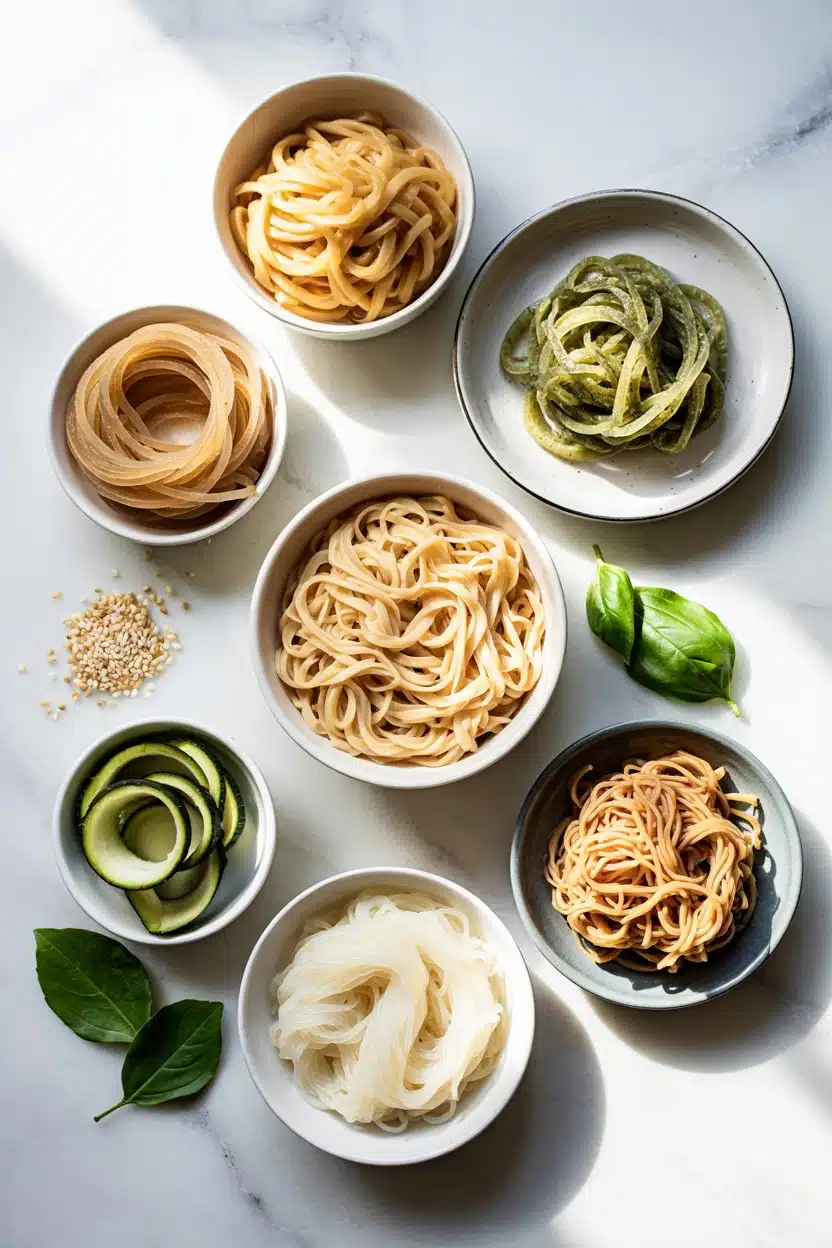
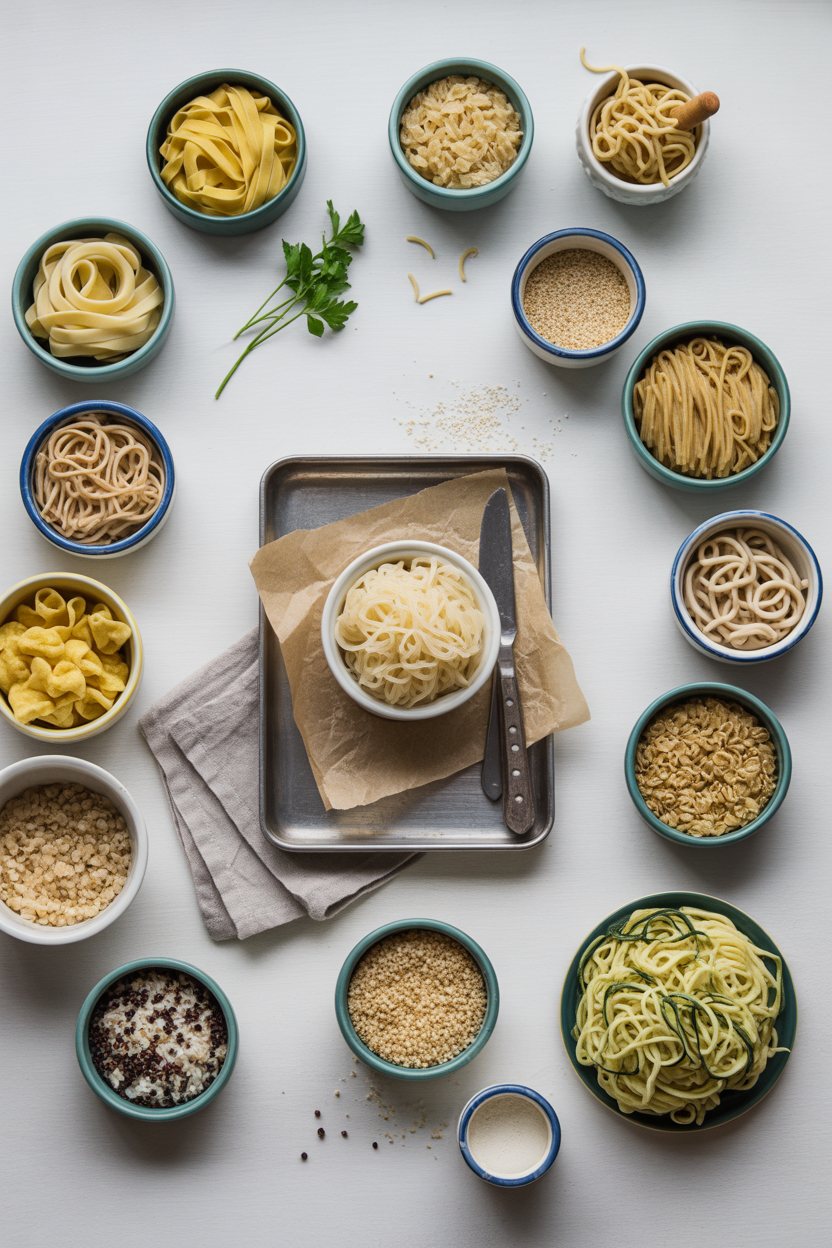
Glass noodles and soba noodles offer the best texture and flavor balance for rice noodle swaps. Prioritize texture first, then flavor. For stir-fries, soak glass noodles before cooking to prevent clumping and ensure tenderness.
| # | Substitute | Best For | Ratio | Key Note |
|---|---|---|---|---|
| 1 | Glass Noodles | 🍳 Cooking | 1:1 | Chewier, nearly clear |
| 2 | Soba Noodles | 🍳 Cooking | 1:1 | Nutty, contains gluten |
| 3 | Udon Noodles | 🍳 Cooking | 1:1 | Thick and chewy |
| 4 | Shirataki Noodles | 🌱 Low-Carb | 1:1 | Nearly zero calories |
| 5 | Spaghetti | 🍳 Cooking | 1:1 | Last resort option |
| 6 | Zucchini Noodles | 🌱 Low-Carb | 1:1 volume | Fresh, crunchy texture |
| 7 | Rice Vermicelli | 🍳 Cooking | 1:1 | Thinner, more delicate |
7 Best Rice Noodle Alternatives for Recipes
These swaps range from nearly identical textures to creative workarounds. The closest matches come first, with bolder departures toward the end.
Remember it later
Planning to try this recipe soon? Save it for a quick find later!
1 - Glass Noodles
Glass noodles (also called cellophane or mung bean noodles) turn translucent when cooked and hold up well in hot dishes. They share rice noodles' neutral flavor profile but land slightly chewier.
The texture works in stir-fries and soups where slippery noodles matter. Use them straight-1 cup cooked glass noodles replaces 1 cup cooked rice noodles.
Quick specs:
- Soak in hot water - 5 minutes until pliable, then drain before adding to the pan.
- Cut after soaking - Long strands tangle; kitchen scissors make portioning easier.
- Add late - They absorb liquid fast, so toss them in during the final minute.
- Watch the heat - High heat for too long turns them gummy.
Skip if: you need noodles that stay firm after sitting in sauce.
Glass Noodles
Works for: Japchae, spring rolls, clear soups
Skip if: Firmer bite matters
Rice Noodles
Works for: Pad Thai, pho, stir-fries with heavy sauce
Skip if: You want a translucent look
2 - Soba Noodles
Soba brings a nutty, earthy flavor that rice noodles don't have. The texture runs firmer and denser-closer to wheat pasta than the soft slip of rice noodles.
Cold noodle salads and dishes with bold Asian sauces showcase soba best. Swap 1:1 by cooked volume, but rinse them under cold water after boiling to stop the cooking and remove excess starch.
If you're out of soba too, Soba Noodles replacements that work covers options with similar earthy character.
Skip if: gluten is a concern-most soba contains wheat flour alongside buckwheat.
3 - Udon Noodles
Udon runs thick and chewy, nothing like the delicate strands of rice noodles. But in brothy soups and saucy stir-fries, that heft works.
The mild wheat flavor won't compete with ginger, garlic, or soy. Use 1 cup cooked udon per 1 cup cooked rice noodles.
Here's what to know:
- Boil fresh udon briefly - 2-3 minutes max; overcooked udon turns mushy.
- Rinse to stop cooking - Cold water keeps them chewy.
- Add to soup last - They absorb broth quickly.
If udon isn't available either, Udon Noodles swaps by recipe type has alternatives that hold up in hot liquid.
Skip if: you need light, slippery noodles for delicate spring rolls.
4 - Shirataki Noodles
Shirataki noodles come from konjac root and contain almost no calories or carbs. They work for low-carb stir-fries and soups when you want noodle texture without the starch.
The trade-off is real: shirataki has a gelatinous, slightly rubbery chew and almost zero flavor. They won't absorb sauce the way rice noodles do.
Rinse them thoroughly-the packaging liquid has a distinct smell that disappears after a quick boil or dry-fry.
The essentials:
- Drain and rinse well - Run under water for 30 seconds minimum.
- Dry-fry first - 2 minutes in a hot pan drives off moisture and firms the texture.
- Season the sauce heavily - These noodles contribute nothing but texture.
- Serve immediately - They get rubbery as they cool.
Skip if: you want noodles that soak up broth or sauce.
5 - Spaghetti
Spaghetti is a last-resort swap, but it works in a pinch. The wheat flavor and firmer texture change the dish noticeably.
Cook spaghetti al dente, rinse with cold water, then toss with a little sesame oil to prevent sticking. Use 1:1 by cooked volume.
The noodles hold up to high-heat stir-frying better than rice noodles. They won't absorb sauce the same way, so dress them while hot.
If you're exploring tested Spaghetti Squash replacements, that page covers vegetable-based options for lighter dishes.
Key details:
- Rinse after cooking - Removes surface starch and stops carryover cooking.
- Toss with oil - Prevents clumping while you prep other ingredients.
- Add sauce last - Wheat pasta doesn't absorb like rice noodles, so coat just before serving.
Skip if: you need gluten-free or want authentic Asian noodle texture.
| Use | Ratio | Notes |
|---|---|---|
| Stir-fry | 1:1 cooked | Rinse and oil before frying |
| Soup | 1:1 cooked | Add late; gets soft fast |
| Cold salad | 1:1 cooked | Chill completely, toss with dressing |
6 - Zucchini Noodles
Zucchini noodles deliver crunch and freshness, not the soft slip of rice noodles. They work in light stir-fries and cold noodle salads where you want vegetables to star.
Use equal volume raw or barely cooked. High heat for too long releases water and turns them soggy.
What to expect:
- Spiralize or julienne - Thin strands mimic noodle shape best.
- Salt and drain - 10 minutes with salt pulls out moisture; pat dry before cooking.
The flavor stays mild and vegetal. If you're also out of zucchini, tested Zucchini replacements covers similar vegetable swaps.
Skip if: you need noodles that hold up in hot soup or absorb heavy sauce.
7 - Rice Vermicelli
Rice vermicelli comes from the same rice flour base but runs thinner and more delicate. It's the closest texture match on this list.
These noodles cook faster-just 3-4 minutes in boiling water or a 5-minute soak in hot water. They work well in spring rolls, light stir-fries, and vermicelli bowls with fresh herbs.
Use 1:1 cooked volume. The thinner strands absorb sauce quickly, so dress them right before serving.
If vermicelli isn't on hand either, instead of Vermicelli try these covers similar thin noodle options.
Skip if: you need wider, chewier noodles for pad Thai or drunken noodles.
Picking the Right Replacement
No single substitute perfectly replicates rice noodles, but most of these work without major recipe changes. Glass noodles and rice vermicelli come closest for texture; soba and udon bring more character but shift the dish in a different direction.
- Closest match - Rice vermicelli, same base ingredient
- Easiest grab - Spaghetti, already in most pantries
- Low-carb option - Shirataki noodles, nearly zero carbs
Frequently Asked Questions
Rice vermicelli works best-same rice flour base, just thinner. Soak briefly and toss in the wok during the last minute of cooking.
Yes, but the texture and flavor differ noticeably. Cook spaghetti al dente, rinse with cold water, and toss with sesame oil before stir-frying.
Most glass noodles made from mung bean starch are gluten-free. Check the label-some brands add wheat starch.
The packaging liquid from konjac root has a fishy odor. Drain, rinse thoroughly for 30 seconds, then boil or dry-fry-the smell disappears completely.
Rice vermicelli is the closest match for pho. Glass noodles work too but turn translucent and slightly chewier in the hot broth.
7 Best Substitutes for Rice Noodle
Ingredients
Method
- Choose your substitute based on dish needs: texture, chewiness, and flavor absorption.
- For glass noodles, soak in hot water 5 minutes, drain, cut if needed, and add late to dish.
- For soba noodles, boil then rinse with cold water to remove starch before use, swap 1:1 cooked volume.
- Boil fresh udon noodles 2-3 minutes, rinse cold to keep chewy; add late in soups or stir-fries.
- Drain and rinse shirataki noodles well; dry-fry 2 minutes to remove moisture; season heavily and serve immediately.
- Cook spaghetti al dente, rinse cold, toss with oil to prevent sticking; use 1:1 cooked volume.
- Use zucchini noodles raw or lightly cooked; salt and drain 10 minutes to remove moisture; pat dry before cooking.
- Cook rice vermicelli by boiling 3-4 minutes or soaking 5 minutes in hot water; use 1:1 cooked volume; dress before serving.
- Adjust cooking times and seasoning based on substitute texture and flavor to best match original dish.



