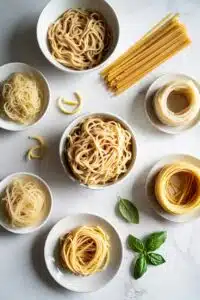
You measured out what you need for tonight's lo mein and the package is almost empty. Those soft, chewy wheat noodles carry sauce and hold up to high-heat stir-frying without turning mushy.
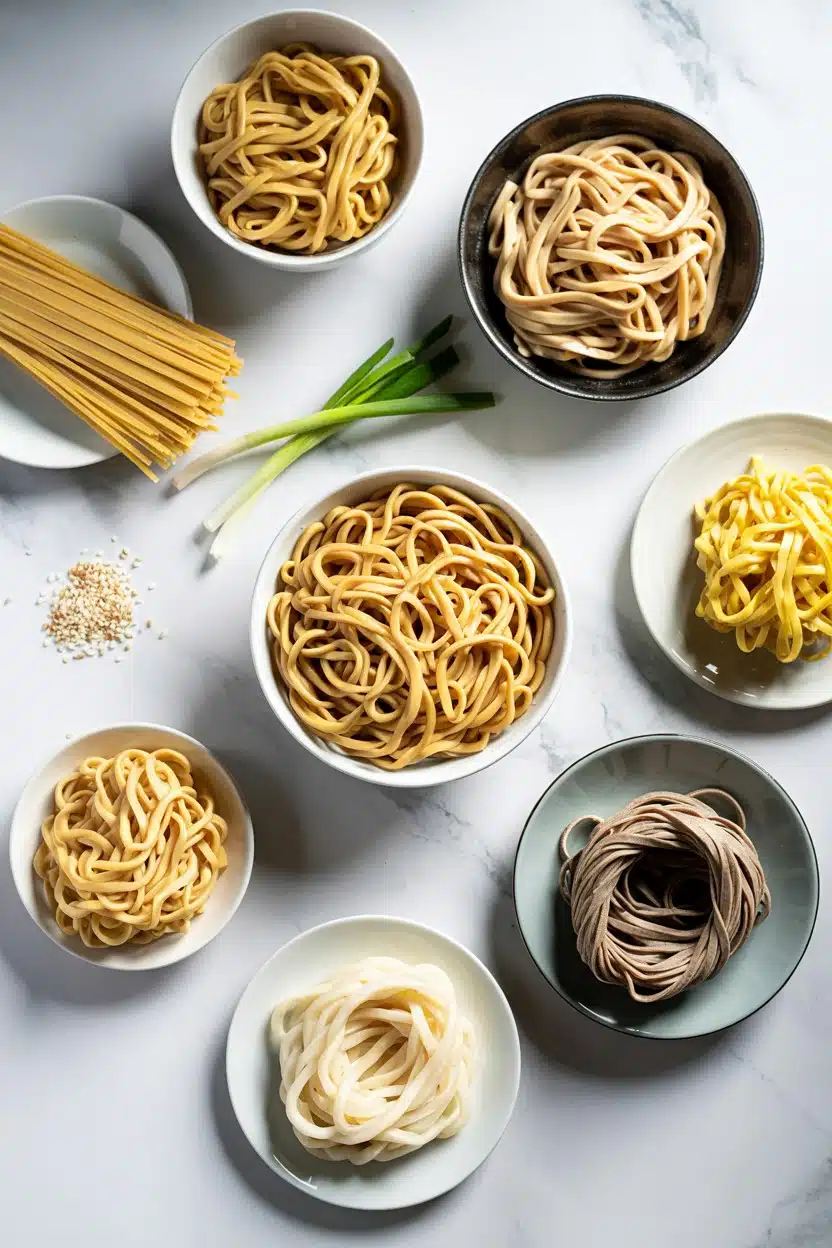

Spaghetti and Udon are top substitutes to consider, focusing on texture first. Spaghetti offers firmness while udon delivers chewiness. Adjust cooking times and sauce absorption accordingly for best results in stir-fries.
The right swap depends on whether you need that same chew or just a noodle that won't fall apart in the wok. Some alternatives match the texture closely, while others bring their own character to the dish.
| # | Substitute | Best For | Ratio | Key Note |
|---|---|---|---|---|
| 1 | Thin Spaghetti | 🍳 Cooking | 1:1 | Firmer bite, milder wheat flavor |
| 2 | Udon Noodles | 🍳 Cooking | 1:1 | Thicker and chewier |
| 3 | Rice Vermicelli | 🍳 Cooking | 1:1 | Softer, more delicate |
| 4 | Soba Noodles | 🍳 Cooking | 1:1 | Earthy buckwheat flavor |
| 5 | Angel Hair Pasta | 🍳 Cooking | 1:1 | Fine texture, cooks fast |
| 6 | Egg Noodles | 🍳 Cooking | 1:1 | Richer, slightly eggy |
| 7 | Shirataki Noodles | 🌱 Low-Carb | 1:1 | Rinse well before using |
7 Easy Lo Mein Noodle Swaps for Cooking
Some swaps stay close, while others require small adjustments. The best pick depends on what's in your pantry and whether texture or flavor matters more for your dish.
Remember it later
Planning to try this recipe soon? Save it for a quick find later!
1 - Spaghetti
Thin spaghetti sits in most pantries and holds up well to stir-fry heat. The texture runs firmer than lo mein, with less of that springy chew.
Cook it one minute shy of the package time so it doesn't turn soft when you toss it in the wok. The milder wheat flavor lets sauces shine without competing.
If you're also out of spaghetti, Spaghetti Squash substitutes for bulk covers options for filling out the dish.
Skip if: you need that authentic bouncy texture.
Thin Spaghetti
Works for: Quick weeknight stir-fries with heavy sauce
Skip if: Authentic Asian noodle texture matters
Lo Mein Noodles
Works for: Traditional dishes needing springy chew
Skip if: You only have dried Italian pasta
2 - Udon
Udon brings serious chew. These thick Japanese noodles absorb sauce differently, soaking it up rather than coating the surface.
The essentials:
- Rinse frozen or vacuum-packed udon under warm water to loosen strands
- Reduce stir-fry time since they're already cooked
- Cut cook time if using dried udon-they firm up fast
The neutral flavor works with any sauce profile. Expect a heartier bowl than lo mein delivers.
Don't have udon either? Check swaps when Udon Noodles runs out for similar thick noodle picks.
Skip if: you want thin, delicate strands.
3 - Rice Vermicelli
Rice vermicelli swaps wheat for rice, giving you a lighter, more delicate noodle. The texture runs softer with a slight snap when cooked right.
Soak in warm water for 5-8 minutes instead of boiling. They'll finish cooking in the wok. Sauce clings well to the thin strands.
Key details:
- Drain thoroughly-excess water makes the dish soggy
- Add to the wok last to prevent overcooking
Missing vermicelli as well? See Vermicelli swaps by recipe type for texture-matched options.
Skip if: you prefer wheat-based chewy noodles.
4 - Soba
Soba noodles bring an earthy, nutty flavor from buckwheat flour. That taste stands out, making this swap better for dishes where you want the noodle to add character.
What to expect:
- Rinse under cold water after boiling to stop cooking and remove starch
- Toss with a drop of oil to prevent clumping
- Works best with lighter sauces that won't mask the buckwheat
- The color runs darker than lo mein
Use the same 1:1 volume ratio. The noodles hold their shape well in stir-fries.
If soba isn't in the pantry either, what to use for Soba Noodles has similar grain-based alternatives.
Skip if: you want a neutral noodle that disappears into the sauce.
5 - Angel Hair
Angel hair cooks in about three minutes, making it the fastest swap on this list. The ultra-thin strands coat beautifully with sauce.
Here's what to know:
- Watch the pot-overcooking turns it to mush in seconds
- Drain when still slightly firm
- Toss immediately in a hot wok with sauce
- Works best with lighter, oil-based sauces
The delicate texture won't give you lo mein's chew. But for a quick weeknight stir-fry, it gets the job done.
Skip if: you need noodles that hold up to heavy tossing.
6 - Egg Noodles
Egg noodles come closest to lo mein's DNA. Both contain egg and wheat, giving you similar richness and chew.
The flavor runs slightly eggier, which works well in dishes with garlic, ginger, and soy. Use wide egg noodles for the best texture match.
If you're out of egg noodles too, Egg Noodle alternatives worth trying covers wheat-based backups with similar body.
Skip if: you want a lighter noodle without the richness.
| Use | Ratio | Notes |
|---|---|---|
| Stir-fry with heavy sauce | 1:1 | Wide egg noodles hold up best |
| Soup base | 1:1 | Fine egg noodles work well |
| Cold noodle salad | 1:1 | Rinse and chill after cooking |
7 - Shirataki
Shirataki noodles contain almost no carbs, making them the go-to for keto or low-carb versions. Made from konjac root, they have a gelatinous texture that's nothing like wheat noodles.
Rinse them well-straight from the package, they have a mild odor. Dry-fry in a hot pan for two minutes to remove excess moisture and improve texture.
Quick specs:
- Won't absorb sauce the same way wheat noodles do
- The chew is bouncy, almost rubbery
The flavor stays neutral. Sauce does the heavy lifting here.
Skip if: you want anything close to traditional noodle texture.
Before You Swap Lo Mein Noodle
Most of these swaps work without overhauling your recipe. The closest match is egg noodles or thin spaghetti-both handle high heat and sauce well. For low-carb needs, shirataki gets the job done with some texture trade-offs.
- Closest match - Egg noodles for similar richness and chew
- Easiest grab - Thin spaghetti from the pantry
- Dietary option - Shirataki for low-carb stir-fries
Frequently Asked Questions
Yes. Cook it one minute less than the package suggests so it stays firm during stir-frying. The texture runs slightly stiffer than lo mein but works well with sauce.
Lo mein noodles are thinner with a springy chew, while udon runs thicker and chewier. Udon absorbs more sauce and gives you a heartier dish.
No boiling needed. Soak rice vermicelli in warm water for 5-8 minutes until pliable, then add directly to the wok. They'll finish cooking in the heat.
They're very similar. Both contain wheat and egg, giving comparable texture and richness. Wide egg noodles make the closest substitute in stir-fries.
Shirataki has a naturally bouncy texture that differs from wheat noodles. Dry-frying them in a hot pan for two minutes after rinsing removes moisture and improves the bite.
7 Best Substitutes for Lo Mein Noodle
Ingredients
Method
- Choose your substitute based on dish needs: thin spaghetti for firm texture, udon for chewiness, rice vermicelli for delicate texture, soba for earthy flavor, angel hair for quick cooking, egg noodles for richness, or shirataki for low-carb.
- Prepare substitutes as needed: rinse frozen udon, soak rice vermicelli in warm water, rinse soba after boiling, cook angel hair briefly, dry-fry shirataki after rinsing.
- Use the substitute at a 1:1 volume ratio to replace lo mein noodles.
- Adjust cooking times: cook spaghetti one minute less than recommended; reduce stir-fry time for pre-cooked udon; soak rice vermicelli instead of boiling; watch angel hair closely to avoid overcooking.
- Add noodles to the wok or dish carefully to maintain texture: add rice vermicelli last; toss soba with a little oil; toss angel hair immediately in hot wok.
- Taste and check noodle texture and sauce consistency during cooking to ensure the swap fits your dish.