
You reach for gochujang mid-marinade and the jar's empty. That thick, sweet-spicy paste does more than just heat-it balances fermented depth with sticky sweetness that holds glazes and dressings together.
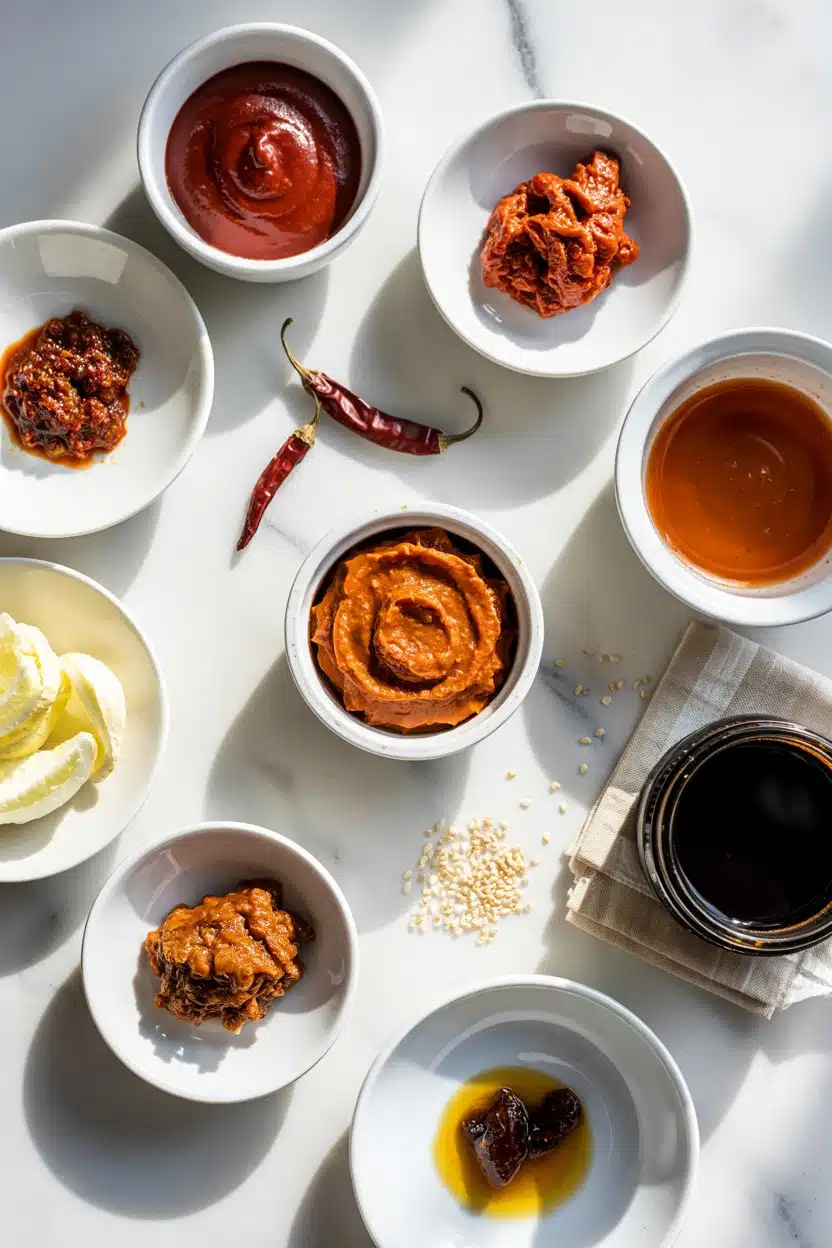
The trick is matching what gochujang does in your dish. Some swaps nail the heat but miss the sweetness.
Others bring umami but lack the paste consistency.
The list below starts with the closest match and moves toward bolder options that work when you're willing to adjust.
| # | Substitute | Best For | Ratio | Key Note |
|---|---|---|---|---|
| 1 | Doenjang | 🍳 Cooking | 1:1 | Earthier, less sweet |
| 2 | Sambal Oelek | 🍳 Cooking | 1 tablespoon + 1 teaspoon sugar | Spicier, fresher chili |
| 3 | Miso Mix | ✨ Both | 1 tablespoon miso + 1 teaspoon honey + pinch chili | Smooth, mild spice |
| 4 | Red Curry Paste | 🍳 Cooking | 1:1 | Herbaceous, coconut notes |
| 5 | Harissa | 🍳 Cooking | 1 tablespoon + 1 teaspoon sugar | Smoky, tangy |
| 6 | Chipotle Adobo | 🍳 Cooking | 1 tablespoon + ½ teaspoon sugar | Smoky, less sweet |
| 7 | Gochugaru Mix | 🍳 Cooking | 1 tablespoon + 1 teaspoon honey | Dry, smoky heat |
Doenjang and sambal oelek best replicate gochujang's flavor and texture. Focus first on matching fermented depth or heat level. Adjust sweetness or thickness to suit your dish, especially in marinades or stir-fries.
7 Smart Gochujang Swaps When You're Out
Here are the swaps that come closest, starting with the option that keeps Korean flavors intact. Pick based on what you're making and which ingredients you already have.
Remember it later
Planning to try this recipe soon? Save it for a quick find later!
1 - Doenjang
Doenjang brings deep fermented funk that mirrors gochujang's umami backbone. The paste consistency works in braises and stews where you want that sticky, savory depth.
It runs earthier and skips the sweetness, so add honey or brown sugar to balance. Understanding the role of Doenjang substitutes for cooking helps when you're missing both-texture and funk matter more than heat here.
Here's what to know:
- Use 1 tablespoon doenjang per 1 tablespoon gochujang
- Add 1 teaspoon honey or brown sugar to match sweetness
*Skip if::* you're making a sweet glaze or dessert-adjacent dish.
Doenjang
Works for: Savory stews, marinades, fermented depth
Skip if: Sweet glazes, dessert dishes
Gochujang
Works for: Balanced heat, sticky glazes, all-purpose Korean paste
Skip if: You want pure umami without sweetness
2 - Sambal Oelek
Sambal oelek delivers bright, forward chili heat without the fermented background. It's thinner and fresher, making it ideal for stir-fries where you want bold spice but not sticky sweetness.
Add sugar to close the gap-gochujang's sweetness balances its heat. If you're out of sambal oelek too, Sambal Oelek replacements that work covers chili pastes that stay thin and bright.
- Use 1 tablespoon sambal oelek plus 1 teaspoon sugar per 1 tablespoon gochujang
- Works best in high-heat cooking where sweetness can caramelize
- Spicier than gochujang-start with less if you're heat-sensitive
*Skip if::* you need a paste that clings to proteins or provides fermented depth.
3 - Miso Mix
Miso paste plus honey and chili flakes hits the salty-sweet-spicy trifecta without fermented Korean funk. The texture stays smooth and spreadable, making it work in dressings and cold applications where gochujang would be too thick.
You're building the flavor manually, so taste as you go. The swap depends on what miso paste does in your recipe-Miso Paste substitutes ranked covers umami pastes that blend without clumping.
- Use 1 tablespoon miso, 1 teaspoon honey, and a pinch of chili flakes per 1 tablespoon gochujang
- White miso keeps it mild; red miso adds more funk
- Stir thoroughly-honey can settle at the bottom
The mix works best at room temperature or gently warmed. High heat can make honey bitter, so add it off the flame if you're finishing a sauce.
*Skip if::* you're cooking over direct high heat or need the paste to hold up in a long braise.
4 - Red Curry Paste
Thai red curry paste brings herbaceous heat with lemongrass, galangal, and kaffir lime. It's bold and complex, but that complexity shifts the dish away from Korean flavors.
Use it when you're okay with a Southeast Asian spin. The paste consistency matches gochujang, so it holds in marinades and slow-cooked dishes without thinning out.
What to expect:
- Use 1 tablespoon red curry paste per 1 tablespoon gochujang
- Coconut and lime notes dominate-adjust other seasonings to balance
*Skip if::* you want authentic Korean flavor or if your dish already has strong aromatics that will clash.
| Use | Ratio | Notes |
|---|---|---|
| Stir-fries | 1:1 | High heat mellows the herbs |
| Curries | 1:1 | Coconut milk balances the spice |
| Marinades | 1:1 | Works best with lime or fish sauce |
5 - Harissa
Harissa delivers smoky, North African heat with cumin, coriander, and caraway. It's thick and spreadable, so it works in roasting and grilling where you need a paste that clings.
The flavor shifts away from Korean entirely-use it when you're okay with a Mediterranean detour. The swap depends on what to use for Harissa Paste if you're missing both-smoky chili pastes that hold up under high heat.
Use 1 tablespoon harissa plus 1 teaspoon sugar per 1 tablespoon gochujang. The sugar tames the tangy edge and brings back some of gochujang's balance.
*Skip if::* you want anything close to authentic Korean flavor or if your dish relies on fermented funk.
6 - Chipotle Adobo
Chipotle peppers in adobo sauce bring smoky, moderate heat with a tomato-vinegar base. The paste consistency is close, making it work in BBQ sauces and grilled meats where smoke enhances the dish.
It runs less sweet than gochujang, so add brown sugar or honey to balance. If you're out of chipotle adobo too, simple Adobo Sauce substitutes list covers smoky options that stay thick.
- Use 1 tablespoon chipotle in adobo plus ½ teaspoon sugar per 1 tablespoon gochujang
- Purée the peppers if you want a smoother paste
- Works best in dishes with bold, smoky profiles
- Less fermented funk, more straightforward smoke
*Skip if::* you're making delicate sauces, cold dishes, or anything where smoke would overpower other flavors.
7 - Gochugaru Mix
Gochugaru (Korean red pepper flakes) plus honey recreates gochujang's heat and sweetness without the fermented paste texture. It's dry, so it works best as a finishing garnish or stirred into wet sauces where it can hydrate.
The flakes won't thicken marinades or glazes on their own-add a touch of tomato paste or miso for body. The swap depends on what gochugaru does in your recipe-Gochugaru swaps that match covers dry and wet chili options.
- Use 1 tablespoon gochugaru plus 1 teaspoon honey per 1 tablespoon gochujang
- Mix with liquid (soy sauce, water, oil) to hydrate the flakes
- Smoky, dry heat without fermented funk
- Works best stirred into soups, stews, or finishing sauces
The flakes need time to soften-add them early or let the sauce rest. For immediate use, grind the flakes finer in a spice grinder or mortar.
*Skip if::* you need a wet paste for marinades, glazes, or anything that requires immediate thickness.
How to Choose a Gochujang Substitute
The right swap depends on whether you need fermented depth, sticky sweetness, or just heat. Doenjang comes closest for savory dishes if you add sugar.
For stir-fries and quick sauces, sambal oelek with honey keeps the balance without the funk.
If you're okay with shifting flavors, harissa and chipotle adobo work in grilled and roasted dishes where smoke enhances the dish. Gochugaru mix recreates the heat but needs liquid to hydrate-it's best for soups and finishing sauces.
- Closest match - Doenjang plus honey for fermented depth
- Easiest grab - Sambal oelek plus sugar for heat
- Bold alternative - Harissa for smoky, North African heat
Frequently Asked Questions
Sriracha brings heat but lacks the fermented depth and sticky sweetness. Add honey and a splash of soy sauce to close the gap, but the texture stays thinner.
Doenjang mixed with honey and a pinch of chili flakes keeps the fermented funk. Miso mix works too if you want something milder that still clings to rice.
Miso mix is the safest swap for sweet-spicy baked goods-it stays smooth and won't overpower. Harissa and chipotle adobo are too smoky and acidic for most baking applications.
Yes-doenjang, sambal oelek, or harissa all work. Add honey to any of them to match gochujang's sweetness, and use the same amount the recipe calls for.
Skip doenjang and miso. Use sambal oelek with honey, harissa with sugar, or gochugaru mixed with honey and a splash of rice vinegar.
7 Best Substitutes for Gochujang
Ingredients
Method
- Choose the substitute based on your dish type and ingredient availability, preferring doenjang plus honey for closest Korean flavor.
- Prepare each substitute as indicated: mix with honey or sugar when needed, hydrate dry flakes, or purée for smoothness.
- Apply the substitute using the specified ratio compared to gochujang in your recipe.
- Adjust seasoning and sweetness incrementally, tasting for balance.
- For best results, consider the cooking method: avoid high heat for miso mix; add gochugaru early to hydrate; reduce vinegar if using chipotle adobo.



