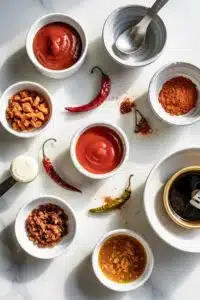
Running out of chili sauce mid-recipe happens. You've already measured the rice, prepped the veggies, or set the marinade timer-and now the bottle's empty.

Chili sauce adds heat, tang, and a touch of sweetness that balances savory dishes. Swaps vary in thickness, spice level, and sugar content, so the closest match depends on what you're making.
These seven options range from pantry staples to bold paste swaps. Start with the ratio, taste as you go, and adjust heat or sweetness to match your dish.
We swap chili sauce with sriracha, sweet chili sauce, or a chili + honey mix based on whether we need heat, sweetness, or a glossy finish. The main risk is wrong sweetness level, so we match sweetness first, then adjust heat with hot sauce or chili flakes. We start 1:1, then thin with a spoon of water if the substitute is thicker than the original.
7 Quick Chili Sauce Substitutes That Work
Each substitute below fills the role of chili sauce in a slightly different way. Match the swap to your dish-dipping, glazing, or stirring into soups-and start with the listed ratio.
Remember it later
Planning to try this recipe soon? Save it for a quick find later!
| # | Substitute | Best For | Ratio | Key Note |
|---|---|---|---|---|
| 1 | Sriracha Sauce | ✨ Both | 1:1 | Spicier with garlic |
| 2 | Hot Sauce | 🍳 Cooking | 1:1 | Sharper vinegar tang |
| 3 | Gochujang | 🍳 Cooking | 2 teaspoon per 1 Tbsp | Thicker, fermented umami |
| 4 | Harissa Paste | 🍳 Cooking | 1:1 | Smoky, earthy, less sweet |
| 5 | Chili + Honey | 🍳 Cooking | 1 teaspoon each per 1 Tbsp | Fresh, floral heat |
| 6 | Tomato Paste Mix | 🍳 Cooking | 1 tablespoon + ½ teaspoon each | More umami, less sweet |
| 7 | Sweet Chili Sauce | ✨ Both | 1:1 | Sweeter, milder heat |
1 - Sriracha
Sriracha lands closer to chili sauce than most hot sauces, but it runs spicier and brings garlic notes along with the heat.
The ratio stays 1:1, making it the easiest grab when you're mid-recipe.
- Spicier - Reduce by ¼ if you want less heat
- Garlicky - Works in marinades and stir-fries where garlic fits
Skip if: you need a vinegar-forward tang without garlic.
Sriracha
Works for: dipping sauces, marinades, stir-fries
Skip if: you want milder heat or no garlic
Chili Sauce
Works for: balanced sweet-heat in most dishes
Skip if: you want bold garlic or extra spice
2 - Hot Sauce
Hot sauce delivers sharper vinegar tang and more heat, but it skips the sweetness that rounds out chili sauce. Use it when you're adding heat to soups, stews, or braises where you can balance the acidity with another ingredient.
Start with a 1:1 ratio, then taste. If it reads too sharp, add a pinch of sugar or honey.
If the heat overwhelms the dish, pull back to ¾ tablespoon and adjust from there.
The swap depends on what hot sauce does in your recipe; if you're also out of hot sauce, Hot Sauce swaps that match covers tangy heat options that work in similar contexts.
Skip if: the recipe needs sweetness to balance savory or salty flavors.
3 - Gochujang
Gochujang brings fermented umami and moderate heat, but it's thicker than chili sauce and less sweet. It works best in Korean-style marinades, stews, and glazes where depth matters more than brightness.
Here's what to know:
- Thicker texture - Thin with water or soy sauce if you need a pourable consistency
- Umami-forward - Adds funk that chili sauce doesn't
- Less sweet - Add honey if the dish needs balance
- Use 2 teaspoons per 1 tablespoon - Start here and adjust for heat
The paste coats proteins and vegetables better than thinner sauces, making it ideal for grilled or roasted dishes. If you're also out of gochujang, Gochujang swaps that match covers fermented heat options that deliver similar depth.
Skip if: you need a thin, pourable sauce for dipping or drizzling.
4 - Harissa
Harissa runs spicy with smoky and earthy notes, but it skips the sweetness that defines chili sauce. The paste works in North African or Mediterranean dishes where bold heat and spice blends fit the flavor.
Use it 1:1, but expect the dish to shift away from sweet heat toward earthy warmth. If you're also missing harissa, Harissa Paste substitutes ranked covers smoky heat options that work in similar contexts.
Skip if: the recipe relies on sweet heat to balance soy, ginger, or citrus.
5 - Chili + Honey
Fresh red chili mixed with honey gives you clean heat and natural sweetness, but it lacks the shelf stability and vinegar tang of bottled chili sauce.
- Mix 1 teaspoon finely chopped chili with 1 teaspoon honey per 1 tablespoon chili sauce
- Floral heat - Fresher and brighter than processed sauces
The flavor stays lighter and more delicate, making it better for finishing dishes or drizzling over proteins. If fresh chilies aren't available either, Red Chili Pepper substitutes ranked covers dried and powdered options that work in similar heat-plus-sweet contexts.
Skip if: you need a sauce that holds up in the fridge for weeks or adds vinegar tang.
| Use | Ratio | Notes |
|---|---|---|
| Dipping sauces | 1:1 chili + honey | Fresh, floral heat |
| Glazing proteins | 1:1, brush during last 5 min | Caramelizes quickly |
| Stir-fries | 1:1, add at end | Heat fades if cooked too long |
6 - Tomato Paste Mix
Tomato paste mixed with chili flakes and vinegar builds a thick, savory base with balanced acidity, but it skips the sweetness and consistency of bottled chili sauce. It works in cooked dishes where you're already layering flavors-stews, braises, or thick sauces-but not for dipping or finishing.
Mix 1 tablespoon tomato paste with ½ teaspoon chili flakes and ½ teaspoon vinegar per 1 tablespoon chili sauce. The paste adds umami depth that chili sauce doesn't, making it better for dishes that simmer or reduce.
- Thicker body - Adds richness to sauces and braises
- Less sweet - Add honey if the dish needs balance
- Umami-forward - Works in savory contexts, not sweet-and-spicy glazes
If you don't have tomato paste either, Tomato Paste alternatives worth trying covers thick umami bases that work in similar cooked applications.
Skip if: you need a pourable sauce for dipping or drizzling over finished dishes.
7 - Sweet Chili Sauce
Sweet chili sauce runs sweeter and milder than chili sauce, with garlicky undertones that make it better for dipping and glazing than for cooking into savory dishes. The heat stays gentle, so you get more sugar and less bite.
What to expect:
- Sweeter profile - Use it when the dish benefits from extra sugar
- Milder heat - Add cayenne or chili flakes if you need more spice
- Garlicky - Works in Asian-inspired dishes where garlic fits
The sauce holds up well in cold applications-spring rolls, lettuce wraps, or drizzled over grilled proteins-but it can turn cloying in stews or braises where savory flavors dominate. If you're out of sweet chili sauce as well, Sweet Chili Sauce alternatives to try covers mild heat options with similar sweetness that work in dipping and glazing contexts.
Skip if: the recipe needs savory heat without added sugar.
Picking the Right Replacement
Most of these swaps work without major changes, but the best choice depends on what you're making. For quick stir-fries or marinades, sriracha comes closest in consistency and heat.
For thick, savory dishes, gochujang or tomato paste mix adds depth that chili sauce doesn't.
- Closest match - Sriracha for balanced heat and consistency
- Easiest grab - Hot sauce for quick heat adjustments
- Bold alternative - Gochujang for fermented umami depth
Frequently Asked Questions
Ketchup works in a pinch if you add heat. Mix 1 tablespoon ketchup with ¼ teaspoon cayenne or chili flakes per tablespoon of chili sauce, but expect a thicker texture and sweeter taste.
No. Chili sauce balances heat with sweetness and mild tang, while hot sauce delivers sharper vinegar and more intense spice without sweetness.
Sriracha and sweet chili sauce work in glazes or marinades for baked proteins. Avoid paste-based swaps like gochujang or harissa in baked goods-they're too thick and change texture.
Add honey, sugar, or a splash of vinegar to balance heat. Start with ½ teaspoon per tablespoon of sauce, taste, and adjust until the spice mellows.
Thin thick pastes like gochujang with water, soy sauce, or vinegar until pourable. Thicken watery sauces by simmering for 2-3 minutes or whisking in a pinch of cornstarch mixed with cold water.
7 Best Substitutes for Chili Sauce
Ingredients
Method
- Choose your substitute based on cooking method: dipping, glazing, or stirring into dishes.
- Prepare the substitute: thin thick pastes like gochujang with water or soy sauce as needed.
- Mix or blend ingredient substitutes like chili + honey to combine evenly.
- Use the recommended ratio for each substitute and adjust the amount gradually to suit the dish's heat and sweetness.
- Taste-test the dish after adding the substitute and adjust seasoning or thickness as necessary before serving.