
Almond milk does one thing in a kitchen that few other plant-based liquids manage as cleanly: it adds body and a faint nuttiness without overpowering whatever surrounds it.
That restraint is both its strength and its limitation.
Understanding where it works - and where it falls flat - makes all the difference between a smoothie that sings and a custard that never sets.
If you're already familiar with milk in cooking as a baseline, almond milk behaves by different rules, and knowing those rules saves frustration.
Almond milk is a plant-based milk substitute made from blended, strained almonds and water. It's mild, slightly nutty, and low in calories - a solid dairy-free option for drinking, baking, and blending, though it lacks the protein and body of cow's milk.
What Is Almond Milk?
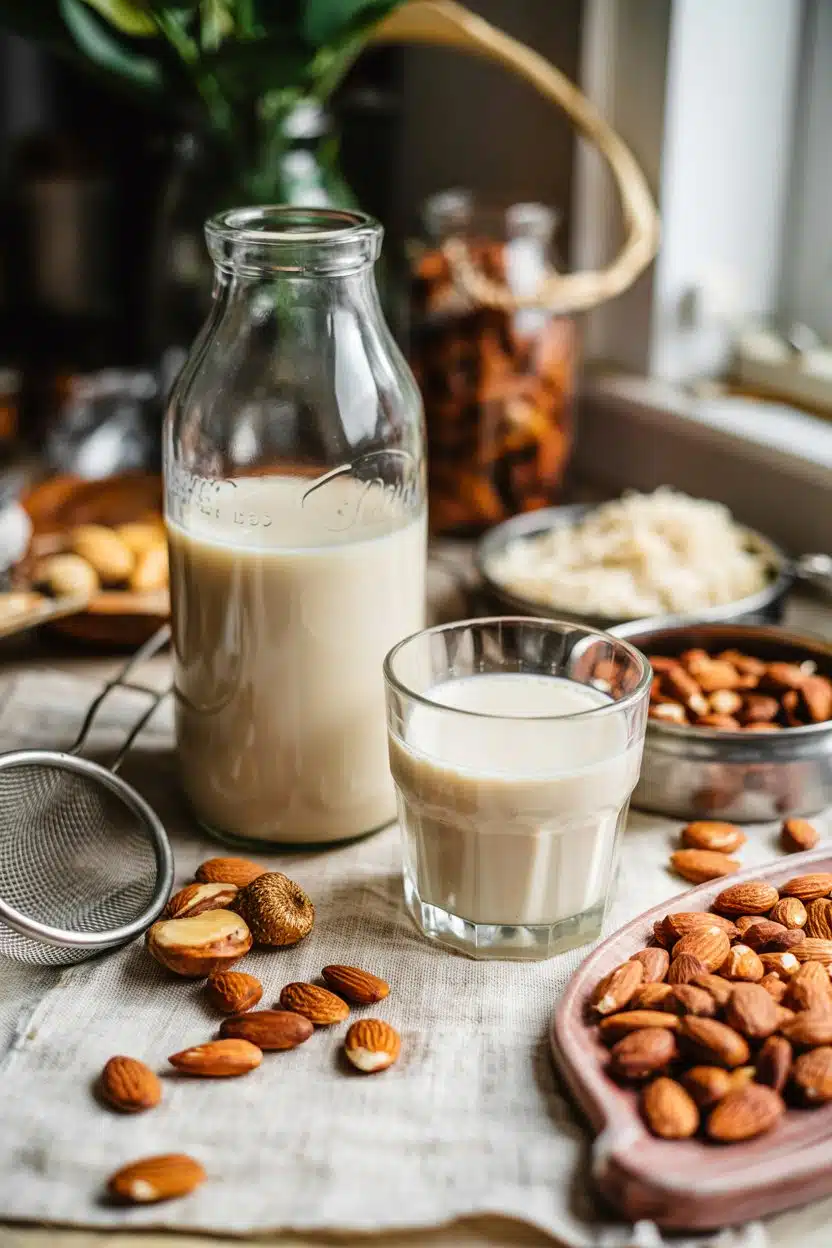
Almond milk is a plant-based milk substitute produced by soaking raw almonds, blending them with water, then straining the solids through a nut-milk bag or fine mesh. The result is a pale, slightly off-white liquid with a thin-to-medium consistency.
Remember it later
Planning to try this recipe soon? Save it for a quick find later!
Commercial versions often include emulsifiers like sunflower lecithin or gellan gum to stabilize the mixture and improve texture.
It originated in medieval Mediterranean kitchens - almond-based drinks appear in Arabic and European manuscripts as far back as the 13th century.
Modern commercial production is global, and the product now comes in dozens of formulations.
Key varieties include unsweetened, lightly sweetened, vanilla-flavored, and barista almond milk, which contains added emulsifiers specifically to help it froth under steam pressure.
If you're comparing it to soy milk swaps that work, the protein and emulsification profiles are quite different.
Flavor
Texture
Aroma
Mild
What Does Almond Milk Taste Like?
The flavor is quieter than most people expect. Unsweetened almond milk tastes like diluted almonds - faintly toasty, slightly earthy at the finish, with a thin quality that sets it apart from oat milk or cow's milk.
Commercial sweetened versions add enough sugar (or sometimes vanilla extract) to tip it toward something closer to a light dessert drink.
That subtle bitterness from almond skins is more noticeable in homemade versions, where less filtration leaves more particulate.
Heat mellows it further.
Warmed gently in oatmeal or pancake batter, the nutty note softens to near-neutral, which is why it works well as a background liquid rather than a featured flavor.
It won't compete with cinnamon, cocoa, or fruit - it just carries them.
How to Use Almond Milk
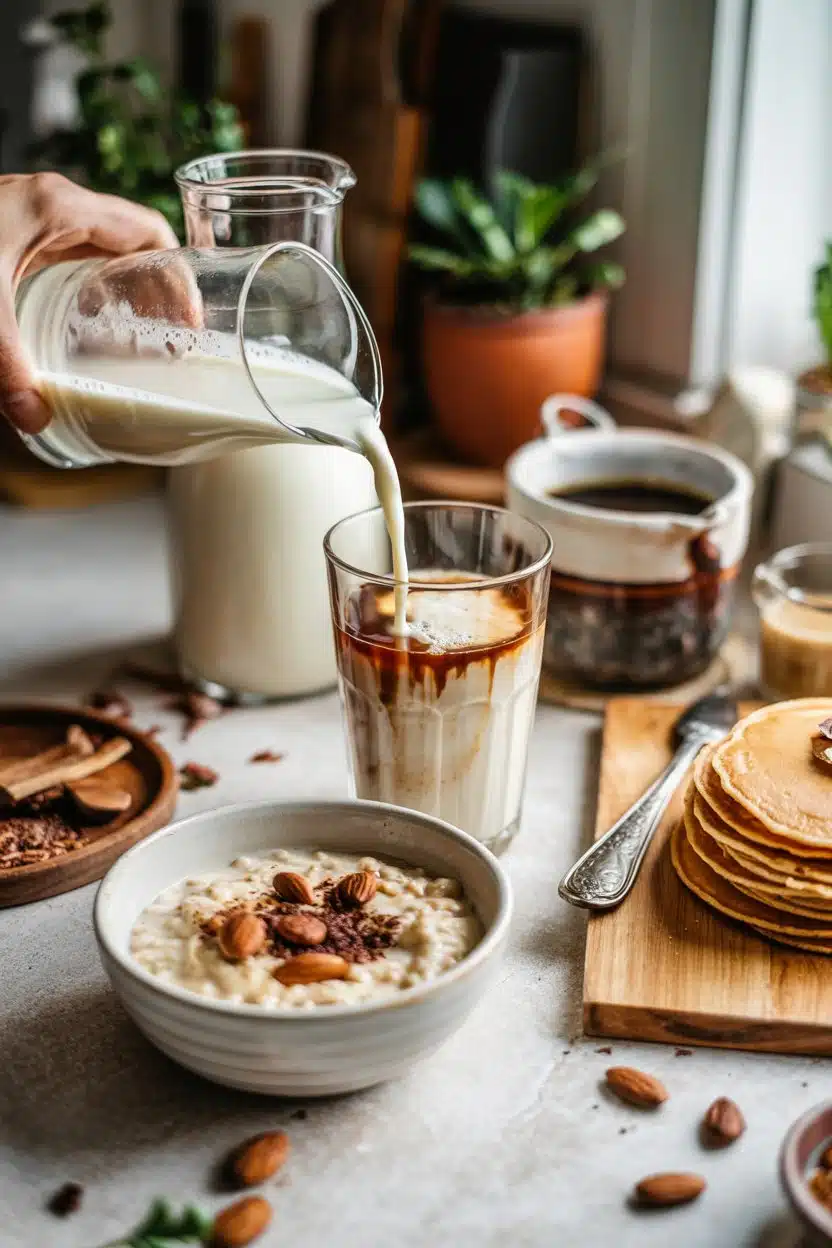
Almond milk earns its place in cold and warm applications where a light, neutral liquid is all you need. It struggles anywhere a recipe depends on fat content or milk proteins for structure - think panna cotta, stovetop custard, or thick cream sauces.
For almond milk swaps that work in those trickier applications, you'll likely need something richer.
| Method | Best For | Tip |
|---|---|---|
| 🥗 Cold/Blended | Smoothies, shakes, cold cereal, iced lattes | Use unsweetened to control sugar in fruit-heavy blends |
| 🍳 Gently Heated | Oatmeal, pancake batter, muffin batter, light soups | Keep heat low - high heat causes separation |
| ☕ Frothed | Lattes, cappuccino-style drinks | Use barista formulations only; standard versions won't hold foam |
| 🧁 Baked | Quick breads, muffins, waffles | Expect a slightly lighter, less rich crumb than cow's milk |
🌱 Plant-Based / Vegan
☕ Cafe-Style Beverages
🫙 Mediterranean-Origin Desserts
banana
berries
oats & chia
cacao & chocolate
nut butters
maple syrup
vanilla & cinnamon
How to Buy and Store Almond Milk
Check the ingredient list before buying. A shorter list with whole almond content listed near the top generally means a better-quality product. Barista-style cartons list emulsifiers like sunflower lecithin explicitly - that's what enables frothing.
Shelf-stable cartons are fine for pantry stocking, but skip any with bulging seals.
Once opened, store in the refrigerator between 34-40°F with the cap sealed.
Shake before each use - sediment settles naturally, especially in lower-additive formulations.
Opened commercial cartons stay fresh for 7-10 days.
Homemade almond milk moves faster: use it within 3-5 days.
For more detail on milk spoilage signs and what off almond milk actually looks and smells like, that guide covers the key indicators.
When to Reach for Almond Milk
Start here if you're cutting lactose, reducing calories, or cooking for a vegan diet and need a liquid that won't compete with other flavors.
Cold applications - smoothies, cereal, iced coffee - are where it performs most reliably.
In baking, it works as a straight swap for milk in most quick-bread recipes, though the result will be slightly lighter.
Skip it anywhere the recipe needs fat or protein to build structure, and consider alternatives to milk with higher fat content for those situations.
Frequently Asked Questions
Only faintly. The almond flavor is diluted through blending and straining, leaving a mild nuttiness rather than the concentrated flavor of a whole almond. Commercial sweetened versions push it further toward vanilla sweetness, which can mask even that subtle note.
Yes, with limits. It works in batters, oatmeal, light soups, and cold sauces where a thin consistency is acceptable. Avoid using it in recipes that require high-heat reductions or rely on milk proteins for structure - it will separate or fail to thicken correctly.
Standard almond milk froths poorly under a steam wand - it produces thin, unstable bubbles that collapse quickly. Barista-formulated almond milk contains added emulsifiers (typically sunflower lecithin) that allow it to hold foam long enough for latte art and layered coffee drinks.
Commercial refrigerated and shelf-stable cartons last 7-10 days after opening when kept sealed and cold. Homemade almond milk has no preservatives or stabilizers, so it degrades faster - plan to use it within 3-5 days and check for sourness or sliminess before drinking.
It's low in calories and naturally lactose-free, and most commercial versions are fortified with calcium and vitamin D to compensate for what almonds don't provide in liquid form. However, it's significantly lower in protein than cow's milk or soy milk - roughly 1 gram per cup versus 8 grams - so it's not a direct nutritional equivalent.



