
Most people assume Asian pear is just a rounder, more exotic-looking European pear - it isn't. Asian pear keeps a firm, apple-like crunch even when fully ripe, which changes how you cook with it and what you pair it with entirely.

It turns up as a thin, sweet counterpoint in dishes alongside sashimi, grated raw into bulgogi marinades, and sliced across cheese boards where its mild sweetness cuts through salt without going soft.
Getting familiar with it starts with understanding what that crispness actually does.
Asian pear is a round, crisp pome fruit from East Asia with pale yellow to brown skin and very firm white flesh. It tastes cleanly sweet with mild floral notes and light acidity - closer to a crisp apple than a European pear.
What Is Asian Pear?
Asian pear is a pome fruit in the same botanical family as European pears and apples, but it behaves more like the latter at the table.
Remember it later
Planning to try this recipe soon? Save it for a quick find later!
Native to China, Korea, and Japan, it has been cultivated for over three thousand years and goes by several names - nashi in Japanese and Australian markets, Korean pear, apple pear, or simply nashi pear.
Unlike European pears, Asian pear doesn't soften dramatically as it ripens. The flesh stays dense, fine-grained, and very crunchy from harvest through the end of its shelf life.
Several varieties exist across the fruit's range:
- 🟡 Nijisseiki (20th Century) - pale yellow-green skin, mild flavor, very juicy; popular in Japan
- 🟤 Hosui - russet-brown skin, slightly richer sweetness; widely grown in Korea and exported globally
- 🟢 Shinseiki - yellow-green skin, clean flavor, good for raw applications
- 🔵 Ya pear - Chinese variety, slightly more elongated, mild and very refreshing
Shape ranges from nearly spherical to slightly flattened, with skin colors spanning greenish-yellow to golden-brown depending on variety and maturity.
What Does Asian Pear Taste Like?
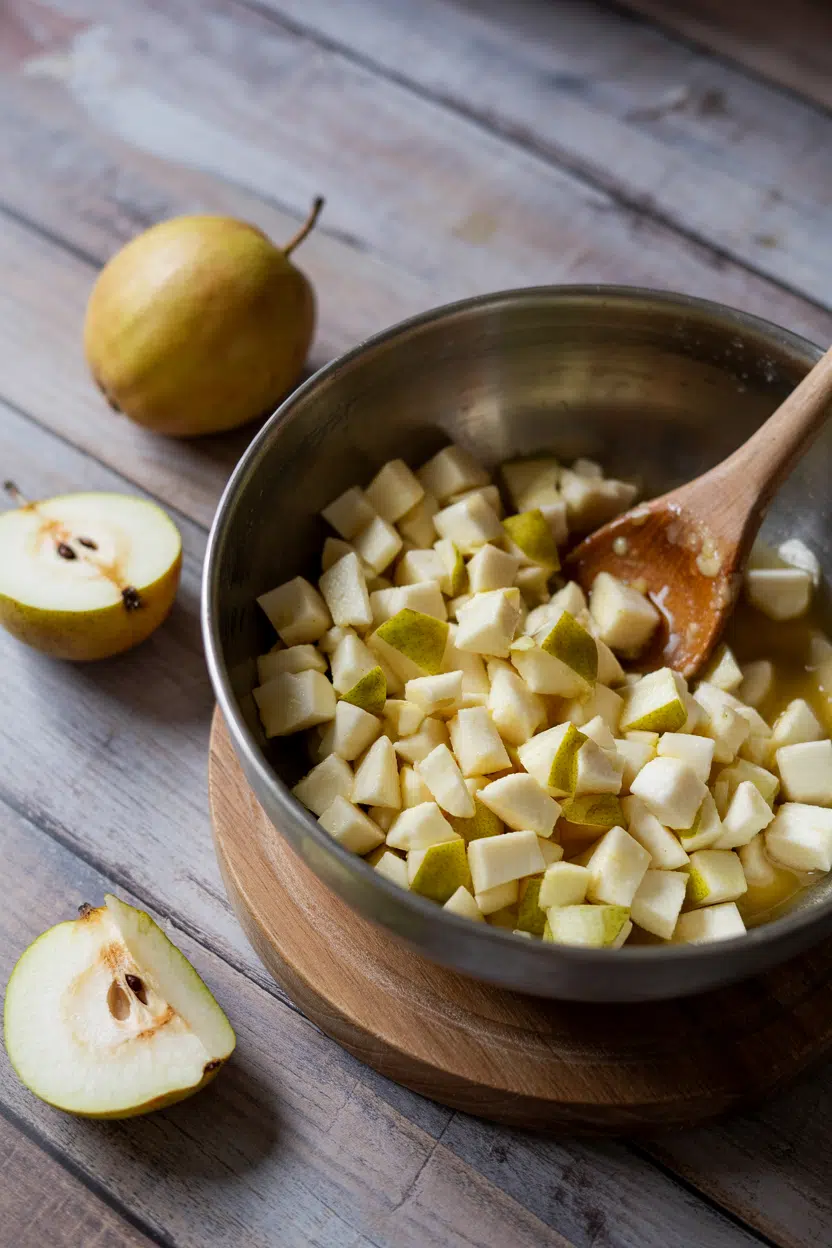
Think of a very crisp Fuji apple crossed with a mild European pear, then strip away the buttery, grainy softness of the latter.
What remains is a clean, refreshing sweetness with a whisper of floral and just enough acidity to keep it from tasting flat.
Raw, the flavor reads light and neutral enough to work with bold ingredients without competition.
Heat doesn't improve it - prolonged cooking softens the crispness without deepening the flavor, so Asian pear is at its best when treated gently or not cooked at all.
How to Use Asian Pear
Grating Asian pear into meat marinades is one of its most practical applications, and the one most cooks overlook. The fruit contains enzymes that break down muscle fibers, making it a natural tenderizer in bulgogi and other Korean beef dishes - adding sweetness and biochemical function at the same time.
Raw sliced applications are equally strong. A few thin rounds add crisp, juicy texture to arugula salads, cheese boards alongside brie or camembert, or plated next to sashimi where the clean sweetness contrasts oily fish.
| Method | Best For | Tip |
|---|---|---|
| 🥗 Raw Sliced | Salads, cheese plates, sashimi accompaniments | Cut just before serving - flesh oxidizes slowly but texture stays best fresh |
| 🥩 Grated Raw | Meat marinades (bulgogi, pork) | Grate on the fine side; marinate beef no longer than 4 hours or texture turns mushy |
| 🍲 Poached | Desserts, spiced syrups | Keeps some crispness even when poached - don't overcook past tender-firm |
| 🥒 Quick-Pickled | Kimchi-style ferments, condiments | Short brining preserves crunch; long fermentation softens it significantly |
| 🥘 Braised | Korean pork dishes, savory braises | Add late in cooking to retain some texture and sweetness |
When you need a different fruit in any of these roles, understanding options for swapping out asian pear keeps a recipe on track without sacrificing the textural goal.
Cuisines that rely on it most heavily are Korean, Japanese, and Chinese, though modern Western kitchens have adopted it in salads and fruit-forward cheese courses. It pairs cleanly with soy sauce, mirin, ginger, toasted sesame, yuzu or lemon, and mizuna.
How to Buy and Store Asian Pear
Choose fruits that feel heavy for their size - water content is a direct indicator of freshness, and a light Asian pear is a dry one.
Skin should be smooth and unbroken, with no soft spots or fermented smell near the stem.
Storage is straightforward:
- Room temperature - holds 3-7 days; fine if you plan to use it within the week
- Refrigerator crisper drawer - keeps whole fruit crisp for 2-4 weeks; store unwashed
- Sliced - store in an airtight container and use within 2-3 days
For longer-term storage, the guide on freezing asian pear covers whether the texture holds up and which applications still work after thawing.
Where to Start With Asian Pear
Raw is the right entry point. Slice one thin, lay it across a cheese board, and taste it against a piece of brie - that contrast shows exactly what the fruit brings before any cooking gets involved.
From there, try grating half a pear into a beef marinade before cooking. The results on texture are immediately visible, and it pairs naturally with everything already in a sides for beef bulgogi spread.
Frequently Asked Questions
No. Both are pome fruits, however Asian pear stays firm and crunchy at full ripeness while European pears soften to a buttery texture. Asian pear is also rounder, with a higher water content and a milder, less complex flavor.
Asian pear contains natural enzymes that break down meat proteins, tenderizing beef in bulgogi marinades while adding mild sweetness. Marinating longer than four hours can over-soften the meat, so timing matters.
Most commonly raw - sliced like an apple, skin on or peeled. The skin is edible and thin on most varieties, though some cooks peel russet-skinned types for a cleaner presentation.
Whole, unwashed Asian pears last 2-4 weeks in the crisper drawer. Once sliced, use them within 2-3 days stored in a sealed container.
Partly. Asian pear poaches well and holds its shape better than European varieties. However, it lacks the softening and flavor concentration that makes European pear work in long braises or baked tarts.



