
You spot a small jar of rosy berries at the spice shop and reach for it, half-convinced it's just decorative pepper - but pink peppercorn earns a place in your pantry on its own terms.
Unlike the differences between allspice vs juniper berries, which sit in a well-mapped flavor territory, pink peppercorns occupy a stranger, brighter corner of the spice world.
They bring fruity warmth and a resinous lift that black pepper simply doesn't offer.
Pink peppercorn is a dried rosy berry from South American trees, not a true pepper. It tastes bright and fruity with mild heat and a piney edge - best used as a finishing spice rather than a cooking base.
What Is Pink Peppercorn?
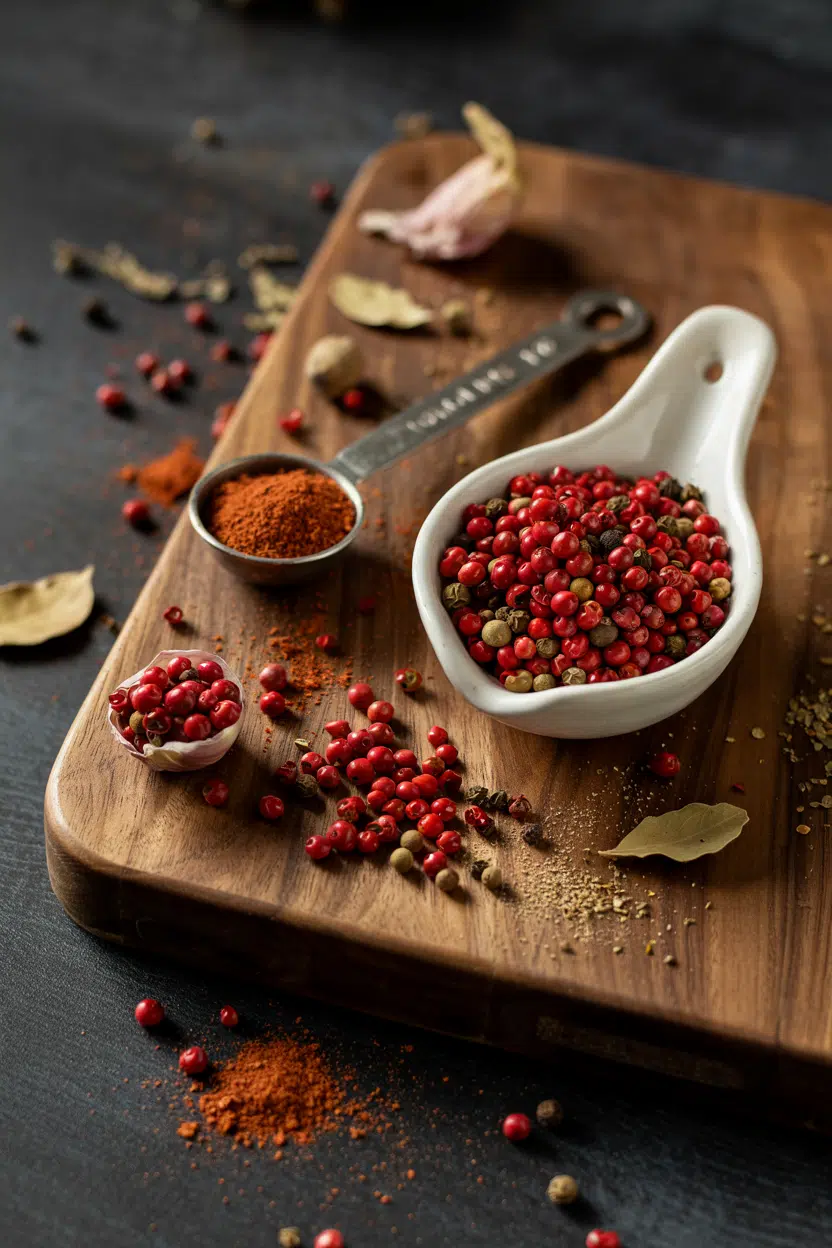
Pink peppercorn is the dried berry of Schinus molle or Schinus terebinthifolius, two trees native to South America and widely cultivated in Madagascar and Réunion.
Remember it later
Planning to try this recipe soon? Save it for a quick find later!
Despite the name, these berries are not related to black pepper - they belong to the Anacardiaceae family, the same family as cashews and mangoes.
The berries go by several names: pink pepper berry, Schinus molle berry, or simply pink peppercorns (you'll also see it written as "pink pepper corns," though that's a misspelling).
Two main species are commercially sold, with Schinus terebinthifolius (Brazilian pepper tree) being the one most common in spice blends.
Each berry is small, about the size of a true peppercorn, with a thin, brittle outer skin and a woody seed inside. You'll find them sold whole in jars, in mixed peppercorn blends, or - less ideally - pre-ground.
- 🌍 Primary origins - Peru and Brazil, with commercial cultivation in Madagascar and Réunion
- Cashew family member - botanically unrelated to black, white, or green pepper
- Common misnaming - often sold in "four-peppercorn" blends alongside true Piper nigrum varieties
What Does Pink Peppercorn Taste Like?
Pink peppercorn tastes like a milder, fruitier cousin of black pepper with a resinous, pine-like edge that recalls juniper. The heat is gentle - noticeable but never sharp - and there's a dried-berry sweetness and light citrus tang underneath it.
Heat does this berry no favors. Long cooking mutes the fruitiness and strips the aroma, leaving a thin, vaguely bitter background note.
That's why the best applications keep it raw or barely warmed - cracked over a finished dish, or infused briefly into cream.
The outer skin is where most of the aroma lives. Crack the berry just before use and you'll get a noticeably brighter hit than pre-ground versions sitting in a jar.
How to Use Pink Peppercorn
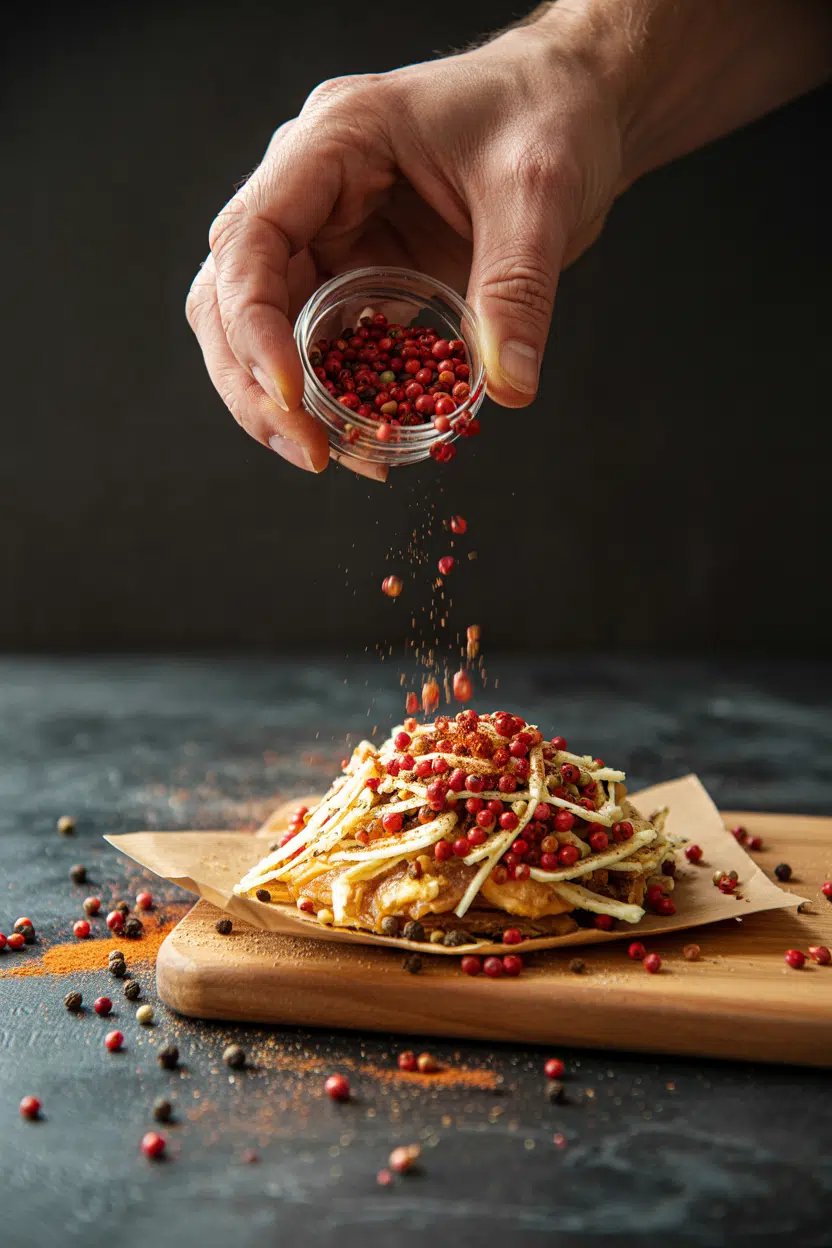
Pink peppercorn is a finishing spice first. Its fruity warmth works best added at the end of cooking or pressed directly into food before serving.
French cuisine has used it as a classic finishing touch for decades, and modern American and New World fusion cooking has expanded that role considerably.
It pairs especially well with fatty fish - seared salmon or tuna are the most common matches - and with cream-based sauces and dairy.
Infusing the berries into warm cream for panna cotta or ice cream is one of the more interesting dessert applications.
For a savory spin, pressing cracked berries into a compound butter (herb) recipe alongside lemon zest produces a finishing butter that works on steak and grilled fish equally well.
In salads, whole berries tossed with citrus segments and a drizzle of oil add a floral, spiced note without overwhelming the greens - though if you're adapting the dressing and need to swap fats, checking alternatives to olive oil can help.
Pink peppercorns also go into pickling brines and work well in spice rubs for duck or pork, where the fruity lift cuts through richer meat.
Avoid pairing with strong bitter herbs like arugula or fenugreek, which overwhelm the delicate fruitiness. Avoid long braises for the same reason.
| Method | Best For | Tip |
|---|---|---|
| 🥗 Raw / Cracked | Finishing seared fish, salads, cheese boards | Crack with a flat knife - don't grind too fine |
| 🍳 Infused | Cream sauces, panna cotta, flavored syrups | Warm gently; don't boil or bitterness creeps in |
| 🧈 Pressed / Blended | Compound butters, spice rubs for duck and pork | Combine with citrus zest to amplify the fruity note |
| 🫙 In Brine | Pickled vegetables, fruit pickles | Add whole berries - they release slowly over time |
How to Buy and Store Pink Peppercorn
Look for whole dried berries that are uniformly rosy to deep-pink and firm when pressed. Faded, brownish, or soft berries are past their best - moisture and age both dull the color and kill the aroma. Buy small quantities from a reputable spice shop, since a full jar you barely use will be flat within a year.
Store whole berries in an airtight, opaque container in a cool, dark cupboard away from heat and steam. Ground berries lose their bright aroma within 2-3 months, so grind only what you need.
For a full breakdown of what degraded berries look and smell like, the guide on pink peppercorn spoilage signs covers what to watch for.
- Shelf life whole - best within 6-12 months; still usable after, just duller
- Shelf life ground - 2-3 months before significant aroma loss
- Avoid - clear glass jars near the stove; light and heat are the main enemies
Where to Start With Pink Peppercorn
Pink peppercorn isn't a replacement for black pepper - it's a different tool. For context on black pepper's flavor and uses, the profiles make a useful side-by-side read.
If you want to substitute in a pinch, pink peppercorn stand-ins covers your best options, and swapping out black pepper addresses the reverse situation. Start simple: crack a few berries over seared salmon with a squeeze of lemon.
That one application shows exactly what this spice does - and why it belongs in your rotation.
Frequently Asked Questions
No. Pink peppercorns are dried berries from Schinus molle or Schinus terebinthifolius trees, not Piper nigrum. They're sold alongside true pepper but belong to an entirely different plant family.
Not directly - pink peppercorn is milder and fruitier, so it won't match black pepper's sharp heat in cooked dishes. It works as a one-for-one swap only in finishing applications where fruitiness is welcome.
Yes, potentially. The Schinus tree is in the Anacardiaceae family, which includes cashews. People with cashew or poison ivy allergies may experience cross-reactive symptoms and should consult a doctor first.
Infuse whole berries into warm cream before making panna cotta, ice cream, or a simple sauce. The fruity, resinous note pairs well with honey, vanilla, and dairy without overpowering sweetness.
Originally from Peru and Brazil, where Schinus molle and Schinus terebinthifolius grow natively. Commercial supply today also comes from Madagascar and Réunion, where the trees were introduced.



