
Vanilla hits first - warm, unhurried, and faintly sweet before the grain even registers.

Jim Beam delivers a soft aromatic entry that what makes bourbon distinct helps explain: charred new oak and a corn-heavy mash bill working together over years of Kentucky aging.
It's one of the most recognizable American bourbons on the shelf, and understanding what it actually tastes like makes it far more useful in both a glass and a pan.
Jim Beam is a Kentucky Straight Bourbon with a corn-forward mash bill and moderate intensity. Its flavor runs vanilla, caramel, and light spice - smooth enough for cocktails, structured enough to hold up in cooking.
What Is Jim Beam?
Jim Beam is a Kentucky Straight Bourbon produced in Clermont, Kentucky, by the Beam Suntory company.
Remember it later
Planning to try this recipe soon? Save it for a quick find later!
It's made from a sour mash process using a mash bill of approximately 77% corn, 13% rye, and 10% malted barley - the grain proportions that define its sweeter, lighter character compared to rye-dominant bourbons.
All bourbon must be matured in new charred oak barrels, and Jim Beam ages its standard expression for at least four years. The result qualifies as Kentucky Straight Bourbon under U.S. federal regulations.
It's also sold under names like Jim Beam White Label, JB bourbon, and Beam Bourbon.
The lineup extends well beyond the flagship bottle.
- 🥃 Jim Beam White Label - the entry-level standard, 40% ABV (80 proof)
- Jim Beam Black - aged longer, deeper oak and richer caramel
- Jim Beam Bottled-in-Bond - 100 proof, aged at least four years per federal bonding rules
- Jim Beam Double Oak - finished in a second charred barrel for extra wood character
- Jim Beam Single Barrel - small-batch, one-barrel selection for more nuance
What Does Jim Beam Taste Like?
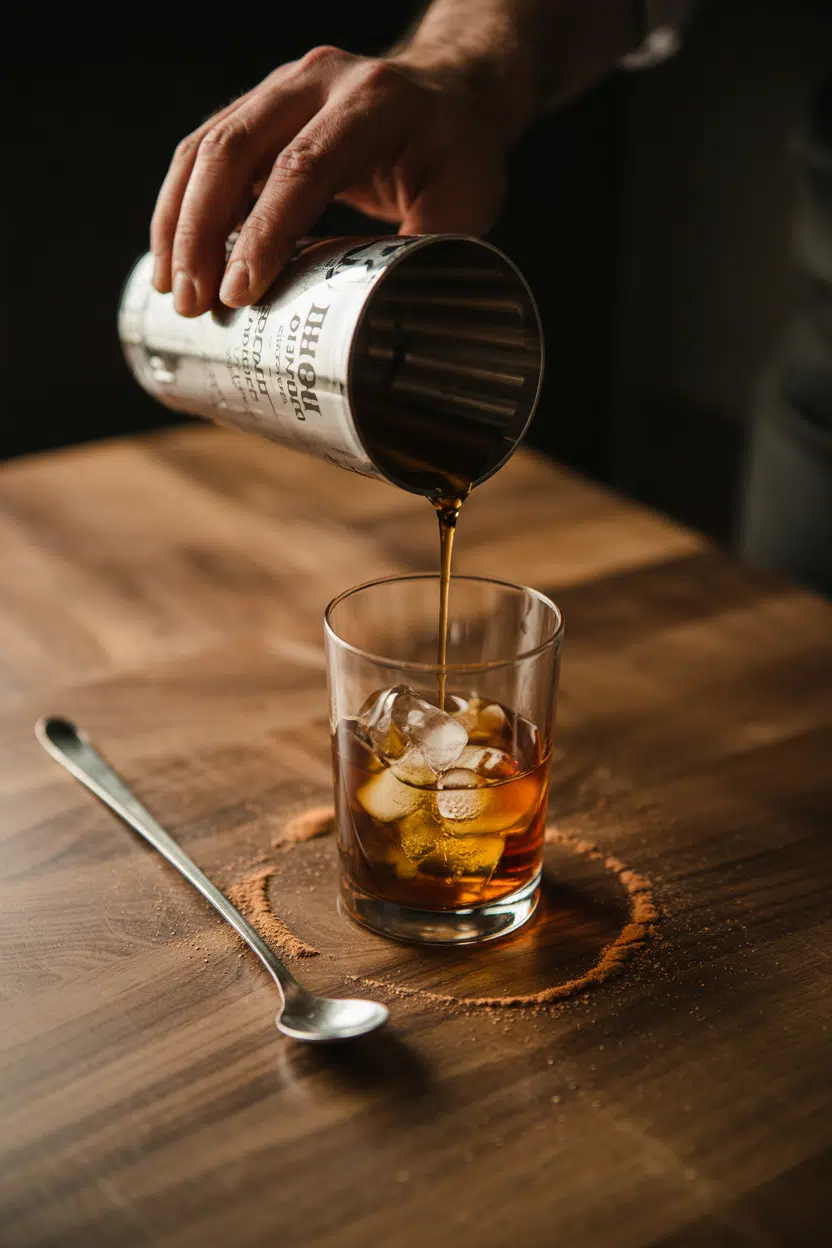
Jim Beam White Label opens with vanilla and toasted oak on the nose, followed by a mild ethanol sharpness that fades quickly.
On the palate, it's corn-sweet and approachable - brown sugar and caramel in the front, with light baking spice (clove, cinnamon) arriving in the mid-palate.
The finish is short to medium, with a gentle warming heat rather than a sharp alcohol burn. Compared to Evan Williams, another entry-level Kentucky bourbon, Jim Beam runs slightly sweeter and a touch lighter.
It sits noticeably softer than rye-forward bourbons like Wild Turkey, which carry more pepper and bite.
Heat softens Jim Beam's spice notes and amplifies its sweetness - useful to know before adding it to a hot pan or reducing it in a sauce.
How to Use Jim Beam
Jim Beam earns its place in cooking largely because of its vanilla and caramel backbone, which integrates cleanly into sweet-savory applications without demanding premium-bottle restraint.
It belongs most naturally in American barbecue and Southern cooking, where its corn sweetness echoes the flavor register of molasses, smoked pork, and maple glaze.
| Method | Best For | Tip |
|---|---|---|
| 🍳 Pan Sauce | Pork chops, chicken thighs, duck breast | Deglaze off-heat, then reduce by half to mellow alcohol sharpness |
| 🥩 Marinade | Grilled pork ribs, chicken wings, skirt steak | Combine with brown sugar, soy, and black pepper; marinate 2-4 hours |
| 🍖 BBQ Sauce | Slow-cooked ribs, pulled pork, brisket | Stir in near the end of cooking to preserve bourbon aroma |
| 🔥 Flambé | Bananas foster, crêpes, peach desserts | Use a long lighter; tilt pan slightly away before igniting |
| ☕ Warm Drinks | Hot chocolate, coffee, apple cider | Add after removing from heat; 1-1.5 oz per serving is plenty |
Jim Beam pairs especially well with maple syrup, dark chocolate, and rosemary - flavors that echo or contrast its vanilla-spice core.
A bourbon-glazed pear compote, for instance, benefits from the same caramel sweetness as making caramel apple nachos at home, where that brown-sugar register carries the whole dessert.
Avoid pairing Jim Beam with delicate green salads or highly herbal sauces, where its sweetness creates an awkward clash.
If a recipe calls for a richer or spicier bourbon, consider swapping out jim beam for a higher-rye expression instead.
How to Buy and Store Jim Beam
The Jim Beam White Label is the standard buy - widely available, consistently produced, and priced for everyday use.
For named expressions like Bottled-in-Bond or the 8-Year, check for an intact bottle seal and, where present, an age statement on the label.
Store Jim Beam upright in a cool, dark location.
Unlike wine, it doesn't benefit from being laid on its side, and the high alcohol content can degrade the cork if it stays in contact long-term.
Knowing the jim beam spoilage signs helps you judge whether an older opened bottle is still worth cooking with.
An unopened bottle remains stable for years.
Once opened, best flavor holds for 1-2 years before subtle oxidation starts to dull the vanilla and caramel notes.
Where to Start with Jim Beam
Jim Beam White Label is the right entry point if you're building a home bar or stocking a kitchen for bourbon-based cooking.
It costs less than most comparable bourbons and delivers a consistent, approachable baseline.
If the lighter sweetness feels thin for your recipe, bourbon swaps that work can point you toward richer or spicier alternatives.
Start with the White Label, cook with it freely, and step up to Jim Beam Black or Bottled-in-Bond once you know what more oak and proof does for a dish.
Frequently Asked Questions
Both - all bourbon is whiskey, but not all whiskey is bourbon. Jim Beam meets the U.S. legal requirements for Kentucky Straight Bourbon: at least 51% corn mash, new charred oak aging, and distilled within proof limits.
Jim Beam White Label is 80 proof, meaning 40% ABV. The Bottled-in-Bond expression steps up to 100 proof (50% ABV), which gives it noticeably more heat and intensity on the finish.
Jack Daniel's is Tennessee whiskey filtered through charcoal before aging, which gives it a smoother, slightly woody character with less sweetness. Jim Beam reads sweeter and more vanilla-forward, with a lighter oak presence overall.
Yes - its vanilla and caramel notes hold up well in pan sauces, glazes, and marinades. The White Label is cost-effective enough to cook with regularly without reserving it only for drinking.
An opened bottle stays at peak flavor for 1-2 years if stored upright with the cap sealed tightly. After that, oxidation gradually mutes the vanilla and caramel notes, though the bourbon remains safe to drink.



