
Green beans do something no dried legume can: they bring live, snapping texture and a clean grassy brightness to a plate without any soaking, long cooking, or prep overhead.

You eat the whole pod - skin, immature seeds, and all - which means the bean delivers both crunch and a mild, slightly sweet flavor in a single bite.
That structural difference is why green beans hold their own blanched and chilled in a salad just as well as they do blistered in a hot wok, and why swapping out snow pea in a stir-fry so often lands on green beans as the obvious next choice.
The green bean is a mildly flavored immature pod vegetable with a clean, grassy sweetness and satisfying snap. Raw or cooked, it holds texture well across most methods - blanching, roasting, and stir-frying all work. Use within 5-10 days for best results.
What Is Green Bean?
The green bean is the immature pod of Phaseolus vulgaris, harvested before the seeds inside have fully developed or dried.
Remember it later
Planning to try this recipe soon? Save it for a quick find later!
That early harvest is what sets it apart from kidney beans or black beans - you're eating the whole structure, pod and seed together, while everything is still tender.
Originally cultivated in the Americas, the plant spread globally after Spanish and Portuguese trade routes carried it across continents in the 16th century. Today it goes by several names depending on region and variety.
- 🫛 Snap bean / string bean - the most common American names; modern varieties have had the fibrous "string" bred out
- 🇫🇷 Haricot vert - the French variety; noticeably slender, more tender, and harvested even earlier than standard green beans
- 🌱 Runner bean - a related but distinct species with a broader, flatter pod and a slightly earthier flavor
- 🥢 French bean - a broader European term that often refers to haricot vert-style thin pods
Standard green beans and haricot verts are the two forms you'll encounter most in supermarkets. Haricot verts cook faster and have a more delicate texture - worth keeping in mind before you apply the same timing to both.
What Does Green Bean Taste Like?
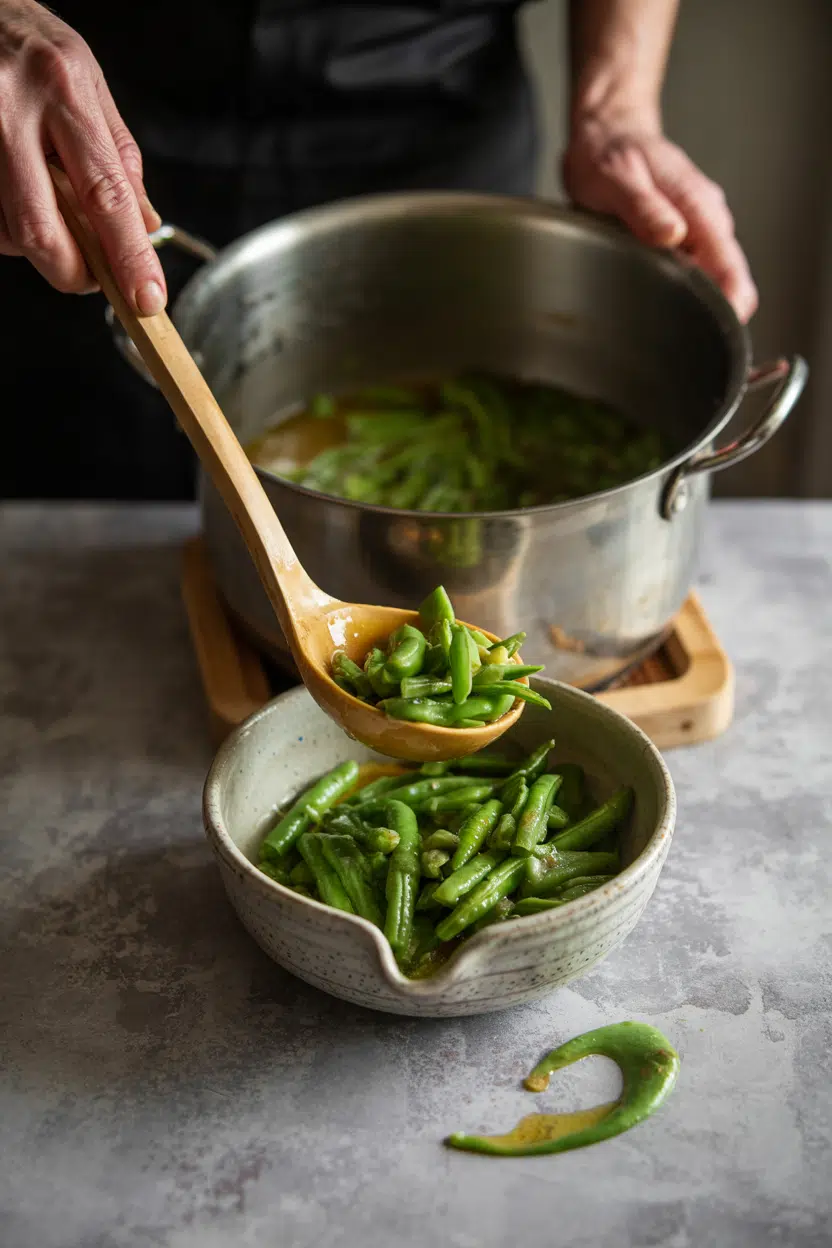
Green beans taste fresh and mildly grassy, with a sweetness that reads more subtle than snap peas but sits in the same flavor family. Cut one open raw and you get a clean, pea-like scent - understated and vegetal rather than sharp.
Heat shifts the flavor noticeably. Blanched green beans stay bright and fresh-tasting, close to raw.
Roasted at high heat, the pod edges blister and a mild nuttiness develops - similar to young asparagus when it chars lightly at the tips. Braised or long-boiled, that green note fades and the bean takes on the flavor of whatever liquid surrounds it.
Texture is the real variable. Overcooked green beans lose their structural snap entirely, collapsing to a soft, almost creamy interior that works in a slow-cooked stew but fails everywhere else.
How to Use Green Bean
Green beans work across a wide range of cooking methods without demanding much technique. The challenge is mostly timing - they go from perfectly cooked to mushy in under a minute if you're not watching.
| Method | Best For | Tip |
|---|---|---|
| 🥗 Raw | Salads, crudités, adding crunch to grain bowls | Trim ends and slice on the bias for a less fibrous bite |
| ♨️ Blanched | Salads, side dishes, prepping ahead before sautéing | Shock in ice water immediately to lock color and snap |
| 🔥 Stir-fried | Chinese dry-fried green beans, garlic-sesame sides | Dry the beans well before they hit the wok or they steam |
| 🫙 Roasted | Blistered sheet-pan sides, Parmesan-crusted preparations | High heat (425°F+) and a single layer - crowding steams instead |
| 🥒 Pickled | Tangy snack, cocktail garnish, relish-style condiment | Use whole pods and brine within 24 hours of picking for best snap |
Pairings lean toward bright, contrasting flavors. Lemon juice or a splash of vinegar cuts the green vegetal note cleanly. Garlic and shallot add depth without overwhelming the bean's mild flavor, and understanding almonds's flavor and uses explains why toasted slivered almonds work so well tossed over a blanched green bean salad - the fat and crunch contrast directly with the pod's moisture and snap.
In Asian preparations, soy sauce and sesame oil are the standard partners. If you're short on soy sauce, knowing how swapping out soy sauce works can keep a dry-fried green bean dish on track without a last-minute grocery run.
Green beans appear across American, French, Chinese, and Mediterranean kitchens. French haricot vert preparations typically keep things simple - blanched, dressed with vinaigrette, maybe a shallot.
Chinese dry-fried versions char the pods until wrinkled, then hit them with doubanjiang or garlic. Mediterranean cooking often braises them with tomato, olive oil, and onion until just soft.
How to Buy and Store Green Bean
Fresh green beans should snap. Literally - bend one and it should break with an audible crack, not bend. Look for pods that are uniformly bright green with no spotting, limpness, or visible bulging from the seeds inside. Swollen seeds signal the bean has matured past its window and will taste starchy rather than sweet.
For haricot verts specifically, the pods should be uniformly thin - any inconsistency in diameter usually means uneven cooking. Thicker pods take longer to cook through, leaving thinner ones overcooked before the others are done.
Store green beans unwashed and loose in a perforated plastic bag or the produce drawer.
Washing before storage introduces moisture that speeds decay.
Standard green beans last 5-10 days refrigerated; thin haricot vert varieties are more delicate and are best used within 3-5 days.
Much like asparagus's shelf life, the fresher the cut, the shorter the window before texture degrades noticeably.
Watch for green bean spoilage signs like sliminess, off-smell, or rust-colored spotting - any of those and the batch is done.
Start With a Blanch
If you've never cooked green beans before, blanching is where to start.
Two to three minutes in heavily salted boiling water, then straight into ice water, gives you a pod that's bright, snappy, and ready for almost any preparation - dress it simply or use it as the base for something more involved.
From there, the direction you take depends on what you want. Roasting gives you char and nuttiness.
Stir-frying gives you speed and bold seasoning. If you're without green beans entirely, a quick look at green bean stand-ins can keep a recipe moving without sacrificing too much texture or flavor.
Frequently Asked Questions
Yes, though with a caveat. Raw green beans contain lectins, which can irritate digestion in large quantities. A small handful in a salad is fine for most people; cooking breaks down the lectins entirely and eliminates that concern.
Standard green beans last 5-10 days stored unwashed in the produce drawer. Thin haricot vert varieties degrade faster - use them within 3-5 days before they lose their snap.
Haricot verts are the French variety of green bean - thinner, more tender, and harvested earlier. They cook faster than standard green beans and have a more delicate flavor; don't apply the same timing to both.
Yes. Green beans are low in calories and carbohydrates and provide vitamin C, vitamin K, folate, and dietary fiber. They're naturally gluten-free and suitable for vegan and vegetarian diets.
Shock them in ice water immediately after blanching - this stops carryover cooking and locks texture. If you're roasting or stir-frying, serve right away; those methods don't hold well once the beans sit.



