
You spot it at the market - long, waxy, and deeply green - and reach for it almost automatically.
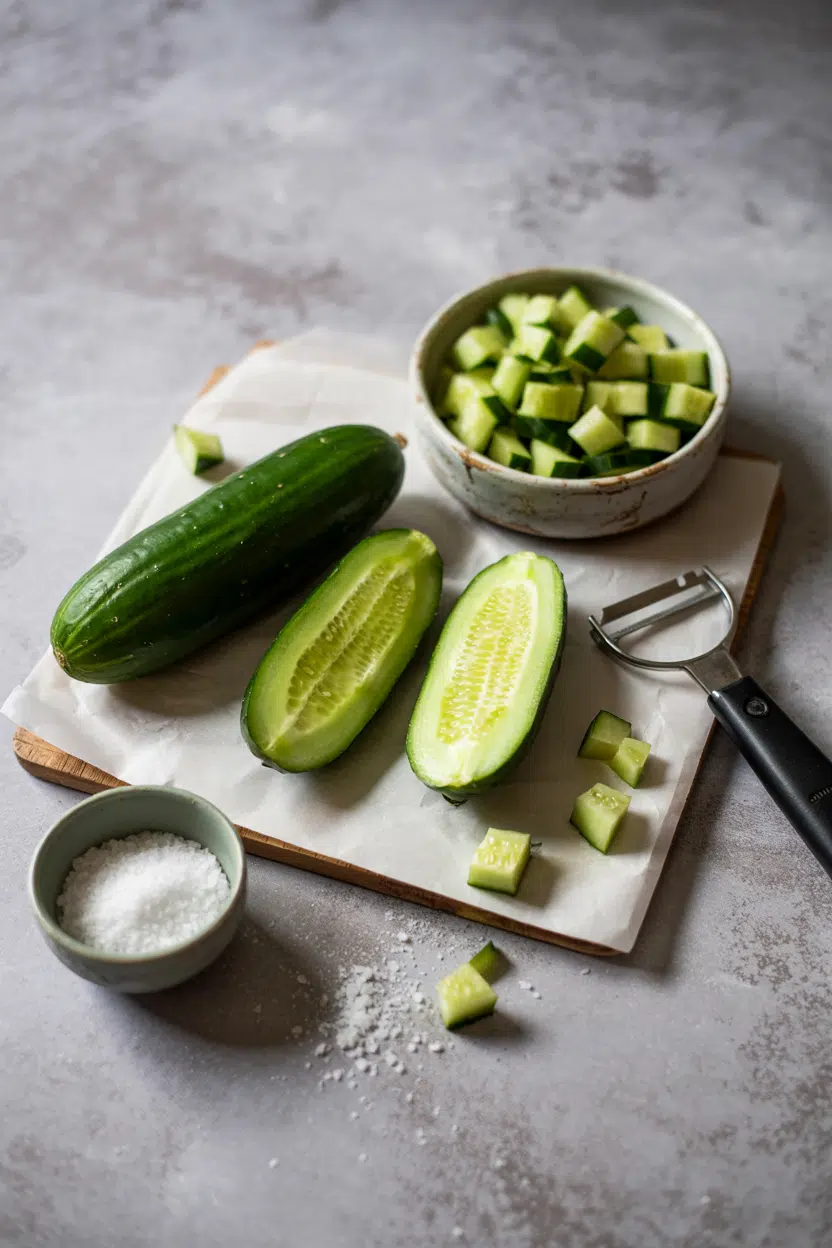
Cucumber is one of those produce-aisle staples that rarely gets a second thought, which is a shame, because knowing how to use it well makes a real difference.
Like squash's shelf life or replacements for celery flakes, understanding cucumber on its own terms opens up more options than you'd expect.
Cucumber is a mild, crisp gourd fruit with roughly 95% water content and a clean vegetal flavor. It shines raw - in salads, cold sauces, and quick pickles - and holds up briefly to light heat. Thin-skinned varieties like English and Persian cucumbers are ready to eat as-is.
What Is Cucumber?
Cucumber originated on the Indian subcontinent and has been cultivated for at least 3,000 years. Botanically, it's a vine fruit in the gourd family (Cucurbitaceae), though most people use it as a vegetable.
Remember it later
Planning to try this recipe soon? Save it for a quick find later!
Its thin-to-waxy green skin wraps a pale, crunchy flesh with a spongy seed cavity at the center.
Several distinct types exist, and the differences matter at the stove. English cucumbers are long, nearly seedless, and thin-skinned - no peeling required. Persian cucumbers are shorter and similarly tender. Pickling cucumbers (sometimes called gherkins when small) are bumpy, firm, and higher in acid tolerance, making them ideal for brine.
Standard waxed cucumbers at most grocery stores have a thicker skin and more prominent seeds.
The alternate names can be confusing: "cuke" is informal shorthand, while "gherkin" specifically refers to small pickling varieties, not just any small cucumber. For raw eating, thin-skinned varieties win.
If swapping out radish in a crunchy salad component, Persian cucumber is often the cleaner choice because of its snappy bite without the peppery edge.
What Does Cucumber Taste Like?
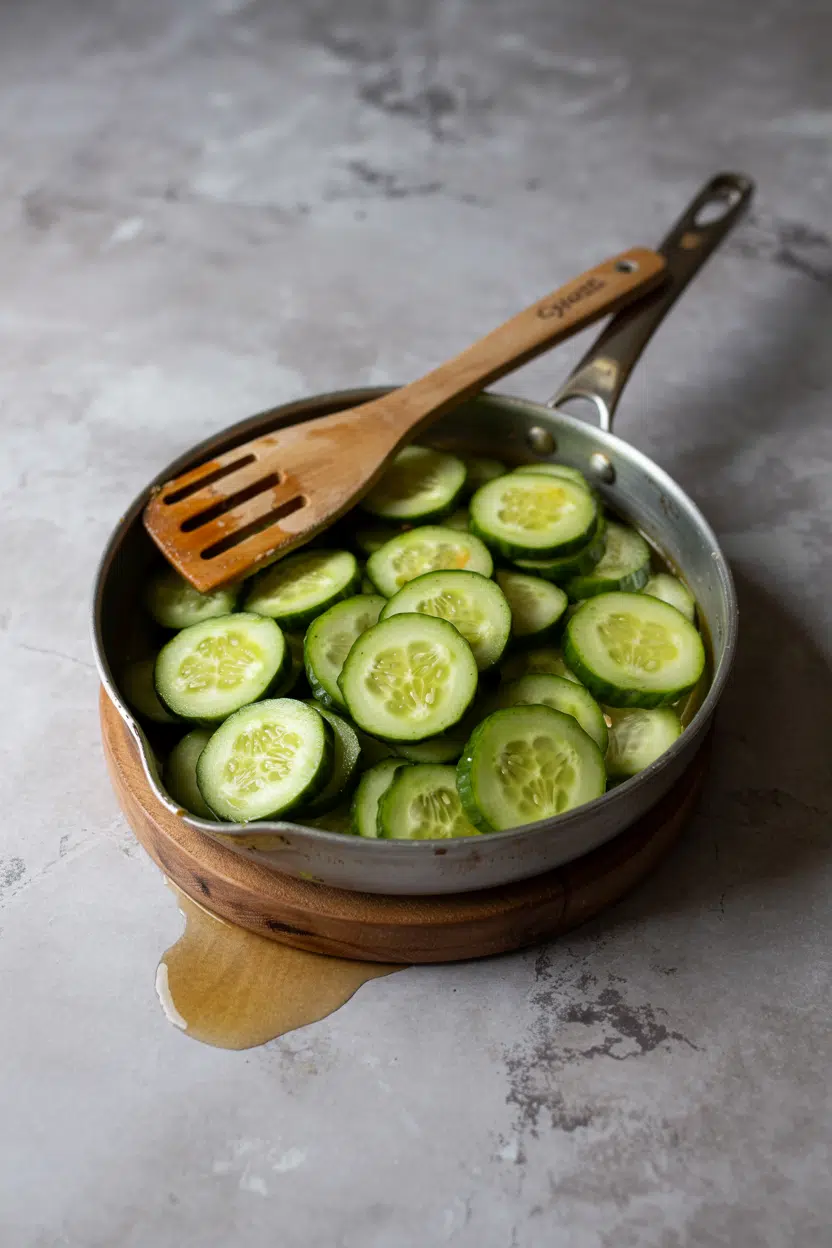
Cucumber flavor is mild and clean - think watery zucchini crossed with mild celery, but lighter and more neutral than either. The flesh itself is subtly sweet with almost no bitterness. It's the skin where things get more interesting.
The skin contains cucurbitacins, bitter compounds that vary by variety and growing conditions. Most commercial cucumbers have had these bred down significantly, but a skin-on slice of a standard waxed cucumber can still carry a faint bitter edge.
English and Persian types have far less. Raw flesh smells fresh and lightly green - nothing sharp or funky.
Heat changes the profile quickly. Brief grilling or charring softens the crunch and brings out a mild sweetness, while long cooking collapses the texture entirely and turns the flavor watery.
Pickling adds a tangy brightness that sharpens the otherwise quiet flavor.
How to Use Cucumber
Raw is where cucumber does its best work.
Sliced thin into salads, ribboned over grain bowls, or pressed into tzatziki with Greek yogurt and dill - the crunch and water content cut through richer ingredients.
Raita works the same way in South Asian meals, balancing heat and fat.
Just like storing lettuce correctly keeps your salad base crisp, prepping cucumber just before serving prevents it from weeping into everything else.
Cold applications are its natural territory.
- 🥒 Quick pickling - Thinly sliced and soaked in rice vinegar, sugar, and salt for Japanese-style sunomono; ready in 20 minutes
- 🥣 Cold soups - Seeded and blended with yogurt or broth for chilled gazpacho or cucumber-yogurt soup; seed removal keeps the texture clean
- 🍜 Raw noodles - Spiralized into long strands as a low-carb substitute in chilled sesame noodle dishes
- 🥂 Drinks - Muddled or infused into water, gin cocktails, or even cold brew for a clean aromatic note
Brief grilling or charring works too - a few minutes over high heat gives cucumber a smoky edge that's unexpected and genuinely good in a warm salad. Beyond that, stop.
Long braising turns it structureless fast.
Cucumber pairs well across cuisines. In Mediterranean cooking, it goes with feta, dill, and lemon.
In East Asian dishes, expect soy sauce, sesame oil, and rice vinegar. Southeast Asian preparations often add mint, fish sauce, and chili.
Middle Eastern menus lean into yogurt-based sauces.
| Method | Best For | Tip |
|---|---|---|
| 🥗 Raw slicing | Salads, sandwiches, tea plates | Salt slices and pat dry to prevent sogginess |
| 🥒 Quick pickling | Sunomono, burger toppers, banh mi | Use pickling cucumbers for firmer texture after brine |
| 🥣 Blending | Cold soups, raita, tzatziki | Seed and drain before blending to avoid wateriness |
| 🔥 Light grilling | Warm salads, side dishes | Keep it under 3-4 minutes total - texture collapses fast |
How to Buy and Store Cucumber
At the store, firmness is the main signal.
Press gently along the body - any soft spots or give indicate age.
Skin should be evenly green and smooth for English or Persian types, or bumpy and firm for pickling varieties.
Wrinkled skin or sunken ends mean the cucumber has already started losing moisture.
Skip waxed cucumbers with an unusually heavy shine if you plan to eat the skin.
At home, store whole cucumbers unwashed, wrapped loosely in a paper towel and placed in a perforated plastic bag in the fridge.
The paper towel absorbs condensation; without it, surface moisture accelerates decay.
Similar logic applies when storing zucchini correctly - the gourd family generally needs dry, cool air, not wet cold.
For a full breakdown of timing by variety, the guide on how long cucumber keeps covers it in detail.
Cut cucumber lasts just 2-3 days; plan accordingly.
Start Here
Cucumber rewards a simple approach. If you're new to it, start raw - sliced thin with good vinegar, dill, and a pinch of salt.
That alone shows you what it does best.
From there, try blending it into a cold sauce like tzatziki; if you need something different in that role, the options for swapping out tzatziki sauce are worth checking.
Skip long heat entirely until you've built a feel for how fast the texture turns.
Cucumber's value is in its crunch and restraint - cooking strips both away quickly.
Frequently Asked Questions
Botanically, it's a fruit - it develops from a flower and contains seeds. In cooking and grocery contexts, it's treated as a vegetable because its flavor profile is savory and mild, not sweet.
Bitterness comes from cucurbitacins, compounds concentrated mostly in the skin and near the stem end. Peeling the cucumber or trimming the stem end removes most of it. English and Persian varieties have been bred for very low cucurbitacin levels.
Yes - they're edible and mild. The issue is texture and water content: the seed cavity is spongier and releases more liquid, which can water down cold soups, sauces, or salads. Scoop them out when moisture control matters.
Very. A whole cup of sliced cucumber is around 16 calories, mostly because it's roughly 95% water. It also provides vitamin K and small amounts of vitamin C and potassium.
Yes, for texture-sensitive applications. Salting draws out excess water through osmosis, which prevents slices from weeping into a salad or thinning out a yogurt sauce. Let salted slices sit 10-15 minutes, then pat dry before using.



