
That first pour of crème de cassis into a glass is striking - the liquid is so dark it reads almost black, then settles into a deep ruby once light catches it.
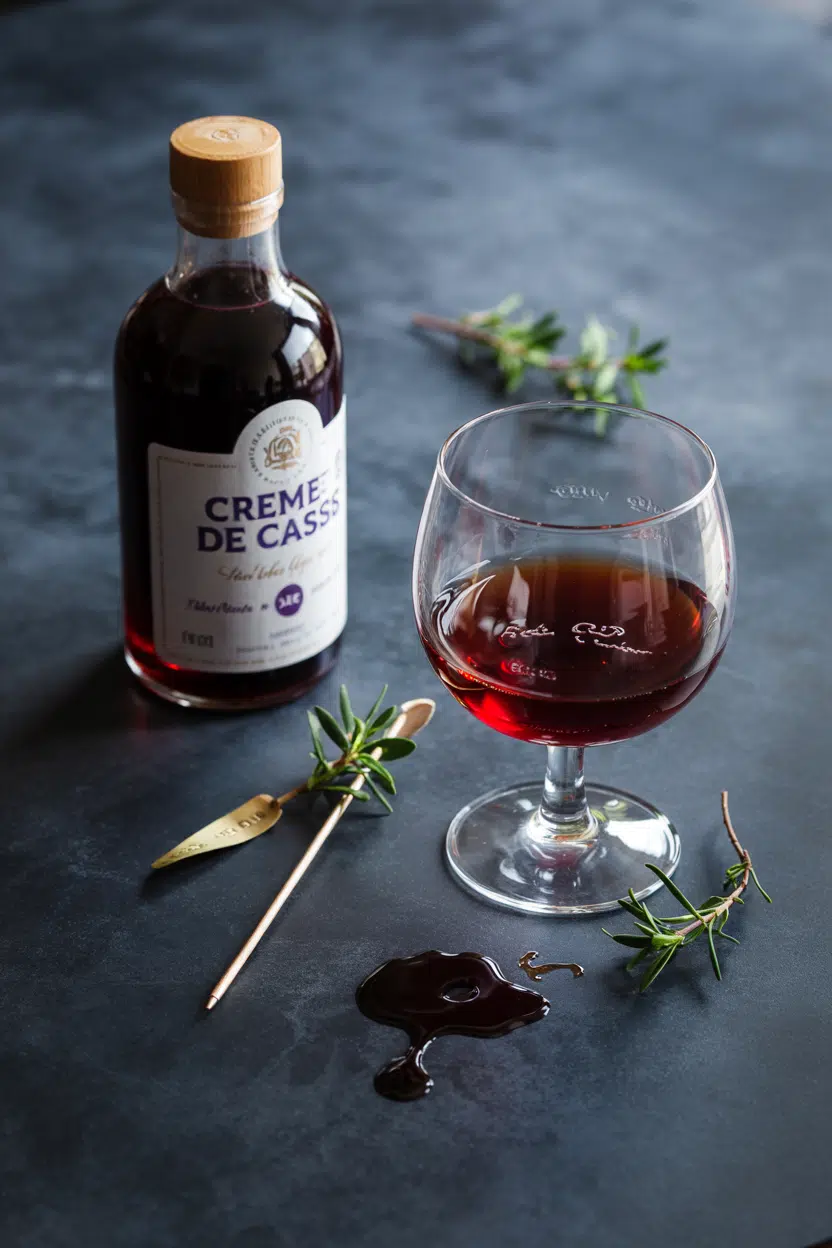
The scent arrives before you even raise the glass: concentrated blackcurrant, faintly floral, with a candied-fruit edge that signals sweetness without apology.
Unlike other fruit liqueurs that lean neutral or boozy, this one tastes unmistakably of its source, the way replacements for amaretto highlight just how much the almond note defines that category.
If benedictine liqueur swaps that work teach anything, it's that a liqueur's character is inseparable from its base ingredient - and cassis proves that point at every sip.
Crème de cassis is a sweet blackcurrant liqueur from Burgundy, France. Deep, jammy, and syrupy, it's used most often in cocktails like the Kir and Kir Royale, though it also works in glazes, sauces, and desserts. Opened bottles keep best within one to two years.
What Is Crème de Cassis?
Crème de cassis is a blackcurrant liqueur produced by macerating fresh or frozen blackcurrants in a neutral alcohol base, then blending the infusion with sugar syrup.
Remember it later
Planning to try this recipe soon? Save it for a quick find later!
It originated in the Burgundy region of France, with Dijon historically considered the capital of production - bottles labeled "crème de cassis de Dijon" follow traditional regional standards.
The name translates literally as "blackcurrant cream," though no dairy is involved. "Cream" in French liqueur terminology signals high sugar content, distinguishing the style from drier fruit spirits.
Standard bottles range from roughly 15% to 20% ABV. Higher sugar content pushes the ABV lower and yields a thicker, more syrupy result.
Understanding the role currant plays in European cooking helps explain why the French built an entire liqueur category around the berry - blackcurrants are intensely aromatic and tart, making them ideal for maceration.
- 🍇 Crème de cassis de Dijon - the benchmark regional style, typically thicker and more concentrated
- Standard blackcurrant liqueur - widely available outside France, lighter sweetness and ABV may vary
- Low-alcohol cassis - some producers make reduced-ABV versions for non-spirit mixing
What Does Crème de Cassis Taste Like?
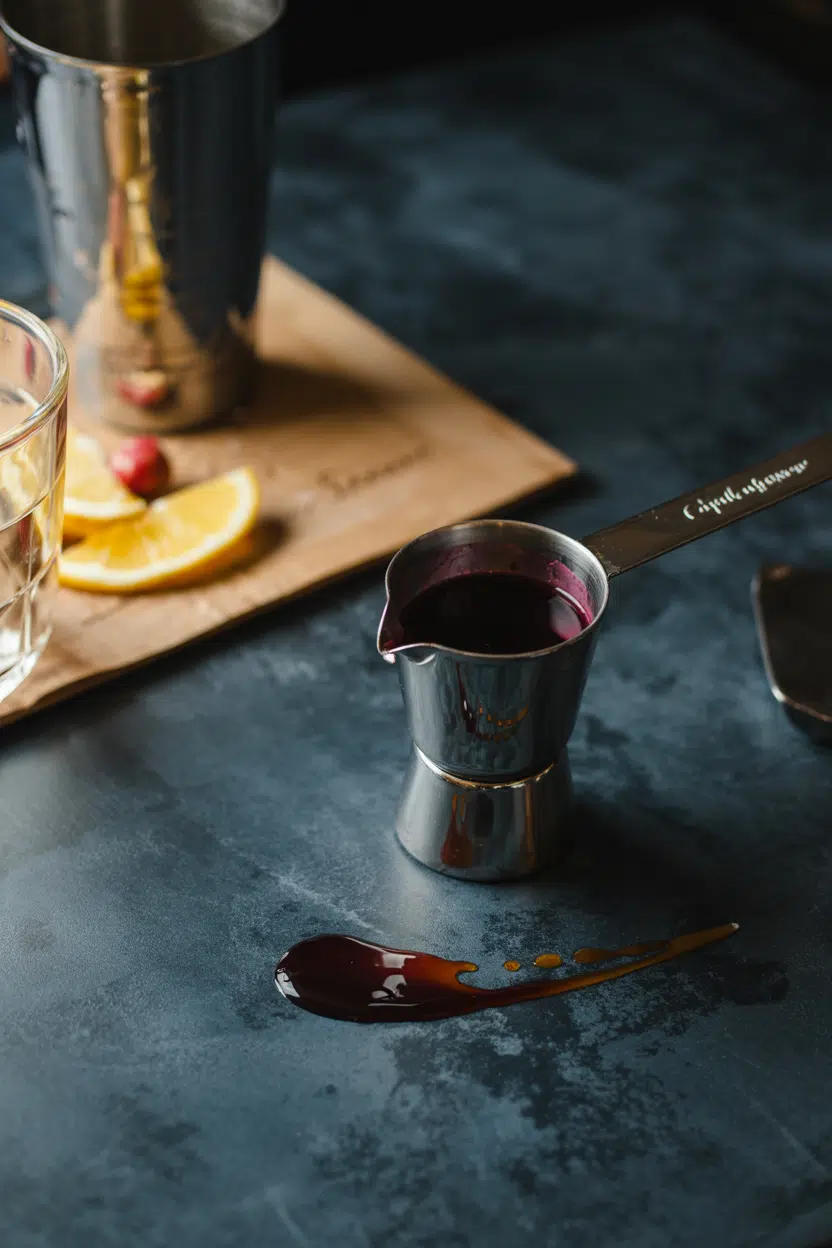
Crème de cassis tastes like blackcurrant jam that's been thinned and lifted with alcohol - rich, dark, and sweet up front, with a firm tartness underneath that keeps it from reading as flat.
The finish lingers with a slow, syrupy sweetness rather than a clean cut.
Compared to fresh blackcurrants, the liqueur is far sweeter and softer - the raw berry's sharp, almost piney edge is smoothed down by sugar and maceration.
Cassis syrup (the non-alcoholic version) is noticeably sharper; crème de cassis sits between the two in intensity.
Heat concentrates its sugar and deepens the dark-fruit note, which is why reductions for glazes taste even more jammy than a cold pour.
How to Use Crème de Cassis
The Kir is where most bottles begin their life: a splash of crème de cassis stirred into dry white wine, the sweetness of the liqueur offsetting the wine's acidity.
Swap the wine for Champagne and you have a Kir Royale, one of the most widely recognized French aperitifs.
Both drinks use roughly one part cassis to five or six parts wine.
Beyond cocktails, it functions as a dark-fruit modifier in gin sours, bourbon smashes, and brandy-based drinks - adding color, sweetness, and depth without overpowering the base spirit.
Bartenders often reach for it the way they'd use a flavored syrup, though its alcohol content means it alters proof.
If a recipe calls for crème de cassis and you're out, swapping out creme de cassis covers the closest alternatives across both cocktail and cooking contexts.
For reference, swapping out triple sec follows a similar logic - orange liqueurs and cassis both serve as sweet modifiers, just with different fruit profiles.
In the kitchen, the uses extend further than most people expect.
| Method | Best For | Tip |
|---|---|---|
| 🍹 Cold/Stirred | Kir, Kir Royale, cocktails, drizzles over ice cream | Add after building the drink - stir gently to layer color |
| 🔥 Reduced | Pan glazes for duck, pork, and game birds | Reduce slowly on low heat; high heat scorches the sugar fast |
| 🥣 Folded | Panna cotta, sorbet base, vinaigrette | Add at the end - heat dulls the bright berry aroma |
| 🍑 Macerating | Soaking fruit for tarts, pavlovas, and cheese boards | Mix with a little lemon juice to keep fruit from going too sweet |
Crème de cassis pairs particularly well with goat cheese and aged hard cheeses, where its sweetness contrasts the salt and funk.
It also works in a homemade lemon vinaigrette - a few drops alongside the acid add fruit depth without making the dressing taste like dessert, which is how it connects to a recipe like this Lemon Vinaigrette Dressing (Homemade).
How to Buy and Store Crème de Cassis
Start with bottles labeled "crème de cassis de Dijon" - these meet traditional Burgundy production standards and tend to have more concentrated blackcurrant flavor.
Before buying, shake the bottle gently; a thicker pour against the glass indicates higher sugar content and a more syrupy result.
Check the ABV and sugar content when comparing bottles. Lower ABV usually means more sugar and a heavier texture, which suits dessert applications.
Higher ABV versions carry more complexity and work better in spirit-forward cocktails.
- Unopened - store in a cool, dark place; lasts several years without quality loss
- After opening - refrigerate upright to slow oxidation; best flavor within 1-2 years
- Signs of decline - color fading from black-ruby to brownish, flat aroma, muted sweetness
For a full breakdown of timing and what changes with age, creme de cassis's shelf life covers the specifics in detail.
It's also worth noting that the high sugar content functions as a natural preservative - similar to how sugar's shelf life extends far beyond most pantry staples because microbes struggle to grow in concentrated sugar environments.
Start with One Bottle, One Drink
Crème de cassis is not a one-trick ingredient, however it earns its place fastest in a glass. Mix one part cassis with five parts dry white wine - that's a Kir, and it takes thirty seconds.
From there, the bottle opens into glazes, desserts, and sauces at your pace.
Buy one mid-range Burgundy bottle before experimenting with cheaper supermarket versions. The blackcurrant character is noticeably stronger, and the difference matters when cassis is the main flavor in a drink.
Frequently Asked Questions
It's a liqueur - it contains alcohol, typically 15-20% ABV. Cassis syrup (sirop de cassis) is the non-alcoholic version and tastes sharper. The two aren't interchangeable in cocktails, though the syrup works as a stand-in in cooking.
Very sweet - it's among the higher-sugar liqueur styles. A standard bottle contains around 350-400g of sugar per liter, more than most triple secs or amarettos. Lower ABV bottles skew even sweeter.
Yes, and it reduces well into glazes and pan sauces. Keep heat low - its sugar burns quickly at high temperatures. Add it off-heat when finishing a sauce to preserve the bright berry aroma.
Cassis syrup has no alcohol and a sharper, less complex flavor. Crème de cassis gains depth from maceration and alcohol, which extract more aromatic compounds from the berry. Flavor intensity also differs - cassis liqueur is richer and more rounded.
Refrigeration isn't strictly required - sugar and alcohol prevent spoilage - however cold storage slows oxidation and preserves the blackcurrant aroma significantly longer. Bottles kept at room temperature after opening tend to lose brightness within months.



