
Slice the white base of a green onion and something sharp and clean hits your nose - lightly pungent, almost grassy.

The green tops carry a brighter, fresher note that disappears quickly under heat, which is exactly why most recipes add them last.
Cooks who've tried swapping out leek or reaching for red onion swaps that work often land back here, because green onion fills a specific gap that stronger alliums can't.
Green onion is a mild, crisp allium used raw or lightly cooked. The white base gives a gentle sharpness; the green tops add fresh, bright onion flavor. Both parts are edible. Use as a garnish, stir-fry aromatic, or salad ingredient.
What Is Green Onion?
Green onion is the immature form of the common onion, harvested before the bulb fully develops. The white base is small, narrow, and not yet rounded - still hollow inside - while the long, hollow green stalks extend upward from it.
Remember it later
Planning to try this recipe soon? Save it for a quick find later!
Originating in East Asia and now cultivated globally, it belongs to the allium family alongside garlic, leek, and chives.
Several names refer to the same thing. Scallion is the most common American term; spring onion and salad onion appear more often in British and Australian usage. Green shallot and bunched onion also circulate depending on region.
Not every variety is identical, however. True scallions (Allium fistulosum) never form a bulb, while spring onions are sometimes allowed to develop a small rounded base before harvest.
For everyday cooking, the distinction rarely matters - both work the same way.
If you're ever short on supply, there are alternatives to scallion that cover most of what green onion does in a dish.
What Does Green Onion Taste Like?
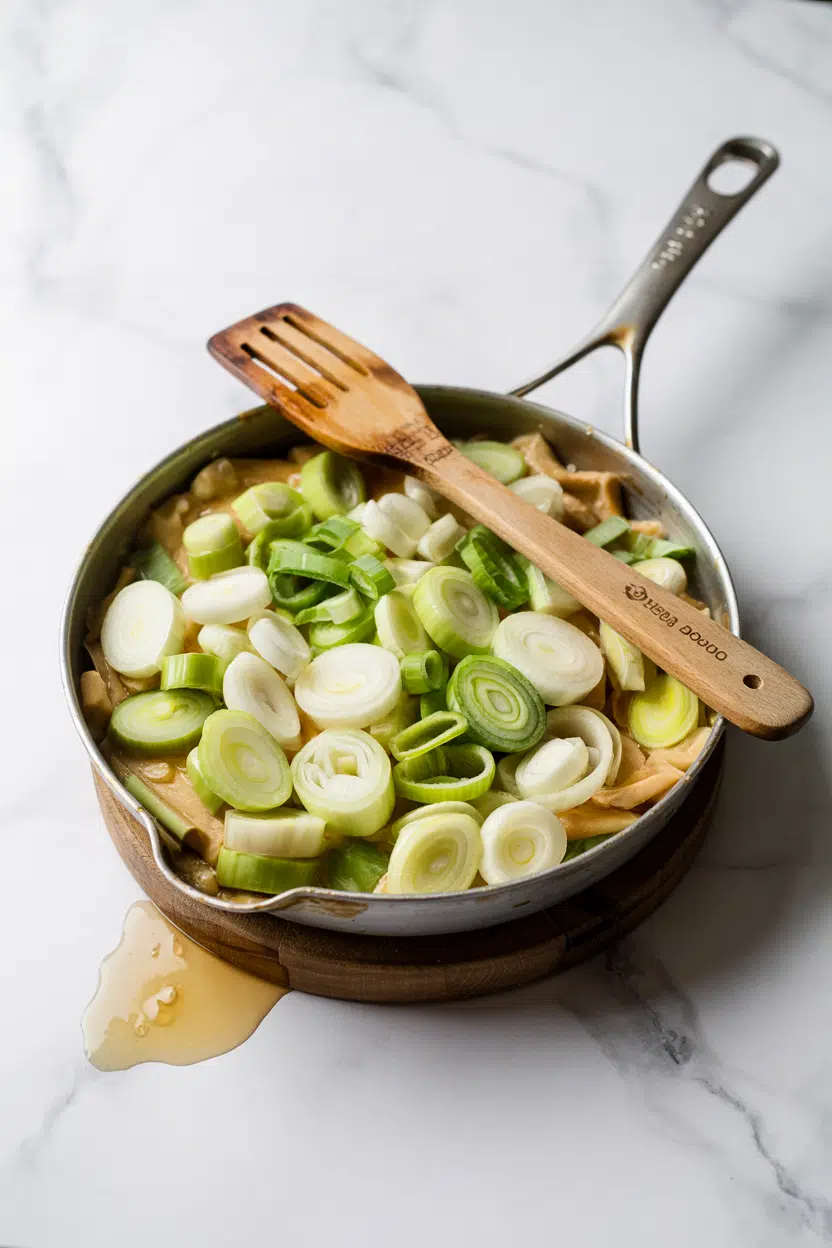
Green onion tastes like a milder, fresher version of a standard onion - closer in character to chives, though with a bit more bite. The two parts of the plant taste noticeably different from each other.
The white base carries most of the sharpness - a clean, oniony heat that softens when cooked. The green tops are brighter and more delicate, with a grassy quality that vanishes quickly over direct heat.
Cooked, both parts turn slightly sweet and lose the raw edge. For a sense of how closely related flavors compare, chive's flavor and uses maps out where that milder cousin lands on the same spectrum.
How to Use Green Onion
Raw applications are where green onion does its clearest work. Thinly sliced green tops scattered over miso soup or chicken noodle broth add a fresh, aromatic finish that heat would erase.
Folded into cold noodle salads, salsas, or grain bowls, the crisp texture adds contrast.
Cooked applications shift the flavor profile considerably. Sweating the white ends with garlic builds the aromatic foundation for stir-fries and noodle dishes across Chinese and Korean cooking. Added late to fried rice, both parts keep their color and stay bright-tasting rather than going limp and sulfurous.
A few less obvious uses are worth knowing:
- 🧈 Compound butter - Fold finely chopped green tops into softened butter with a pinch of salt for a quick steak or bread finish.
- 🥒 Quick pickle - A 20-minute rice vinegar brine turns sliced green onion into a bright, tangy topping for rice bowls and sandwiches.
- 🔥 Grilled whole - White ends charred over high heat develop a smoky sweetness; this is the basis for Spanish calçots and Korean pa-gui.
- 🧀 Cream cheese spread - Stirred into softened cream cheese with a little lime zest, green onion makes a clean, simple bagel or cracker spread.
Avoid long dry roasting - the tops burn and turn bitter before the white base has time to soften properly.
| Method | Best For | Tip |
|---|---|---|
| 🥗 Raw | Garnish, salads, salsas, cold noodles | Slice thin on the bias for cleaner presentation |
| 🍳 Quick Sauté | Stir-fry base, fried rice, noodle dishes | Add white ends first, green tops last 30 seconds |
| 🫙 Pickled | Rice bowls, sandwiches, tacos | Rice vinegar + sugar brine, 15-20 minutes minimum |
| 🔥 Grilled | Side vegetable, char-based dishes | Use whole bunches; oil well before high-heat grill |
How to Buy and Store Green Onion
At the store, look for firm white bases with no soft spots or hollow collapse, and green tops that are bright, dry, and unbruised. Slimy collars where the green meets the white are a reliable sign of age.
Skip bunches with yellowing or wilted tips.
For standard fridge storage, wrap unwashed bunches in a lightly damp paper towel and seal in a perforated bag.
Green onion lasts 5-10 days this way, though the green tops degrade before the white base does.
Full guidance on green onion spoilage signs is worth a read before you toss a bunch that might still be usable.
For comparison, keeping chives fresh follows almost the same method - damp wrap, fridge, use within a week.
Start With the Garnish
New to green onion? Slice the green tops thin and scatter them over the next bowl of soup, fried rice, or scrambled eggs you make. No cooking required, no technique to learn.
Once you've seen how much that small addition changes the aroma and finish of a dish, it becomes instinct.
From there, try the white ends sweated in oil as your stir-fry base - you'll notice how the same ingredient shifts character entirely depending on how you handle it.
Frequently Asked Questions
Yes, in most practical contexts. Both refer to immature onions harvested before the bulb develops. The term "scallion" is standard in the US; "green onion" is used interchangeably across North America and beyond.
Yes - the green tops are fully edible and widely used as a garnish or flavor boost. They're more delicate than the white base and best added raw or at the very end of cooking to preserve their color and fresh flavor.
About 5-10 days when stored in a damp paper towel inside a perforated bag. The green tops degrade faster than the white base, so check those first for sliminess or yellowing.
Yes, but only for cooked applications afterward. Slice them first, spread on a tray to freeze individually, then transfer to a bag. Frozen green onion turns limp on thawing and won't work as a raw garnish.
Yes - raw is actually their strongest role. The crisp texture and mild sharpness come through clearly without cooking, making them effective in salads, salsas, and as a finishing garnish on hot dishes.



