Snip a small bunch of fresh chives over a warm bowl of soup and the room picks up a clean, grassy-onion scent almost immediately.
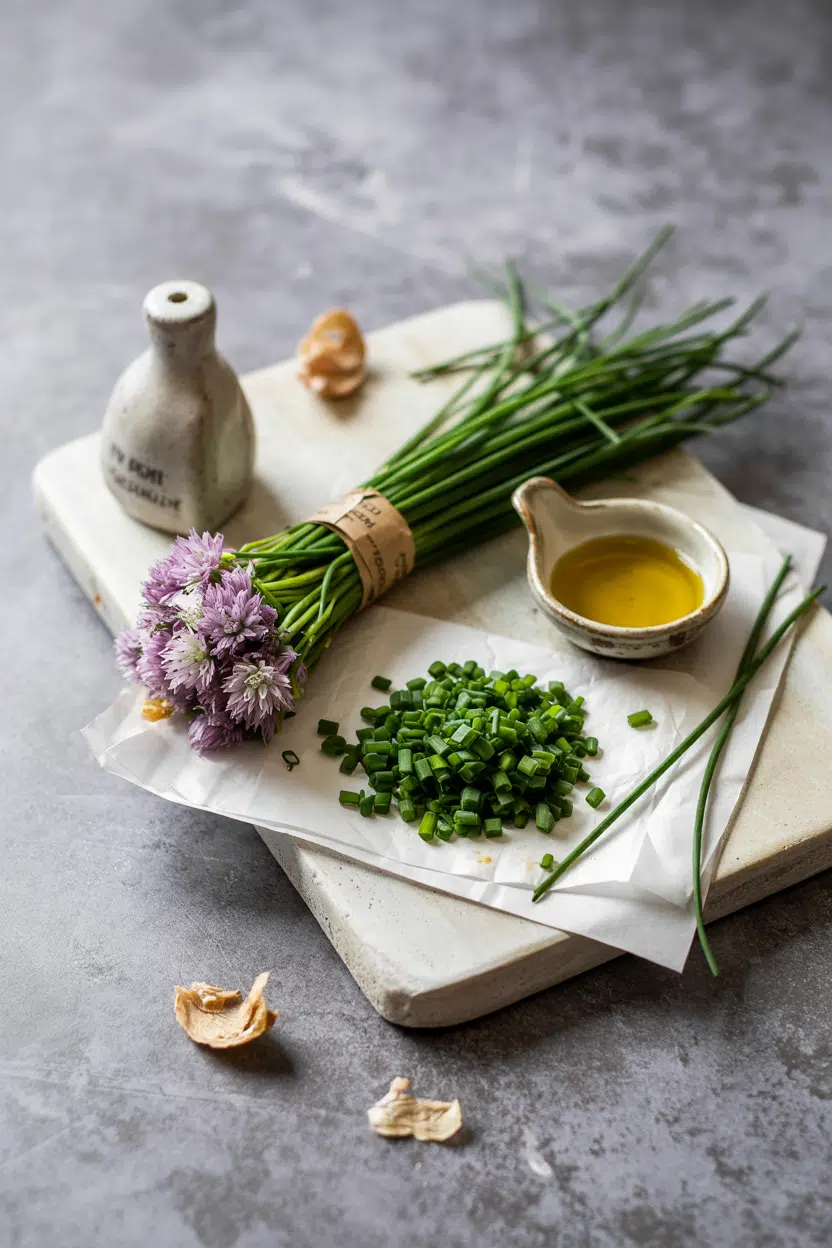
That fragrance is a reliable signal: the flavor underneath is gentle, bright, and just sharp enough to notice without overpowering anything near it.
Chives are slender hollow stems from the allium family with a mild onion-garlic flavor and fresh grassy aroma. Best used raw or off-heat, they add bright green color and a gentle allium note to eggs, potatoes, dips, and cold sauces without dominating the dish.
What Is Chive?
Chive - formally Allium schoenoprasum - is a perennial herb native to temperate regions of Europe and Asia.
Remember it later
Planning to try this recipe soon? Save it for a quick find later!
It belongs to the allium family alongside onions, garlic, and shallots, though its flavor registers far lower on the intensity scale than any of those relatives.
The plant produces hollow, grass-like green tubes that grow in dense clumps, and it's those slender stems we harvest and use in cooking.
Garden chives are the standard variety found in most grocery stores and home herb pots.
A distinct cousin, garlic chives (Allium tuberosum), has flat rather than hollow stems and a noticeably stronger garlic character - worth knowing if you buy from a farmers' market where both may appear unlabeled.
You'll also see them called French chives or simply chives (occasionally misspelled as "chiveses").
Unlike scallions, chives have no usable white bulb - the entire edible portion is the slender green stem, which keeps them suited to delicate applications where a scallion's firmer bite would feel out of place.
If you ever run short, a quick look at chive swaps that work covers the closest options by flavor profile.
What Does Chive Taste Like?
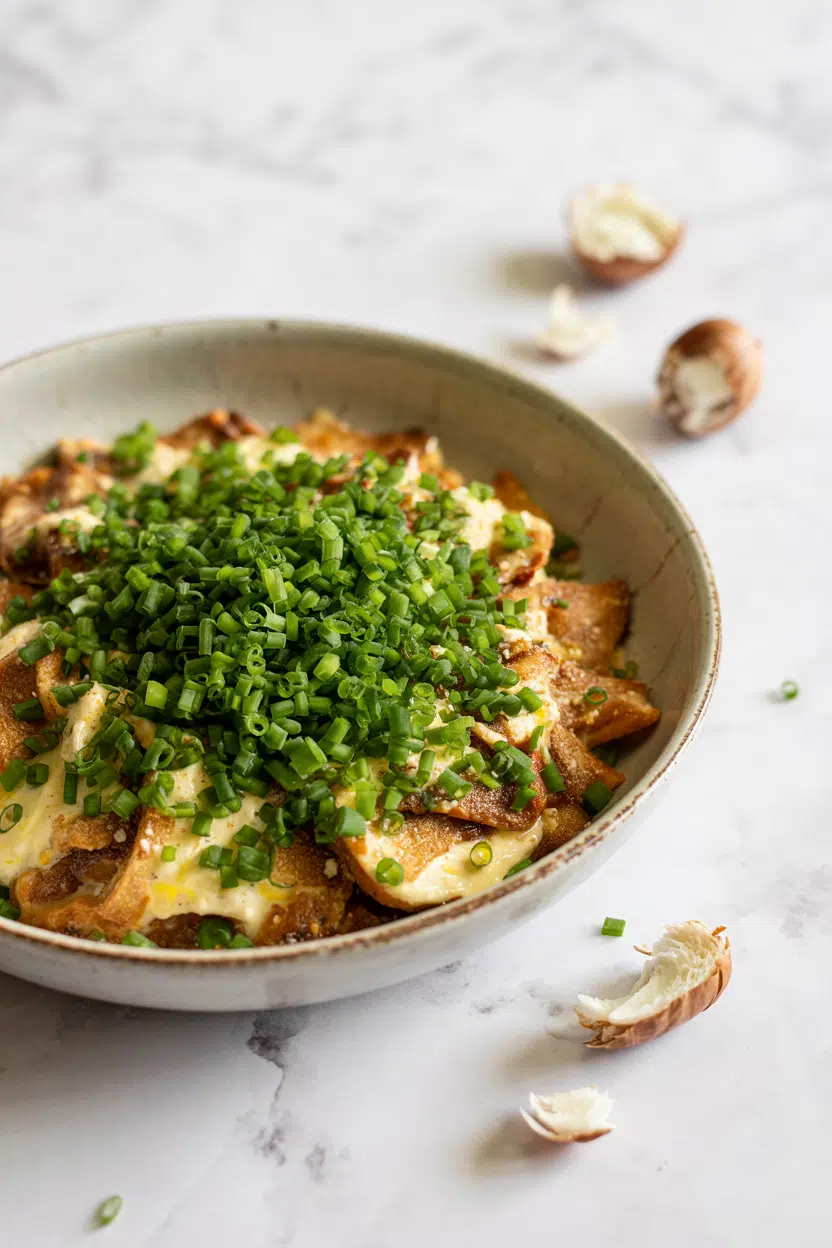
Fresh chives taste like a very mild green onion - the sharpness is present but restrained, layered with a light garlic undertone and a clean, grassy finish.
Think of the top third of a scallion, stripped of any fibrous heat, and you're close.
Heat changes the equation quickly. A brief 30-second stir off-heat softens the raw edge slightly and keeps the green color vivid.
Anything beyond that - sustained sautéing, braising, or deep frying - strips out the allium brightness and leaves behind a flat, faintly bitter taste with a dull olive-green color.
Raw is almost always the right call. That fragile freshness is exactly what makes chives worth using.
How to Use Chive
Chives work best as a finishing herb, not a cooking base. The standard technique is to snip the stems with scissors rather than chop with a knife - a blade bruises the hollow tubes and releases liquid that dulls both color and flavor.
Hold a small bunch over the dish and snip directly for the cleanest result.
| Method | Best For | Tip |
|---|---|---|
| 🥗 Raw Snipped | Baked potato topping, egg garnish, cold salads | Snip with scissors - don't chop - to avoid bruising |
| 🥣 Folded In | Sour cream dip, compound butter, herb cheeses | Stir in gently; overmixing turns color dull |
| 🍲 Off-Heat Stir | Vichyssoise, scrambled eggs, warm vinaigrettes | Add after the pan leaves the flame - 30 seconds max contact |
| 🍳 Light Sauté | Omelets, quick pan sauces | One minute only; watch closely for color change |
French cooking uses chives as part of the classic fines herbes blend alongside tarragon and chervil. Eastern European and British cooking leans on them heavily in potato dishes and cold dips.
In American casual cooking, baked potatoes and chive sour cream are the most recognizable pairing, though compound butters and cream cheese spreads rely on them just as much.
Chives pair cleanly with potato, egg, sour cream, salmon, cream cheese, lemon, and butter. They sit alongside parsley in herb mixes without competing.
For garnish inspiration from a related allium, the technique behind a fried shallots asian garnish recipe shows how allium family members can anchor a plated dish as a visual and flavor element.
How to Buy and Store Chive
Good fresh chives are easy to spot. Bright green, upright stems with no yellowing, sliminess, or papery base are the sign of a healthy bunch. Avoid anything limp, spotted, or carrying an off smell - those indicate age.
Following the store fresh herbs technique will extend nearly any fresh herb, chives included.
Fresh chives hold well for 4-7 days in the refrigerator this way. Trimmed stems stood upright in a glass of water can last 1-2 weeks, though peak flavor fades around day five.
Watch for chive spoilage signs like yellowing tips, slimy stems, or a sour smell - any of those and it's time to replace the bunch.
Where to Start With Chive
Start with the two applications that show chives at their best - a baked potato with sour cream, and scrambled eggs finished just off the heat.
- 🥔 Baked potato first - snip generously over sour cream and you'll immediately understand how chives add flavor without heat
- 🍳 Then try eggs - fold into soft scrambled eggs off the flame for a clean, grassy-onion finish that doesn't compete with the yolk
- 🧈 Next, compound butter - mix snipped chives into softened butter with lemon zest; this is the move that opens up fish and vegetable applications
Those three anchor every other use. Once you know how chives behave in each format - raw garnish, folded cool, stirred off-heat - every other dish follows the same logic.
Frequently Asked Questions
No. Chives are thinner, fully hollow, and have no usable white bulb. Green onions have a firmer stem and a more pronounced bite. For dishes where the difference matters, [replacements for green onion](https://forkliftkitchen.com/green-onion-substitutes/) breaks down which alliums swap cleanly.
Briefly, yes - but raw is better for flavor and color. A light sauté under one minute or an off-heat stir works. Anything longer and the bright allium note disappears, leaving flat, slightly bitter stems.
Yes, though frozen chives lose their texture and won't work as a fresh garnish. Snip them, freeze flat on a tray, then transfer to a bag. Use them only in cooked applications like compound butter or warm sauces.
Wrapped in a damp paper towel, fresh chives last 4-7 days. Standing trimmed stems in a glass of water extends that to about two weeks, but flavor peaks around day five regardless of storage method.
Garlic chives (*Allium tuberosum*) have flat, solid stems and a distinctly stronger garlic flavor compared to the mild onion note of standard garden chives. They're common in Chinese and Southeast Asian cooking and are not interchangeable in most Western recipes.